When Comfort Food Gets a Polish Passport
Hey there, friend! Beau here, welcoming you back to the Feastical kitchen. You know that feeling when you walk into a house and dinner is already in the oven? That warm, savory, “everything is going to be okay” aroma that wraps around you like a favorite sweater? That’s exactly the vibe we’re crafting today. We’re taking a delicious detour from the usual weeknight rotation and building a casserole that’s so packed with flavor, it might just give your slow cooker a complex.
I’m talking about my Creamy Polish Pasta Casserole with Kielbasa & Sauerkraut. Now, I see you. Maybe you just glanced at “sauerkraut” and got a little nervous. Maybe you’re thinking, “Beau, that’s for hot dogs, not my pasta night.” Trust me, I was once in your shoes. But here’s the secret: when you bake it into this creamy, cheesy, smoky masterpiece, that tangy sauerkraut transforms. It becomes this incredible background note that cuts through the richness, making every bite more interesting and utterly addictive. It’s the unexpected guest at the party who ends up being the life of it.
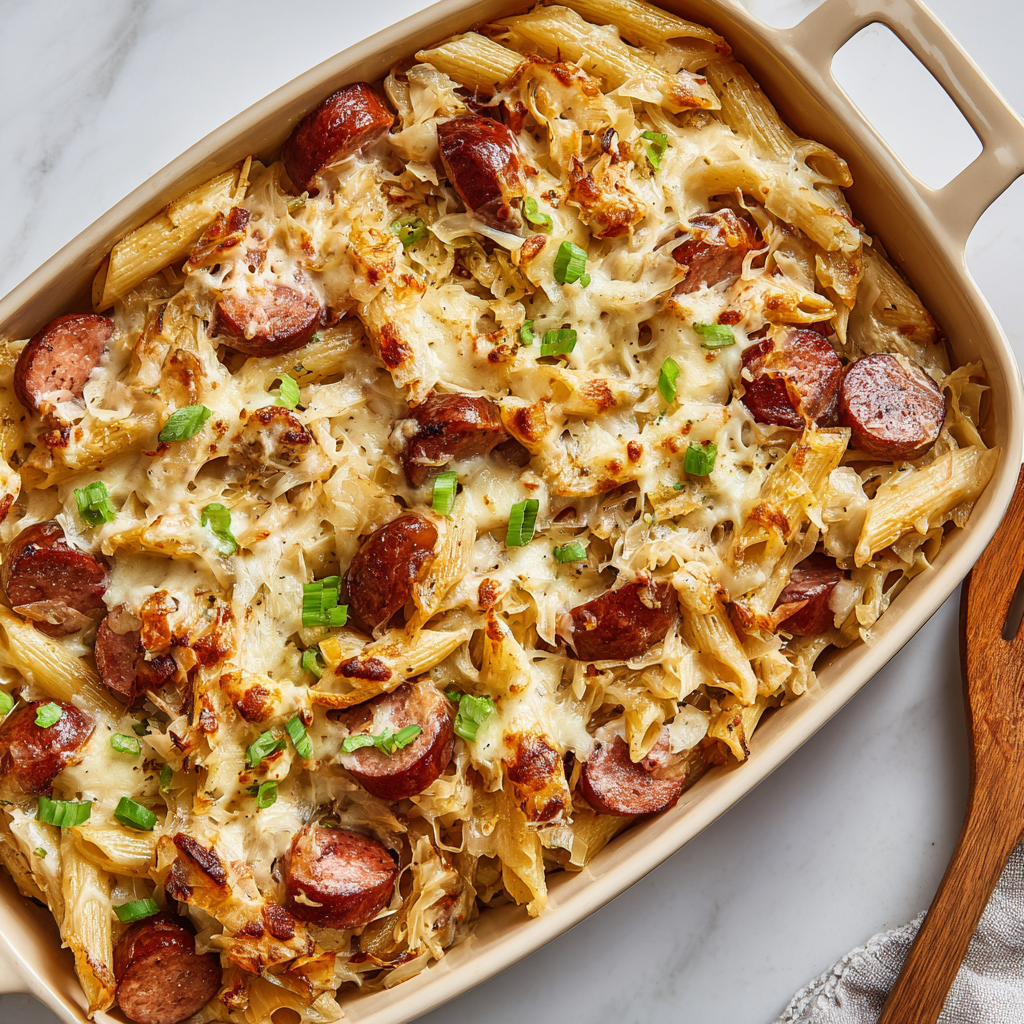
This isn’t just a thrown-together dish; it’s a hug in a baking dish. Tender penne cradles slices of smoky kielbasa, all tangled up in a velvety, Dijon-kissed cheese sauce and that brilliant, tangy kraut. The whole thing gets crowned with a layer of Swiss cheese that bakes up into a gorgeous, golden-brown blanket. It’s hearty, it’s satisfying, and it has this incredible way of turning a regular Tuesday into a celebration. So, grab your favorite wooden spoon and let’s build some delicious memories together.
The Potluck That Changed My Mind
I have to confess, my relationship with sauerkraut was strictly transactional for most of my life. Ballpark? Sure. On a Reuben? Absolutely. But in a pasta bake? I wasn’t sold. That all changed a few winters ago at a neighborhood potluck. It was one of those “bring your family’s heritage dish” parties, and my friend Anya, whose grandparents hailed from Poland, showed up with a giant, steamy dish that had everyone circling like sharks.
One bite and my culinary world tilted. The tangy kraut wasn’t sour; it was bright and almost sweet against the smoky sausage. The creaminess was unreal. I immediately cornered Anya (politely, with a fork still in my hand) and begged for the story. She laughed and said it was her Babcia’s “use-what-you-have” dish, born from cold winters and a well-stocked pantry. It was food that fed a family, warmed a home, and carried history in every spoonful. I went home that night with a hastily scribbled recipe on a napkin and a mission. I’ve tinkered with it over the years, but the soul of Anya’s Babcia’s dish is right here in this recipe. It’s a reminder that the best food often comes from tradition, simplicity, and a willingness to try something wonderfully unexpected.
Gathering Your Flavor Crew
Here’s the cast of characters that’s going to make this dinner a star. I’ve added my little chef notes next to each one because knowing your ingredients is half the battle won!
- 4 cups penne pasta, cooked and drained: Penne is my go-to here because those little tubes are perfect for trapping all the creamy sauce and little bits of goodness. Chef’s Tip: Cook it just to al dente! It’s going to soak up sauce and bake, so we don’t want it mushy.
- 2 tbsp butter & 2 tbsp flour: Our dynamic duo for the roux, the base of our luxurious sauce. This combo thickens everything up beautifully.
- 2 ½ cups milk: Whole milk will give you the richest sauce, but 2% works in a pinch. We’re building flavor, so let’s not go skim here.
- 1 cup sour cream: This is our magic ingredient for tangy, luscious creaminess. Pull it out of the fridge when you start so it’s not ice-cold when you add it.
- 1 tsp garlic powder: Yes, powder! In a baked sauce like this, it distributes flavor more evenly than fresh minced garlic, which can sometimes burn or get bitter.
- 2–3 tbsp Dijon mustard: Don’t skip this! It adds a sophisticated sharpness that balances the richness. Start with 2 tbsp and add the third after tasting if you’re a mustard fan.
- 16 oz sauerkraut, drained: The star of the show! Be sure to drain it really, really well and give it a quick squeeze to remove excess liquid. We want the flavor, not the brine.
- 4 green onions, chopped: A fresh, mild onion bite. The green parts look gorgeous for color, too!
- 1 ½ lbs Polska kielbasa, sliced: Look for a good quality Polish sausage. It’s typically pre-cooked (smoked), so we’re just heating it through and letting its smoky flavor permeate the dish. A great sub is any smoked sausage.
- 3 cups Swiss cheese, shredded and divided: I love the nutty, mild melt of Swiss here. Pro Hack: Shred it yourself! Pre-shredded cheese has anti-caking agents that can make your sauce grainy. The 5 minutes it takes is 100% worth it.
- Salt and pepper to taste: Your trusty sidekicks. Go easy on the salt initially, as the kielbasa, cheese, and kraut bring their own.
Let’s Build This Beauty, Step-by-Step
Okay, team! Aprons on? Let’s do this. I’ll walk you through each step with the little tricks I’ve learned to make this foolproof.
Step 1: Preheat & Prep. Fire up that oven to a cozy 350°F (175°C). Grab your 9×13 baking dish and give it a light coat of butter, oil, or a quick spray. This little step guarantees a golden crust and easy cleanup—no stuck-on cheese disasters!
Step 2: Pasta Party. Cook your penne in a big pot of well-salted water. Remember, we’re aiming for al dente—it should still have a slight bite to it. Drain it well and let it hang out in the colander. No one wants a watery casserole.
Step 3: Sauce Time (The Heart of the Operation!). In a medium saucepan, melt the butter over medium heat. Once it’s foaming, sprinkle in the flour and whisk it constantly for a full minute. You’re toasting the flour, which cooks out that raw taste. It should look like a pale, bubbly paste. Now, slowly stream in the milk while whisking like your dinner depends on it (it does!). This prevents lumps. Keep whisking until the mixture thickens and coats the back of a spoon, about 5-7 minutes. Chef’s Hack: If you do get a few lumps, don’t panic! A quick blitz with an immersion blender or a vigorous whisking will usually fix it.
Step 4: Finish the Sauce. Take the saucepan off the heat. This is crucial! If you add the sour cream to boiling sauce, it might curdle. Whisk in the garlic powder, Dijon mustard, and that full cup of sour cream until it’s silky smooth. Now taste it! This is your moment. Add salt and pepper. Remember, the kraut and sausage are salty, so season judiciously.
Step 5: The Big Combine. In your greased baking dish, toss the drained pasta with the creamy sauce. Now, for the fun part: add the well-drained sauerkraut, most of the green onions (save a pinch for garnish!), the sliced kielbasa, and 2 cups of your freshly shredded Swiss cheese. Stir it all together until every noodle is in on the action. It’s going to look incredible already.
Step 6: The Cheesy Blanket. Smooth the mixture into an even layer. Take the remaining 1 cup of Swiss cheese and sprinkle it evenly over the top, creating that iconic, gooey, golden lid we’re all dreaming of.
Step 7: Bake to Perfection. Slide that dish of potential into the oven. Bake for 35-40 minutes. You’re looking for the edges to be bubbling enthusiastically and the top to be a beautiful, spotted golden brown.
Step 8: The Tortuous, Essential Wait. I know, I know. It smells amazing. But let it rest on the counter for 5-10 minutes before you dive in. This allows the sauce to set slightly, making it easier to serve up perfect squares instead of a delicious lava flow.
How to Serve It Up Like a Pro
This casserole is a full meal superstar all on its own – no sides required. But a little flourish makes dinner feel special. I like to scoop out generous portions with a big serving spoon. Garnish with the reserved chopped green onions for a pop of fresh color and flavor. A little sprinkle of fresh parsley or dill is also fantastic if you have it.
If you want to round out the meal, something green and simple is the perfect partner. A crisp side salad with a bright vinaigrette cuts through the richness beautifully. Or, for a hot side, my go-tos are roasted asparagus, Brussels sprouts (tossed with a little caraway seed to echo Polish flavors!), or simple steamed green beans. The goal is balance: the casserole is hearty and creamy, so a fresh or crisp side acts as the perfect palate cleanser between those gloriously comforting bites.
Make It Your Own: Flavor Twists & Swaps
One of my favorite things about this recipe is its flexibility. Play with it! Here are a few of my favorite riffs:
- The “Mushroom & Thyme” Twist: Sauté 8 oz of sliced cremini mushrooms until golden and add them in with the kielbasa. Throw in a teaspoon of fresh thyme leaves for an earthy, aromatic vibe.
- Lighter Touch: Use turkey kielbasa, low-fat milk, and light sour cream. You can also swap half the Swiss for a sharp, flavorful cheddar so you use less cheese but still get big taste.
- Kraut-Curious? Try This: If you’re still unsure about straight sauerkraut, rinse it under cold water after draining. This removes some of the sharper tang, leaving a mellower flavor that’s a great gateway.
- From Poland to Bavaria: Swap the Swiss cheese for a good German Emmentaler or a creamy Havarti. Use a hearty Bavarian-style beer mustard instead of Dijon for a deeper flavor.
- Veggie-Packed Version: Add a cup of frozen peas or corn (no need to thaw) or a cup of finely chopped roasted red peppers when you combine everything. An easy way to sneak in more color and nutrients.
Beau’s Kitchen Notes
This recipe has evolved from that napkin scribble into a Feastical favorite. The biggest lesson? Drain that sauerkraut like your casserole’s texture depends on it. I learned this the hard way with a slightly soupy batch early on. A good squeeze in a clean kitchen towel is the ultimate pro move.
Over time, I’ve also played with the mustard level. I found that a full 3 tablespoons gives it that fantastic “what is that amazing flavor?” quality without being outright mustardy. I encourage you to taste the sauce before you assemble and adjust to your own palate. That’s what cooking is all about! This dish also has a beautiful way of bringing people together. It’s been the centerpiece of game days, snowy night dinners, and “I’m bringing you a meal” deliveries for friends. It’s hearty, travel-friendly, and always, always a hit.
Your Questions, Answered
Q: Can I make this ahead of time?
A: Absolutely! Assemble the entire casserole (right up to adding the top cheese), cover tightly, and refrigerate for up to 24 hours. When you’re ready, you may need to add 5-10 minutes to the bake time since it’s going in cold. It’s a lifesaver for busy days or entertaining.
Q: My sauce seemed a bit thick/grainy. What happened?
A: Two likely culprits: 1) The roux cooked too long before adding the milk, or the heat was too high when you added the sour cream. Keep the heat medium and take the pot off the burner before stirring in the sour cream. 2) Pre-shredded cheese can sometimes cause graininess. Shredding your own is the best fix for next time!
Q: Can I freeze this casserole?
A: You bet! It freezes beautifully for up to 4 months. Assemble it (unbaked) in a freezer-safe dish, wrap it tightly in plastic wrap and foil. Thaw overnight in the fridge before baking as directed. You can also freeze leftovers in individual portions for the ultimate easy future meal.

Creamy Polish Pasta Casserole with Kielbasa & Sauerkraut
Description
Hey friend! If you love cozy casseroles and bold, comforting flavors, this one is for you. Inspired by traditional Polish ingredients like smoky kielbasa and tangy sauerkraut, this creamy pasta bake brings everything together in one bubbling, golden dish.
Ingredients
-
4 cups penne pasta (uncooked, then cooked al dente)
-
2 tablespoons butter
-
2 tablespoons all-purpose flour
-
2 ½ cups milk (whole or 2%)
-
1 cup sour cream (room temperature)
-
1 teaspoon garlic powder
-
2–3 tablespoons Dijon mustard
-
16 oz sauerkraut, well-drained and squeezed dry
-
4 green onions, chopped (reserve some for garnish)
-
1 ½ pounds Polska kielbasa, sliced
-
3 cups Swiss cheese, freshly shredded (divided)
-
Salt and black pepper to taste
Instructions
1. Preheat
Preheat oven to 350°F (175°C). Lightly grease a 9×13-inch baking dish.
2. Cook the Pasta
Cook penne in well-salted water until just al dente. Drain thoroughly and set aside.
3. Make the Cream Sauce
In a saucepan over medium heat, melt butter.
Whisk in flour and cook for 1 minute to form a roux.
Slowly whisk in milk and cook until thickened (about 5–7 minutes).
Remove from heat and whisk in:
-
Sour cream
-
Garlic powder
-
Dijon mustard
Season lightly with salt and pepper.
4. Combine
In the baking dish, combine:
-
Cooked pasta
-
Sliced kielbasa
-
Drained sauerkraut
-
Green onions (reserve some)
-
2 cups shredded Swiss cheese
Pour sauce over everything and gently stir to combine.
5. Top & Bake
Sprinkle remaining 1 cup Swiss cheese evenly on top.
Bake for 35–40 minutes, until bubbly and golden.
6. Rest & Serve
Let rest for 5–10 minutes before serving. Garnish with reserved green onions.
Notes
-
Drain sauerkraut extremely well. Excess liquid can thin the sauce.
-
Cook pasta slightly firm. It continues cooking in the oven.
-
Shred your own cheese for smoother melting.
-
If sauce feels too thick before baking, stir in 2–3 tablespoons milk.
-
Taste the sauce before combining—adjust mustard or seasoning to your preference.
Final Thoughts
When Comfort Food Gets a Polish Passport
Hey there, friend! Beau here, and we’ve just taken a delicious journey together through a dish that’s become one of my absolute favorites. As I sit here typing this, the lingering aroma of that baked casserole still warming my kitchen, I’m reminded why I fell in love with cooking in the first place. It’s not just about following a recipe—it’s about the stories we create around the table and the traditions we carry forward with every meal.
This Creamy Polish Pasta Casserole with Kielbasa & Sauerkraut is more than the sum of its humble ingredients. It’s a bridge between cultures, a conversation starter, and proof that the most memorable dishes often come from the most unexpected combinations. That tangy sauerkraut you were nervous about? It’s now the very thing that makes you reach for seconds. The smoky kielbasa that ties everything together? It’s carrying generations of Polish culinary wisdom in every slice.
I think about Anya’s Babcia, who probably never imagined her “use-what-you-have” winter casserole would one day find its way into my little Feastical kitchen, let alone onto your dinner table. That’s the beautiful thing about food—it travels, it evolves, and it connects us across time and distance. When you serve this to your family tonight, or bring it to a potluck next weekend, you’re not just feeding people. You’re continuing a story. You’re adding your own chapter to a recipe that has warmed homes and hearts for decades.
And honestly? That’s what Feastical is all about. It’s not about perfection or fancy techniques. It’s about showing up with a wooden spoon, a little curiosity, and the willingness to try something wonderfully unexpected. It’s about the laughter around the table, the satisfied sighs after that first bite, and the way a simple Tuesday night can feel like a celebration when the oven’s been working its magic.
So here’s my final thought for you, friend: Don’t be afraid of the ingredients that make you pause. Don’t shy away from the sauerkrauts of the world. Some of the best culinary adventures begin with a raised eyebrow and a “well, why not?” Because the next time someone asks you to bring a dish, you’ll have this one in your back pocket. And when they lean in, fork poised, and ask, “What’s in this? It’s amazing!” you’ll get to smile and say, “Oh, just a little something with a Polish passport.”
Now go forth, make that casserole, and build some delicious memories. I’ll be right here in the Feastical kitchen, saving you a seat at the table.