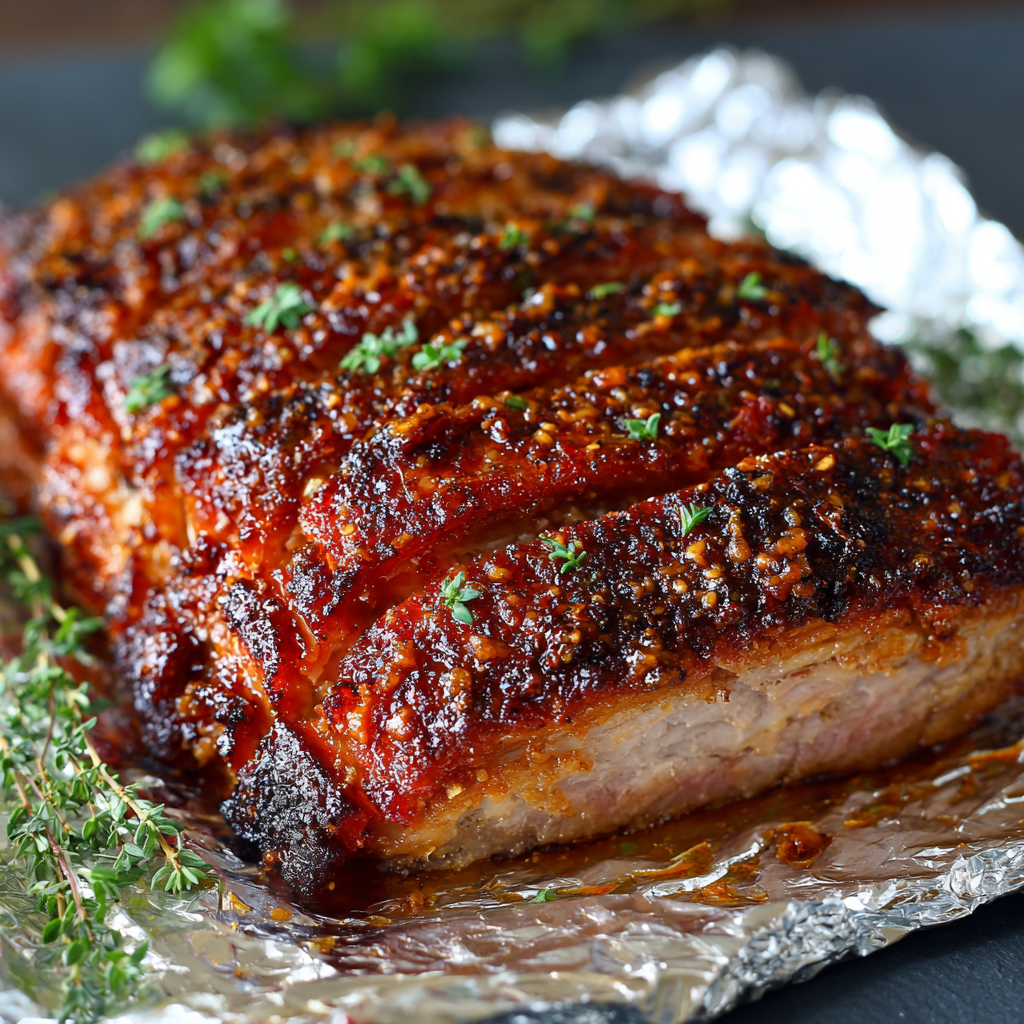
Brown Sugar and Dijon Baked Corned Beef Brisket: Your New Favorite Comfort Food
Hey friends, Beau here from Feastical! Let’s talk about a cut of meat that sometimes feels a little intimidating but is secretly one of the easiest, most forgiving, and downright delicious things you can make in your oven: corned beef brisket.
Now, I know what you might be thinking. “Beau, that’s a St. Paddy’s Day thing, right? Don’t I have to boil it for hours?” Well, I’m here to let you in on a little kitchen secret that will change your corned beef game forever. We’re skipping the boil and heading straight for the oven. Why? Because baking your brisket, all wrapped up in a cozy foil packet, is the ultimate ticket to meat that’s so tender, you could cut it with a spoon.
And to take it from simply “tender” to “absolutely-can’t-wait-for-leftovers” incredible, we’re giving it a simple, two-ingredient glaze that does all the heavy lifting. We’re talking about the dynamic duo of deep, molasses-kissed brown sugar and tangy, complex Dijon mustard. This combo creates a crust that’s sticky, slightly sweet, savory, and packs a flavor punch that seeps right into the beef. It’s a no-fuss, set-it-and-forget-it kind of recipe that delivers a meal worthy of a Sunday supper centerpiece or a killer weeknight dinner that makes you feel like a kitchen superstar. So, preheat that oven, grab your favorite baking sheet, and let’s make some magic happen.
A Messy Apron and a Lesson in Patience
This recipe always takes me back to my grandma’s kitchen. She was the queen of “low and slow” cooking long before it was a trendy food network term. I remember one chilly Sunday, I was about ten years old, buzzing around her like a gnat, desperate for whatever was making the house smell so incredible to be ready now. She had this massive piece of corned beef brisket, and she let me help her mix the glaze. I, of course, got brown sugar all over the floor and Dijon mustard on my shirt. But she just laughed, handed me a clean apron, and said, “Beau, the best things in life—and in the kitchen—take time. You can’t rush a good brisket.”
When she finally pulled that steaming, fragrant packet from the oven and unwrapped it, the sight of that glistening, dark-crusted beef is seared into my memory. That first bite was a revelation—savory, sweet, and so incredibly tender it practically melted on my tongue. It taught me that a little patience yields the most delicious rewards. This recipe is my homage to her, and to the simple, soul-satisfying power of a well-cooked piece of meat.
Gather Your Goods: The Simple Lineup
Here’s the beautiful part: you only need a few key players to create this masterpiece. The brisket itself comes pre-seasoned, so the hard work is already done for you!
- 1 (3-4 pound) Corned Beef Brisket: This is the star of our show! Look for one in the refrigerated meat section of your grocery store, usually around St. Patrick’s Day, but many stores carry it year-round. It typically comes with a little spice packet—we’ll be using that! Chef’s Insight: Don’t worry about rinsing the brisket; that salty brine is part of the flavor. Just pat it dry with paper towels so our glaze can stick.
- 1/3 Cup Brown Sugar: Light or dark works beautifully. Dark brown sugar has a deeper molasses flavor that pairs wonderfully with the savory beef, creating an almost barbecue-like crust. Substitution Tip: If you’re out of brown sugar, you can use coconut sugar for a less refined option, or even pure maple syrup, though the glaze will be a bit runnier.
- 3 Tablespoons Dijon Mustard: This isn’t your average yellow mustard! Dijon has a complex, sharp, and slightly white wine-like tang that cuts through the richness of the beef and sugar. Chef’s Insight: The mustard acts as a glue for the sugar and adds a fantastic savory depth. If you only have whole-grain Dijon, that will add a lovely texture and even more flavor.
- The Spice Packet: That little packet of goodness tucked in with your brisket! It’s usually a mix of peppercorns, coriander, mustard seeds, and bay leaves. We’ll sprinkle this right onto the meat before the glaze for an extra layer of flavor.
Let’s Get Cooking: Your Foolproof Roadmap to Perfection
Ready to make the most tender brisket of your life? Follow these steps, and you really can’t go wrong. I’ve included all my little chef hacks to ensure your success.
- Preheat and Prep. Fire up your oven to a steady 350°F (175°C). While it’s warming, grab a large baking sheet and a long piece of heavy-duty aluminum foil—you want it to be long enough to fully envelop the brisket. Chef’s Hack: Laying the brisket on the foil on the baking sheet now saves you from a messy transfer later!
- Meet Your Brisket. Take your corned beef out of its package and place it flat-side down on the foil. Pat it completely dry with a few paper towels. This is a CRUCIAL step! A dry surface means our glaze will cling on for dear life, creating that incredible crust. If there’s a thick, solid layer of fat on one side, you can trim a little off, but leave a good amount—it’s our built-in basting system that keeps everything juicy.
- Sprinkle the Spices. Open up that little spice packet and sprinkle the contents evenly over the top and sides of the brisket. Gently press the spices into the meat so they adhere.
- Create the Magic Paste. In a small bowl, combine the brown sugar and Dijon mustard. Stir it together until it forms a thick, spreadable paste. It might seem a little stiff at first, but that’s perfect. Chef’s Hack: If your brown sugar is a little hard, pop it in the microwave for 15 seconds with a damp paper towel over it to soften it up.
- Get Hands-On with the Glaze. Using a spoon or your hands (my preferred method—cooking is tactile!), slather that brown sugar and Dijon paste all over the top and sides of the brisket. Cover every nook and cranny you can. Don’t be shy! This is what’s going to create that beautiful, caramelized, flavor-packed bark.
- The Cozy Foil Blanket. Carefully bring the long sides of the foil up over the brisket and fold them down together in a series of tight folds, creating a sealed tent. Then, fold the short ends up and in, creating a completely sealed packet. Chef’s Insight: This sealed environment is the key to tenderness. It traps the steam and the brisket’s own juices, essentially braising it in its own glorious liquid. No dry brisket here!
- Bake to Melt-in-Your-Mouth Tenderness. Slide the baking sheet with the foil packet into your preheated oven. Now for the hardest part: the wait. For a 3-pound brisket, bake for about 2 hours and 30 minutes. If yours is closer to 4 pounds, aim for 3 hours. You’ll know it’s done when your whole house smells amazing and a fork inserted into the meat meets almost no resistance.
- The All-Important Rest. Once the timer dings, carefully remove the baking sheet from the oven. DO NOT OPEN THE FOIL. I know, the temptation is real! But let that brisket rest, still wrapped, for a solid 15-20 minutes. This allows the frantic, hot meat juices to relax and redistribute back throughout the brisket. If you skip this step, all those lovely juices will just run out onto the cutting board, leaving you with drier meat.
- Slice and Serve. Now you can unwrap your masterpiece! Be careful of the steam. Transfer the brisket to a cutting board. Here’s your final pro-tip: always slice against the grain. Look for the lines running through the meat (the “grain”) and cut perpendicular to them. This shortens the muscle fibers, making each bite incredibly tender instead of chewy.
Plating Up Your Masterpiece
Now that you have this gorgeous, glistening brisket, how do you serve it? The possibilities are endless!
For a classic, hearty plate, I love serving thick slices of the brisket alongside buttery, garlicky mashed potatoes and some simple steamed green beans or roasted carrots. The potatoes are the perfect vehicle for soaking up any of those incredible juices left in the foil packet—don’t you dare throw those away! Drizzle that liquid gold right over the top of the sliced beef and potatoes.
Feeling like a traditionalist? You can’t go wrong with the classic Boiled Dinner. About 45 minutes before your brisket is done, you can unwrap it (carefully!), toss in some chopped potatoes, carrots, and wedges of cabbage around it, re-seal the foil, and let everything roast together until the vegetables are tender.
And let’s not forget the king of all leftovers: the Reuben sandwich. Pile thin slices of this brisket on rye bread with Swiss cheese, sauerkraut, and Thousand Island dressing, then grill it up in a buttered pan until golden and crispy. It’s a life-changing experience, I promise you.
Mix It Up! Fun Flavor Twists
Once you’ve mastered the basic formula, have some fun with it! This recipe is a fantastic canvas for your own creativity.
- The Irish Whiskey Glaze: Add a tablespoon of Irish whiskey to the brown sugar and Dijon mix for a wonderfully deep, adult flavor. The alcohol cooks off, leaving just a beautiful, smoky warmth.
- Orange & Clove Zest: Stir the zest of one whole orange and a quarter teaspoon of ground cloves into your glaze. This gives the brisket a wonderfully bright, aromatic, almost holiday-like flavor profile.
- Spicy Maple Kick: Swap the brown sugar for pure maple syrup and add a teaspoon of smoked paprika and a pinch of cayenne pepper. You’ll get a sweet, smoky, and slightly spicy crust that’s absolutely addictive.
- Honey & Whole Grain Mustard: Use honey instead of brown sugar and whole-grain mustard instead of Dijon. You’ll get a lighter, fruitier sweetness and a fantastic pop of texture from the mustard seeds.
- Low-Carb/Keto Version: Simply replace the brown sugar with a brown sugar substitute like Swerve or Lakanto’s Golden Monkfruit Sweetener. The Dijon mustard is already low in carbs, so you’re good to go!
Beau’s Kitchen Chronicles
This recipe has been a staple in my kitchen for years, and it’s evolved in the funniest ways. There was the infamous “Great Brisket Incident of 2018” where I used parchment paper instead of foil (don’t do it—it leaks!) and ended up with a smoky kitchen and a very sad, dried-out brisket. Lesson learned the hard way! I’ve also found that the quality of the corned beef makes a difference. I tend to splurge on a flat-cut brisket from a good butcher when I can—it’s a bit leaner and slices up beautifully for sandwiches. But honestly, even the budget-friendly grocery store versions turn out phenomenal with this method. It’s a truly foolproof recipe.
Your Questions, Answered!
Q: My glaze seemed to melt off and mix with the juices. Did I do something wrong?
A: Not at all! This is totally normal. While some of the glaze will caramelize onto the top of the brisket, a good portion of it will melt into the cooking liquid. This is a *good* thing! It creates an incredibly flavorful au jus that you can spoon over the sliced meat. You’re still getting all the flavor, I promise.
Q: Can I cook this in a slow cooker instead?
A: You bet! This method translates beautifully to a crockpot. Prepare the brisket with the spice packet and glaze just as directed. Place it in the slow cooker (you might need to cut it in half to fit), and add about 1/2 cup of water or beef broth to the bottom. Cook on LOW for 8-9 hours or on HIGH for 5-6 hours. The result will be just as tender!
Q: Why is my corned beef still tough?
A: Tough meat almost always means it needs more time. The beauty of this method is that it’s very forgiving. If your brisket isn’t fork-tender after the initial cook time, just re-seal the foil and pop it back in the oven for another 20-30 minutes. Brisket is a tough cut that becomes tender through long, slow, moist cooking.
Q: How should I store leftovers?
A: Let the brisket cool completely, then store it in an airtight container in the refrigerator for up to 4 days. It makes the most incredible leftovers! You can also freeze it for up to 3 months. Slice it before freezing for easy sandwich-making later.
Brown Sugar and Dijon Baked Corned Beef Brisket (Tender & Juicy)
Description
Brown Sugar and Dijon Baked Corned Beef Brisket
Tender, flavorful corned beef with a sticky-sweet Dijon glaze—perfect for Sunday suppers, sandwiches, or a cozy dinner.
Ingredients
-
1 (3–4 lb) corned beef brisket (flat cut, with spice packet)
-
1/3 cup brown sugar (light or dark)
-
3 tbsp Dijon mustard
-
Spice packet included with brisket
Instructions
1. Prep the Oven & Brisket
-
Preheat oven to 350°F (175°C).
-
Line a large baking sheet with heavy-duty aluminum foil long enough to fully wrap the brisket.
-
Place the brisket flat-side down on the foil. Pat dry thoroughly with paper towels.
2. Season & Glaze
-
Sprinkle the spice packet evenly over the brisket, pressing lightly.
-
In a small bowl, mix brown sugar + Dijon mustard into a thick paste.
-
Spread the paste evenly over the top and sides of the brisket.
3. Wrap & Bake
-
Fold the long sides of the foil up and seal, then fold the short ends to create a fully sealed packet.
-
Place the foil-wrapped brisket on the baking sheet and bake:
-
3 lbs: ~2 hr 30 min
-
4 lbs: ~3 hr
-
-
Rest wrapped 15–20 minutes before slicing.
4. Slice & Serve
-
Slice against the grain for tender pieces.
-
Serve with mashed potatoes, roasted veggies, or in a Reuben sandwich.
Notes
-
Glaze melting: Some glaze mixes with cooking juices—this makes an incredible au jus.
-
Slow cooker option: Place glazed brisket + ½ cup water/broth in slow cooker. Cook LOW 8–9 hr or HIGH 5–6 hr.
-
Tough brisket: Simply wrap and bake 20–30 min longer until fork-tender.
-
Storing leftovers: Refrigerate in airtight container up to 4 days, or freeze up to 3 months (slice before freezing).
Nutrition
- Calories: 420Cal Per Serving
- Sugar: 8g
- Fat: 28g
- Carbohydrates: 10g
- Protein: 28g
Nutritional Information (A Quick Note!)
Hey, I’m all about feel-good food, and that includes being mindful of what we’re eating. This baked corned beef brisket is a rich, satisfying source of protein. A 4-ounce serving provides a great protein boost to keep you full and energized. It’s important to note that corned beef is cured, so it is higher in sodium than a regular beef brisket. The brown sugar adds carbohydrates and natural sugars, creating that delicious crust we all love.
As with any good thing, balance is key! I love serving this with lots of healthy, simple vegetables to create a well-rounded meal. If you’re watching your sodium intake, you can look for a lower-sodium corned beef option at the store, and remember that you don’t need to add any extra salt to this recipe. The estimated values per serving (about 4oz of meat) are: Calories: ~420 | Protein: ~28g | Fat: ~28g | Carbs: ~10g | Sugar: ~8g.
Final Thoughts from My Kitchen to Yours
Friends, this Brown Sugar and Dijon Baked Corned Beef Brisket is more than just a recipe—it’s a reminder that the most satisfying meals often come from the simplest techniques. It’s about taking a humble cut of meat and treating it with a little patience and a lot of love, transforming it into something truly spectacular. It’s the kind of dish that gathers people around the table, that fills your home with an irresistible aroma, and that leaves everyone asking for seconds.
I hope this recipe becomes a trusted favorite in your home, just like it is in mine. It’s proof that you don’t need fancy skills or a million ingredients to create a meal that tastes like a warm hug. So go on, give it a try. And when you do, I’d love to hear