Your New Favorite Bowl of Sunshine: Authentic Korean Bibimbap
Hey friends, Beau here from Feastical! Let’s talk about one of life’s greatest joys: a meal that’s a total party in a bowl. I’m not talking about just throwing leftovers together (though we’ve all been there, and no judgment!). I’m talking about a dish that’s a vibrant, intentional, and beautiful symphony of flavors and textures. A dish that feels like you’re creating edible art, but that’s secretly way easier to pull off than it looks.
That dish, my friends, is Bibimbap (pronounced bee-bim-bap).
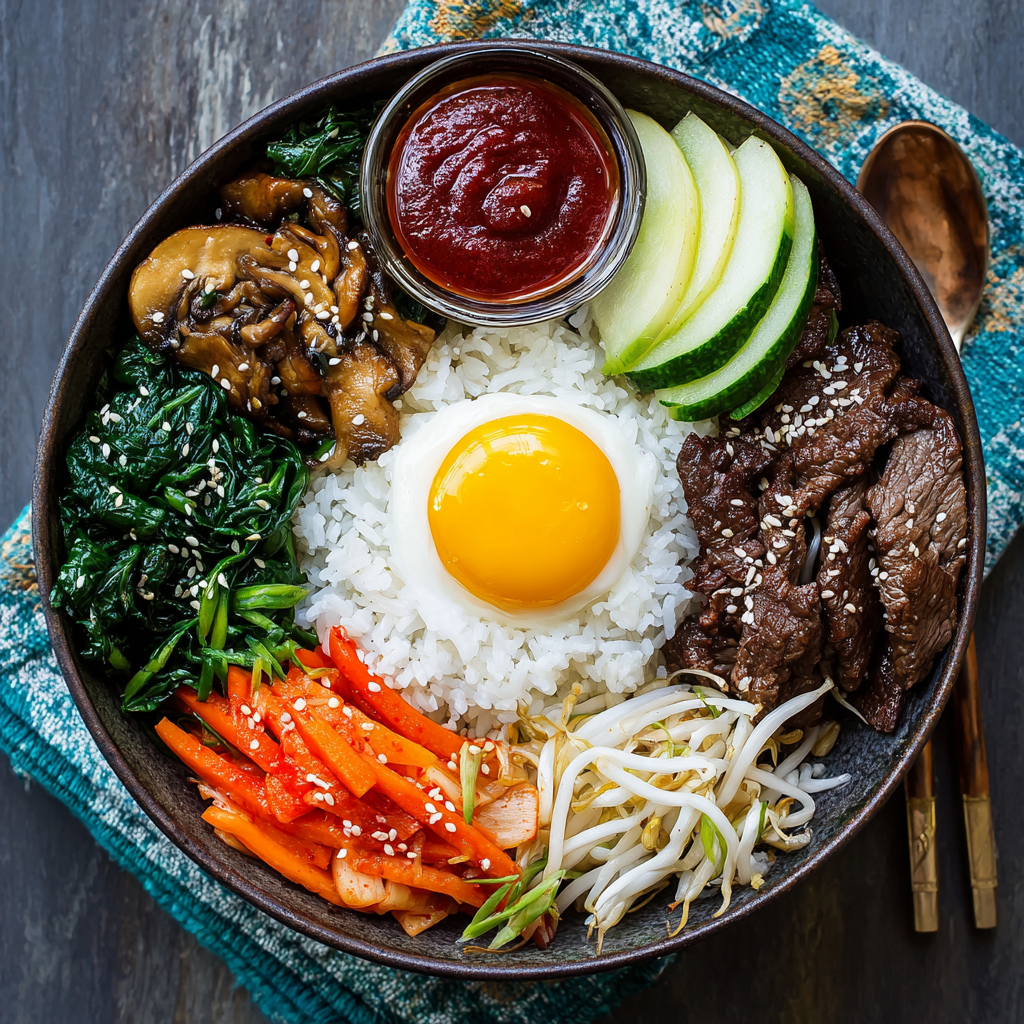
If you’ve never had the pleasure, let me paint you a picture. Imagine a bowl of steaming, fluffy white rice acting as a blank canvas. Arranged on top, like colorful spokes on a wheel, are an array of separately sautéed, seasoned, and perfectly cooked vegetables. In the center sits a nest of savory, sweet, and tender marinated beef, crowned with a glorious sunny-side-up egg, its yolk just waiting to become a rich, golden sauce. The final flourish? A big, bold dollop of spicy-sweet gochujang sauce that ties this entire flavor festival together.
The magic of bibimbap isn’t just in its stunning appearance; it’s in the action. You get to be the maestro of your meal, grabbing your spoon and chopsticks and mixing everything together with gusto. The hot rice, the runny egg yolk, the crisp veggies, and that spicy sauce all become one incredible, harmonious bite. It’s a feel-good food experience that’s nourishing, exciting, and downright fun. So, are you ready to bring this Korean classic into your kitchen? Let’s dig in!
The Seoul-Food Bowl That Stole My Heart
My love affair with bibimbap didn’t start in a fancy restaurant. It started in a tiny, hole-in-the-wall spot in Seoul during a trip I took years ago. I was jet-lagged, a little overwhelmed, and desperately seeking something that felt like a warm hug. A local friend dragged me to this bustling place where the sound of sizzling stone pots and the lively chatter of diners filled the air.
I pointed at a picture on the wall—a bowl that looked like a rainbow had exploded in it. When it arrived, dolsot bibimbap in a scorching hot stone bowl, it was sizzling and crackling. The server gestured for me to mix it fast. As I did, the bottom layer of rice turned into this incredible, crispy, golden crust. That first bite was a revelation. It was warm, comforting, and packed with so many different textures and flavors—it was a complete meal and a total adventure in one bowl. It was the moment I truly understood that food is the universal language of comfort and connection. I’ve been chasing that perfect, crispy-bottomed bite in my own kitchen ever since.
Gathering Your Bibimbap Brigade: The Ingredients
Don’t let the list of ingredients intimidate you! Part of the beauty of bibimbap is its flexibility. Think of this as your blueprint. We’re building layers of flavor, and each component is simple on its own. Here’s what you’ll need, with a little chef-ly insight for each.
For the Beef Marinade:
- 8 oz beef tenderloin, finely sliced: Tenderloin is fantastic because it’s lean and tender, but you can also use ribeye or sirloin for a richer flavor. The key is to slice it against the grain as thinly as you can. Pro-tip: pop it in the freezer for 15-20 minutes first to firm it up, making slicing a breeze!
- 1/4 green apple, grated: This is my secret weapon! The natural enzymes in the apple help tenderize the beef, and it adds a subtle, sweet background note that balances the soy and garlic. It’s a game-changer.
- 3 garlic cloves, minced: Because what’s a good marinade without garlic? It’s the soul of this savory base.
- 1 tbsp soy sauce: For that essential salty, umami depth. Use tamari for a gluten-free version.
- 1 tbsp brown sugar: To caramelize and create a beautiful glaze on the beef as it cooks.
- 2 tsp sesame oil: We’re finishing the marinade with this nutty, aromatic oil. It’s the signature scent of so many Korean dishes.
For the Vibrant Veggies:
- 1 carrot, cut into matchsticks: Adds a gorgeous orange color and a lovely crunch. A julienne peeler is your best friend here!
- 1 zucchini, cut into matchsticks: Brings a gentle, fresh flavor and soft texture once sautéed.
- 1 bunch spinach, blanched and squeezed dry: This gives us our dark, leafy green component. Blanching it quickly in boiling water then shocking it in ice water keeps it vibrant and tender.
- 8 dried shiitake mushrooms, rehydrated and sautéed: Dried shiitakes have an intensely savory, almost meaty flavor that’s far superior to fresh here. Save the soaking liquid for a future soup!
- 2 cups bean sprouts, lightly boiled: They offer a fantastic, clean, and crisp texture. A quick boil (about 2 minutes) is all they need.
For the Legendary Gochujang Sauce:
- 3 tbsp gochujang (Korean chili paste): The star of the show! This fermented chili paste is spicy, sweet, and deeply complex. Find it in the Asian aisle of most grocery stores. There’s no true substitute, but sriracha can work in a pinch.
- 3 tbsp rice vinegar: Cuts through the richness and adds a necessary tang.
- 1 tsp soy sauce: A little extra umami boost for the sauce.
- 3 tsp white sugar: Balances the heat and vinegar. Adjust to your taste!
- 1 garlic clove, finely grated: Because we can never have too much garlic.
- 1 tsp sesame oil: Ties the sauce together with its signature aroma.
To Serve & Assemble:
- Steamed white rice (2 to 3 cups): Short-grain white rice is traditional—it’s nice and sticky. But brown rice or quinoa are great healthy swaps.
- 2 to 4 fried eggs (sunny-side-up preferred): The crown jewel! That runny yolk is non-negotiable for me. It’s the sauce that brings everything to life.
- Sesame seeds, for garnish: For a little toasty, visual flair.
Let’s Build Your Masterpiece: Step-by-Step Instructions
Okay, team! This is where the magic happens. We’re going to tackle this like a well-orchestrated kitchen dance. We’ll work on components one by one, and before you know it, you’ll be ready to assemble your beautiful bowls. Read through all the steps first—it’s the chef’s secret to a stress-free cooking experience.
Step 1: Marinate the Beef. In a medium bowl, combine the thinly sliced beef with the grated apple, minced garlic, soy sauce, brown sugar, and sesame oil. Use your hands to really massage those flavors into the meat. Let it hang out on the counter while you prep your veggies (15-30 minutes). This short marinating time is all it needs! Chef’s Hack: While the beef marinates, this is the perfect time to get your rice cooking and start rehydrating your dried shiitake mushrooms in hot water.
Step 2: Conquer the Vegetables. We cook each veggie separately to honor its unique texture and flavor. Don’t worry, it goes fast!
- Spinach & Bean Sprouts: Bring a pot of water to a boil. Blanch the spinach for 30 seconds, then remove with a slotted spoon and plunge into a bowl of ice water. Squeeze it completely dry, then season with a tiny pinch of salt and a few drops of sesame oil. In the same boiling water, cook the bean sprouts for 1-2 minutes until slightly softened but still crunchy. Drain and season the same way.
- Sautéed Veggies: Heat a drizzle of neutral oil (like vegetable or canola) in a skillet or wok over medium-high heat. Sauté the carrot matchsticks with a pinch of salt for about 1-2 minutes until they’re slightly softened but still snappy. Remove to a plate. Do the same with the zucchini. Finally, squeeze the water from your rehydrated shiitakes (slice them if they’re large), and sauté them until they’re browned and fragrant.
Chef’s Hack: No need to wash the pan between veggies—a little flavor crossover is a good thing! Just give it a quick wipe if there are any burnt bits.
Step 3: Cook the Beef. Using the same skillet (see a theme? Less cleanup!), cook the marinated beef over high heat. Spread it out in a single layer and let it sear without moving it for a minute to get a good caramelization. Then, stir-fry until it’s just cooked through, about 2-3 minutes total. You don’t want to overcook it! Remove it from the pan and set aside.
Step 4: Whisk the Gochujang Sauce. This is the easiest part. In a small bowl, whisk together the gochujang, rice vinegar, soy sauce, sugar, grated garlic, and sesame oil until it’s smooth and glorious. Taste it! Want it sweeter? Add a pinch more sugar. More tang? A splash more vinegar. You are the boss of your bibimbap sauce.
Step 5: Fry Those Perfect Eggs. Last but not least, fry up your eggs sunny-side-up. We want the whites to be fully set and the yolks to be gloriously runny and golden. A little crispy lace around the edges is always a welcome bonus.
Step 6: The Grand Assembly! Place a generous serving of warm, steamed rice into the bottom of each bowl. Artfully arrange your vegetable components and the beef in little piles around the edge of the rice. It’s okay to be fancy here! Place your beautiful fried egg right in the center. Drizzle with the gochujang sauce and sprinkle with sesame seeds.
Step 7: The Most Important Step. Serve immediately, and instruct everyone to dive in with their spoons and chopsticks, mixing everything together thoroughly. This is where the separate elements become one incredible, unified dish. Enjoy the symphony!
How to Serve Your Bibimbap Like a Pro
Presentation is half the fun with bibimbap! I love using wide, shallow bowls so you have plenty of room to create your colorful landscape. The traditional way is to arrange the veggies and beef in distinct sections around the perimeter, almost like the hands of a clock, with the egg as the centerpiece. It’s a real “wow” moment when you bring it to the table.
But hey, if you’re serving a hungry crowd and don’t have time for art, consider a bibimbap bar! Set out a big pot of rice, and all the components—the beef, each vegetable, the sauce, and a plate of fried eggs—in separate bowls. Let everyone build their own perfect combination. It’s interactive, fun, and ensures everyone gets exactly what they want.
For drinks, a crisp, cold lager or a dry Korean beer like Hite pairs wonderfully. If you’re not drinking, an iced barley tea or even sparkling water with a squeeze of lime is incredibly refreshing against the spicy, savory flavors.
Make It Your Own: Delicious Bibimbap Variations
The beauty of this recipe is its adaptability. Don’t be afraid to play with it based on what you have or what you’re craving!
- Go Veggie: Skip the beef and make it a vegetable bibimbap! You can add sautéed bell peppers, sliced onions, or even some crispy baked tofu or tempeh for protein.
- Spicy Pork Swap: Love pork? Swap the beef for thinly sliced pork belly or shoulder and marinate it the same way. It’s a fantastic, rich alternative.
- Dolsot (Stone Pot) Bibimbap: This is the ultimate experience. Heat an oven-safe stone or ceramic bowl in a 450°F oven for 30 minutes. Carefully remove it, coat the inside with a little sesame oil, add your rice, and assemble your bibimbap. The sizzling hot bowl will create an incredible crispy rice crust on the bottom. (Be super careful—the bowl will be extremely hot!)
- Korean Fusion Twist: Love Mexican flavors? Try a version with a base of cilantro-lime rice, use black beans and corn as your veggies, and mix the gochujang with a little lime juice and crema for the sauce. It’s a wild, delicious fusion!
- Lower-Carb Option: For a lighter version, swap the rice for cauliflower rice. Just be sure to sauté it to remove as much moisture as possible so your bowl isn’t soggy.
Beau’s Kitchen Chronicles: A Few Parting Thoughts
This recipe has been a living, evolving thing in my kitchen. The first time I made it, I was so focused on getting the vegetables perfectly straight that I forgot to cook the egg! We had to pause the whole assembly line to fry them up. My friends still give me a hard time about it. The moral of the story? It doesn’t have to be perfect. It just has to be delicious.
Over time, I’ve learned that the grated apple in the marinade was my own happy accident that stuck, and that a little extra sesame oil on the spinach is never a bad thing. Cooking is about making a recipe your own. So take this blueprint, run with it, and create a bibimbap that sings your song.
Bibimbap FAQs: Your Questions, Answered!
Q: My bibimbap sauce is too spicy! How can I tone it down?
A: No worries! The easiest way is to add a little more sugar or even a teaspoon of honey to balance the heat. You can also thin it out with a tablespoon of water or a touch more rice vinegar. Taste as you go!
Q: Can I make the components ahead of time?
A: Absolutely! This is a fantastic meal-prep dish. Cook all your vegetables and the beef, let them cool, and store them in separate airtight containers in the fridge for up to 3 days. The sauce can be made weeks ahead and kept in the fridge. When you’re ready to eat, just reheat the rice and veggies, fry a fresh egg, and assemble!
Q: My rice is getting cold by the time I assemble everything. Help!
A: This is a common one! The key is to have your rice ready and kept warm. Time your veggie cooking so it all finishes around the same time. Use a hot skillet for the beef and eggs right at the end. And remember, the hot rice will slightly warm the room-temp veggies when you mix it all together. For the best experience, use warm bowls—you can pop your empty serving bowls in a warm oven
Authentic Korean Bibimbap Recipe : Beef, Veggies, and Spicy Gochujang Sauce
Description
Your New Favorite Bowl of Sunshine: Korean Bibimbap
A vibrant, nourishing, and totally customizable Korean classic that’s as fun to assemble as it is to eat.
Ingredients
For the Beef Marinade:
-
8 oz beef tenderloin, thinly sliced
-
1/4 green apple, grated
-
3 garlic cloves, minced
-
1 tbsp soy sauce
-
1 tbsp brown sugar
-
2 tsp sesame oil
For the Vegetables:
-
1 carrot, julienned
-
1 zucchini, julienned
-
1 bunch spinach, blanched
-
8 dried shiitake mushrooms, rehydrated & sautéed
-
2 cups bean sprouts, lightly boiled
For the Gochujang Sauce:
-
3 tbsp gochujang (Korean chili paste)
-
3 tbsp rice vinegar
-
1 tsp soy sauce
-
3 tsp sugar
-
1 garlic clove, finely grated
-
1 tsp sesame oil
To Serve:
-
2–3 cups steamed short-grain rice
-
2–4 fried eggs (sunny-side-up preferred)
-
Sesame seeds for garnish
Instructions
-
Marinate the Beef:
Combine beef, apple, garlic, soy sauce, brown sugar, and sesame oil. Let rest 15–30 minutes. -
Prep Vegetables:
-
Blanch spinach 30 sec, shock in ice water, squeeze dry, season with salt & sesame oil.
-
Boil bean sprouts 1–2 min, drain, season.
-
Sauté carrot, zucchini, and mushrooms separately with a pinch of salt.
-
-
Cook the Beef:
Sear marinated beef in a hot skillet 2–3 minutes until just cooked. -
Make the Sauce:
Whisk together gochujang, rice vinegar, soy sauce, sugar, garlic, and sesame oil. Adjust to taste. -
Fry Eggs:
Sunny-side-up with set whites and runny yolks. -
Assemble Bowls:
-
Layer rice in bowls.
-
Arrange vegetables and beef around the rice.
-
Top with a fried egg.
-
Drizzle sauce and sprinkle sesame seeds. Mix before eating.
-
Notes
-
Prep ahead: Cook veggies and beef in advance; assemble fresh at mealtime.
-
Vegetarian option: Swap beef for tofu or extra mushrooms.
-
Crispy rice magic: Use a hot stone pot or cast iron for a golden crust.
-
Mild spice: Adjust gochujang with sugar or a splash of water.
Nutrition
- Calories: 450–500 kcal Per Serving
- Fat: 14 g
- Carbohydrates: 60 g
- Fiber: 6 g
- Protein: : 28 g
Final Thoughts: More Than a Meal, It’s an Experience
So, there you have it. Bibimbap isn’t just a recipe; it’s a invitation to play with your food, to celebrate color and texture, and to create something truly special from a handful of simple, wholesome ingredients. It’s the culinary equivalent of a burst of sunshine in a bowl—nutritious, vibrant, and guaranteed to lift your spirits.
Remember, the goal isn’t perfection. It’s the joy of the process. Whether you arrange your vegetables with artistic precision or simply pile them on with hungry abandon, the final, glorious mix is what it’s all about. That moment when the runny yolk, spicy gochujang, and warm rice become one is a little bit of magic you can create any night of the week.
Don’t be afraid to make it your own. Use this recipe as your trusted blueprint, but listen to your cravings. Swap the veggies, change the protein, or adjust the sauce to your preferred level of fire. This is your kitchen, and your bibimbap is your masterpiece.
Now, it’s your turn. Gather your ingredients, put on some music, and treat yourself to a bowl of pure, unadulterated joy. Your new favorite meal is waiting.