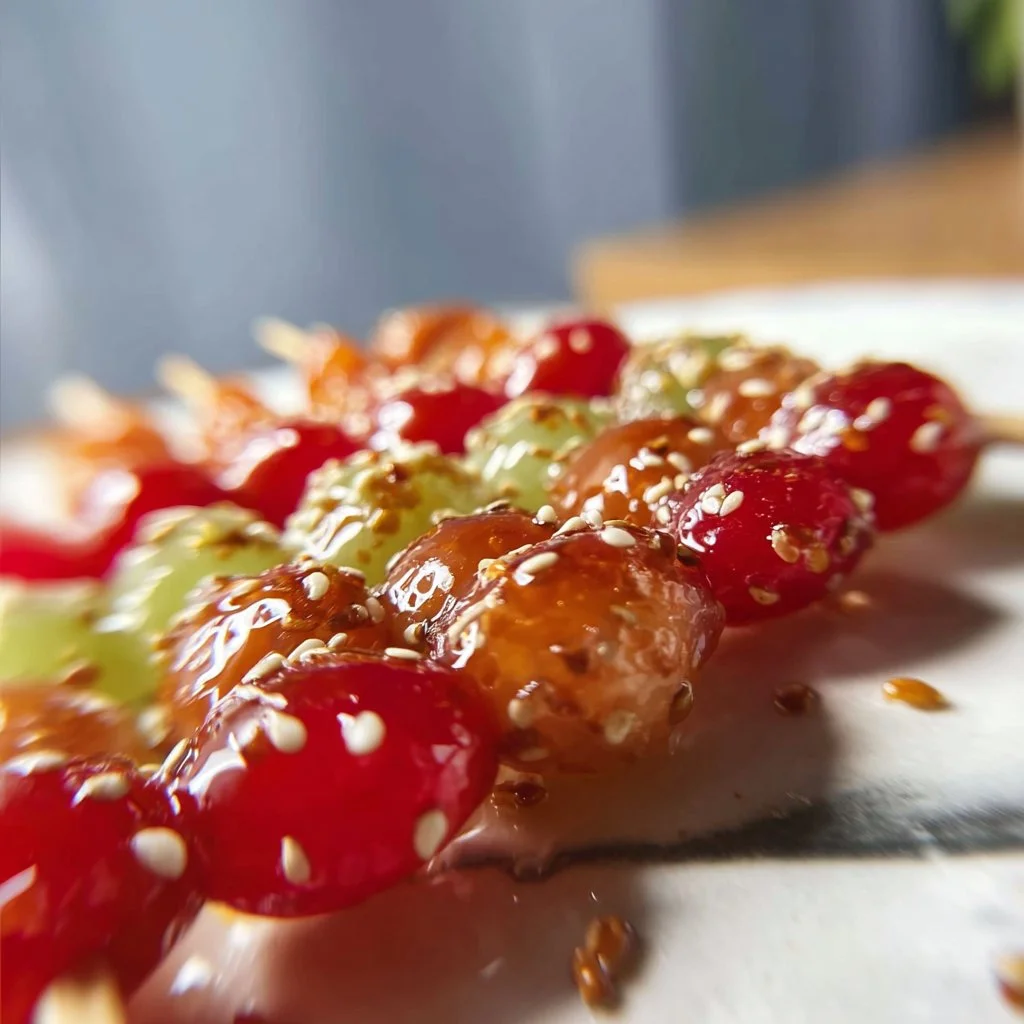
Tanghulu translates to “candied hawthorn” in English.
Tanghulu: A Sweet Dive into Tradition
Hello, fellow food lovers! It’s Beau Collier here, ready to take you on a sweet journey with one of my favorite treats—Tanghulu! If you’ve never heard of this delightful candied hawthorn, buckle up; you’re in for a treat! This traditional Chinese snack is an absolute show-stopper: a crispy, sugary coat that elevates the tartness of fresh hawthorn berries. It’s not just a dish; it’s a celebration of flavor, texture, and nostalgia in every bite.
Tanghulu translates to “candied hawthorn” in English, and is often found lining streets during Chinese festivals and markets. The first time I tasted Tanghulu, it was at a bustling night market in Beijing. Picture this: the air thick with the scent of sizzling street food, laughter bubbling like freshly brewed tea, and the neon glow of bright signs beckoning with promises of deliciousness. I was stumbling through the stalls when something caught my eye—a vendor expertly dipping skewers of vibrant hawthorn berries into a shimmering sugar syrup. Intrigued, I approached, and after a quick exchange of my coins, I took my first bite. The crunch of the shell gave way to the tart juiciness of the fruit inside, and I was instantly transported back to my childhood, where my grandmother would make candy apples on special occasions, coating them in glossy caramel that had just the right amount of bite.
That memory stayed with me, and it inspired me to recreate Tanghulu right in my own kitchen. Once you master this recipe, you can easily transform it into a charming dessert for gatherings or a delightful treat for yourself. Trust me; your tastebuds will be doing a happy dance! So, let’s dive into the world of Tanghulu—your kitchen is about to become a mini sweet shop!
Ingredients
Here’s what you’ll need to whip up your own Tanghulu at home:
-
Hawthorn berries: The stars of the show! These tart little gems are rich in flavor and nutrition. You can find them fresh or dried in most Asian grocery stores. If hawthorn berries aren’t available, try using strawberries, cherries, or even small apples, but note that the final taste will vary.
-
Sugar: The key to that satisfying crunch! Use white granulated sugar for the classic version. For a healthier twist, you can substitute coconut sugar or even a sugar alternative like stevia; however, the taste will change.
-
Water: This acts as a base to dissolve the sugar. It’s essential for achieving the right syrup consistency. Feel free to infuse the water with a splash of lemon juice if you’d like to add a citrus twist to the syrup.
These simple ingredients create a beautifully sweet and tangy treat—no frills, just good, clean fun!
Step-by-Step Instructions
Ready to get cooking? Let’s make some magical Tanghulu! Here’s how you do it:
-
Prep the Hawthorn Berries: Rinse the fresh hawthorn berries under cool water and gently pat them dry with a paper towel. If they have stems, remove those, but leave them on skewers. This not only helps with dipping but also adds some rustic charm!
-
Make the Sugar Syrup: In a small saucepan, combine 1 cup of sugar and ½ cup of water. Place it over medium heat. Stir gently until the sugar dissolves. Here’s a pro tip: Don’t stir once the mixture starts boiling, or it may crystallize! You’re aiming for a syrup consistency, which should take about 5-7 minutes. Keep an eye on it!
-
Prepare Your Skewers: While the syrup is cooking, it’s a great time to get your skewers ready. Using bamboo skewers is perfect; just thread the hawthorn berries on them, leaving a little space between each one.
-
Dip the Berries: Once your sugar syrup is bubbling and has reached that glossy, candy-like appearance (about 300°F if you have a candy thermometer), remove it from the heat. Carefully dip each skewer of hawthorn berries into the syrup, ensuring they are fully coated. Now, here’s my secret: as you pull the skewer out, give it a slight twist to drip off any excess syrup—it prevents a build-up of gooeyness!
-
Cool and Harden: Lay the dipped skewers on a parchment-lined baking sheet. Let them sit for a few minutes until the syrup hardens and the candies get that beautiful, glassy finish.
-
Enjoy!: Your homemade Tanghulu is ready to be devoured! These are best enjoyed fresh, but you can store leftovers (if there are any!) in an airtight container at room temperature for a day or two.
While you’re cooking, don’t hesitate to taste-test that syrup. A little dip with your finger never hurt anyone!
Serving Suggestions
Serving Tanghulu is all about the presentation! Place the skewers upright in a jar or a mug, like a beautiful bouquet of sweetness! Dust some edible glitter on top for that extra sparkle, or serve them alongside a scoop of vanilla ice cream for a delightful contrast of temperatures. You could also create a fun dessert platter with assorted fruits and a few Tanghulu skewers sprinkled around. It’s like a fruit party that everyone will want to join!
For a quirky touch, consider serving them in a decorative candy dish at your next gathering. Not only will they look stunning, but you’ll also become the talk of the town for bringing the feel-good vibes with this nostalgic treat.
Recipe Variations
Feeling adventurous? Here are a few creative twists on the classic Tanghulu recipe:
-
Spiced Tanghulu: Give your syrup a little kick by adding a pinch of cayenne pepper or ground ginger while it’s warming. This will add a delightful warmth that contrasts beautifully with the tart berries.
-
Chocolate-Covered Twist: After coating the berries with syrup, once they’ve hardened, dip them in melted dark chocolate for an indulgent treat!
-
Flavor Infusions: Get imaginative with your sugar syrup! Add a splash of vanilla extract or a few fresh mint leaves during the syrup-making process for a refreshing twist.
-
Nutty Crunch: Once the Tanghulu has cooled slightly, roll them in crushed nuts or sesame seeds before the syrup hardens. This adds texture and a nutty flavor that complements the tangy berries.
-
Mini Tanghulu: Instead of hawthorn, try using other bite-sized fruits like blueberries, grapes, or pineapple chunks for a fun variation that caters to different taste preferences.
The beauty of Tanghulu is its flexibility—get creative, and you’ll discover delicious combinations that are uniquely yours!
Chef’s Notes
Tanghulu holds a special place in my heart as it’s become a fun project to share with friends and family. I remember hosting a gathering where we turned making Tanghulu into a fun event: everyone got to choose their favorite fruits and create their own personalized skewers. The laughter, the sweet aroma, and the beautiful creations made the evening truly memorable.
Over time, I’ve experimented with different fruits and flavors—my favorite being the refreshing mint-infused syrup! Sometimes, I even add a dash of food coloring to make things more festive—perfect for celebrations.
FAQs and Troubleshooting
-
Why did my Tanghulu not harden?
- This often happens if the syrup didn’t reach the right temperature. Make sure you’re hitting that 300°F mark. If you’re unsure, a candy thermometer can be a great investment for your kitchen!
-
Can I use frozen berries instead?
- Fresh berries work best for Tanghulu since frozen ones may release too much moisture while dipping, making it difficult for the syrup to adhere. If you only have frozen berries, consider thawing, draining, and patting them dry before proceeding.
-
What if my sugar crystallizes?
- If this happens, don’t panic! You can reheat the mixture while stirring gently until it melts back down to a syrup. Just be careful not to let it boil for too long again!
-
How long can I store leftover Tanghulu?
- For best results, enjoy them fresh! However, you can store them in an airtight container at room temperature for about 1-2 days. After that, humidity might make the candy lose its crispiness.
Nutritional Info
Tanghulu packs a unique punch with hawthorn berries boasting plenty of health benefits! They’re low in calories and a good source of dietary fiber, vitamin C, and antioxidants. This dish largely consists of sugar, so moderation is key when indulging.
Here’s a quick breakdown per serving (1 skewer of Tanghulu):
- Calories: Approximately 120
- Fat: 0g
- Carbohydrates: 30g
- Sugar: 28g
- Fiber: 4g
Though it may not be the healthiest treat, it certainly brings joy to the palate! And let’s not forget—happiness from a sweet treat feeds the soul, too.
Final Thoughts
There you have it, my fellow food enthusiasts—your ultimate guide to making Tanghulu! It’s more than just a dessert; it’s a journey into nostalgia, creativity, and delight. As you enjoy these delicious candies, I hope you feel inspired to create your own sweet experiences and share them with loved ones.
Whether it’s a cozy evening making Tanghulu in your kitchen, delicious snacks for gatherings, or simply indulging on your own, know that each bite is filled with warmth and joy. So, what are you waiting for? Grab your ingredients, get that sugar bubbling, and start a new tradition of your own! Happy cooking! 🍭✨
Print
Tanghulu
- Total Time: 25 minutes
- Yield: 4 servings 1x
- Diet: Vegetarian
Description
A traditional Chinese sweet treat made with candied hawthorn berries, featuring a crispy, sugary coat that contrasts with the tartness of the fruit.
Ingredients
- 1 cup of sugar
- ½ cup of water
- Hawthorn berries (or strawberries, cherries, or small apples)
Instructions
- Prep the hawthorn berries: Rinse the fresh hawthorn berries under cool water and gently pat them dry. Remove stems if necessary.
- Make the sugar syrup: In a saucepan, combine sugar and water over medium heat. Stir until the sugar dissolves without stirring once it starts boiling.
- Prepare your skewers: Thread hawthorn berries onto bamboo skewers, leaving space between each.
- Dip the berries: Once the syrup reaches a glossy consistency, dip each skewer into the syrup, coating them thoroughly.
- Cool and harden: Lay skewers on a parchment-lined baking sheet and let them sit until the syrup hardens.
- Enjoy: Serve your Tanghulu fresh or store in an airtight container at room temperature for a couple of days.
Notes
Experiment with different fruits or add spices to the syrup for variations. Serve in decorative jars or mugs for a fun presentation.
- Prep Time: 15 minutes
- Cook Time: 10 minutes
- Category: Dessert
- Method: Candying
- Cuisine: Chinese
Nutrition
- Serving Size: 1 skewer
- Calories: 120
- Sugar: 28g
- Sodium: 0mg
- Fat: 0g
- Saturated Fat: 0g
- Unsaturated Fat: 0g
- Trans Fat: 0g
- Carbohydrates: 30g
- Fiber: 4g
- Protein: 0g
- Cholesterol: 0mg
Keywords: Tanghulu, candied hawthorn, Chinese dessert, sweet treat, nostalgia