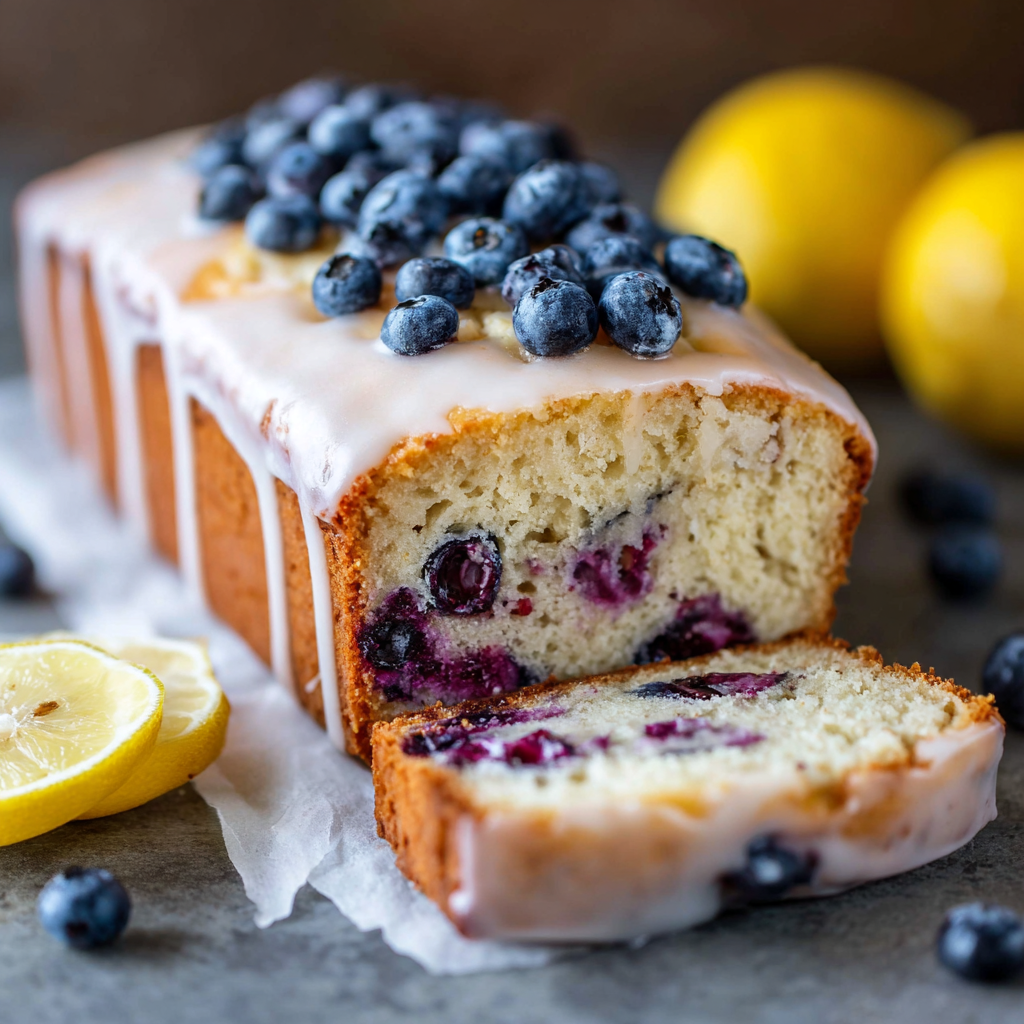
Lemon Blueberry Loaf Cake : Bright, Moist & Bursting with Berries
Lemon Blueberry Loaf Cake: Your Slice of Sunshine
Hey there, friend! Beau here, welcoming you back to my kitchen at Feastical. You know that feeling when you need a little burst of joy? Maybe the sky is a stubborn shade of gray, or the week just feels… longer than usual. That’s exactly when I head to my countertop, pull out my favorite mixing bowl, and reach for a bright yellow lemon. Because happiness, I’ve found, often starts with a little zest.
Today, I’m beyond excited to share with you my absolute go-to for baking bliss: this Lemon Blueberry Loaf Cake. This isn’t just a cake; it’s a mood-lifter, a brunch superstar, and a “wow, you made that?!” showstopper all wrapped up in one beautifully simple loaf. Imagine the softest, most tender crumb, perfumed with real lemon and studded with pockets of juicy, jammy blueberries. Then, we crown it with a whisper-thin, zesty lemon glaze that seeps into every nook and cranny. It’s sunshine in cake form, I tell you.
Whether you’re a seasoned baker or someone who’s still on first-name terms with that mysterious spatula in the back of the drawer, this recipe is for you. We’re keeping it simple, soulful, and seriously satisfying. So, tie on your apron, preheat that oven, and let’s bake something that tastes like a warm, sweet hug.
Why This Cake? A Little Kitchen Memory
This recipe takes me right back to my grandma’s linoleum-floored kitchen. She wasn’t a fancy baker, but she was a practical one. One rainy summer afternoon, with a pint of blueberries threatening to go soft and a lemon rolling around the fruit bowl, she decided to “whip something up.”
I was her official taste-tester (a prestigious title for a seven-year-old). I remember watching her rub the lemon zest into the sugar with her fingers, the citrus oil scent exploding into the air. “That’s where the real flavor lives, Beau,” she’d say. When she folded in those blueberries, they looked like little violet marbles in the pale yellow batter. The wait for it to bake felt endless, but the moment that warm, lemony steam hit my face when she turned the loaf out… magic. It was humble, it was imperfectly gorgeous, and it was made with what we had. That’s the spirit I bring to every recipe here at Feastical—and it’s the heart of this beautiful loaf.
Gathering Your Sunshine: Ingredients & Insights
Here’s what you’ll need to create this masterpiece. I’ve added my little chef notes next to each one—because knowing the “why” makes you a more confident cook!
- 1½ cups all-purpose flour: The trusty backbone of our loaf. It gives structure without being tough. For a slightly lighter crumb, you can swap in ½ cup cake flour, but all-purpose works perfectly.
- 1 teaspoon baking powder: Our leavening agent! This is what gives the cake its gentle rise and soft texture. Make sure yours is fresh (it should fizz vigorously if you sprinkle a bit in hot water).
- ½ teaspoon salt: Never skip this! Salt is the flavor enhancer that makes the lemon sing and balances the sweetness. It’s the secret handshake of good baking.
- ½ cup (1 stick) unsalted butter, softened: Hello, richness and moisture! Using unsalted lets you control the salt level. “Softened” means it should give easily to a gentle press but not be oily or melted. Pro tip: if you forgot to take it out, cube it and let it sit for 15-20 minutes.
- ¾ cup granulated sugar: Sweetness and tenderness. We’re not making an overly sweet dessert here—this amount lets the fruit shine.
- 2 large eggs, at room temperature: They bind the batter and add moisture. Room temp eggs blend much more smoothly into the creamed butter and sugar, giving you a better texture.
- 1 tablespoon lemon zest: This is the GOLD. The zest holds the potent, fragrant lemon oils. Use a fine grater or microplane and only get the bright yellow skin, not the bitter white pith underneath.
- 2 tablespoons fresh lemon juice: The tart, punchy counterpart to the sweet zest. Always, always use fresh juice. The bottled stuff just can’t compare in flavor.
- ½ cup milk (any kind), at room temperature: Moisture and tenderness again. Whole milk is luxurious, but 2%, almond, or oat milk work great too.
- 1 cup fresh or frozen blueberries: The jewel of the loaf! If using frozen, do not thaw—they’ll bleed less. The key move: toss them in 1 teaspoon of the measured flour before folding in. This little hack helps suspend them in the batter so they don’t all sink to the bottom.
For the Glaze (Optional, but Highly Recommended):
- ½ cup powdered sugar: Sift it if it’s lumpy for a super-smooth glaze.
- 1–2 tablespoons fresh lemon juice: Start with one, then add the second by teaspoons until you get a thick but pourable consistency.
Let’s Get Baking: Step-by-Step Sunshine
Ready to make some magic? Follow these steps, and read my little commentary along the way—it’s like I’m right there with you, handing you the whisk!
- Prep & Preheat: Start by preheating your oven to 350°F (175°C). This is the sweet spot for even baking. Grease a standard 9×5 inch loaf pan thoroughly with butter or non-stick spray, then line it with a strip of parchment paper that overhangs the long sides. This “sling” will be your best friend when it’s time to lift the beautiful, fragile loaf out. No more flipping and hoping!
- The Dry Team: In a medium bowl, whisk together your flour, baking powder, and salt. Give it a good 30-second whisk. This isn’t just mixing; it’s aerating the flour and ensuring the baking powder is evenly distributed for a uniform rise. Set this bowl aside—the dry team is ready.
- Creaming is Key: In a large mixing bowl, beat the softened butter and granulated sugar together on medium-high speed for a full 2-3 minutes. We’re not just combining them; we’re “creaming.” This process traps tiny air bubbles in the butter, which expand in the oven and give us that lovely, light crumb. It should turn pale, fluffy, and almost look like a soft, yellow cloud.
- Egg-cellent Addition: With the mixer on medium, add the eggs one at a time, beating well after each addition. Let the first egg fully disappear into the butter-sugar mix before adding the second. This prevents the batter from curdling or splitting. Now, beat in the lemon zest and fresh lemon juice. The smell right now is your first reward.
- The Gentle Merge: Here’s where we switch to a gentle hand. With the mixer on low, add about one-third of the dry ingredients and mix until just combined. Then pour in half of the milk and mix. Repeat with another third of the dry, the rest of the milk, and finish with the last of the dry ingredients. Mix until you no longer see streaks of flour, but stop immediately after. Overmixing at this stage develops gluten and leads to a tough, dense loaf. A few tiny lumps are perfectly fine!
- Berry Ballet: Take that cup of blueberries you’ve tossed in a teaspoon of flour. Using a flexible spatula, gently fold them into the batter. Use a broad, sweeping motion from the bottom of the bowl up and over. We want to distribute them without crushing them or overworking the batter.
- Into the Oven: Scrape the beautiful, speckled batter into your prepared loaf pan. Smooth the top gently. Give the pan a light tap on the counter to settle any big air pockets. Slide it onto the middle rack of your preheated oven.
- The Bake & The Test: Bake for 50-60 minutes. Start checking at 50 minutes. The true test? Insert a toothpick or a thin skewer into the very center of the loaf. It should come out with a few moist crumbs clinging to it, but not wet batter. If it’s clean, it’s done! The top will be a gorgeous golden brown, and the cake will have pulled away slightly from the sides of the pan.
- The Crucial Cool: Let the loaf cool in the pan on a wire rack for at least 30 minutes. I know it’s hard to wait! But this allows the structure to set. Then, use those parchment paper slings to carefully lift it out onto the rack to cool completely before glazing. A warm cake will drink up the glaze too quickly and make a mess.
- The Glorious Glaze: Whisk your powdered sugar and lemon juice together in a small bowl. Start with 1 tablespoon of juice and add more by the teaspoon until it’s thick but pourable—like a slow-moving lava. Drizzle it artistically (or enthusiastically!) over the completely cooled loaf. Let it set for 10-15 minutes before slicing.
Serving Your Slice of Sunshine
Now for the best part! This loaf is incredibly versatile.
For the ultimate afternoon treat, slice a thick piece, pour yourself a cup of Earl Grey tea or a strong coffee, and just savor. The contrast of the tart-sweet cake with a bitter beverage is *chef’s kiss*.
At brunch, it’s a superstar. Serve it alongside a frittata and some crispy bacon. It feels fancy without any fuss.
Want to dress it up for dessert? Warm a slice slightly and add a dollop of softly whipped cream or a scoop of vanilla bean ice cream. The warmth will make the blueberries extra jammy and the cold cream is pure heaven.
And honestly? It’s pretty darn perfect all on its own, eaten straight from your hand as you stand by the kitchen counter. No judgment here.
Make It Your Own: Fun Flavor Twists
Once you’ve mastered the classic, play around! Here are a few of my favorite spins:
- Lemon Blueberry Poppy Seed: Add 2 tablespoons of poppy seeds to the dry ingredients. They add a wonderful, subtle crunch and a beautiful visual speckle.
- Gluten-Free Sunshine: Swap the all-purpose flour for a 1:1 gluten-free baking blend (I like the ones with xanthan gum already included). The result is just as tender and delicious.
- Mixed Berry Bonanza: Use a mix of blueberries, raspberries, and blackberries for a more complex berry flavor. If using raspberries, be extra gentle when folding—they’re delicate!
- Cream Cheese Swirl: Before baking, drop small spoonfuls of a mixture of 4 oz softened cream cheese, ¼ cup sugar, and 1 egg yolk over the batter. Use a knife to swirl it gently for a gorgeous marbled effect and a tangy surprise.
- Lavender Infused: Add 1 teaspoon of culinary-grade dried lavender buds to the sugar before creaming it with the butter. Rub them together with your fingers to release the oils. It adds a stunning, floral note that pairs beautifully with lemon.
Beau’s Kitchen Notes & Stories
This recipe has been my reliable friend for years, and it’s evolved in my kitchen. I once, in a distracted moment, accidentally used a whole cup of lemon juice instead of two tablespoons. The result was… alarmingly tart, but weirdly refreshing! We dubbed it the “Pucker-Up Loaf” and ate it anyway. Lesson learned: measure your liquids.
The biggest game-changer for me was the flour-toss trick with the berries. I used to have a persistent “blueberry sinkhole” at the bottom of my loaves. A very wise baker friend shared that tip, and it fixed everything. It’s the little things!
This cake also freezes beautifully. Wrap the cooled, unglazed loaf tightly in plastic wrap and then foil. It’ll keep for up to 3 months. Thaw overnight on the counter, then glaze and serve. Perfect for having a slice of sunshine ready whenever you need it.
Your Questions, Answered
Q: My blueberries all sank to the bottom! What happened?
A: The most common culprit is not tossing them in that teaspoon of flour, or using berries that are too wet/thawed. The flour coating gives them a bit of “grip” in the batter. Also, make sure your batter isn’t too thin—if it seems runny, you might have under-measured the flour.
Q: Can I use frozen blueberries without thawing?
A: Absolutely, and it’s often better! Do not thaw them. Toss them straight from the freezer in the flour. This helps prevent them from bleeding too much color into the batter and turning the whole loaf purple.
Q: The top of my loaf is browning too fast, but the center isn’t done.
A: This happens! Tent a loose piece of aluminum foil over the top of the loaf pan for the last 15-20 minutes of baking. This will shield it from direct heat and allow the center to cook through without the top burning.
Q: My glaze is too runny/thick. How do I fix it?
A> Too runny? Whisk in more sifted powdered sugar, a tablespoon at a time. Too thick? Add more lemon juice just a few drops at a time until it loosens up. You’re aiming for a consistency that slowly ribbons off the whisk.

Lemon Blueberry Loaf Cake : Bright, Moist & Bursting with Berries
Description
Lemon Blueberry Loaf Cake
Moist, tender, bright, and bursting with blueberries
Ingredients
Loaf Cake
-
1½ cups all-purpose flour
-
1 tsp baking powder
-
½ tsp salt
-
½ cup unsalted butter, softened
-
¾ cup granulated sugar
-
2 large eggs, room temperature
-
1 tbsp lemon zest
-
2 tbsp fresh lemon juice
-
½ cup milk (any kind), room temperature
-
1 cup blueberries (fresh or frozen, do not thaw)
-
1 tsp flour (for tossing blueberries)
Lemon Glaze (Optional)
-
½ cup powdered sugar
-
1–2 tbsp fresh lemon juice
Instructions
-
Preheat oven to 350°F (175°C). Grease a 9×5-inch loaf pan and line with parchment paper.
-
Mix dry ingredients
In a bowl, whisk together flour, baking powder, and salt. Set aside. -
Cream butter & sugar
In a large bowl, beat butter and sugar until light and fluffy, about 2–3 minutes. -
Add eggs & lemon
Beat in eggs one at a time. Mix in lemon zest and lemon juice. -
Combine batter
Add dry ingredients in three additions, alternating with milk, mixing just until combined. Do not overmix. -
Add blueberries
Toss blueberries with 1 tsp flour, then gently fold into the batter. -
Bake
Pour batter into prepared pan. Bake for 50–60 minutes, until a toothpick inserted in the center comes out with a few moist crumbs. -
Cool
Let cool in pan for 30 minutes, then lift out and cool completely on a wire rack. -
Glaze (optional)
Whisk powdered sugar with lemon juice until thick but pourable. Drizzle over cooled loaf.
Notes
-
Tossing blueberries in flour helps prevent sinking
-
Tent loosely with foil if the top browns too fast
-
Do not overmix for a tender crumb
-
Frozen blueberries work best straight from the freezer
Nutritional Info (A Quick Note!)
Hey, we’re all about feel-good food here, and that includes feeling good about what we eat. This info is an estimate per slice (based on 10 slices) to help you make informed choices. Remember, baking at home means
Final Thoughts: Your Slice of Sunshine Awaits
And there you have it—the simple, joyful magic of a Lemon Blueberry Loaf Cake. It’s more than just a recipe; it’s a reminder that some of life’s brightest moments are stirred, baked, and shared with love right in our own kitchens.
Whether you bake this loaf to brighten a cloudy day, to share with someone special, or simply to fill your home with the irresistible scent of lemon and blueberries, remember this: you’re not just baking a cake—you’re creating a memory. Each slice holds the warmth of hands that made it, the care you poured in, and the simple, beautiful truth that good things often come from humble ingredients and a willing heart.
So go ahead, slice into that golden loaf. Let the glaze crackle, the berries burst, and the tender crumb melt on your tongue. You’ve made sunshine. And you deserve every single bite.
Thank you for baking with me today. Until next time, keep your oven warm and your heart even warmer.

Bakery-Style Lemon Poppy Seed Muffins : Bright, Fluffy & Irresistible
Sunshine in a Muffin Tin: Your New Morning Best Friend
Hey there, friend! Beau here, welcoming you back to my kitchen. Is it just me, or does the world sometimes need a little extra sparkle? A bit of brightness to cut through the gray? That’s exactly the magic I find in a perfect Lemon Poppy Seed Muffin. We’re not talking about the dry, sad cousins you sometimes find languishing on a coffee shop counter. Oh no. We’re crafting Bakery-Style Lemon Poppy Seed Muffins – the kind with a domed, golden top, a tender, cloud-like crumb that’s bursting with sunny citrus flavor, and that delightful little *pop* of texture from the poppy seeds.
This recipe is my go-to for turning a regular Tuesday into something special. It’s the edible equivalent of throwing open the curtains on a spring morning. They’re incredibly simple to make, but with a few of my favorite chef-approved hacks, they look and taste like they came from the finest bakery case. Whether you’re whipping them up for a weekend brunch crowd, packing them in lunchboxes as a sweet surprise, or simply treating yourself with a warm muffin and a cup of coffee, this recipe is about to become a staple. So, grab your favorite mixing bowl and let’s bake some happiness together!
More Than a Muffin: A Zest-Filled Memory
This recipe always takes me back to my grandma’s sun-drenched kitchen. She wasn’t a fancy baker, but she had a way of making the simplest things feel like an event. One particularly grumpy, drizzly Saturday when I was about ten, I trailed in after little league, feeling sorry for myself after a strikeout. Without a word, she handed me a lemon and a old, bright yellow zester. “Make yourself useful,” she said with a wink. “We’re making sunshine.”
As I grated, filling the air with that incredible, eye-wateringly bright aroma, my mood started to lift. She taught me how to juice the lemon without getting seeds in the bowl, and let me stir the poppy seeds into the batter, calling them “little flavor specks.” The wait while they baked was agony, but the reward… that first warm, sticky bite of a muffin fresh from the oven, with its sweet-tart glaze? It was a hug in food form. It taught me that cooking isn’t just about feeding people; it’s about changing the weather in a room. That’s the spirit I want to bring to your kitchen today.
Gathering Your Sunshine Squad: Ingredients & Insights
Great baking starts with great ingredients, and understanding why we use them is half the fun. Here’s your lineup, with my personal notes to guide you.
- 2 cups all-purpose flour: The trusty foundation. For a slightly lighter crumb, you can swap one cup for cake flour.
- 1 tbsp poppy seeds: These aren’t just for looks! They add a wonderful, subtle nutty crunch. Pro-tip: give them a quick toast in a dry pan for 60 seconds to really wake up their flavor.
- 1 tbsp baking powder + 1/2 tsp baking soda: Our dynamic leavening duo! The powder gives the initial lift for that beautiful dome, and the soda reacts with the yogurt/lemon juice for a tender texture.
- 1/2 tsp salt: The flavor enhancer. Never skip it! It makes the lemon and sweetness truly sing.
- 1/2 cup unsalted butter, melted: Richness and moisture. Using unsalted lets you control the salt level. Let it cool slightly before adding so it doesn’t cook the eggs!
- 2/3 cup granulated sugar: The perfect amount of sweetness to balance the tart lemon. It also helps create a lovely golden crust.
- 2 large eggs: Room temperature is best! They incorporate more easily, leading to a smoother, more uniform batter.
- 1/2 cup Greek yogurt or sour cream: The secret weapon for supremely moist muffins! The tang also complements the lemon perfectly. I prefer full-fat for the best texture, but low-fat works in a pinch.
- 1/2 cup milk: Whole milk adds richness, but any milk you have will do. Even a plant-based alternative like almond or oat milk works beautifully.
- 2 tbsp lemon zest (about 2 lemons): This is where the big, bright lemon flavor lives! Use a microplane if you have one—it gets the zest fine without the bitter white pith.
- 3 tbsp fresh lemon juice: Please, for the love of all things good, use fresh lemons! The bottled stuff just doesn’t compare. Roll your lemons on the counter firmly before cutting to get more juice.
- 1 tsp vanilla extract: The background singer that makes the lead vocalist (lemon) sound even better. It adds a layer of warm, comforting flavor.
For the Optional (but highly recommended) Lemon Glaze:
- 1/2 cup powdered sugar: Sift it if it’s lumpy for the silkiest glaze.
- 1–2 tbsp fresh lemon juice: Start with one tablespoon and add the second slowly until you reach a thick but drizzle-able consistency.
Let’s Get Baking: Step-by-Step to Muffin Heaven
Ready to see the magic happen? Follow these steps, and you’ll be a muffin maestro in no time. I’ve packed each one with my favorite kitchen hacks.
Step 1: Preheat & Prep. Crank that oven to 375°F (190°C). This slightly higher heat is our first trick to getting that gorgeous, sky-high muffin top. Line a 12-cup muffin tin with paper liners or grease it generously. I’m a liner guy – less mess, easy cleanup, and they look cute!
Step 2: The Dry Team. In a large bowl, grab your whisk and thoroughly combine the flour, poppy seeds, baking powder, baking soda, and salt. Whisking here does two things: it mixes everything evenly, and it aerates the flour a bit, contributing to a lighter muffin. See? We’re building texture already.
Step 3: The Wet Dream Team. In a medium bowl, combine the slightly cooled melted butter and sugar. Whisk it for a good 30 seconds – you’re not just mixing, you’re helping the sugar start to dissolve. Add the eggs one at a time, whisking well after each. Now, stir in the Greek yogurt, milk, that glorious lemon zest, fresh lemon juice, and vanilla. It might look a little curdled at this point—that’s totally okay! The acid from the yogurt and lemon is just saying hello to the other ingredients.
Step 4: The Grand Union (The Most Important Step!). Pour the wet ingredients into the dry. Now, put down that electric mixer. Pick up a sturdy spatula or a wooden spoon. Gently fold the batter together. Your mission is to just combine them—no dry streaks of flour should remain, but a few lumps are perfectly fine, even welcome! Overmixing is the #1 enemy of tender muffins. It develops the gluten in the flour and leads to a tough, tunneled texture. We want gentle, fluffy clouds, not bread!
Step 5: Portion with Love. Divide the batter evenly among the 12 muffin cups. I like to use a large cookie scoop or an ice cream scoop for less mess and even portions. For that true bakery-style dome, fill the cups all the way to the top. Don’t be shy!
Step 6: Bake to Golden Perfection. Slide the tin into your preheated oven. Bake for 18-22 minutes. Start checking at 18 minutes—they’re done when the tops are springy to the touch and a toothpick inserted into the center of a muffin comes out clean or with just a few moist crumbs. That hot oven will give you a beautiful, cracked, golden top.
Step 7: Cool & Drizzle. Let the muffins cool in the pan for 5 minutes, then transfer them to a wire rack. This stops the cooking and prevents soggy bottoms. While they’re still a bit warm, whisk together your powdered sugar and lemon juice for the glaze and drizzle it artfully over the tops. The warm muffins will soak in just a little, creating an amazing flavor layer.
How to Serve These Citrus Gems
Presentation is part of the joy! Let these muffins cool until just warm or reach room temperature before glazing for cleaner lines (though I love a messy, drippy glaze, too!). Pile them high on a rustic wooden board or a vintage cake stand for serious brunch appeal. Of course, they’re equally perfect nestled in a napkin, enjoyed straight from your hand.
The ultimate pairing? A strong cup of black coffee or a pot of Earl Grey tea. The bitterness plays off the sweet-tart muffin brilliantly. For a real treat, serve a warm muffin with a dollop of lightly sweetened whipped cream or a side of fresh berries. They’re fantastic for breakfast, a mid-afternoon pick-me-up, or as a light dessert. Honestly, I’ve been known to enjoy one for all three in the same day… no judgment here!
Make It Your Own: Delicious Twists & Swaps
Once you’ve mastered the classic, have fun playing with it! Here are a few of my favorite riffs:
- Blueberry Lemon Poppy Seed: Gently fold 1 cup of fresh or frozen blueberries (don’t thaw) into the batter at the very end. A classic combo that never fails.
- Lavender Infused: Add 1 teaspoon of culinary dried lavender to the dry ingredients. It adds a beautiful, floral note that’s incredibly elegant.
- Gluten-Free & Dairy-Free Friendly: Use a 1:1 gluten-free flour blend. Swap the butter for melted coconut oil, use dairy-free yogurt, and your favorite non-dairy milk. It works like a charm!
- Cream Cheese Swirl: Before baking, drop small spoonfuls of sweetened cream cheese (mix 4 oz cream cheese with 2 tbsp sugar) onto the batter in each cup and use a toothpick to swirl it in gently.
- Orange Poppy Seed: Swap the lemon zest and juice for orange! Use the juice of one orange (about 1/4 cup) and reduce the milk by a tablespoon or two to compensate for the extra liquid.
Beau’s Kitchen Notes & Stories
This recipe has been my little laboratory project for years. The biggest game-changer was switching from all baking powder to the combination of powder and soda with an acidic ingredient (yogurt/lemon). It was like someone turned on the light—the texture went from good to “OH WOW.”
A funny fail I had early on? I once, in a pre-coffee haze, used sesame seeds instead of poppy seeds. Let me tell you, “Lemon Sesame Muffins” are… not recommended. The look on my friend’s face when he bit into one was priceless. Now I keep my jars very clearly labeled! The moral: even mistakes make for good stories and great learning. Don’t be afraid to experiment (with the right ingredients!).
Your Questions, Answered!
Q: My muffins didn’t dome! They’re flat. What happened?
A: The usual suspects: old baking powder/soda (check expiration dates!), under-filling the cups (be bold, fill to the top!), or an oven that wasn’t hot enough. That initial blast of high heat is crucial for the rise.
Q: Why is my batter so thick/lumpy?
A>Don’t worry! This is a thick batter by design—that’s what helps support the dome and poppy seeds. The lumps will mostly bake out. Just ensure there are no dry flour patches, and you’re golden.
Q: Can I make these ahead of time?
A>Absolutely! Bake them, let them cool completely, and store in an airtight container at room temp for 2 days, or freeze for up to 3 months. I often freeze them unglazed, then add the glaze after thawing.
Q: My muffins are dry. How can I prevent that?
A>The key is not overbaking. Check early! Also, make sure you’re measuring your flour correctly (spoon it into the cup and level it off, don’t scoop). And don’t skip the yogurt/sour cream—it’s our moisture guardian.

Bakery-Style Lemon Poppy Seed Muffins : Bright, Fluffy & Irresistible
Description
Bakery-Style Lemon Poppy Seed Muffins
Soft, fluffy, bright, and bursting with citrus flavor
Ingredients
Muffins
-
2 cups all-purpose flour
-
1 tbsp poppy seeds
-
1 tbsp baking powder
-
½ tsp baking soda
-
½ tsp salt
-
½ cup unsalted butter, melted and slightly cooled
-
⅔ cup granulated sugar
-
2 large eggs, room temperature
-
½ cup Greek yogurt or sour cream
-
½ cup milk
-
2 tbsp lemon zest (about 2 lemons)
-
3 tbsp fresh lemon juice
-
1 tsp vanilla extract
Optional Lemon Glaze
-
½ cup powdered sugar
-
1–2 tbsp fresh lemon juice
Instructions
-
Preheat oven to 375°F (190°C). Line a 12-cup muffin tin with liners or grease well.
-
Mix dry ingredients
In a large bowl, whisk together flour, poppy seeds, baking powder, baking soda, and salt. -
Mix wet ingredients
In a separate bowl, whisk melted butter and sugar until combined. Add eggs one at a time. Stir in yogurt, milk, lemon zest, lemon juice, and vanilla. -
Combine
Pour wet ingredients into dry ingredients. Gently fold just until combined. Do not overmix—small lumps are okay. -
Fill muffin cups
Divide batter evenly, filling each cup nearly to the top for bakery-style domes. -
Bake
Bake for 18–22 minutes, or until tops are lightly golden and a toothpick inserted comes out clean. -
Cool & glaze (optional)
Cool muffins for 5 minutes in the pan, then transfer to a wire rack. Mix glaze ingredients and drizzle over slightly warm muffins.
Notes
-
High heat = tall tops: Baking at 375°F helps create domed muffins
-
Don’t overmix: Overworking the batter leads to dense muffins
-
Use fresh lemons: Zest provides the strongest lemon flavor
-
Thick batter is normal: This helps support the poppy seeds and rise
Nutritional Information (Per Muffin, without glaze)
While we bake for joy and flavor, it’s always good to know what’s in our food. Here’s the breakdown for one delicious muffin (based on standard ingredients, calculated with Greek yogurt):
- Calories: ~210
- Protein: 4g
- Carbohydrates: 26g
- Fat: 10g (Saturated Fat: 6g)
- Fiber: 1g
- Sugars: 12g
Remember, these are approximate. Using different brands or substitutions will alter the values. The glaze adds about 25-30 calories and 7g of sugar per muffin. Enjoy as part of a balanced day!
Final Thoughts: Share the Sunshine!
And there you have it, friends—my heart and soul in muffin form. This recipe is more than just a list of steps; it’s an invitation to slow down, to enjoy the simple process of creating something beautiful and delicious with your own hands. The scent of lemon zest and baking muffins has the power to turn any kitchen into the happiest place in the house.
I truly hope you love making (and devouring!) these Bakery-Style Lemon Poppy Seed Muffins as much as I do. When you make them, I’d be over the moon if you tagged @Feastical on social media so I can see your beautiful creations. Now, go preheat that oven and make some sunshine. Happy baking!
With love and a spatula,
Beau
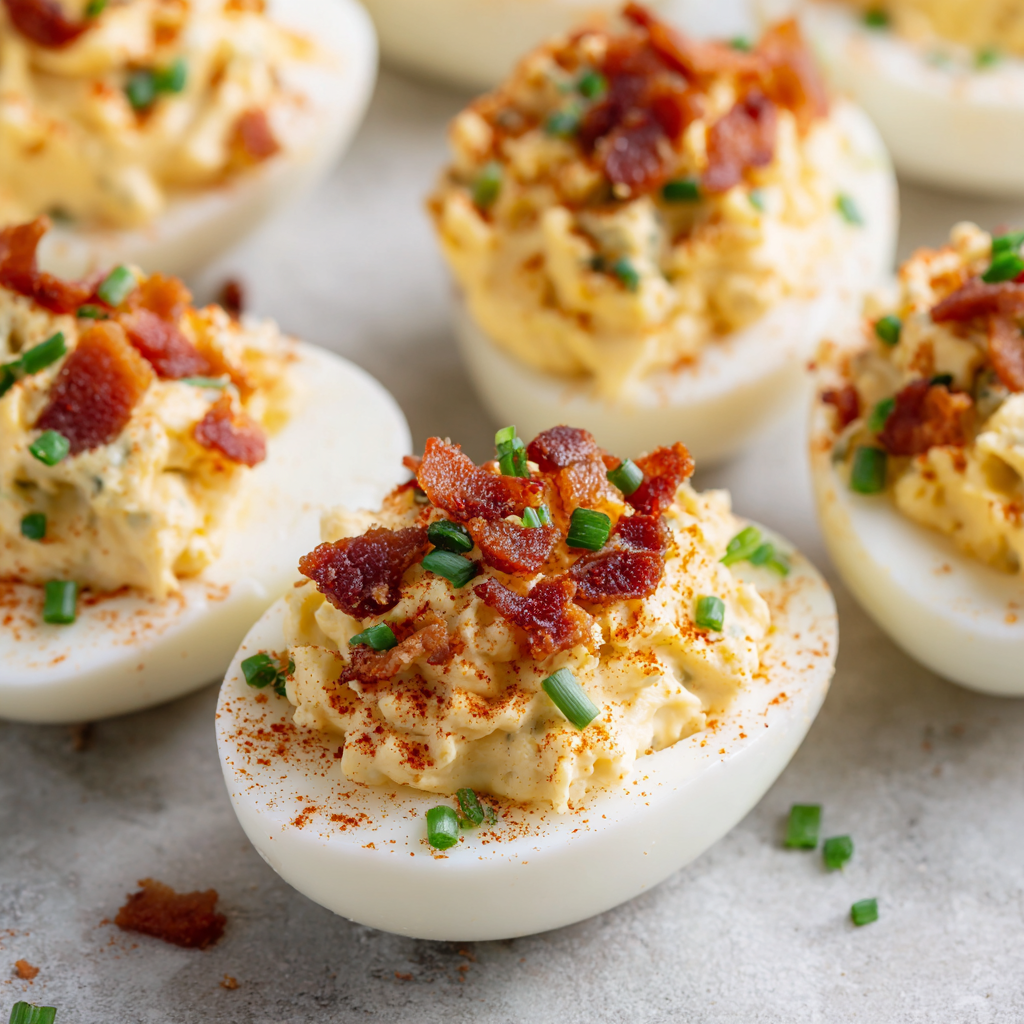
Bacon Ranch Deviled Eggs : Creamy, Smoky, and Crowd-Pleasing
Bacon Ranch Deviled Eggs: Where Classic Comfort Meets a Party in Your Mouth
Hey there, friend! Beau here, from Feastical. Grab a stool and pull up to the kitchen counter. I want to talk about one of the greatest, most humble, and yet most fiercely debated party foods of all time: the deviled egg. You know the ones. They sit on a platter at every family reunion, potluck, and holiday spread, looking simple and elegant. But then you take a bite, and suddenly, you’re in a silent (or not-so-silent) bidding war for the last one on the plate.
Today, we’re not just making deviled eggs. We’re launching them into the flavor stratosphere. We’re giving them a full-blown, tastebud-tickling, can’t-eat-just-one upgrade. I’m talking about my Bacon Ranch Deviled Eggs. Imagine the creamy, dreamy yolk filling you know and love, but now it’s tangy, herby, and packed with the savory magic of ranch seasoning. Now, imagine that topped with a glorious, crispy crown of smoky bacon. It’s a warm hug and a high-five all in one bite.
This isn’t just a recipe; it’s a party starter, a conversation piece, and guaranteed proof that you’re the coolest cook in the room. Whether you’re a deviled egg purist or a flavor adventurer, these little gems are about to become your new secret weapon. They’re simple enough for a Tuesday snack but fancy enough to wow a crowd. So, let’s roll up our sleeves, maybe sneak a piece of bacon (chef’s privilege!), and make some magic.
The Great Deviled Egg Diplomacy of ‘98
My love affair with deviled eggs started not in a fancy kitchen, but on a wobbly fold-out table at my Great-Aunt Louise’s 4th of July bash. The table groaned under the weight of every potluck dish imaginable, but my eyes were locked on one singular, sun-bleached Tupperware carrier. Inside, nestled on a questionable bed of green plastic grass, were two dozen perfect, pristine deviled eggs, each dusted with a precise sprinkle of paprika.
They were the territory of the adults. Kids were subtly steered toward the hot dogs. But I was determined. I devised a plan—a little distraction here, a polite request there—and finally secured one half. That first taste was a revelation: cool, smooth, rich, and tangy. It felt like I’d been let in on a delicious grown-up secret. Years later, when I started hosting my own game days, I wanted to recreate that feeling but add my own stamp. The classic version was perfection, but what if we made it more? Adding bacon was a no-brainer. But the ranch? That was the game-changer. It was the flavor of fun, of dipping sauces and veggie platters, all whirled into that creamy filling. The first time I served them, the platter was empty in minutes. The tradition had been joyfully, deliciously, updated.
Gathering Your Flavor All-Stars
Here’s the beautiful part: this epic upgrade requires mostly pantry staples. Quality matters, but simplicity reigns supreme. Let’s break it down.
- 6 large eggs: The star of the show. I like older eggs for easier peeling, but fresh from the fridge works perfectly with our method. Size matters here—large eggs give you the perfect filling-to-white ratio.
- 2 tablespoons mayonnaise: This is the backbone of our creamy filling. Use a good-quality, real mayo (Duke’s, Hellmann’s/Best Foods). For a tangier twist, try swapping half with Greek yogurt! (Chef’s Insight: Mayo gives that luxurious mouthfeel we’re after.)
- 1 tablespoon ranch dressing: The flavor bomb! Use a bottled creamy ranch you love, or for ultimate freshness, whisk 1 tbsp mayo with ½ tsp dried dill, ¼ tsp garlic powder, ¼ tsp onion powder, and a pinch of dried parsley and chives. (Substitution Tip: Out of ranch? A teaspoon of ranch seasoning powder + a teaspoon of milk or mayo works in a pinch.)
- 1 teaspoon Dijon mustard (optional, but highly recommended): This isn’t just for tang. Dijon has a complex flavor and acts as a subtle emulsifier, making your filling silky smooth. Yellow mustard works in a true emergency, but Dijon is the way.
- Salt and black pepper, to taste: Season as you go! The bacon and ranch add salt, so taste before you go wild.
- 2 slices cooked bacon, crumbled: The crispy, smoky garnish of dreams. Bake it for even cooking, or pan-fry it. Reserve a tiny pinch for the filling if you’re feeling extra. (Pro Tip: Use thick-cut bacon for a more substantial, meaty crunch.)
- Optional garnishes: This is your playground. Chopped fresh chives or dill add color and freshness. A light dusting of smoked paprika (not regular!) echoes the bacon’s smokiness beautifully. A tiny slice of pickled jalapeño? Don’t mind if I do.
Let’s Build Some Bite-Sized Bliss: A Step-by-Step Guide
Follow these steps, and you’ll have flawless eggs every single time. I’m tossing in all my little kitchen hacks along the way.
Step 1: The Perfect Hard-Boiled Egg. This is the foundation. Place your eggs in a single layer in a saucepan. Cover them with cold water by about an inch. Bring the pot to a rolling boil over high heat. The second it boils, slap the lid on, turn off the heat, and set a timer for 10 minutes. Walk away! This “steam” method is foolproof. When the timer dings, immediately pour out the hot water and shock the eggs in a bowl of ice water. Let them chill for at least 15 minutes. This stops the cooking and contracts the egg inside the shell, making peeling a breeze. (Chef’s Hack: Gently crack and roll the egg on the counter before peeling under cool running water—the shell often slips right off.)
Step 2: The Assembly Line. Pat your peeled eggs dry. Carefully slice them in half lengthwise. Use a sharp, thin-bladed knife for clean cuts. Gently pop the yolks out into a medium bowl. Arrange your beautiful, empty egg white “boats” on your serving platter. See? We’re already halfway there!
Step 3: The Creamy Dream Filling. To the yolks, add your mayo, ranch, and Dijon. Now, mash and stir! I start with a fork and then switch to a small whisk for ultimate smoothness. You want this completely lump-free. Season with a pinch of salt and a few cranks of black pepper. Taste it! This is the best part. Adjust anything it needs—more ranch tang? A smidge more pepper? Make it yours. (Pro Tip: For an extra-silky filling, push the yolk mixture through a fine-mesh sieve before adding the wet ingredients. It’s a game-changer for texture.)
Step 4: The Grand Fill-Up. You can spoon the filling back into the whites, but for that pro-level look, piping is the way. Scoop your filling into a zip-top bag, snip off a corner (about ½ inch), and pipe away! Swirl it, pile it high, make it look gorgeous. No fancy piping tip needed. (Kitchen Story: I once used a plastic sandwich bag for this at a tailgate and got more compliments on the presentation than the flavor. The power of a little swirl!)
Step 5: The Crown Jewels. Now, the moment we’ve been waiting for. Generously sprinkle each egg with your crispy, crumbled bacon. Follow with any other garnishes—a sprinkle of chives, that dusting of smoked paprika. The colors will pop, and the flavors are now layered and ready to rock.
Plating Your Masterpiece
Presentation is part of the fun! Don’t just plop these on a plate. Give them the stage they deserve. A simple white platter lets the colors of the eggs, bacon, and herbs really shine. For a rustic vibe, a slate board or a piece of beautiful wood works wonders. To keep them from sliding, you can lay down a bed of curly kale, that leftover plastic grass (for nostalgia’s sake!), or even a simple linen napkin.
If you’re feeling extra, create a “deviled egg bar” for your guests. Set out the platter of filled eggs and little bowls of extra toppings: more bacon, different fresh herbs, pickled onions, a bowl of extra-crispy fried shallots, or even a small dish of hot sauce for the brave. Let people customize! It’s interactive, fun, and guarantees everyone gets their perfect bite.
Make It Your Own: 5 Flavor Twists to Try
The basic formula is your canvas. Here are a few of my favorite ways to paint outside the lines:
- The “Everything Bagel” Egg: Swap the ranch for 2 tbsp of whipped cream cheese + 1 tsp of everything bagel seasoning in the filling. Top with more everything seasoning and a tiny bit of finely minced red onion.
- Spicy Southwest: Add 1 tbsp of finely chopped pickled jalapeño and 1 tsp of its brine to the filling. Mix in 2 tbsp of shredded sharp cheddar. Top with a slice of fresh jalapeño and a crumble of cotija cheese instead of bacon.
- Herb Garden Fresh (Low-Carb/Keto Friendly): Omit the ranch. Use 3 tbsp mayo + 1 tbsp each of finely chopped fresh dill, chives, and parsley. A tiny bit of lemon zest in the filling is divine.
- The “Loaded Baked Potato”: Add 2 tbsp of finely shredded sharp cheddar and 1 tbsp of sour cream to the filling. Top with bacon, a tiny dollop of sour cream, and a sprinkle of green onion.
- Smoked Salmon & Dill: A elegant twist. Omit bacon and ranch. Use 2 tbsp mayo + 1 tbsp sour cream + 1 tbsp fresh dill. Gently fold in 2 tbsp of finely chopped smoked salmon into the filling. Top with a small, elegant piece of salmon and a sprig of dill.
Beau’s Back-Porch Notes
This recipe has lived a good life. I’ve made it in a tiny apartment kitchen for two and multiplied it by ten for a wedding shower. The biggest lesson? Don’t stress. I once forgot the Dijon, used Greek yogurt instead of mayo because it was all I had, and topped them with leftover BBQ pork rinds instead of bacon (don’t knock it ‘til you try it!). They were still the first thing to disappear. The spirit of this dish is joy and sharing. The eggs can be boiled and peeled a day ahead. The filling can be made a few hours ahead and stored separately. Assemble within an hour or two of serving so the bacon stays crisp. Most importantly, have fun with it. Food tastes better when it’s made with a little bit of laughter.
Your Questions, Answered
Q: My eggs are impossible to peel! Help!
A: I feel your pain. The ice bath is non-negotiable. Also, slightly older eggs peel easier than super-fresh ones. If you’re planning ahead, buy your eggs a week before. And that crack-and-roll-under-water method is a lifesaver.
Q: Can I make these ahead of time?
A: Absolutely! Up to 24 hours. Keep the components separate: store peeled egg whites in a sealed container with a damp paper towel, the filling in its own bag or bowl, and the bacon in a bag. Assemble 1-2 hours before the party for the best texture.
Q: My filling is too runny/thick. How do I fix it?
A> Kitchen climates vary! Too runny? Add a bit more mashed yolk or a sprinkle of everything bagel seasoning to soak up moisture. Too thick? Add a few drops of milk, buttermilk, or more ranch dressing, one tiny drop at a time, until it’s pipeable.
Q: What’s the best way to transport these?
A: Get a dedicated deviled egg carrier! They’re cheap and genius. Or, use a deep platter/container, arrange the eggs, then gently place plastic wrap directly on the surface of the filling before putting the lid on. This prevents sliding and garnish-displacement during travel.

Bacon Ranch Deviled Eggs : Creamy, Smoky, and Crowd-Pleasing
Description
Hey friend! If classic deviled eggs are comfort food royalty, these Bacon Ranch Deviled Eggs are the life of the party. Creamy yolks meet tangy ranch, then get crowned with crispy bacon for a bite that’s rich, savory, and totally irresistible. They’re easy to make, perfect for gatherings, and just as dangerous to keep in your fridge alone. Let’s get to it!
Ingredients
-
6 large eggs
-
2 tbsp mayonnaise
-
1 tbsp ranch dressing (or 1 tsp ranch seasoning + 1 tsp milk or mayo)
-
1 tsp Dijon mustard (optional, but recommended)
-
Salt, to taste
-
Black pepper, to taste
-
2 slices bacon, cooked until crispy and crumbled
-
Optional garnish: chopped chives, dill, or smoked paprika
Instructions
-
Hard-boil the eggs
Place eggs in a saucepan and cover with cold water by 1 inch. Bring to a boil, cover, turn off heat, and let sit for 10 minutes. Transfer to an ice bath for 15 minutes. -
Peel and halve
Peel eggs and slice lengthwise. Remove yolks and place them in a bowl. -
Make the filling
Mash yolks with mayonnaise, ranch dressing, Dijon (if using), salt, and pepper until smooth and creamy. -
Fill the eggs
Spoon or pipe the filling back into the egg whites. -
Top and serve
Sprinkle generously with crumbled bacon and add optional garnishes. Chill until ready to serve.
Notes
-
Use slightly older eggs for easier peeling.
-
Taste the filling before filling—bacon and ranch add salt, so adjust carefully.
-
Pipe for presentation: A zip-top bag with the corner snipped works perfectly.
-
Add bacon last if prepping ahead, so it stays crispy.
-
Smoked paprika > regular paprika if you want extra depth.
Nutritional Info & Prep Info
Prep Time: 15 minutes | Cook Time: 10 minutes (for boiling) | Total Time: 25 minutes | Servings: 12 halves (6 eggs)
Per Deviled Egg Half (approximate):
Calories: ~80 | Protein: 3g | Fat: 7g | Saturated Fat: 1.5g | Carbohydrates: 1g | Fiber: 0g | Sugar: 0.3g | Sodium: 100mg
Note: Nutrition is an estimate and will vary based on specific brands and quantities used. Using center-cut bacon or turkey bacon can reduce fat/sodium. For a lower-fat version, the Greek yogurt swap mentioned above is a great option.
The Last Bite
And there you have it! My not-so-secret, always-a-hit recipe for Bacon Ranch Deviled Eggs. This is more than just an appetizer; it’s a little bite of confidence, a testament to the fact that the best food often starts with a classic and is built with love (and maybe a little bacon).
I hope you make these for your next gathering, or better yet, just for yourself on a random Wednesday. You deserve it. If you do make them, I’d love to hear about it! Tag me @Feastical or shoot me an email. Nothing makes my day more than seeing your kitchen victories.
Now, go forth and devil those eggs! Until next time, keep your spatula close and your appetite closer.
– Beau

Classic Deviled Eggs (Plus 3 Delicious Flavor Twists!)
The Unbeatable, Irresistible Charm of the Perfect Deviled Egg
Hey there, friend! Beau here, welcoming you back to Feastical. Let’s talk about a culinary icon so perfect, it needs no introduction, yet always deserves a grand welcome: the deviled egg. Is there any other dish that can effortlessly bridge the gap between a fancy cocktail party, a backyard barbecue, and a humble weeknight snack? I don’t think so. That creamy, tangy, slightly mysterious filling tucked into a tender egg white boat is more than just food; it’s a memory on a platter, a guaranteed conversation starter, and the first thing to disappear from any table it graces.
But here’s my chef’s confession: for years, I treated deviled eggs as a simple, throw-together recipe. A little mayo, a squirt of mustard, mash, done. It wasn’t until I brought a rushed, sadly bland batch to a friend’s potluck and saw them linger sadly next to a glorious, garnished tray that I had a revelation. The humble deviled egg is a canvas. It’s a perfect, protein-packed base waiting for your personality. Mastering the classic version is your kitchen rite of passage, and from there? The flavor world is your oyster (or, well, your egg).
So today, we’re going deep on deviled egg excellence. We’ll nail the foolproof, silky-smooth, perfectly seasoned classic that will have people begging for your secret. And because I love a good kitchen adventure, I’m sharing three of my favorite flavor twists that will take your eggs from classic to legendary. Grab your eggs and your sense of fun—let’s make some magic.
A Tower of Eggs and Laughter: My Deviled Egg Awakening
My love affair with deviled eggs truly began at my Great-Aunt Clara’s annual spring luncheon. Picture this: a sun-drenched porch, tables draped in gingham, and a centerpiece that wasn’t flowers, but a literal tiered tower of deviled eggs. She must have made six dozen. As a kid, I was in awe. This wasn’t just a side dish; it was the main event.
I was appointed “sprinkle master,” tasked with dusting each egg with a final, perfect shower of paprika from her special little shaker. I took my job deadly seriously, hovering over each platter. But when I turned to ask her a question, my elbow caught the edge of the tower. Time froze. In slow motion, I watched as three levels of creamy, beautiful eggs slid into a delicious, messy heap on the tablecloth. My heart sank. Aunt Clara just looked at the catastrophe, then at my horrified face, and burst out laughing. “More for us to taste-test, Beau!” she chuckled, handing me a fork. We stood there, eating the “casualties” straight from the table, and she explained how a little extra vinegar was her secret. In that messy, joyful moment, I learned that the best food isn’t about perfection—it’s about sharing, laughing, and maybe keeping your elbows in when near egg towers.
Gathering Your Flavor Arsenal: The Classic Base
Here’s what you’ll need to create a dozen perfect, creamy classic deviled egg halves. I’ve added my little chef insights for each—because knowing the why makes you a better cook!
- 6 large eggs: The star. Large eggs give you the ideal white-to-yolk ratio. Pro tip: Eggs that are a week or so old peel easier than brand-new ones! If you’re in a pinch, that’s a handy hack.
- 3 tablespoons mayonnaise: This is your creaminess foundation. Use a good-quality, real mayo (like Duke’s or Hellmann’s/Best Foods) for the richest flavor. For a tangier twist, sub in Greek yogurt for half of it.
- 1 teaspoon yellow mustard: It’s not just for color! Yellow mustard gives that iconic, gentle tang. Feeling fancy? A smooth Dijon mustard adds a more sophisticated, sharp note.
- 1/2 teaspoon white vinegar or pickle juice: The secret weapon for brightness! White vinegar is clean and sharp, while pickle juice (from dill or sweet pickles) adds a layer of briny, complex flavor. This little bit cuts through the richness perfectly.
- Salt & pepper, to taste: Don’t you dare forget to season your filling! I start with 1/8 tsp salt and a few cracks of black pepper, then taste and adjust. The yolks need it.
- Paprika, for garnish: The classic red crown. Sweet paprika is traditional, but a sprinkle of smoked paprika? Game-changer. It adds a whisper of barbecue-like depth.
Crafting Perfection: Your Step-by-Step Roadmap
Follow these steps, and you’ll have the most foolproof, crowd-pleasing deviled eggs in your neighborhood. I’m walking you through every stage with my favorite kitchen hacks.
Step 1: The Foolproof Boil. Place your eggs in a single layer in a saucepan. Cover them with cold water by about an inch. Bring the pot to a rolling boil over high heat. The second it hits a full boil, slap the lid on, turn off the heat, and set a timer for 10 minutes. This “off-heat” method is my go-to because it prevents that ugly green ring around the yolk and ensures tender, not rubbery, whites.
Step 2: The Ice Bath Shock. While the eggs cook, prepare an ice bath (a big bowl of water and ice). When the timer dings, use a slotted spoon to immediately transfer the hot eggs to the ice bath. Let them chill for at least 15 minutes. This stops the cooking and, crucially, contracts the egg inside the shell, making peeling a million times easier.
Step 3: The Great Peel. Tap each egg all over on the counter to crackle the shell. Start peeling from the wider end (where there’s usually an air pocket) under a tiny trickle of running water—the water helps loosen the membrane. You’ll get clean, smooth eggs every time.
Step 4: Halve & Harvest. Slice each peeled egg lengthwise with a sharp, thin knife. Gently pop the yolks out into a medium bowl. Arrange your empty white halves on your serving plate. See how they’re like little waiting canoes? Adorable.
Step 5: The Creamy Alchemy. To the yolks, add your mayo, mustard, vinegar or pickle juice, salt, and pepper. Now, mash and stir! I like to use a fork first to break up the yolks, then switch to a small whisk or silicone spatula to beat the mixture until it’s utterly smooth and creamy. No lumps allowed! Taste it—this is your moment. Need more tang? A dash more vinegar. More zip? More mustard. Make it yours.
Step 6: The Grand Fill. You can simply spoon the filling back into the wells. But for a truly pro look, spoon the filling into a zip-top bag, snip off a corner (about 1/2 inch), and pipe it in with a swirl. It’s so satisfying and looks incredible.
Step 7: The Final Flourish. Just before serving, give each egg its signature dusting of paprika. This keeps the color vibrant and adds that final pop of flavor and color.
Plating Your Masterpiece: Serving with Style
Presentation is part of the fun! Don’t just plop these beauties on a plate. A dedicated deviled egg tray with little grooves is a great investment if you make these often. No tray? Get creative. A simple platter works wonders. Line it with fresh lettuce leaves, kale, or a bed of fresh herbs like dill or parsley for a pop of green that makes the eggs shine.
For a casual gathering, I love scattering some extra garnishes around the plate—a few extra bacon bits from our variation, some whole chives, or cornichons on the side. It looks abundant and inviting. Remember, serve them chilled! I like to make the filling and prep the whites, then fill and garnish about an hour before the party starts. That way, they’re perfectly cool and the flavors have had a chance to mingle.
Play With Your Food! 3 Delicious Flavor Twists
Once you’ve mastered the classic, the kitchen playground opens up. Here are three of my absolute favorite ways to jazz up the base recipe.
1. Bacon Cheddar Ranch: To the classic yolk filling, mix in 1 tablespoon of ranch dressing (powder or bottled), 2 tablespoons of finely shredded sharp cheddar cheese, and 1 tablespoon of finely crumbled cooked bacon. Pipe into the whites and top with a tiny sprinkle of cheddar, a bacon bit, and a sliver of fresh chive. It’s like a loaded potato, but in egg form!
2. Spicy Sriracha Lime: Add 1 teaspoon (or more!) of Sriracha and 1 teaspoon of fresh lime juice to the yolk mix. For an extra kick, fold in a teaspoon of finely minced jalapeño (seeds removed for less heat). Pipe and top with a tiny slice of jalapeño, a drizzle of Sriracha, and a sprinkle of black sesame seeds or chili flakes.
3. Avocado Lime with Tajín: This is a fresher, brighter twist. Swap out half of the mayonnaise for the flesh of one small, ripe avocado. Add 1 teaspoon of fresh lime juice and a pinch of cumin to the yolk mix. Blend until super smooth. The filling will be a lovely pale green. Garnish with a cilantro leaf and a magical sprinkle of Tajín seasoning for that sweet, salty, chili-lime punch.
Beau’s Kitchen Notebook: Extra Thoughts & Stories
This recipe has evolved in my kitchen from a last-minute item to a purposeful delight. I learned the hard way that over-seasoning the filling is a real danger—you can always add, but you can’t take away! My biggest evolution was embracing the pipe. For years, I was a spoon guy. But seeing the beautiful, swirled rosettes you get from a piping bag (or even a zip-top with the corner cut) just elevates the whole experience. It feels special.
One time, I was experimenting with a “everything bagel” deviled egg and accidentally used garlic powder instead of onion powder. Let’s just say they were… potent. A friendly reminder to always label your spice jars! The recipe is forgiving, so don’t stress. Have fun, taste as you go, and make it your own. That’s what home cooking is all about.
Your Questions, Answered: Deviled Egg FAQs
Q: My eggs are impossible to peel! Help!
A: The ice bath is key! Also, using slightly older eggs (1-2 weeks old) helps. Peeling under a small stream of cool running water lets the water get under the shell and membrane, making it slide right off.
Q: Can I make deviled eggs ahead of time?
A: Absolutely! You can hard-boil and peel the eggs up to 2 days in advance, keeping them in a sealed container in the fridge. You can also make the filling 1 day ahead and store it separately. Fill the whites no more than a few hours before serving for the best texture.
Q: My filling is a bit runny. What did I do wrong?
A> This usually means a bit too much mayo or add-ins. The fix is easy! Chill the filling in the fridge for 20-30 minutes to firm up before piping. You can also add a tiny pinch of extra mashed yolk or a sprinkle of finely grated cheese to help thicken it.
Q: What’s the best way to transport deviled eggs?
A: A dedicated egg carrier is fantastic. Otherwise, use a deep container and place the eggs snugly so they don’t slide. Put a damp paper towel under the rack or plate to keep things from sliding, and keep them chilled with an ice pack if traveling far.

Classic Deviled Eggs (Plus 3 Delicious Flavor Twists!)
Description
Hey there, friend! Beau here, and today we’re celebrating a true icon: the deviled egg. Simple, nostalgic, and endlessly lovable, this little bite somehow fits in everywhere—from holiday tables to backyard cookouts to “I just need a snack” moments. When done right, deviled eggs are creamy, tangy, perfectly seasoned, and impossible to stop eating. This recipe nails the classic version first (because fundamentals matter!), with easy tips to make them smooth, flavorful, and party-ready every single time.
Ingredients
-
6 large eggs
-
3 tbsp mayonnaise
-
1 tsp yellow mustard
-
½ tsp white vinegar or pickle juice
-
Salt, to taste
-
Black pepper, to taste
-
Paprika (sweet or smoked), for garnish
Instructions
-
Boil the eggs
Place eggs in a saucepan in a single layer. Cover with cold water by about 1 inch. Bring to a rolling boil, cover, turn off heat, and let sit for 10 minutes. -
Ice bath
Transfer eggs immediately to an ice bath and let cool for at least 15 minutes. -
Peel & halve
Peel the eggs and slice them lengthwise. Gently remove yolks and place them in a bowl. -
Make the filling
Mash yolks with mayonnaise, mustard, vinegar (or pickle juice), salt, and pepper until smooth and creamy. -
Fill the eggs
Spoon or pipe the filling back into the egg whites. -
Garnish & serve
Sprinkle lightly with paprika just before serving.
Notes
-
Older eggs peel easier: Eggs that are 1–2 weeks old are much easier to peel than very fresh ones.
-
Ice bath matters: It stops cooking and helps the shell release cleanly.
-
Taste before filling: Adjust salt, vinegar, or mustard while the yolks are still in the bowl.
-
Pipe for polish: A zip-top bag with the corner snipped gives you an instant “fancy” look.
-
Chill before serving: Deviled eggs taste best when cold.
Nutritional Snapshot (For the Classic Base)
Let’s be real—we don’t eat deviled eggs because they’re a “diet food.” We eat them because they’re delicious! But it’s always good to know what’s on your plate. This info is for one classic deviled egg half.
Prep Time: 15 mins | Cook Time: 12 mins | Total Time: 30 mins | Servings: 12 halves
Calories: ~60 | Protein: 3g | Carbohydrates: <1g | Fat: 5g
Eggs are a fantastic source of high-quality protein and essential nutrients like choline. The fats come primarily from the mayo and the egg yolk itself. Remember, the variations will alter these numbers slightly (adding avocado, cheese, or bacon changes the fat and protein profile). Enjoy them as part of a balanced spread!
The Last Bite: Keep the Party Going
And there you have it, my friend—your complete guide to deviled egg domination, from the timeless classic to three wildly tasty spins. I hope this inspires you to see this potluck staple in a whole new light. It’s a dish that welcomes creativity, rewards a little care, and always, always brings people together.
So the next time you need a guaranteed hit, whether it’s for Easter brunch, a summer picnic, or just a Tuesday treat, you’ve got this. Whip up a batch, maybe try that avocado lime twist, and watch them vanish. And when someone asks, “What’s your secret?” you can just smile and say, “A little love, and a dash of pickle juice.”
Did you try a variation? Invent one of your own? I’d love to hear about it! Tag me @feastical or drop a comment on the blog. Now, if you’ll excuse me, I have a tower of eggs to carefully reconstruct… Happy cooking!
– Beau
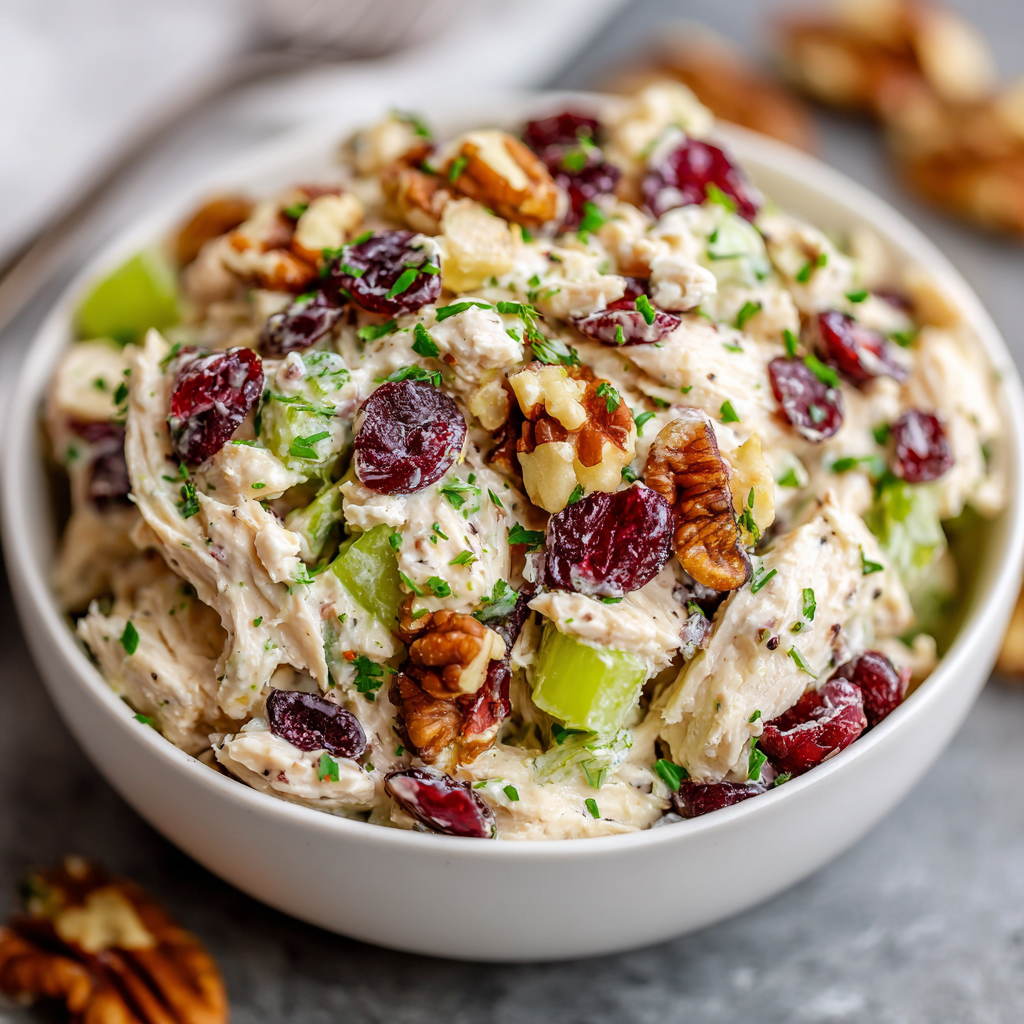
Cranberry Chicken Salad : Creamy, Tangy & Perfect for Meal Prep
The Lunchtime Game-Changer You Didn’t Know You Needed
Hey there, friend! Beau here. Let’s talk about that mid-day slump. You know the one. It’s 1 PM, your stomach is rumbling, and you’re staring into the fridge or the sad abyss of your lunch bag wondering, “Is this it?” Another boring sandwich, another lackluster leftovers container. I’ve been there more times than I care to admit, and let me tell you, it was the inspiration behind creating a lunch recipe that feels like a treat but fuels you like a champ.
That’s where this Cranberry Chicken Salad swoops in to save the day. We’re not talking about the gloppy, mayo-drowned stuff of cafeteria lore. Oh no. This is a vibrant, textural wonderland. Imagine tender, juicy shreds of chicken, the sunny little pop of tart-sweet cranberries, the satisfying crunch of celery, all hugged by a creamy, tangy dressing that sings with flavor. It’s sweet, savory, crunchy, and creamy in every single bite.
The best part? It’s a meal prep superstar. Whip up a batch on a lazy Sunday afternoon, and you’ve got the backbone for a week of incredible, no-thought-required lunches. It’s just as happy stuffed into a buttery croissant as it is piled onto a bed of crisp greens or scooped into a crunchy lettuce wrap. This recipe is my love letter to easy, feel-good eating that never, ever sacrifices flavor. So, grab your favorite mixing bowl, and let’s make lunch something to actually look forward to!
A Picnic Table Revelation
This recipe has roots in a very specific, slightly chaotic memory. Picture this: It’s a family reunion potluck in a sunny park, tables groaning under the weight of every dish imaginable. My contribution that day was a simple roasted chicken. As fate would have it, I was placed right next to my Aunt Marla’s famous “Everything But The Kitchen Sink” Salad, a wild concoction involving pasta, about six kinds of cheese, and… dried cranberries.
As the day wore on and the sun got warmer, my plain chicken started to look a little lonely. Inspired by Aunt Marla’s bold use of cranberries, I took a forkful of my chicken, dragged it through the edge of her salad’s dressing (sorry, Aunt Marla!), and topped it with a few stray cranberries and almond slices from the table. The first bite was a revelation. The warm chicken, the cool tang, the sweet fruit—it was magic. Right there on that paper plate, the idea for this salad was born. It’s a reminder that the best food often comes from happy accidents and sharing with the people you love.
Gathering Your Flavor Crew
Here’s what you’ll need to bring this salad to life. I’ve included my favorite insights and swaps so you can make it your own!
- 2½ cups cooked, shredded or chopped chicken: The star of the show! Using leftover roasted or rotisserie chicken is my ultimate hack for flavor and ease. If you’re starting from scratch, just simmer two large chicken breasts in seasoned broth until cooked through. Chef’s Tip: Shred the chicken while it’s still warm—it absorbs the dressing beautifully.
- ½ cup dried cranberries: These little rubies provide the perfect tangy-sweet counterpoint. Look for fruit juice-sweetened ones if you want to cut back on added sugar. In a pinch, chopped dried cherries or even golden raisins work wonderfully.
- ½ cup celery, finely diced: Don’t skip this! It’s not just filler. Celery adds a crucial, refreshing crunch and a clean, savory note that balances the sweetness.
- ¼ cup chopped walnuts or sliced almonds (optional): I love the earthy depth and extra crunch nuts provide. Walnuts are my classic go-to, but almonds, pecans, or even sunflower seeds for a nut-free version are all fantastic.
- ½ cup plain Greek yogurt or mayo (or a mix): This is your dressing base. I often do half Greek yogurt (for protein and tang) and half mayo (for that classic richness). All of one or the other is totally fine—use what you love!
- 1 tbsp Dijon mustard (optional but highly recommended): This is my secret weapon. A spoonful adds a subtle complexity and helps emulsify the dressing. Trust me on this one.
- 1 tbsp lemon juice: Freshly squeezed, please! It brightens up the entire salad and prevents it from tasting flat.
- Salt & pepper to taste: Season in layers. A pinch in the dressing, and another gentle toss at the end.
- Optional: green onions or parsley: A sprinkle of finely chopped green onions adds a mild bite, while fresh parsley gives a lovely herby freshness. Perfect for a color pop!
Let’s Get Mixing! Your Foolproof Guide
See? No fancy techniques here. Just a little mixing and tasting. Let’s walk through it.
- Prep Your Chicken: If you haven’t already, shred or chop your cooked chicken into bite-sized pieces. Place it in a large, cozy-looking mixing bowl. Pro-Tip: If using cold leftover chicken, let it sit out for 10-15 minutes to take the chill off. It will blend with the dressing much better.
- Add the Goodies: To the bowl with the chicken, add the dried cranberries, diced celery, and your nuts of choice (if using). Toss these together with your hands or a spoon just to get them acquainted.
- Whisk the Dressing: In a separate smaller bowl, combine your Greek yogurt/mayo, Dijon mustard, and lemon juice. Add a generous pinch of salt and a few cracks of black pepper. Whisk it until it’s smooth, creamy, and homogenous. Little Chef Hack: Taste the dressing on a tiny piece of celery. Does it need more zip? Add a splash more lemon. More punch? A dab more mustard. This is your moment to adjust!
- The Grand Combine: Pour the creamy dressing over the chicken mixture. Using a large flexible spatula or a big spoon, gently fold everything together. You want every nook and cranny of chicken to get coated in that creamy goodness. Be thorough but gentle—no need to pulverize the ingredients.
- The Patient Chill: This might be the hardest step! Cover the bowl with plastic wrap or transfer the salad to an airtight container and pop it in the fridge for at least 15 minutes. Honestly, 30 minutes to an hour is even better. This resting time is non-negotiable magic. It allows the flavors to marry, the cranberries to soften just a touch, and the whole salad to become gloriously chilled and cohesive.
How to Serve Your Masterpiece
This is the fun part! This salad is a social butterfly and gets along with everyone.
The Classic Sandwich: Piled high on whole-grain bread, a flaky croissant, or a toasted bagel with a crisp leaf of butter lettuce. Unbeatable.
The Light & Fresh Route: Serve it over a big bed of mixed greens, spinach, or arugula. The peppery arugula paired with the sweet salad is a match made in heaven.
The No-Bread Wrap: Use large, sturdy leaves of butter lettuce, romaine hearts, or even blanched collard greens as your vessel. Spoon a generous amount down the center, roll it up, and enjoy the satisfying crunch.
The Fancy Appetizer: Spoon it into endive leaves or hollowed-out mini sweet peppers for an elegant, easy party bite.
The Simple Snack: Honestly, sometimes I just grab a fork and eat it straight from the container. No judgment here!
Make It Your Own: Delicious Twists
Once you’ve mastered the base, the playground is open! Here are a few of my favorite riffs:
- Apple Walnut Twist: Add ½ a finely diced crisp apple (like Honeycrisp or Granny Smith) and use toasted walnuts. The fresh apple crunch is incredible.
- Curry in a Hurry: Whisk 1-2 teaspoons of mild curry powder and a tablespoon of mango chutney or raisins into the dressing. It’s a warm, aromatic flavor adventure.
- Grape & Almond: Swap the cranberries for halved red grapes and use sliced almonds. It’s sweeter, juicier, and feels very classic.
- Southwest Style: Omit the cranberries and nuts. Add ¼ cup of corn, a diced avocado (tossed in lime juice), and a tablespoon of chopped cilantro. Use lime juice in the dressing instead of lemon, and add a pinch of cumin.
- Paleo/Whole30 Friendly: Use compliant chicken, omit the yogurt, and use all mayo (check labels for sugar). Swap the dried cranberries for chopped dried tart cherries (unsweetened) or omit. Add extra celery and some diced red onion for bite.
Beau’s Kitchen Confidential
This recipe has been a living, evolving thing in my kitchen for years. The first time I made it, I went overboard on the Dijon—let’s just say it had quite the “nose-tingling” effect! I’ve learned that balance is key. I also used to painstakingly hand-chop everything into perfect, uniform cubes. Now? I love the rustic, textural feel of hand-shredded chicken and rough-chopped celery. It feels more homemade and hearty. The biggest lesson this salad taught me is that the best “recipe” is often just a great formula you can tweak based on what’s in your fridge and what your mood is. It’s a forgiving, friendly dish that wants you to succeed.
Your Questions, Answered
Q: My salad turned out a bit dry. What happened?
A: No worries! This usually means the chicken was very lean or the dressing needed a bit more love. Easy fix: stir in an extra tablespoon or two of yogurt or mayo. Also, make sure you’re using a full 2½ *cups* of chicken—if you accidentally packed in more, you’ll need more dressing.
Q: How far in advance can I make this?
A> It’s a meal prep dream! It will keep beautifully in an airtight container in the fridge for 3-4 days. The flavors actually get better on day two. I don’t recommend freezing it, as the yogurt/mayo dressing can separate and the celery will lose its crunch.
Q: Can I use canned chicken?
A> You can in a pinch, but the texture and flavor won’t be quite as good as freshly cooked or rotisserie chicken. If you do, be sure to drain it very, very well and consider adding an extra squeeze of lemon to brighten it up.
Q: My family hates nuts. Any other crunchy substitute?
A> Absolutely! Try toasted sunflower seeds or pepitas (pumpkin seeds). They add that fantastic crunch without the “nut” flavor. You could also add an extra stalk of diced celery or even some diced, toasted jicama for a fun, watery crunch.
Cranberry Chicken Salad : Creamy, Tangy & Perfect for Meal Prep
Description
Hey friend—Beau here! If your lunches have been feeling a little… uninspired, this Cranberry Chicken Salad is about to rescue your midday routine. It’s fresh, creamy without being heavy, packed with protein, and comes together in minutes. Perfect for sandwiches, wraps, salads, or straight-from-the-fridge snacking.
Ingredients
-
2½ cups cooked chicken, shredded or chopped
-
½ cup dried cranberries
-
½ cup celery, finely diced
-
¼ cup chopped walnuts or sliced almonds (optional)
-
½ cup plain Greek yogurt, mayo, or a mix of both
-
1 tbsp Dijon mustard (optional, but adds great flavor)
-
1 tbsp fresh lemon juice
-
Salt and black pepper, to taste
-
Optional: chopped parsley or green onions for garnish
Instructions
-
Prep the chicken
Add the cooked chicken to a large mixing bowl. -
Add the mix-ins
Stir in cranberries, celery, and nuts (if using). -
Make the dressing
In a small bowl, whisk together yogurt/mayo, Dijon mustard, lemon juice, salt, and pepper until smooth. -
Combine
Pour dressing over the chicken mixture and gently fold until everything is evenly coated. -
Chill (recommended)
Cover and refrigerate for at least 15 minutes to let flavors blend. -
Serve
Enjoy in sandwiches, wraps, lettuce cups, or over greens.
Notes
-
Warm chicken shreds easier: Shred chicken while it’s still slightly warm for better texture.
-
Adjust creaminess: Add an extra spoon of yogurt or mayo if it looks dry.
-
Balance the flavor: Too sweet? Add more lemon or Dijon. Too tangy? A pinch of salt smooths it out.
-
Meal prep win: Keeps well in the fridge for 3–4 days in an airtight container.
Feeling Good About Your Fuel
While I’m all about flavor first, it’s nice to know what’s powering your day! This nutritional breakdown is for one serving (approximately 1 cup) using a mix of Greek yogurt and mayo, and including walnuts. Remember, these are estimates and can vary based on your specific ingredients and substitutions.
Per Serving: Calories: ~280 | Protein: 25g | Carbohydrates: 10g | Dietary Fiber: 1g | Sugars: 7g | Fat: 15g | Saturated Fat: 2g
This salad is a fantastic source of lean protein, thanks to the chicken and Greek yogurt, which helps keep you full and satisfied. Using Greek yogurt also adds a boost of probiotics and calcium. The fats are primarily the healthier unsaturated kind from the nuts and mayo/oil. It’s a balanced, wholesome choice that delivers on both taste and nutrition.
Final Thoughts
And that’s it, friends! You’re now armed with the recipe for a lunch that’s anything but boring. This Cranberry Chicken Salad is more than just a mix of ingredients; it’s a promise of a brighter, tastier midday break. It’s proof that with a little prep and a lot of love for flavor, you can transform simple components into something truly special.
I hope this recipe finds its way into your regular rotation, gets scribbled on notecards for friends, and maybe even starts its own picnic-table tradition in your family. Remember, the kitchen is for playing, tasting, and creating joy—one delicious forkful at a time. Now, go forth and make something wonderful!
With a full heart and an empty mixing bowl,
Beau
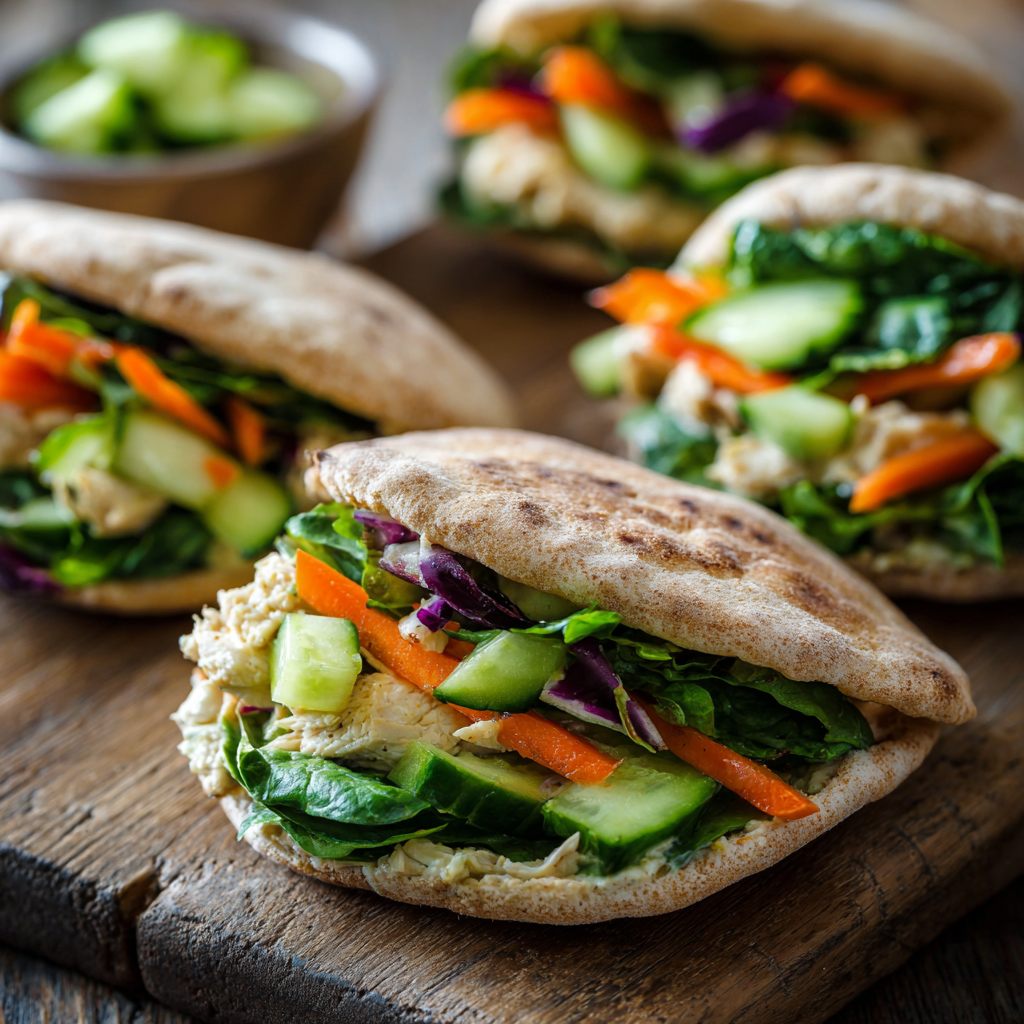
Pita Pocket Stuffers : Easy Mini Lunches with Chicken or Hummus
Pita Pocket Stuffers: Your New Secret Weapon for Wholesome, Happy Lunches
Hey friends, Beau here! Let’s have a real talk for a second. How many times have you stood in front of the fridge at noon, door hanging open, staring at ingredients that refuse to become a meal? Or worse, spent a small fortune on a “meh” takeout salad that leaves you hungry by 3 PM? I’ve been there more times than I’d like to admit. It’s why I became obsessed with creating lunch solutions that are anything but boring—recipes that are fast, full of flavor, and actually make you look forward to your midday break.
Enter the humble hero we all need: the Pita Pocket Stuffer. This isn’t just a sandwich; it’s a customizable, packable, downright delightful little package of joy. Think of it as a mini edible treasure chest you get to fill with all your favorite things. Whether you’re team savory shredded chicken or all about that creamy, dreamy hummus, these pockets are your blank canvas. They’re perfect for work lunches, school boxes, post-gym fuel, or a light, no-fuss dinner. Best part? We’re talking 10 minutes of active time for a result that tastes like you fussed. So, let’s ditch the lunchtime rut together and build something delicious!
The Pita Promise: A Lunchbox Memory
My love affair with stuffed pitas started way before I ever picked up a chef’s knife. Picture a 10-year-old me, sitting at the Formica kitchen table, watching my grandma assemble what she called “pocket surprises” for my school lunch. She’d warm the pitas just enough on her old cast-iron griddle until they were soft and pliable, then she’d let me be the “sous-chef.” My job was to layer in the shredded roast chicken from last night’s dinner, then the crisp lettuce, and finally, the “confetti”—her name for finely diced red bell peppers and cucumbers.
She’d wrap each one in wax paper, twist the ends, and say, “There’s a little hug in there for lunchtime.” Opening that package later in the noisy cafeteria was my quiet moment of comfort. It was more than food; it was a connection. That’s the spirit I want to bring to Feastical: food that connects, comforts, and makes the ordinary moments a little more special. These pita pocket stuffers are my grown-up, fancied-up version of Grandma’s pocket surprise, and I’m so excited to share that feeling with you.
Gathering Your Flavor Crew: Ingredients & Insights
Here’s where the fun begins! This list is your launchpad, not a rigid rulebook. I’ll give you the blueprint and all my favorite chef-y notes to help you build your perfect pocket.
- 4 mini pita pockets (whole wheat or regular): The vessel! Mini pitas are the perfect single-serving size. Chef’s Tip: Look for ones that are “pocket-friendly” (no pre-cut tops). Gently warming them makes them supple and less likely to tear when you open them.
- ½ cup cooked, chopped chicken OR ½ cup hummus: The protein powerhouse! Use leftover rotisserie chicken, grilled chicken, or even canned chickpeas you smash yourself. For the hummus route, a classic garlic or roasted red pepper hummus works wonders.
- ½ cup shredded lettuce or spinach: The fresh, crisp base. Butter lettuce is tender, romaine adds crunch, and baby spinach packs a nutrient punch. Pat your greens dry to keep the pita from getting soggy!
- ¼ cup diced cucumber: The hydrating crunch. I prefer English cucumbers for their thin skin and fewer seeds. A quick dice is all you need.
- ¼ cup shredded carrots: A sweet pop of color and vitamins. Buy pre-shredded to save time, or run a whole carrot down your grater for ultra-fresh flavor.
- The “Make It Yours” Optional Extras: This is your playground! Crumbled feta or goat cheese for tang, sliced Kalamata olives for a briny kick, cherry tomatoes for juicy bursts, a drizzle of tzatziki or a spicy sriracha mayo, or even a sprinkle of za’atar or dill.
Building Your Flavor Masterpiece: Step-by-Step
Ready to assemble? Let’s do this. I’ll walk you through each step with all the little hacks I’ve learned to make this foolproof and fantastic.
- Wake Up Your Pitas. Don’t skip this! It’s the key to a tear-free stuffing experience. You can warm them for 15-20 seconds in the microwave, wrapped in a damp paper towel, or toast them lightly in a dry skillet over medium heat for about 30 seconds per side. You’re not looking for crisp, just soft and flexible. Chef’s Hack: If they’re being stubborn, pop them in the toaster on the lowest setting for a quick wake-up call.
- Perform a Careful “Pocket-otomy.” Using a small, sharp paring knife, carefully slice about 1-2 inches along the top curved edge of the pita. Gently work your fingers inside to open up the pocket. If there’s a stubborn bread wall in the middle, you can gently separate it, but don’t force it or you’ll blow out the side. Patience is a virtue here!
- Spread the Foundation. If using hummus, take a spoon and smear a generous layer along the inside of *both* walls of the pocket. This creates a delicious, creamy barrier that helps hold veggies in place. If using chicken, you can add it now, but consider mixing it with a little mayo, Greek yogurt, or even a spoonful of hummus to keep it moist and cohesive.
- Layer with Strategy. This is how you avoid the dreaded “all-the-falling-out” bite. Start with your heavier, chunkier items (chicken, tomatoes) at the bottom of the pocket. Then add your lighter, leafier greens (lettuce, spinach). Finish with your crunchy, smaller items (cucumber, carrots, olives) near the top. This creates a stable, flavorful structure in every bite.
- Drizzle, Dust, and Devour (or Pack!). Now’s the time for your final flourishes! A zigzag of tzatziki, a sprinkle of feta, a pinch of everything bagel seasoning. If eating immediately, dig in with joy! If packing for later, wrap snugly in parchment paper or foil, twisting the ends like a candy wrapper. Store upright in your lunchbox to keep everything in its happy place.
Plating Up & Partnering: How to Serve Your Pita Pockets
These little guys are seriously versatile. For a casual lunch at home, I love serving two on a bright plate with a big handful of kettle-cooked potato chips and some crisp pickle spears on the side—it’s the perfect contrast of textures. Turning it into a light dinner? Make it a “Mediterranean Mezze” night! Arrange your stuffed pitas on a big board alongside bowls of olives, marinated artichoke hearts, dolmas, and a big dollop of extra hummus for dipping. For kids (or kids at heart), cut the stuffed pita into “sushi rolls”—simply slice the filled pocket into 1-inch rounds. They’re fun, dippable, and less messy. No matter how you serve them, the goal is a smile on your face and delicious food in your belly.
Mix It Up! 5 Flavorful Twists on the Classic
Once you’ve mastered the basic blueprint, the world is your pita pocket! Here are a few of my favorite ways to riff on the theme:
- The Greek Goddess: Fill with hummus, chopped romaine, diced tomatoes, cucumber, red onion, Kalamata olives, and a big crumble of feta cheese. Drizzle with a little Greek vinaigrette.
- Buffalo Chicken Crunch: Toss chopped chicken in buffalo sauce mixed with a touch of ranch or blue cheese dressing. Stuff with the chicken, shredded romaine, diced celery, and a few extra blue cheese crumbles. Cool, spicy, and crunchy!
- Vegan Falafel Fiesta: Swap the chicken for crumbled baked falafel or store-bought ones. Add hummus, shredded cabbage, sliced radishes, and a generous drizzle of tahini sauce.
- Turkey Club Remix: Use sliced turkey, a smear of avocado mash (or guacamole), crispy bacon bits, lettuce, and tomato. It’s a classic lunch sandwich reimagined.
- Sweet & Savory Breakfast Pocket: Yes, for breakfast! Spread with almond butter or cream cheese, then fill with sliced strawberries, a sprinkle of cinnamon, and a few pieces of crumbled cooked bacon or turkey sausage. A surprisingly amazing combo!
Beau’s Kitchen Notes: The Evolution of the Pocket
This recipe has lived in my back pocket (pun intended) for years, evolving with every batch. My biggest “aha!” moment was realizing the power of the moisture barrier. I used to just chuck everything in, and by lunch, the pita would be sadly soggy. Now, whether it’s hummus, a smear of avocado, or a well-dressed protein, that initial layer is non-negotiable. Also, I once tried to use a giant pita for a “mega-stuff” and it was a hilarious, messy failure. The mini pitas are truly the ideal size for manageability and portion control. Remember, friends, cooking is about progress, not perfection. Every slightly overstuffed, slightly messy pocket is still a delicious victory.
Your Questions, Answered: FAQs & Fixes
Q: My pita always tears when I try to open it! Help!
A: This is usually a warmth issue. Make sure to warm it just enough so it’s soft and puffy. If it’s still stubborn, use kitchen scissors to snip a small opening, then gently work it open with your fingers. Don’t rush it!
Q: Can I meal prep these for the whole week?
A> You can absolutely prep the components for the week! Keep chopped veggies, cooked chicken, and hummus in separate airtight containers. Assemble your pockets the morning you plan to eat them (or the night before) to maintain the perfect texture. A fully assembled pocket will hold for about 24 hours in the fridge if wrapped tightly.
Q: It’s falling apart when I eat it. What am I doing wrong?
A> Two things: 1) You might be overstuffing. Show that pocket a little mercy! 2) Check your layering order. Heavier, wetter items on the bottom, lighter, drier items on top creates a more stable architecture.
Q: Any gluten-free or low-carb options?
A> Absolutely! For gluten-free, seek out GF pita brands (they’re becoming more common!). For low-carb, you can use large, sturdy lettuce leaves like romaine or butter lettuce as a wrap, or even halved and hollowed-out mini bell peppers as your “vessel.”

Pita Pocket Stuffers : Easy Mini Lunches with Chicken or Hummus
Description
Hey friends, Beau here! If lunch has been feeling boring, rushed, or straight-up uninspiring, these Pita Pocket Stuffers are about to change the game. They’re quick to make, endlessly customizable, and perfect for busy days when you still want something fresh, filling, and fun. Think of them as little edible pockets of happiness—ready in minutes and packed with flavor.
Ingredients
-
4 mini pita pockets (whole wheat or regular)
-
½ cup cooked, chopped chicken or ½ cup hummus (for vegetarian)
-
½ cup shredded lettuce or baby spinach
-
¼ cup diced cucumber
-
¼ cup shredded carrots
Optional Add-Ins (mix & match):
-
Crumbled feta or goat cheese
-
Cherry tomatoes, halved
-
Kalamata olives, sliced
-
Tzatziki or yogurt sauce
-
Avocado slices
-
A pinch of za’atar, dill, or black pepper
Instructions
-
Warm the pitas
Gently warm the pita pockets for about 15–20 seconds in the microwave or briefly in a dry pan. This makes them soft and easy to open. -
Open the pocket
Carefully cut a small slit along the top edge of each pita and gently open it to form a pocket. -
Add the base
Spread hummus inside the pita or add your chopped chicken. This acts as the flavor foundation. -
Layer the veggies
Add lettuce or spinach first, followed by cucumber and carrots. Sprinkle in any extras you love. -
Finish & serve
Add cheese or sauce if using. Serve right away or wrap tightly for lunch on the go.
Notes
-
Warm = flexible: Cold pitas tear easily, so don’t skip warming them.
-
Don’t overstuff: A slightly filled pita is easier (and neater!) to eat.
-
Meal-prep smart: Prep all fillings ahead of time, but assemble the pita the day you’ll eat it to avoid sogginess.
-
Kid-friendly hack: Slice filled pitas into bite-size rounds for easy lunches.
Nutritional Highlights (Per Serving: 2 Stuffed Mini Pitas)
Let’s talk fuel! This is a balanced, energy-sustaining meal. Using the chicken version as an example, two stuffed pitas come in around 280-320 calories, packing a satisfying 12-20g of protein to keep you full, along with a good mix of complex carbs and healthy fats. The veggie fillings deliver fiber, vitamins A and C (from the carrots and greens), and hydration (from the cucumber). Using whole wheat pitas adds extra fiber. Remember, these numbers are a guide—they’ll dance a little based on your specific ingredients and fabulous additions!
Prep Time: 10 mins | Cook Time: 0 mins | Total Time: 10 mins | Servings: 2
Final Thoughts: Your Lunch, Upgraded
And there you have it, friends—your ticket to leaving lackluster lunches in the dust. These Pita Pocket Stuffers are proof that eating well doesn’t require fancy skills or hours in the kitchen. It’s about smart, simple, soulful combinations that make you feel good. I hope this recipe becomes a trusted friend in your weekly routine, a canvas for your own culinary creativity, and maybe even a “pocket surprise” for someone you love. Now, I’d love to hear from you! What’s your ultimate pita pocket combo? Tag me on social with #FeasticalPockets so I can see your delicious creations. Until next time, keep your kitchen fun and your forks ready!
Hungry for more?
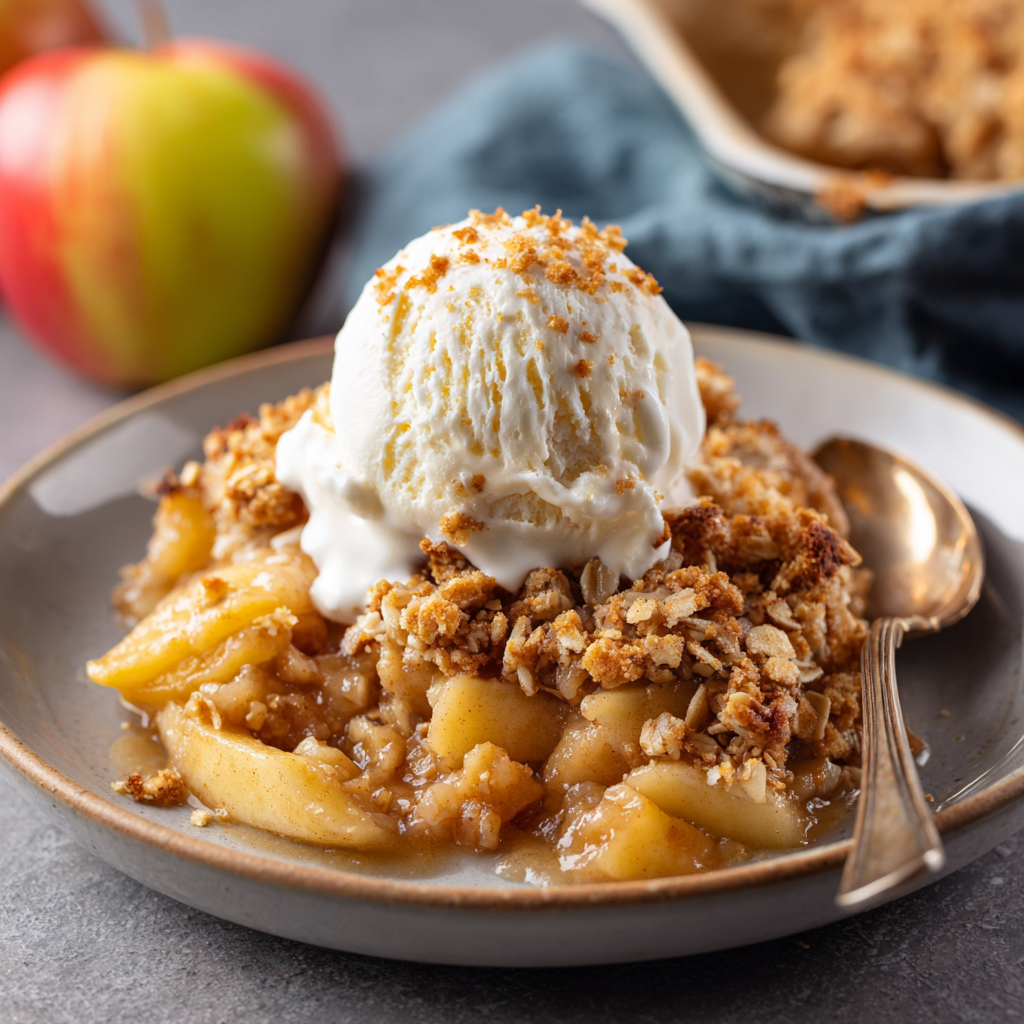
Easy Apple Crisp : Warm, Classic Dessert with a Buttery Oat Topping
Easy Apple Crisp: Your New Go-To Warm Hug of a Dessert
Hey friends, Beau here from Feastical! Let’s get real for a second. Is there anything better than the smell of cinnamon and apples wafting through your kitchen? It’s the universal signal that something cozy, delicious, and utterly soul-satisfying is about to happen. That’s exactly why I’m so pumped to share this recipe with you today.
This Easy Apple Crisp is my dessert soulmate. It has all the heartwarming, nostalgic flavor of a classic apple pie, but here’s the kicker—there’s no finicky pie crust involved. Nope. Just a mountain of juicy, spiced apples hidden under a blanket of buttery, crispy, oat-y goodness that bakes up into pure gold. It’s the dessert you can whip up on a busy Tuesday because you deserve a treat, or the showstopper you proudly serve to a table full of friends on a chilly Saturday night.
Whether you’re a seasoned pro who can julienne a carrot in your sleep or you’re just starting your kitchen journey (we’ve all been there—where DOES that spatula go?), this recipe is for you. It’s forgiving, flexible, and designed to make you feel like a rockstar. So, tie on your apron, preheat that oven, and let’s create some magic. This isn’t just dessert; it’s a edible reminder that the best things in life are often the simplest.
The Apple Doesn’t Fall Far From the Tree (Or the Crisp!)
This recipe takes me straight back to my grandma’s linoleum-floored kitchen. She was the queen of “a little of this, a pinch of that” cooking, and her apple crisp was legendary. I remember standing on a wobbly step-stool, “helping” her slice apples (read: eating more than made it into the bowl), and being utterly mesmerized as she used her fingers to work the cold butter into the flour and oats. “The secret,” she’d whisper, like she was sharing state secrets, “is getting it just crumbly enough.”
The real ritual, though, was the waiting. That 45 minutes in the oven felt like an eternity. We’d play cards at the kitchen table, the scent wrapping around us like a promise. When that timer finally dinged, she’d pull out the bubbling, golden dish and, without fail, let me have the first spoonful straight from the corner—blowing on it furiously so I wouldn’t burn my tongue. It was more than sugar and spice; it was love, patience, and the simple joy of creating something wonderful together. Every time I make this crisp, I’m right back there, and I hope this recipe creates a similar warm memory for you.
Gathering Your Apple Crisp Dream Team
Part of the beauty of this dessert is the short, sweet ingredient list. We’re using pantry staples to create something extraordinary. Here’s everything you’ll need, with a few chef-y insights to guide you.
For the Apple Filling:
- 6 medium apples, peeled and sliced – This is where the flavor party starts! I love a mix of Granny Smith (for their tartness and structure) and Honeycrisp or Gala (for their sweetness and softness). Using two types gives you a perfect balance. Chef’s Tip: No need to be perfect! Just slice them about 1/4-inch thick so they cook evenly.
- 1/4 cup granulated sugar – This sweetens the apples and helps pull out their natural juices to create that glorious syrupy filling.
- 1/2 teaspoon ground cinnamon – The classic cozy spice. Don’t be shy here—this is the soul of the filling.
- 1 tablespoon lemon juice – A little bright acid to balance the sweetness and prevent the apples from browning while you prep. Fresh is great, but bottled works in a pinch!
- 1 tablespoon all-purpose flour – Our thickening agent. It soaks up the apple juices as they bake, so you get a luscious sauce, not a soupy puddle. A great gluten-free swap is an equal amount of cornstarch.
For the Buttery Oat Topping:
- 3/4 cup old-fashioned rolled oats – These give the topping its signature hearty texture and crispiness. Quick oats will work but yield a softer, less textured topping. Avoid steel-cut—they won’t cook through.
- 1/2 cup all-purpose flour – The base of our crumble. It creates those irresistible buttery clumps.
- 1/3 cup packed brown sugar – Hello, molasses notes! The brown sugar adds a deep, caramel-like flavor and helps the topping crisp up beautifully. Light or dark both work.
- 1/2 teaspoon ground cinnamon – We’re echoing the flavor in the filling, tying the whole dish together.
- 1/4 teaspoon salt – Do not skip this! Salt is the flavor amplifier. It makes the sweet taste sweeter and the buttery taste richer.
- 1/2 cup (1 stick) COLD butter, cut into small pieces – This is the non-negotiable star. Cold butter is the key to a crisp, not soggy, topping. When the cold butter hits the hot oven, it steams and creates flaky, separate crumbs. I cut it into cubes and then pop it back in the fridge until the very last second.
Let’s Build Some Deliciousness: Step-by-Step
Ready? Let’s turn those ingredients into the cozy dessert of your dreams. I’ll walk you through each step with my favorite kitchen hacks.
- Preheat and Prep. Fire up your oven to 350°F (175°C). Take an 8×8-inch baking dish (or a similar 2-quart dish) and give it a light coating of butter, baking spray, or a quick wipe of oil. This little step guarantees easy serving later—no stuck-on apple casualties! Beau’s Hack: If I’m feeling fancy or serving a crowd, I’ll use a pretty ceramic or cast-iron skillet. It goes straight from oven to table for major “wow” factor.
- Create the Apple Filling. In a large mixing bowl, combine your sliced apples, granulated sugar, cinnamon, lemon juice, and flour. Now, get in there with your (clean!) hands and toss it all together. You want every single apple slice to get a light, friendly coating of the sugary, spiced mixture. This ensures every bite is perfectly balanced. Pour this fragrant apple mountain into your waiting baking dish and spread it into an even layer. Don’t wash that bowl yet!
- Make the Magical Topping. In the same bowl (see? less dishes!), whisk together the oats, flour, brown sugar, cinnamon, and salt. Make sure the brown sugar is broken up and evenly distributed. Now, scatter those cold butter cubes over the top. Here’s the fun part: use a pastry cutter, two forks, or my personal favorite—your fingertips—to work the butter into the dry ingredients. Pinch and rub the mixture between your fingers until it resembles a rough, crumbly texture with pea-sized (and some smaller) butter pieces throughout. The goal is not a uniform paste, but a shaggy, crumbly mess. Those visible butter bits are what will melt and create crispy pockets of joy.
- Assemble and Bake to Golden Perfection. Sprinkle the oat topping evenly over the apples. No need to press it down—let it be fluffy! Slide the dish onto the middle rack of your preheated oven. Now, the hardest part: the wait. Bake for 40-45 minutes. You’re looking for a topping that’s deeply golden brown (almost toasted-looking) and a filling that is visibly bubbling around the edges. That bubble is the sound of success—it means your filling is thick and juicy.
- The Crucial Rest. I know, I know. You want to dive in. But trust me on this: let the crisp rest for at least 15-20 minutes after pulling it from the oven. This allows the bubbling filling to settle and thicken up just enough so that when you scoop it, you get a perfect, cohesive serving and not apple soup. It’s worth the wait, I promise.
How to Serve This Beauty (The Best Part!)
This is where your apple crisp becomes an experience. Sure, you can eat it straight from the dish with a spoon (no judgment here), but let’s talk about elevating the moment.
The Classic & Unbeatable: A generous scoop of high-quality vanilla ice cream melting over the warm crisp is a match made in heaven. The hot-and-cold, creamy-and-crispy contrast is everything.
The Cozy Alternative: A dollop of softly whipped cream or a spoonful of thick, tangy Greek yogurt adds a lovely richness and cuts the sweetness perfectly.
For Breakfast? (Yes, Really): Leftover apple crisp is absolutely fantastic reheated and served with a pour of cold milk or a scoop of vanilla yogurt. I fully endorse dessert for breakfast when it involves fruit and oats!
However you serve it, do it warm. That’s when the flavors sing and the textures are at their peak. It’s comfort in a bowl.
Make It Your Own: Delicious Twists & Swaps
One of my favorite things about this recipe is its versatility. Feel free to play and adapt it to your taste or pantry!
- Pear & Ginger Crisp: Swap out half the apples for ripe, peeled pears. Add 1 teaspoon of freshly grated ginger or 1/2 teaspoon of ground ginger to the filling for a bright, zippy twist.
- Berry-Apple Harvest: Add 1 cup of fresh or frozen blueberries or blackberries to the apple mixture. The berries will burst and create a gorgeous, vibrant purple-pink filling.
- Nutty Crunch: Stir 1/2 cup of chopped pecans or walnuts into the oat topping before sprinkling it on. It adds an incredible toasted flavor and extra crunch.
- Gluten-Free & Dairy-Free Friendly: Use a 1:1 gluten-free flour blend in both the filling and topping. For the butter, swap in a high-quality, firm vegan butter stick (keep it cold!). The result is just as delicious.
- Maple Sweetness: Replace the brown sugar in the topping with 1/3 cup of pure maple syrup. You may need to add an extra 2-3 tablespoons of flour to compensate for the extra liquid and keep the topping crumbly.
Beau’s Kitchen Notebook
This recipe has been with me through countless potlucks, holiday feasts, and “I need chocolate—wait, no, apple crisp” moments. It’s evolved from my grandma’s “pinch of this” method to these written-down measurements, but the spirit is the same. Over the years, I’ve learned that the type of apple truly changes the game—tart apples give a more grown-up, complex flavor, while sweet apples feel like instant nostalgia.
A funny story: I once was so eager to make this for a date that I forgot to add the flour to the filling. The result was essentially sweet, spiced apple soup with a floating oat raft. We laughed so hard, ate it with straws (joking, kind of), and it’s still a story we tell. Even the “failures” are memorable. So don’t stress. Cooking is about joy, not perfection. Now, go preheat that oven!
Your Apple Crisp Questions, Answered
Q: Can I make this apple crisp ahead of time?
A: Absolutely! You can assemble the crisp completely (cover tightly) and refrigerate it for up to 24 hours before baking. You may need to add 5-10 extra minutes to the bake time since it’s going into the oven cold. You can also bake it, let it cool completely, cover, and reheat it in a 300°F oven for 15-20 minutes before serving.
Q: My topping is soggy! What happened?
A: The usual suspects: 1) The butter was too soft or melted when you mixed it. Always start with cold butter. 2) The crisp didn’t bake long enough. Ensure the top is a deep golden brown and you see active bubbling around the edges. 3) Let it rest! The filling continues to thicken as it cools outside the oven.
Q: Can I use frozen apples?
A: You can, but don’t thaw them first. Toss the frozen slices directly with the filling ingredients (you might need an extra half-tablespoon of flour) and bake. Expect a slightly more liquidy filling, and potentially a longer bake time.
Q: What’s the best way to store leftovers?
A: Cover the baking dish with foil or transfer leftovers to an airtight container. They’ll keep in the fridge for 3-4 days. Reheat single servings in the microwave for a minute, or reheat the whole dish in a 325°F oven until warmed through.

Easy Apple Crisp : Warm, Classic Dessert with a Buttery Oat Topping
Description
Hey friends, Beau here from Feastical! This Easy Apple Crisp is everything we love about apple pie—warm cinnamon apples, buttery sweetness, and pure nostalgia—without the stress of rolling out dough. Juicy apples bake beneath a golden, oat-studded crumble that’s crisp on top and tender underneath. It’s simple, forgiving, and endlessly comforting, whether you’re baking for guests or just treating yourself on a quiet night in.
Ingredients
Apple Filling
-
6 medium apples, peeled and sliced (Granny Smith + Honeycrisp is ideal)
-
¼ cup granulated sugar
-
½ teaspoon ground cinnamon
-
1 tablespoon lemon juice
-
1 tablespoon all-purpose flour (or cornstarch for gluten-free)
Buttery Oat Topping
-
¾ cup old-fashioned rolled oats
-
½ cup all-purpose flour
-
⅓ cup packed brown sugar
-
½ teaspoon ground cinnamon
-
¼ teaspoon salt
-
½ cup (1 stick) cold butter, cubed
Instructions
-
Preheat oven to 350°F (175°C). Lightly grease an 8×8-inch baking dish.
-
Make the filling
In a large bowl, toss apples with sugar, cinnamon, lemon juice, and flour until evenly coated. Spread into the prepared baking dish. -
Prepare the topping
In the same bowl, mix oats, flour, brown sugar, cinnamon, and salt. Cut in cold butter using fingers or a pastry cutter until the mixture is crumbly with pea-sized butter pieces. -
Assemble & bake
Sprinkle topping evenly over apples. Bake uncovered for 40–45 minutes, until the topping is golden and the filling is bubbling around the edges. -
Rest before serving
Let cool for 15–20 minutes to allow the filling to set.
Notes
-
Use cold butter for a crisp, not soggy, topping
-
Mix apple varieties for balanced sweet-tart flavor
-
Deep golden topping = success — pale topping means underbaked
-
Let it rest so the filling thickens properly
Nutritional Info (Approximate & For Your Info!)
Here’s a general breakdown per serving (based on 6 servings). Remember, this is a treat meant to be enjoyed soulfully!
Calories: ~300 | Total Fat: 12g | Saturated Fat: 7g | Cholesterol: 30mg | Sodium: 150mg | Total Carbohydrates: 48g | Dietary Fiber: 4g | Sugars: 32g | Protein: 2g
Please note: These values are estimates calculated using online tools and will vary based on specific ingredients used (like apple type, butter brand, etc.). For precise dietary needs, use your preferred nutritional calculator with your exact ingredients.
Final Thoughts from My Kitchen to Yours
And there you have it, friends—my heart-on-a-plate, Easy Apple Crisp. This recipe is more than just a list of steps; it’s an invitation to slow down, to create something with your hands, and to fill your home with a smell that feels like a celebration. It’s proof that you don’t need complicated techniques or fancy equipment to make a dessert that people will absolutely rave about.
I hope this crisp becomes a regular in your recipe rotation, a solution for last-minute guests, and a treat that makes an ordinary day feel special. Most of all, I hope you have as much fun making it as I do. Now, go grab that ice cream! And when you make it, tag me over at @Feastical—I’d love to see your masterpiece.
Until next time, keep it simple, keep it soulful, and always keep a fork handy.
– Beau
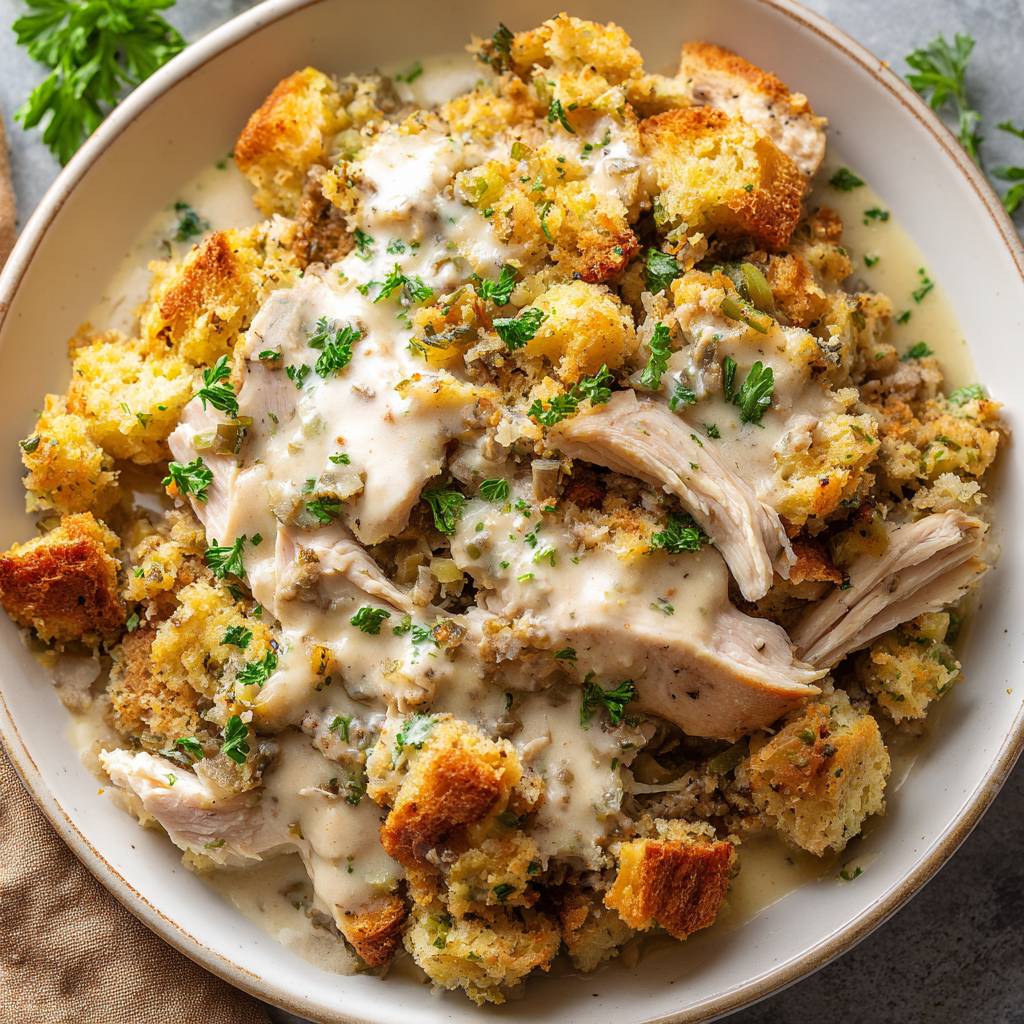
Crockpot Chicken and Stuffing : The Ultimate Set-It-and-Forget-It Comfort Meal
Crockpot Chicken and Stuffing – The Ultimate Set-It-and-Forget-It Comfort Meal
Creamy, Savory, and Effortlessly Cozy
When Your Soul Needs a Warm Hug, Your Crockpot Answers
Hey friends, Beau here from Feastical. Let’s talk about those days. You know the ones. The sky is grey, your to-do list is laughing at you, and the very last thing you want to do is stand at the stove orchestrating a complicated dinner symphony. Your stomach is rumbling for something that feels like a Sunday at grandma’s house, but your energy is firmly planted in “takeout menu” territory. I get it. We’ve all been there.
That’s exactly why this Crockpot Chicken and Stuffing recipe is my not-so-secret weapon. It’s the culinary equivalent of a cozy blanket and your favorite sweatpants. This dish is pure magic: tender, juicy chicken, nestled under a layer of savory, herb-infused stuffing that turns luxuriously soft and creamy as it cooks. The best part? You achieve this state of comfort food nirvana with about 10 minutes of active effort. Just a few simple layers, the click of a lid, and you’re free for the next 5-6 hours. The slow cooker does the heavy lifting, filling your home with the kind of aroma that makes everyone wander into the kitchen asking, “Is it ready yet?” with hopeful puppy-dog eyes.
This isn’t just a recipe; it’s a permission slip to take it easy. It’s for the busy parent, the tired professional, the student on a budget, or anyone who believes that good food should bring comfort, not stress. So, let’s ditch the complicated and embrace the beautifully simple. Grab your crockpot, and let’s make a meal that’s guaranteed to feel like a warm hug on a plate.
Why This Dish Feels Like Coming Home
This recipe always takes me straight back to my Aunt Clara’s kitchen after a long, cold day of playing outside. She wasn’t a fancy chef, but she was a wizard with a slow cooker and a can of cream soup. Her version of this was legendary in our family. She’d have it bubbling away on the counter, and the second we’d burst through the door, cheeks rosy and starving, that smell would hit us—the savory scent of poultry seasoning, the rich promise of creamy sauce.
We’d set the table (impatiently), and she’d lift the lid, releasing a cloud of steam that fogged up her glasses. She’d always serve it with a dramatic flourish, saying, “The pot did all the work, I just made the magic happen!” It was our guaranteed post-adventure feast, eaten with big spoons and even bigger smiles. It taught me early on that the best meals aren’t about perfection; they’re about ease, warmth, and the people you share them with. Every time I make this now, I get a little taste of that childhood comfort, and I love that I can pass that feeling right on to you.
Gathering Your Comfort Food Toolkit
Here’s the beautiful lineup of simple ingredients that come together to create something truly greater than the sum of its parts. Don’t stress about brand names or exactness—this is a forgiving recipe!
- 1 ½ to 2 lbs boneless, skinless chicken breasts or thighs: The star of the show! I often use a mix. Thighs are my personal favorite for slow cooking—they stay incredibly juicy and are more forgiving if you cook them a bit longer. Breasts are leaner and will shred beautifully. Use what you love or have on hand!
- 1 box (6 oz) stuffing mix (any flavor): This is our flavor and texture hero. The classic “herb” or “chicken” flavored mix is perfect. Those little dried bread cubes and packets of seasoning are a brilliant shortcut for incredible flavor. (Gluten-free? Use your favorite GF stuffing mix!)
- 1 can (10.5 oz) cream of chicken soup: The creamy base that brings everything together. It creates a luxurious sauce as it melds with the broth. Chef’s Insight: For a richer flavor, try cream of mushroom or celery. To lighten it up, a 98% fat-free version works great, or you can use a homemade cream soup substitute.
- ¾ cup chicken broth: The essential liquid that brings moisture and depth. This hydrates the stuffing and creates the sauce. Pro Tip: If you want a thicker, more stuffing-like topping, reduce this to ½ cup. For a saucier, almost casserole-like dish, stick with ¾ cup or even go up to 1 cup.
- ½ cup sour cream: The secret weapon for tangy richness! It adds a wonderful creaminess and a slight zing that balances the savory flavors. Don’t skip it! If you’re in a pinch, plain Greek yogurt is a fantastic substitute.
- ½ teaspoon garlic powder: An easy flavor booster that distributes evenly. You can also use a teaspoon of minced fresh garlic if you’re feeling fancy.
- Salt and black pepper, to taste: Always season your chicken directly! The stuffing mix and soup have sodium, so I’m light on the salt here and let people adjust at the table.
- Optional: 1-2 cups frozen green beans or peas: My little hack for a one-pot meal. Toss them in during the last 30-60 minutes—they’ll heat through and add a pop of color and veggie goodness without getting mushy.
- Fresh parsley, for garnish: A sprinkle of green at the end makes it look restaurant-fresh and adds a tiny bit of freshness. Chives or thyme are lovely too!
Let’s Build Your Cozy Masterpiece (It’s So Easy!)
Ready for the simplest cooking session ever? Follow these steps, and you really can’t go wrong. I’ve packed in my favorite chef hacks along the way.
- Prep Your Pot & Protein: Give the inside of your slow cooker a quick spray with non-stick cooking spray. This isn’t totally necessary, but it makes cleanup a dream. Place your chicken in a single layer on the bottom. Now, season it well! Sprinkle both sides with a pinch of salt, pepper, and that garlic powder. This simple step ensures the chicken itself is flavorful, not just the topping.
- Create the Flavor Bomb Topping: In a medium bowl, dump in your dry stuffing mix (crumbs, herbs, and all!). Add the entire can of cream soup, the sour cream, and the chicken broth. Grab a spoon or spatula and mix it until it’s just combined. It will be a very thick, almost pasty mixture—this is perfect! Don’t add more liquid; the magic happens as it cooks. Chef’s Hack: If you want extra flavor, stir in a teaspoon of dried onion flakes or a sprinkle of dried thyme at this stage.
- The Big Layer: Take your thick stuffing mixture and plop it right on top of the seasoned chicken. Use your spoon to spread it into an even layer, covering the chicken completely. This blanket of goodness will steam and baste the chicken as it cooks, keeping it unbelievably moist. Put the lid on securely. That’s it. Your active work is done. Go live your life!
- Let the Slow Cooker Work Its Magic: Cook on LOW for 5-6 hours or on HIGH for 3-4 hours. Low and slow is always my preference for the most tender chicken, but high works perfectly if you’re on a tighter schedule. The dish is done when the chicken is cooked through (165°F internal temperature) and the stuffing on top is set, moist, and heated through.
- Veggie Time (Optional but Smart): About 30 to 60 minutes before serving, if you’re adding frozen veggies, simply stir them gently into the top layer of the stuffing. Don’t bury them; just nestle them in so they can heat through. Replace the lid and let it finish cooking. This keeps them bright and crisp-tender.
- Serve & Swoon: When the timer goes off and your kitchen smells like heaven, it’s time! You can serve the chicken breasts/thighs whole, or use two forks to easily shred the chicken right in the pot—it will be that tender. Spoon generous helpings of the creamy chicken and savory stuffing onto plates or into bowls. Garnish with that fresh parsley for a beautiful finish.
How to Serve Up This Cozy Classic
This dish is a complete meal in a pot, but a couple of simple sides can turn it into a feast. Here’s how I love to plate it up:
For a classic, homey presentation, I go for a wide, shallow bowl. Place a piece of the tender chicken or a pile of shredded meat right in the center. Spoon a big heap of that creamy stuffing right over the top, letting some of the sauce pool around the edges. That sauce is liquid gold—don’t waste a drop!
Now, for sides: because we have our protein and starch covered, a simple, bright vegetable is the perfect contrast. Steamed or roasted broccoli with a squeeze of lemon is my go-to. A crisp green salad with a tangy vinaigrette cuts through the richness beautifully. And honestly, a side of cranberry sauce (the kind from the can is totally acceptable here!) adds a sweet-tart pop that is absolutely divine with the savory stuffing. Don’t forget a big basket of warm, crusty bread for mopping up every last bit of that delicious sauce.
Make It Your Own: Fun Twists & Swaps
The beauty of this recipe is its flexibility. Once you’ve mastered the basic version, play around! Here are a few of my favorite spins:
- The “Thanksgiving Leftovers” Twist: Use cream of mushroom soup and add ½ cup of dried cranberries to the stuffing mix. In the last hour, stir in 1 cup of chopped leftover roasted turkey instead of chicken. Top with a sprinkle of pecans before serving.
- The “Everything Cheese Lover”: After cooking, stir 1 cup of shredded cheddar cheese into the hot stuffing topping until melty. Let it sit for 5 minutes. Garnish with extra cheese and crispy fried onions for a decadent treat.
- The “Herb Garden” Fresh Version: Swap the boxed stuffing mix for 4 cups of dried, cubed artisan bread. Increase the broth to 1 cup and add 1 tablespoon of your favorite poultry seasoning blend, ¼ cup of fresh chopped parsley, and 2 tablespoons of fresh chopped sage.
- The “Lightened Up” Swap: Use chicken breasts, 98% fat-free cream of chicken soup, low-sodium broth, and plain non-fat Greek yogurt instead of sour cream. You’ll still get all the creamy comfort with a lighter footprint.
- The “Pork Chop” Alternative: Replace the chicken with 4-6 boneless pork chops. They become incredibly tender and pair wonderfully with the stuffing flavors. Cook times remain the same.
Beau’s Kitchen Confidential
This recipe has been in my back pocket for years, and it’s evolved from my Aunt Clara’s classic. The biggest game-changer was adding the sour cream—it was her “secret” that I’m now shouting from the rooftops! It transforms the texture from just “wet stuffing” to a luxuriously creamy one.
A funny story: I once was filming a video for this recipe and was so busy chatting to the camera about how “hands-off” it was that I completely forgot to actually plug in the crockpot. Six hours later, I had a very sad, very raw dinner. We ordered pizza and laughed about it. The moral? Always double-check that little red light is on! Even us “pros” have kitchen fails. It’s all part of the fun.
Your Questions, Answered
Q: Can I put raw chicken frozen in the crockpot?
A: I don’t recommend it for food safety and even cooking. Thaw your chicken first for the best (and safest) results. The frozen chicken can stay in the “danger zone” temperature for too long as it thaws in the slow cooker.
Q: My stuffing turned out a bit mushy. What happened?
A: This usually means a bit too much liquid. Next time, try reducing the broth by ¼ cup. Also, avoid stirring during the cooking process—that can break down the bread cubes. The texture should be moist and cohesive, not soupy.
Q: Can I make this in the oven instead?
A: Absolutely! Layer everything in a 9×13 baking dish as directed. Cover tightly with foil and bake at 350°F (175°C) for about 45-55 minutes, until the chicken is cooked through and the stuffing is hot. Uncover for the last 10 minutes if you like a crisper top.
Q: How do I store and reheat leftovers?
A: Store in an airtight container in the fridge for up to 4 days. Reheat individual portions in the microwave with a splash of broth or water to keep it moist. You can also reheat it covered in a 350°F oven until warmed through.

Crockpot Chicken and Stuffing : The Ultimate Set-It-and-Forget-It Comfort Meal
Description
Creamy, savory, and endlessly cozy, this Crockpot Chicken and Stuffing is the definition of effortless comfort food. Tender chicken cooks low and slow beneath a rich, herby stuffing topping that turns irresistibly soft and creamy as it simmers. With just minutes of prep and one slow cooker, this is the kind of meal that feels like a warm hug after a long day—no stirring, no stress, no fancy steps.
Ingredients
-
1½–2 lbs boneless, skinless chicken breasts or thighs
-
Salt and black pepper, to taste
-
½ teaspoon garlic powder
-
1 box (6 oz) stuffing mix (chicken or herb flavor)
-
1 can (10.5 oz) cream of chicken soup
-
¾ cup chicken broth
-
½ cup sour cream (or plain Greek yogurt)
-
Optional: 1–2 cups frozen green beans or peas
-
Optional garnish: chopped fresh parsley or chives
Instructions
-
Prep the slow cooker
Lightly grease the crockpot. Place chicken in an even layer on the bottom and season with salt, pepper, and garlic powder. -
Mix the topping
In a bowl, combine stuffing mix, cream of chicken soup, sour cream, and chicken broth. Stir until just combined. The mixture will be thick. -
Layer and cook
Spread the stuffing mixture evenly over the chicken. Cover and cook:-
LOW: 5–6 hours
-
HIGH: 3–4 hours
Until chicken is fully cooked and tender.
-
-
Add vegetables (optional)
During the last 30–60 minutes, gently stir frozen vegetables into the top layer. Cover and continue cooking. -
Serve
Serve chicken whole or shredded, topped generously with creamy stuffing. Garnish with fresh herbs if desired.
Notes
-
Chicken thighs stay juicier if cooking on the longer end.
-
Don’t over-stir — stirring too much breaks down the stuffing.
-
For thicker stuffing, reduce broth to ½ cup.
-
For extra sauce, increase broth to 1 cup.
-
Always thaw chicken first for safe, even cooking.
Final Thoughts: Your New Go-To for Cozy Nights
This Crockpot Chicken and Stuffing is more than just a recipe—it’s a reminder that good food doesn’t have to be complicated. It’s the warm, savory hug you can count on when life feels overwhelming, when time is short, or when you simply crave the kind of meal that feels like home.
Whether you stick to the classic version or make it your own with one of the fun twists, this dish delivers every time. It forgives, adapts, and fills your kitchen with the kind of smell that makes everyone feel welcome.
So, the next time that grey day rolls around and takeout menus are calling, remember: you have a better option. Set it, forget it, and let your slow cooker do what it does best—turning simple ingredients into a moment of pure comfort.
Thanks for cooking with me, friends. Now, go enjoy that well-deserved cozy night in. You’ve earned it.
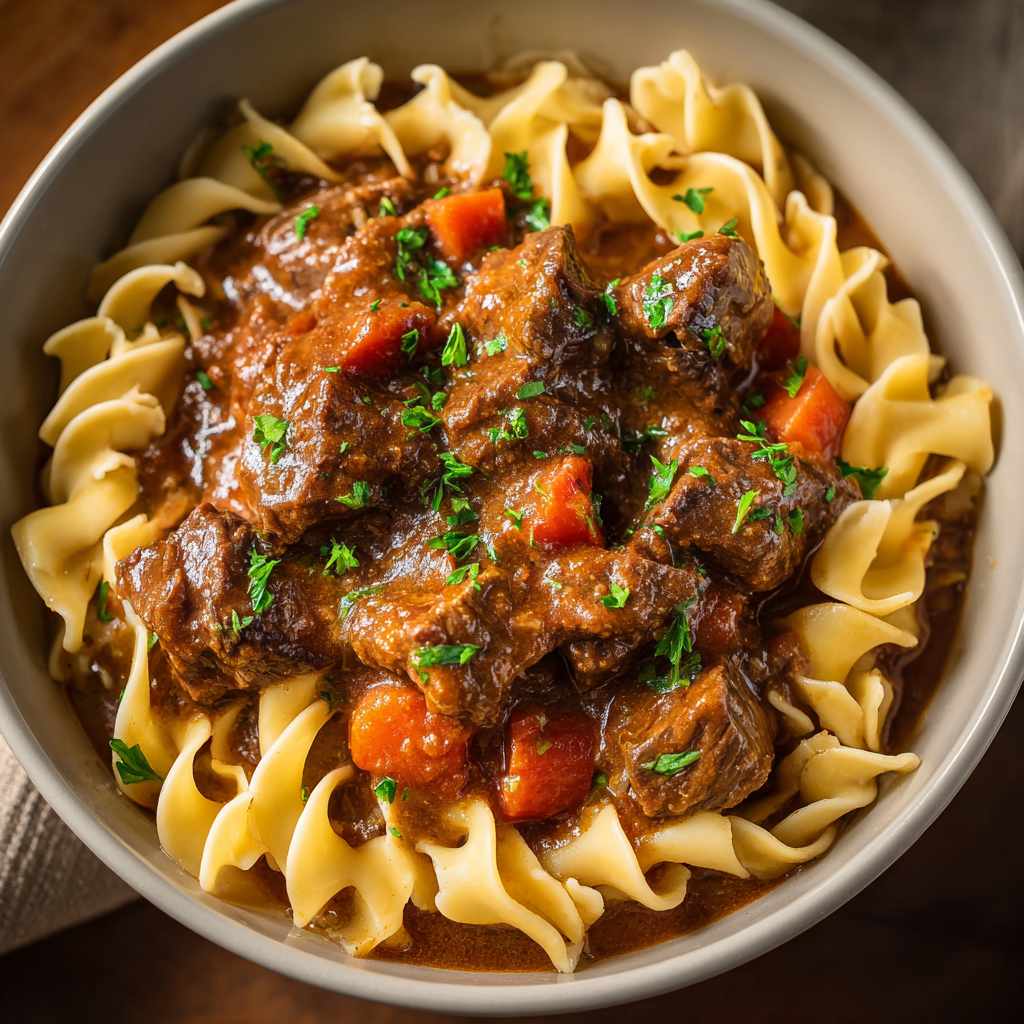
Beef & Noodles : A Cozy, Hearty Midwest Classic
Beef & Noodles: The Cozy Midwest Classic That Tastes Like a Hug
Hey friends, Beau here from Feastical! Pull up a chair and let’s talk about one of life’s greatest, simplest pleasures: a steaming bowl of food that just gets you. You know the kind. It’s the dish you crave when the wind is howling, when you need a serious pick-me-up, or when you just want to wrap your hands around something warm and reassuring. For me, and for so many across the heartland, that dish is a humble, glorious bowl of Beef & Noodles.
This isn’t fancy cuisine. It’s better. It’s heritage food. It’s the kind of recipe passed down on stained index cards and made by memory in well-loved Dutch ovens. Tender, fall-apart beef swimming in a savory, onion-kissed gravy, all tangled up with soft, pillowy egg noodles. It’s sustenance. It’s soul. It’s the culinary equivalent of your favorite worn-in sweater.
Today, I’m sharing my tried-and-true, foolproof version of this Midwest classic. We’re going to build layers of flavor the easy way, with a few of my favorite kitchen hacks tucked in. Whether you’re a weeknight warrior or a Sunday simmerer, this recipe is your ticket to comfort food bliss. So, tie on your apron, grab your biggest pot, and let’s make a meal that’ll have everyone asking for seconds. This is more than just dinner; it’s a feel-good feast.
A Simmering Pot of Memories
This recipe always takes me right back to my grandma’s kitchen in Indiana. It wasn’t a fancy space— Formica counters, that faint smell of coffee and cinnamon always in the air—but it was the heart of her home. She made Beef & Noodles almost every Sunday after church. The ritual was as comforting as the food itself.
I’d sit at the table, supposedly doing homework, but really just watching her. There was no recipe in sight. She’d brown the beef with a focus that meant business, then deglaze the pan with a splash of broth, scraping up every last flavorful bit with a satisfied sigh. The pot would then go into the oven for its long, slow simmer. For hours, the most incredible aroma would weave through the house—a savory promise of what was to come.
When the family gathered, she’d pull the bubbling pot from the oven, stir in the wide egg noodles, and within minutes, she was ladling heaping portions into our bowls. It was quiet, focused work. The joy was in the serving, in watching us dig in. That first bite was pure magic: savory, rich, and profoundly simple. It taught me that the best meals aren’t about complexity; they’re about patience, love, and the powerful act of feeding the people you care for. Every time I make this, I feel that connection. It’s my edible heirloom.
Gathering Your Flavor Makers
Here’s everything you’ll need to create this bowl of comfort. I’ve added my little chef’s notes alongside each one—because knowing the why makes you a more confident cook!
- 2 lbs beef chuck roast, cut into 1.5-inch chunks: This is our star! Chuck roast is my go-to because it’s marbled with fat that melts during the long cook, making it incredibly tender and flavorful. Chef’s Insight: Ask your butcher to cut it for you to save time. Stew meat works, but chuck has better flavor consistency.
- 1 tablespoon neutral oil (like avocado or canola): Just enough to get a good sear. We’re not deep-frying, just creating a flavorful foundation.
- 1 small yellow onion, diced: The sweet, aromatic backbone of our gravy. It melts down into silky sweetness. Sub Tip: No yellow onion? A white onion or two large shallots will do in a pinch.
- 3 cloves garlic, minced: Our aromatic powerhouse. Please, use fresh! That jarred stuff just can’t compete when it’s a key flavor layer.
- 4 cups beef broth: This forms our gravy base. Chef’s Hack: For a richer, fuller flavor, I like to use a good-quality, low-sodium broth. It lets you control the salt. Need a boost? A splash of red wine when deglazing is a game-changer!
- 1 tablespoon Worcestershire sauce: The secret umami bomb! It adds a deep, savory, slightly tangy complexity that makes the gravy sing. Don’t skip it.
- 1 teaspoon dried thyme: Herbal, earthy notes that pair perfectly with beef. Sub Tip: Fresh thyme is fantastic—use 3-4 sprigs tied together and remove before adding noodles.
- Salt and black pepper, to taste: Season as you go! I season the beef before searing and adjust again at the end.
- 12 oz wide egg noodles (homestyle or extra wide): The classic companion. They’re sturdy enough to hold up to the rich gravy and have a wonderful, comforting texture. Sub Tip: For a gluten-free twist, your favorite GF wide noodles work great—just cook them separately and add at the end.
- Optional: chopped fresh parsley for garnish: A little pop of color and fresh flavor to finish. Chives or even a tiny dollop of sour cream are also delicious.
Let’s Get Cooking: Building Your Masterpiece
Okay, team. Time to fire up the stove. Follow these steps, soak up the tips, and you’re guaranteed a perfect pot of comfort.
Step 1: The Perfect Sear (Don’t Rush This!)
Pat your beef chunks very dry with paper towels. This is the #1 trick for a good sear, not a steam. Season generously with salt and pepper. In your large, heavy-bottomed pot or Dutch oven, heat the oil over medium-high heat until it shimmers. Add the beef in a single layer, with space between the pieces. Work in batches! Crowding the pan is the enemy of browning. Let it sear, undisturbed, for 3-4 minutes per side until you get a gorgeous, deep-brown crust. Remove to a plate and repeat. Chef’s Mantra: Brown food = flavor food. Those crispy bits left in the pot? Liquid gold.
Step 2: Building the Flavor Foundation
In that same glorious pot (with all those browned bits), reduce the heat to medium. Add the diced onion. Sauté for 4-5 minutes, stirring occasionally, until they’re softened and turning translucent. Now, add the minced garlic and cook for just 30 seconds until fragrant—you’ll smell it! Garlic burns fast, so keep it moving.
Step 3: The Slow Simmer (This is Where Magic Happens)
Return all the seared beef and any accumulated juices back to the pot. Pour in the beef broth and Worcestershire sauce. The broth will sizzle and steam—use your spoon to scrape up every last bit of browned fond from the bottom of the pot. This is called deglazing, and it’s where we capture all that flavor we worked so hard to create. Stir in the dried thyme, and bring everything to a lively boil. Once boiling, immediately reduce the heat to low. Cover the pot with a tight-fitting lid and let it simmer gently for 1.5 to 2 hours. The beef should be fork-tender, practically melting apart. This low-and-slow cook is non-negotiable for that perfect texture.
Step 4: Noodle Time!
Once your beef is tender, taste the broth and adjust seasoning with more salt and pepper if needed. Bring the stew back to a low boil. Stir in the dry egg noodles directly into the pot. Submerge them in the liquid. Let them cook, uncovered, at a simmer for 10-12 minutes, stirring occasionally to prevent sticking. The noodles will soak up the broth and thicken the gravy beautifully. If it gets too thick before the noodles are done, just add a splash of water or extra broth. You’re looking for a glossy, coat-the-spoon consistency.
Step 5: The Grand Finale
Turn off the heat. Let the pot sit for 5 minutes—this allows the gravy to settle and the flavors to marry one last time. Give it one final gentle stir. Ladle generous servings into deep bowls. Garnish with that chopped parsley for a fresh contrast. Serve immediately and watch the smiles appear.
How to Serve Your Cozy Creation
This dish is a complete meal in a bowl, but let’s talk about making it a true Midwest feast! The beauty is in its simplicity, so your sides should be simple too.
The Classic Plate: A deep, wide bowl is essential. Pile that Beef & Noodles right in the center. I love to serve it with a slice of thick, buttered crusty bread or a soft dinner roll on the side for sopping up every last drop of gravy. A simple, crisp green salad with a tangy vinaigrette cuts through the richness perfectly.
Go All-In on Comfort: Feeling extra indulgent? Serve it over a cloud of creamy mashed potatoes or buttery wide egg noodles. Yes, noodles on noodles! It’s a carb-lover’s dream and a true regional tradition. A side of roasted carrots or steamed green beans adds a lovely veggie component.
For the Crowd: This recipe doubles beautifully for a potluck or family gathering. Keep it warm in a slow cooker on the “warm” setting. Set out bowls, spoons, and your chosen sides for a build-your-own comfort bowl bar. It’s a guaranteed crowd-pleaser that asks for nothing but your appetite.
Make It Your Own: Fun Twists & Swaps
Love the base recipe? Awesome! Now let’s play with it. Here are a few of my favorite ways to mix things up.
- The “Kitchen Sink” Stew: Add 2 cups of chunked carrots and celery when you sauté the onions. For the last 20 minutes of simmering, toss in a cup of frozen peas. You’ve just turned it into a hearty beef stew with noodles!
- Mushroom Lover’s Dream: Sauté 8 oz of sliced cremini or baby bella mushrooms with the onions. Their earthy flavor adds incredible depth. A splash of dry sherry when deglazing takes it over the top.
- Chicken & Noodles (The Comfort Cousin): Swap the beef for 2 lbs of boneless, skinless chicken thighs. Use chicken broth instead of beef. The cook time is shorter—simmer for about 45 minutes or until the chicken shreds easily. A teaspoon of poultry seasoning is a great addition here.
- Slow Cooker Simplicity: Perfect for busy days. After searing the beef and sautéing the onion/garlic, transfer everything to your slow cooker. Add broth and Worcestershire. Cook on LOW for 7-8 hours or HIGH for 4-5. An hour before serving, stir in uncooked noodles, cover, and cook on HIGH until tender.
- Creamy Herb Version: For a richer, creamier gravy, stir in 1/2 cup of sour cream or full-fat plain Greek yogurt at the very end, after you’ve turned off the heat. Add a tablespoon of chopped fresh dill or parsley. So good!
Beau’s Kitchen Notes & Stories
This recipe has been my reliable friend for years, and it’s evolved in my kitchen. I used to be terrified of overcooking the beef, so I’d pull it too early. Lesson learned: trust the low simmer! The connective tissue needs time to break down into that gorgeous tenderness.
One hilarious kitchen fail early on? I was in a hurry and dumped all the uncooked noodles in at the beginning of the 2-hour simmer. Let’s just say I ended up with beef-flavored paste and had to order pizza. A humble, but delicious, reminder that timing matters!
Now, I see this recipe as a template. It’s forgiving. Not enough broth? Add some water. Want it thicker? Make a quick slurry of cornstarch and cold water at the end. The goal isn’t perfection; it’s a delicious, soul-warming meal shared with good people. That’s the real Feastical spirit.
Your Questions, Answered
Q: My gravy is too thin! How can I thicken it?
A: No sweat! The easiest fix is to create a slurry. Mix 1 tablespoon of cornstarch with 2 tablespoons of cold water until smooth. After the noodles are cooked, bring the stew to a gentle simmer and stir in the slurry. Cook for 1-2 minutes until thickened. You can also let it simmer uncovered for a bit longer to reduce.
Q: Can I cook the noodles separately?
A: Absolutely, and sometimes I prefer it! Boil the noodles in a separate pot of salted water according to package directions. Drain, toss with a tiny bit of butter to prevent sticking, and then ladle the beef and gravy over them. This gives you more control over the noodle texture and prevents them from absorbing all the gravy if you have leftovers.
Q: What’s the best way to store and reheat leftovers?
A: Store in an airtight container in the fridge for up to 4 days. The noodles will continue to absorb liquid, so when reheating on the stove or in the microwave, add a splash of broth or water to loosen it back up to that perfect saucy consistency.
Q: Is there a way to make this in an Instant Pot or pressure cooker?
A: Yes! Use the sauté function to brown the beef and soften the onions/garlic. Add everything EXCEPT the noodles. Pressure cook on High for 35 minutes, with a natural pressure release for 10 minutes. Then, use the sauté function again to bring it to a simmer and cook your noodles right in the pot, or add pre-cooked noodles to heat through.

Beef & Noodles : A Cozy, Hearty Midwest Classic
Description
Hey friends, Beau here from Feastical! When the weather turns cold or life just feels heavy, this is the bowl I reach for. Beef & Noodles is pure Midwest comfort—tender chunks of beef simmered low and slow in a savory gravy, finished with soft, pillowy egg noodles. It’s simple, hearty, and deeply satisfying. No frills, no fuss—just the kind of meal that warms you from the inside out.
Ingredients
-
2 lbs beef chuck roast, cut into 1½-inch chunks
-
1 tablespoon neutral oil (canola or avocado)
-
1 small yellow onion, diced
-
3 cloves garlic, minced
-
4 cups beef broth (low sodium preferred)
-
1 tablespoon Worcestershire sauce
-
1 teaspoon dried thyme
-
Salt and black pepper, to taste
-
12 oz wide egg noodles
-
Optional garnish: chopped fresh parsley
Instructions
-
Sear the beef
Pat beef dry and season generously with salt and pepper. Heat oil in a large Dutch oven over medium-high heat. Brown beef in batches, 3–4 minutes per side, until deeply golden. Remove and set aside. -
Build the base
Reduce heat to medium. Add onion to the same pot and cook 4–5 minutes until softened. Stir in garlic and cook 30 seconds until fragrant. -
Simmer low and slow
Return beef (and juices) to the pot. Add beef broth, Worcestershire sauce, and thyme. Bring to a boil, scraping up browned bits from the bottom. Reduce to low, cover, and simmer 1½–2 hours, until beef is fork-tender. -
Cook the noodles
Bring stew back to a gentle boil. Stir in egg noodles and cook uncovered 10–12 minutes, stirring occasionally, until noodles are tender and the gravy thickens. -
Finish & serve
Taste and adjust seasoning. Let rest 5 minutes before serving. Garnish with parsley if desired.
Notes
-
Don’t rush the simmer – Chuck roast needs time to become tender.
-
Brown in batches – Crowding the pot causes steaming, not searing.
-
Too thick? Add a splash of broth or water.
-
Too thin? Simmer uncovered or stir in a cornstarch slurry (1 tbsp cornstarch + 2 tbsp cold water).
-
Leftovers tip: Add broth when reheating—noodles soak up liquid overnight.
Nutritional Information (Approximate)
Here’s a general breakdown per serving (based on 6 servings). Remember, this is comfort food meant to be enjoyed as part of a balanced diet!
- Calories: ~480
- Protein: 35g (Excellent source for staying full!)
- Carbohydrates: 30g (Primarily from the nourishing egg noodles)
- Fat: 24g (This includes the marbled fat from the chuck roast, which provides flavor and tenderness)
- Fiber: 2g
- Sodium: ~720mg (Using low-sodium broth can significantly reduce this)
Note: These values are estimates calculated using generic ingredients. For precise nutritional information, consider using a calculator with your specific brand ingredients. To lighten it up slightly, you can trim excess fat from the beef and use a lower-fat broth.
Final Thoughts: More Than a Meal
Friends, if you take only one thing away from our time together today, let it be this: Beef & Noodles is a feeling.
This recipe isn’t just a list of ingredients and steps. It’s an invitation. An invitation to slow down, to savor the process, and to create something profoundly good and simple for yourself and the people around your table. In a world that often feels complex and fast, there’s a sacred kind of peace found in the rhythmic sear of meat, the slow simmer of a pot, and the warm, fragrant steam that rises when you lift the lid.
Whether this dish is a beloved memory from your own past or a brand-new tradition you’re starting today, you’re participating in something timeless. You’re crafting comfort. You’re turning humble, honest ingredients into a bowlful of sustenance that does more than fill a stomach—it soothes the soul.
Don’t stress over perfection. My grandma’s stained recipe card didn’t have precise grams or degrees. It had heart. So, whether you follow my version to the letter or twist it into something uniquely yours, you’re doing it right. The goal is the shared sigh of contentment after the first bite. The goal is the quiet around the table, broken only by the sound of spoons scraping bowls.
So here’s to the cozy classics. To the meals that feel like a hug. To the recipes we pass down and the stories we share over them. Thank you for letting me share one of my heart’s favorite recipes with you.
Now, go forth and simmer. I can’t wait to hear about your own kitchen stories.
With a full heart and an empty bowl,
Beau @ Feastical

Mini Chicken Pot Pies : Muffin-Tin Comfort Food You Can Hold
Mini Chicken Pot Pies: Muffin-Tin Comfort Food You Can Hold
Hey friends, Beau here from Feastical! Let’s talk about one of life’s greatest, coziest inventions: the chicken pot pie. That glorious fusion of creamy filling, tender chicken, and a flaky, buttery crust that shatters at the touch of a fork. It’s a hug in a baking dish. But what if I told you we could take all that soul-warming goodness and make it portable? What if you could hold your comfort food in your hand, no plate required, perfect for game day, packed lunches, or just a super fun family dinner?
Well, stop dreaming, because these Mini Chicken Pot Pies are about to become your new favorite kitchen hack. We’re taking all the classic flavor and baking it right into a muffin tin, creating golden, flaky, handheld pockets of pure joy. They’re irresistibly cute, deceptively easy (thanks to a couple of smart shortcuts), and they disappear from the plate faster than you can say “seconds, please!” Whether you’re a seasoned pro or someone who considers “ordering takeout” a core culinary skill, this recipe is for you. So, tie on your apron, preheat that oven, and let’s turn classic comfort into a totally holdable feast.
The Pie That Built a Fort (And My Love for Comfort Food)
My obsession with pot pies started long before I ever ran a food blog. It goes back to rainy Saturday afternoons at my grandma’s house. The moment those tell-tale clouds would roll in, she’d wink, head to the kitchen, and pull out her deep, ceramic pie dish. To me, the magic wasn’t just in the eating (though that was phenomenal)—it was in the ceremony. The whole house would slowly fill with the scent of roasting chicken, thyme, and pastry. It was the signal that the world outside could do its worst; in here, we were safe, full, and together.
One particular stormy day, the power flickered out just as her pie was cooling. Undeterred, Grandma declared it a “fort night.” We dragged every blanket and pillow into the living room, built a massive fortress, and ate that entire chicken pot pie by flashlight, using our hands when the forks got lost in the pillow piles. It was messy, hilarious, and utterly perfect. That’s the spirit I wanted to capture with these mini pies: all the soul-soothing flavor of that memory, but in a form that’s ready for adventure, for sharing, for eating in a blanket fort (or just on the couch). It’s comfort food that fits in your hand, and honestly, isn’t that what we all need sometimes?
Gathering Your Cozy Ingredients
Here’s the beautiful part: we’re keeping it simple and stress-free. This is about maximizing flavor, not your time spent prepping. Here’s what you’ll need to make about 12 perfect little pies.
- 2 cups cooked, shredded chicken: This is your star! I love using the meat from a store-bought rotisserie chicken—it’s juicy, flavorful, and the ultimate timesaver. Leftover roasted or grilled chicken works wonderfully too. Chef’s Insight: For a deeper flavor, poach a couple of chicken breasts in broth with a bay leaf and some peppercorns.
- 1 cup frozen mixed vegetables (peas, carrots, corn): Don’t thaw them! The frozen veggies hold their shape and texture perfectly during the quick bake. This blend is the classic trifecta, but feel free to swap in your favorite frozen mix. Substitution Tip: Fresh diced carrots and peas are great too; just give them a quick 2-minute blanch in boiling water first.
- 1 can (10.5 oz) cream of chicken soup: Our creamy, savory glue. It creates the perfect saucy base without needing to make a roux from scratch. Chef’s Insight: For a richer, homemade vibe, you can substitute with 1 cup of a thick, seasoned béchamel or even a jarred chicken gravy in a pinch.
- 1 tube refrigerated biscuit dough (8 large biscuits): The game-changing shortcut! These become our flaky, golden crust. We’re going to stretch one tube to cover 12 muffin cups—trust me, it works like a charm. Substitution Tip: For a from-scratch option, use your favorite biscuit or even pie dough recipe, rolled thin.
- ½ teaspoon garlic powder: Adds a warm, savory backbone. Granulated garlic distributes evenly throughout the filling. Chef’s Insight: A teaspoon of fresh thyme or a pinch of poultry seasoning would be a fantastic addition here for an herby note.
- Salt and pepper, to taste: Always, always taste your filling before assembling! Season it well.
- Optional: chopped fresh parsley for garnish: A little green sprinkle makes everything look (and taste) more vibrant and finished.
Let’s Build Some Mini Masterpieces: Step-by-Step
Ready to see the magic happen? Follow these steps, and you’ll have a tray of golden cuties in no time. I’ve sprinkled in my favorite chef hacks to ensure your success.
- Preheat & Prep: Fire up your oven to 375°F (190°C). While it’s warming, grab a standard 12-cup muffin tin and give it a generous spritz of non-stick cooking spray. Chef Hack: For an extra guarantee of no sticking and a richer flavor, you can brush the cups with a little melted butter instead.
- Mix the Hearty Filling: In a large mixing bowl, combine your shredded chicken, frozen veggies, cream of chicken soup, garlic powder, and a good crack of black pepper. Give it a gentle but thorough mix until everything is evenly coated in that creamy sauce. This is your tasting moment! Dip a spoon in and try it. Does it need a pinch more salt? A little more pepper? Adjust it now—this is where you make it yours.
- The Biscuit Transformation: Open your tube of biscuits (that satisfying *pop* never gets old). Separate them onto a clean surface. Here’s the key trick: take each plump biscuit and carefully split it in half horizontally, like you’re opening a hamburger bun. You’ll end up with 16 thinner rounds of dough. Chef Hack: If the dough is sticky, dust your fingers and the knife with a tiny bit of flour. Don’t worry if they aren’t perfect circles; rustic is charming!
- Form the Crust Cups: Take 12 of your thinner biscuit rounds and press each one into the bottom and up the sides of a prepared muffin cup. Use your fingers to gently press and smooth the dough, ensuring it goes about halfway up the sides. It should look like a little dough cup waiting for treasure. The dough might seem thin, but it puffs up beautifully!
- Fill to the Brim: Evenly divide the chicken and veggie filling among your 12 dough cups. Spoon it right in, packing it gently. You want them nice and full—this is no time for shyness! If you have a little filling left over, just tuck it into the cups that look like they could handle it.
- Top It Off (Optional but Awesome): You have a few options here. You can leave them as open-faced pies. Or, you can take the 4 remaining biscuit rounds, stretch them slightly, and place them on top of some of the pies, pressing the edges to seal. You won’t have enough for all 12, so I like to make a few “lidded” ones for variety! For a classic look, cut a small slit in the top to let steam escape.
- Bake to Golden Perfection: Slide the muffin tin into your preheated oven and bake for 15-18 minutes. You’re looking for the biscuit dough to be fully cooked through and a gorgeous golden brown on top and around the edges. Your kitchen will smell absolutely incredible.
- The Grand Release: Once out of the oven, let the mini pies cool in the tin for 5-7 minutes. This is crucial—it lets the filling set slightly and makes them much easier to remove. Then, gently run a butter knife around the edges of each pie and carefully lift them out. They should pop right out!
How to Serve These Handheld Hugs
Presentation is part of the fun! Place these warm, golden mini pot pies on a big wooden board or a simple platter. Scatter that optional chopped parsley over the top for a fresh, colorful finish. These are the ultimate finger food for a crowd—just set them out and watch them vanish. For a family dinner, I love serving 2-3 per person alongside a bright, simple green salad with a tangy vinaigrette to cut through the richness. They’re also fantastic dipped into a little extra gravy or a side of cranberry sauce for a sweet-and-savory kick. And let’s not forget the lunchbox hero award: pack a couple in a container once cooled; they taste fantastic at room temperature, too!
Make It Your Own: Delicious Twists & Swaps
The beauty of this recipe is its versatility. Once you’ve mastered the basic formula, the world is your muffin tin! Here are a few of my favorite spins:
- The Thanksgiving Leftover Pie: Swap the chicken for diced leftover turkey, use cream of mushroom soup, and add a handful of dried cranberries to the filling. A sprinkle of sage in the mix is pure holiday magic.
- Vegetarian “Chick’n” Pot Pie: Use a plant-based chicken substitute or hearty chunks of sautéed mushrooms and potatoes. Cream of mushroom or celery soup keeps it creamy and delicious.
- Biscuit-Topped Casserole Style: Don’t feel like forming cups? Press the entire tube of biscuits (not split) into the bottom of a greased 9×13 baking dish. Spread the filling over top, then bake. You’ll get a fantastic pot pie casserole with a thick, fluffy biscuit base.
- The “Everything” Upgrade: Sauté a diced small onion and a rib of celery in butter before adding it to the filling. Stir in a big spoonful of sour cream or cream cheese for extra tang and richness.
- Puff Pastry Elegance: For a super flaky, French-inspired crust, use a thawed sheet of puff pastry instead of biscuits. Cut it into squares and press into the muffin cups. So fancy, so easy.
Beau’s Kitchen Notes & Stories
This recipe has become a Feastical staple, and it’s evolved in my kitchen more times than I can count. I once accidentally used a can of cheddar cheese soup instead of cream of chicken, and you know what? It was a delicious, cheesy accident my nephews still ask for! The lesson? Don’t fear improvisation. These mini pies are incredibly forgiving.
I also learned the hard way that letting them cool before removal is non-negotiable. In my early, over-eager days, I tried to pry one out immediately and ended up with a delicious but tragically deconstructed mess on my plate. Patience, young padawan. Let the magic set. Now, I use those 5 minutes to whip up a quick salad or pour the drinks. Every recipe has a rhythm; find yours and have fun with it.
Your Questions, Answered (Let’s Troubleshoot!)
Q: My biscuit cups came out soggy on the bottom. What happened?
A: This usually means the filling was a bit too wet or they needed a tad more bake time. Next time, make sure you’re not using any extra liquid from the chicken or soup can. Also, ensure your oven is fully preheated and try placing the muffin tin on a lower rack for the last few minutes to crisp the bottom.
Q: Can I make these ahead of time and reheat them?
A: Absolutely! They reheat beautifully. Let them cool completely, store in an airtight container in the fridge for up to 3 days. Reheat in a 350°F oven for 10-12 minutes, or in the air fryer for about 5 minutes, until hot and crisp. The microwave works in a pinch but will soften the crust.
Q: I’m gluten-free. Any swaps?
A> For sure! Use a gluten-free cream of chicken soup (or make a simple gluten-free gravy) and a tube of gluten-free biscuit dough. The method stays exactly the same.
Q: Can I freeze the unbaked or baked mini pies?
A> Yes! For unbaked, assemble them completely, then freeze the whole muffin tin until solid. Pop the frozen pies out and store in a freezer bag. Bake from frozen, adding 5-10 minutes to the bake time. Baked pies can also be frozen and reheated in the oven.

Mini Chicken Pot Pies : Muffin-Tin Comfort Food You Can Hold
Description
If classic chicken pot pie feels like a warm hug, these mini versions are little handheld cuddles. Creamy chicken and veggies tucked into flaky biscuit cups, baked right in a muffin tin—easy, fun, and perfect for family dinners, parties, or make-ahead lunches. Same cozy flavor, way more convenient.
Ingredients
-
2 cups cooked, shredded chicken (rotisserie works great)
-
1 cup frozen mixed vegetables (peas, carrots, corn – no need to thaw)
-
1 can (10.5 oz / 300 g) cream of chicken soup
-
½ teaspoon garlic powder
-
Salt and black pepper, to taste
-
1 tube refrigerated biscuit dough (8 large biscuits)
-
Optional garnish: chopped fresh parsley
Instructions
-
Preheat oven to 375°F (190°C). Grease a 12-cup muffin tin well.
-
Make the filling: In a bowl, mix chicken, frozen vegetables, cream of chicken soup, garlic powder, salt, and pepper. Taste and adjust seasoning.
-
Prep the biscuits: Separate biscuits and carefully split each one in half horizontally to make thinner rounds.
-
Form crusts: Press 12 biscuit halves into the muffin cups, covering the bottom and sides to form little dough cups.
-
Fill: Spoon the chicken mixture evenly into each cup.
-
Bake for 15–18 minutes, until biscuits are golden and cooked through.
-
Cool slightly (5–7 minutes), then gently remove from the tin. Garnish if desired and serve warm.
Notes
-
Use thick filling: Extra liquid can make the bottoms soggy.
-
Don’t overbake or biscuits may dry out—golden is perfect.
-
Make ahead: Store baked pies in the fridge up to 3 days.
-
Reheat smart: Oven or air fryer keeps them crisp; microwave softens the crust.
-
Freezer-friendly: Freeze baked pies up to 2 months. Reheat from frozen at 350°F (180°C) until hot
Nutritional Information (A Quick Note)
While I’m all about the flavor and the feeling first, I know many of you like to keep track. Here’s a rough estimate per mini pie, based on the ingredients listed. Remember, variations will change this!
- Calories: ~210
- Protein: ~10g (Great for keeping you full!)
- Carbohydrates: ~18g
- Fat: ~11g
- Sodium: This will vary based on your soup and chicken. Using low-sodium soup and seasoning to taste is a great way to control it.
These are satisfying little packages—two or three with a big salad makes for a perfectly balanced, utterly comforting meal.
Final Thoughts from My Kitchen to Yours
And there you have it, friends—your new secret weapon for delicious, crowd-pleasing, holdable comfort. These Mini Chicken Pot Pies are more than just a recipe; they’re a reminder that the best food is often the simplest, and that joy can literally fit in the palm of your hand. They bridge the gap between nostalgic weekend cooking and busy weekday reality, and that’s a gap I love to fill.
I hope you bake up a batch, share them with people you love, and maybe even start a new tradition of your own. If you do, I’d love to hear about it! Tag me @feastical or drop a comment on the blog. Now, go forth and bake. Your fork (or frankly, just your hands) is waiting.
With love and a full plate,
Beau