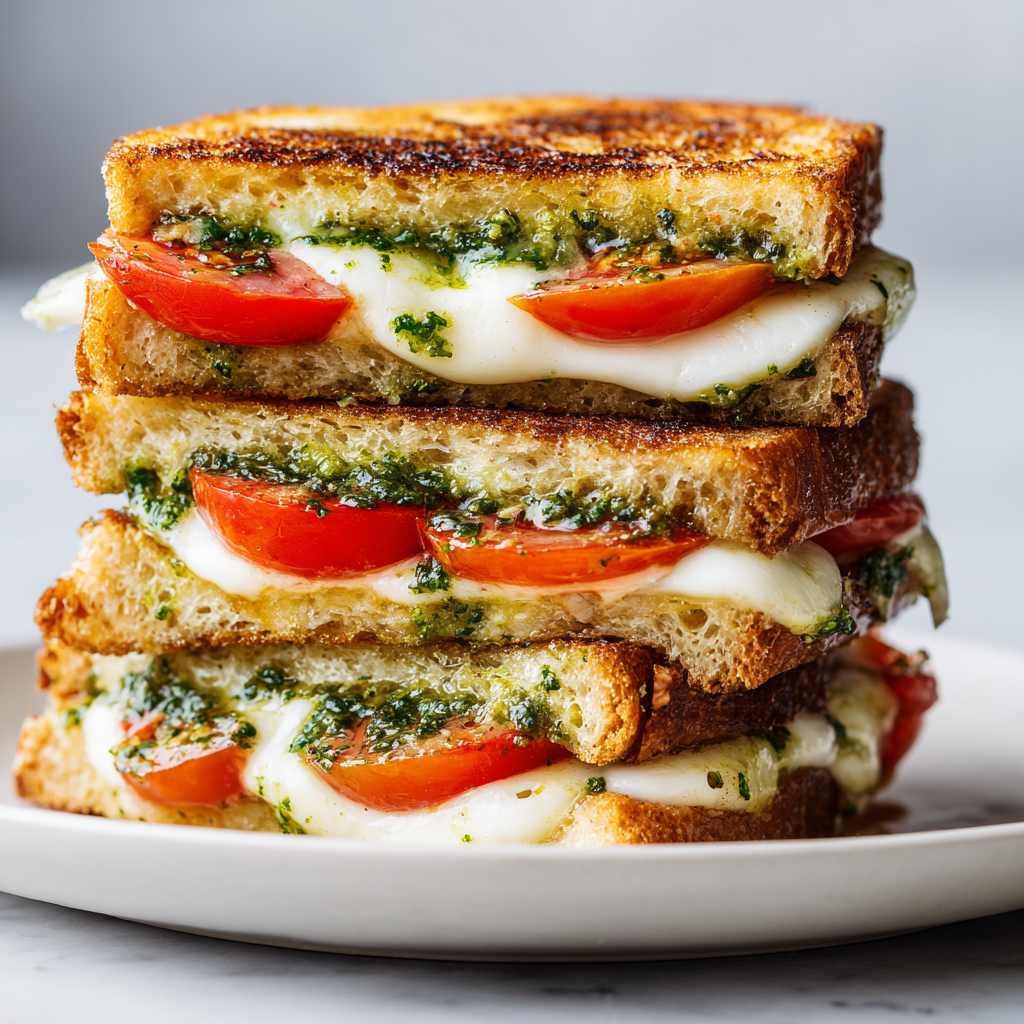
Caprese Grilled Cheese : A Golden, Melty Upgrade
When a Salad and a Grilled Cheese Fall Madly in Love
Hey friends, Beau here! Let’s talk about one of life’s greatest kitchen miracles: the moment two incredible dishes collide to create something even more magical. We’ve all had that classic, sun-ripened Caprese salad—the juicy tomatoes, the creamy mozzarella, the fragrant basil, a drizzle of olive oil. It’s summer on a plate. And then, of course, there’s the humble grilled cheese: a crispy, golden, buttery hug of melted goodness that’s been solving bad days since, well, forever. What if we took the bright, fresh soul of the first and packed it into the warm, comforting embrace of the second? Friends, that is not a ‘what if.’ That is today’s mission.
This Caprese Grilled Cheese is my go-to when I want a meal that feels both indulgent and a little bit virtuous (we’ve got veggies in there!). It’s for those days when you want cooking to be a joy, not a chore. We’re talking about a sandwich that crackles when you bite into it, reveals a river of stretchy, mild mozzarella, and bursts with the vibrant, garden-fresh punch of basil pesto and tomato. It’s fast, it’s foolproof, and it absolutely delivers on the “wow” factor. So, tie on your apron, grab your favorite spatula, and let’s turn simple ingredients into a little bit of golden-brown heaven.
The Summer That Tasted Like Basil and Sunshine
This recipe always takes me back to my grandparents’ backyard garden. My Nonna, she had tomato plants that were practically legendary—heavy, fragrant fruits that warmed in the sun. Right next to them was a sprawling basil plant that smelled like heaven when you brushed past it. One sweltering afternoon, tired of weeding, I dragged myself inside. Nonna, without a word, sliced a tomato, tore some mozzarella, and piled it all on a plate with a few basil leaves. She handed it to me with a chunk of crusty bread. “Eat,” she said. It was so simple, yet it completely reset my whole day.
Years later, stuck in a tiny apartment kitchen during a dreary drizzle, I was craving that taste of summer. A grilled cheese was on the menu, but my heart was in that sun-drenched garden. I looked at the sad tomato and the ball of mozzarella on my counter… and it clicked. What if I could get that Caprese flavor, but in the cozy, warm form I needed right then? I mashed some basil into olive oil, slapped it all between bread, and grilled it. That first bite was a time machine. It wasn’t Nonna’s exact plate, but it captured its spirit perfectly. That’s the beauty of food—it’s a delicious, edible souvenir.
Gathering Your Flavor Dream Team
Here’s what you’ll need to build this masterpiece. Remember, the better your ingredients, the more your sandwich will sing. But I’ve also got swaps for you, because we work with what we’ve got!
- 4 slices sourdough or country bread: This is your foundation. I love the tangy chew of sourdough or the sturdy crumb of a good country loaf. They hold up to the filling and get incredibly crispy. Chef’s Insight: Avoid super-soft sandwich bread—it can get soggy. Day-old bread is actually perfect here!
- 4 oz fresh mozzarella, sliced: We’re using the fresh stuff that comes in water (mozzarella di bufala or fior di latte), not the low-moisture block for pizza. Its creamy, milky melt is unmatched. Sub Tip: In a pinch, a good whole-milk mozzarella ball works. For a sharper twist, try a few thin slices of provolone mixed in.
- 1 medium tomato, sliced: Go for the ripest, reddest tomato you can find! A beefsteak or a juicy vine-ripened tomato is ideal. Chef’s Insight: A light sprinkle of salt on the tomato slices before assembling draws out excess moisture, preventing a soggy sandwich. It’s a game-changer.
- 2 tablespoons basil pesto: This is the flavor bomb. Use a good-quality store-bought pesto for ease, or go all-in with my easy homemade pesto recipe. Sub Tip: No pesto? Thinly slice fresh basil leaves and mix them with a teaspoon of olive oil and a tiny pinch of minced garlic.
- 1 tablespoon butter, softened: Real, salted butter is the key to that iconic golden, crispy crust. Chef’s Insight: Soften it to room temperature so it spreads easily without tearing the bread. For a different flavor, try mayonnaise on the outside—it creates an insane, even crisp!
- Salt and black pepper, to taste: Don’t you dare forget these! They elevate every single layer. Freshly cracked pepper on the tomato is a tiny step with massive impact.
Let’s Build & Sizzle: Your Foolproof Roadmap to Melty Bliss
Okay, team. Let’s get this sandwich from counter to plate in under 15 minutes. I’ll walk you through each step with my favorite little hacks along the way.
- Prep Your Station: Before you touch a single ingredient, get everything out and ready. Slice your tomato and cheese, have your pesto and butter handy, and get your bread lined up. We’re cooking over medium heat, so go ahead and place your skillet or griddle on the stove. A little mise en place (that’s chef talk for “get your stuff together”) makes the process smooth and stress-free.
- Flavor the Bread: Lay out your four bread slices. Using a spoon or a butter knife, spread a generous tablespoon of pesto on one side of each slice. Yes, all four! This ensures every single bite is packed with that herby, garlicky goodness. Cover right to the edges for maximum flavor.
- Layer with Love & Wisdom: On two of the pesto-slathered slices, start your stack. First, lay down the slices of fresh mozzarella. Then, add your tomato slices. Here’s my pro tip: sprinkle a little salt and a good grind of black pepper directly onto the tomato. This simple act seasons the tomato itself and pulls out a bit of water, which means less steam inside your sandwich and a crispier result.
- Sandwich & Butter Up: Place the remaining bread slices on top, pesto-side down, to create two sandwiches. Now, spread the softened butter evenly over the top outer side of each sandwich. Be generous but even—this is what creates that gorgeous, even golden crust.
- Heat, Grill, and Press: Place your skillet or griddle over medium heat. Let it get properly warm (a drop of water should sizzle). Carefully place the sandwiches in the pan, butter-side down. Now, immediately butter the now-top sides of the bread. Cook for 3-4 minutes, until the bottom is a deep, golden brown. Don’t rush by cranking the heat! Medium heat melts the cheese perfectly before the bread burns. Use a spatula to press down gently—this improves contact for even browning.
- The Flip & Final Crisp: Carefully flip the sandwiches with your spatula. They should feel sturdy. Cook for another 3-4 minutes on the second side, again pressing gently, until it’s equally golden and you see cheese starting to ooze out the sides. If you’re unsure about the melt, you can cover the pan for the last minute to trap heat.
- Rest and Devour: Transfer your gorgeous, golden sandwiches to a cutting board. This is crucial: let them rest for 1-2 minutes. This allows the molten cheese to settle slightly, so when you cut in, it doesn’t all gush out immediately. Then, slice diagonally (it just tastes better that way, trust me) and serve immediately!
How to Plate Your Masterpiece
You’ve created a work of art—let’s serve it like one! A grilled cheese deserves a little fanfare. I love serving the halves stacked slightly askew on a simple wooden board or a brightly colored plate, showing off that beautiful cross-section. A little pile of kettle-cooked potato chips or a handful of crisp, cool grapes on the side is my ideal textural contrast. For a real “lunch at the café” feel, a simple green salad with a lemony vinaigrette cuts through the richness perfectly. And if you’re feeling extra? Dunk a corner into a small bowl of warm marinara sauce for a pizza-dip moment. No matter how you do it, serve it hot and with a big smile.
Make It Your Own: Delicious Twists on the Theme
The basic blueprint is perfect, but the kitchen is your playground! Here are a few of my favorite ways to riff on this recipe:
- The “Everything But The Kitchen Sink”: Add a couple of slices of creamy avocado inside, or a few slices of prosciutto or salami for a salty, meaty punch. A thin schmear of fig jam on the bread before the pesto adds a sweet, sophisticated note.
- Pesto Power Swap: Swap the basil pesto for sun-dried tomato pesto for a deeper, tangier flavor, or try a vibrant kale pesto. Even a simple tapenade would be incredible.
- Cheese Please Variations: Mix your cheeses! Try adding a sprinkle of grated Parmesan to the fresh mozzarella for a salty kick, or use burrata instead for an ultra-creamy, decadent center.
- Dietary-Friendly Flips: Gluten-Free? Use your favorite GF bread. Dairy-Free? Vegan mozzarella and butter alternatives work great—just watch the melt time. Low-Carb? Cook it in a panini press between two layers of parchment for a “crustless” version, or use sturdy lettuce leaves as the “bread.”
- Breakfast Caprese: Add a fried egg inside! The runny yolk mixed with the pesto and tomato is a next-level experience.
Beau’s Behind-the-Scenes Notes
This recipe has evolved in my kitchen more times than I can count. The biggest lesson? Patience with the heat. I used to blast it on high, desperate for that crispy bread, only to end up with burnt outsides and cold, unmelted cheese inside. Medium heat is your true friend here—it’s the difference between good and legendary. Also, I once tried using huge, watery heirloom tomato slices without salting them first. The result was a delicious but unfortunately soggy mess. We live and we learn! Now, I see this sandwich as a canvas. Some days I add a balsamic glaze drizzle after it’s cooked. Other days, I mix a little chili flake into the butter. It’s your kitchen, your rules. Make it taste like you.
Your Questions, Answered
Q: My bread is burning before the cheese melts! What am I doing wrong?
A: Your heat is too high, my friend! Dial it back to a true medium. If it’s still happening, try covering the pan with a lid for a minute after flipping to trap steam and heat, which will help melt the cheese faster. Also, make sure your cheese slices aren’t too thick.
Q: Can I make this ahead of time?
A: You can assemble the sandwiches ahead of time (wrap them tightly in plastic wrap) and keep them in the fridge for a few hours before cooking. Don’t butter the outside until you’re ready to grill, though, or the bread will get soggy.
Q: Why is my sandwich soggy in the middle?
A> Two likely culprits: 1) Your tomato was very watery. Always salt your tomato slices and let them sit on a paper towel for a few minutes before assembling. 2) You might be using too much pesto or a very oily one. A thin, even layer is all you need.
Q: What’s the best cheese for maximum stretch?
A: Fresh mozzarella gives a creamy, mild melt. For that iconic “pull,” a combination of fresh mozzarella and a little bit of a drier, low-moisture mozzarella (the pizza kind) or even a young provolone works wonders. The different milk proteins create a fantastic stretch.
Caprese Grilled Cheese : A Golden, Melty Upgrade
Description
Some recipes feel like pure kitchen magic — and this is one of them. Caprese Grilled Cheese brings together the bright, fresh flavors of a classic tomato-mozzarella-basil salad and the crispy, melty comfort of grilled cheese. It’s quick, satisfying, and perfect for lunch or an easy dinner. If you want something cozy but still a little fresh and vibrant, this sandwich delivers every time.
Ingredients
-
4 slices sourdough or country bread
-
4 oz (115 g) fresh mozzarella, sliced
-
1 medium ripe tomato, sliced
-
2 tablespoons basil pesto
-
1 tablespoon butter, softened (or mayonnaise)
-
Salt and black pepper, to taste
Optional extras:
-
Fresh basil leaves
-
Balsamic glaze drizzle
Instructions
-
Prep the tomato
Lay tomato slices on a paper towel and lightly sprinkle with salt. Let sit 5 minutes to remove excess moisture (this helps prevent soggy bread). -
Spread the pesto
Spread pesto on one side of each slice of bread. -
Assemble
On two slices (pesto side up), layer mozzarella and tomato. Add black pepper and extra basil if using. Top with remaining bread slices, pesto side down. -
Butter the outside
Spread butter (or mayo) on the outer sides of each sandwich. -
Cook
Heat a skillet over medium heat. Place sandwiches in the pan and cook 3–4 minutes per side, pressing gently, until bread is golden brown and cheese is melted. -
Rest and serve
Let rest 1–2 minutes, then slice and serve warm.
Nutritional Info (A Quick Breakdown)
Alright, let’s talk numbers for a moment. This info is for one full sandwich (two halves), calculated using standard ingredients. Remember, this is comfort food with fresh ingredients at its heart! Each sandwich provides a good source of protein and calcium from the cheese, and the tomato adds a dose of vitamins C and K. Using whole-grain sourdough can add fiber. As with all good things, it’s part of a balanced plate. The pesto and olive oil (in the pesto and butter) contribute healthy fats. To lighten it up slightly, you can use a light butter spread, go easier on the pesto, or use cooking spray instead of butter for grilling (though you’ll sacrifice some flavor).
Per Serving (1 sandwich): Calories: ~450 | Protein: 16g | Carbohydrates: 34g | Fat: 28g | Saturated Fat: 12g | Cholesterol: 60mg | Sodium: 750mg | Fiber: 2g | Sugar: 4g
Final Thoughts
And there you have it! The Caprese Grilled Cheese: proof that the best recipes often come from marrying two simple, beloved ideas. It’s more than just a sandwich; it’s a quick trip to an Italian summer, a solution for a busy weeknight, and a guaranteed way to make your kitchen smell amazing. I hope this recipe becomes a regular in your rotation, and I can’t wait to hear how you make it your own. Did you add bacon? Try a different pesto? Let me know in the comments below—I read every single one. Now, go forth and grill something magnificent. Until next time, keep it soulful, keep it simple, and always keep it delicious. Talk soon, Beau.
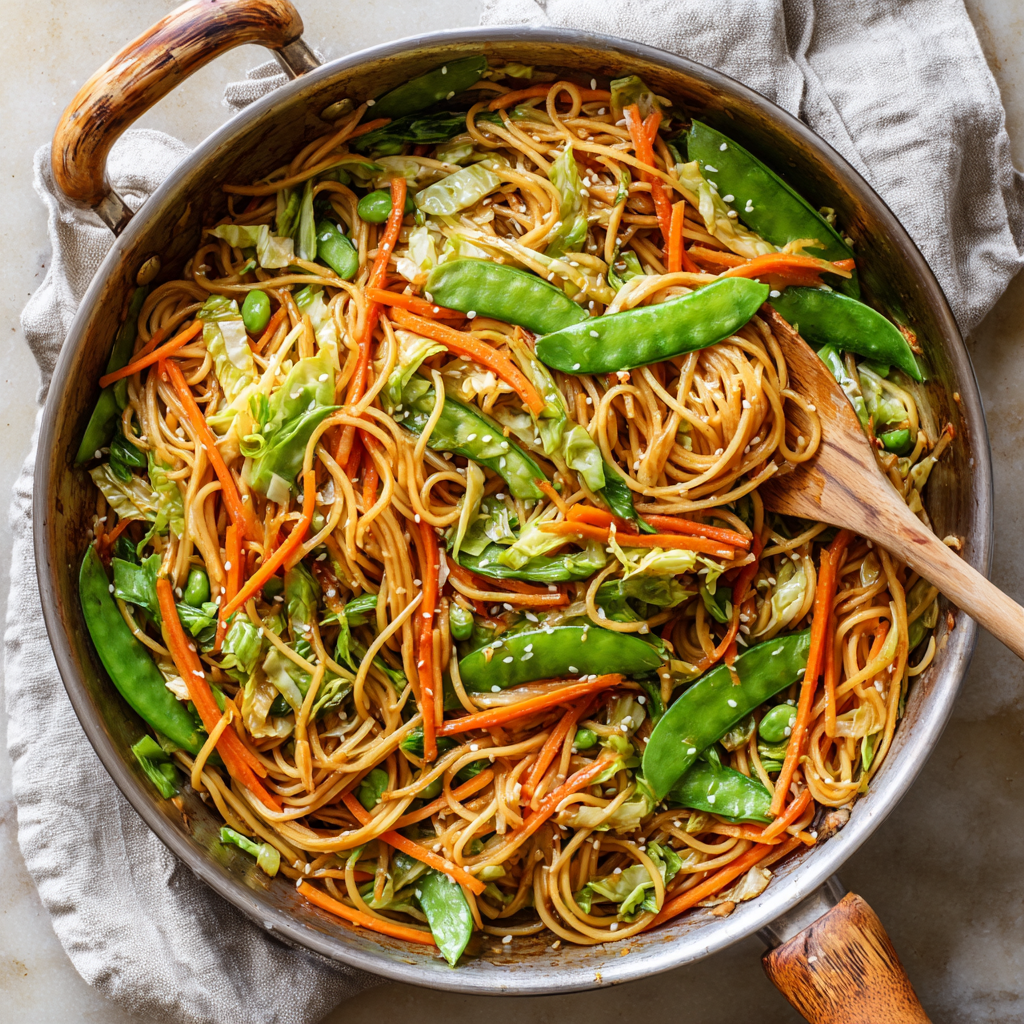
Spring Veggie Lo Mein : Fresh Flavor in Every Bite
Spring Has Sprung in Your Skillet: The Ultimate Veggie Lo Mein
Hey friends, Beau here! Is it just me, or does something magical happen the moment the weather turns? One day you’re craving slow-simmered stews and hearty casseroles, and the next, all you want is something bright, crisp, and bursting with life. Your kitchen mood shifts from cozy hibernation to sunny celebration. That’s exactly where this Spring Veggie Lo Mein comes in. It’s not just a recipe; it’s a 20-minute vacation on a plate.
We’re talking about tender noodles tangled up with a confetti of the season’s best—crunchy cabbage, sweet snap peas, and sunny carrots—all dancing in a light, savory sauce that sings with ginger and garlic. It’s the kind of meal that feels both indulgent and incredibly virtuous. Whether you’re a stir-fry fanatic or a wok-wary newbie, this dish is your ticket to a stress-free, flavor-packed dinner. So, let’s turn up the heat, grab your favorite wooden spoon, and wok this way to a seriously delicious spring meal.
The Stir-Fry Symphony: A Family Tradition
This recipe takes me right back to my mom’s bustling kitchen on busy weeknights. She called stir-fry her “clean-out-the-crisper symphony,” and I was her eager (if slightly messy) conductor-in-training. The sizzle as the hit the hot oil was our opening note. The rhythmic scrape of the spatula against the wok was the percussion. My job was the “mise en place”—arranging all the colorful veggies in little bowls like a painter’s palette before the chaos began.
There was always a race against time, a thrilling culinary sprint where everything had to be just right. “The wok hay—the breath of the wok—is everything, Beau!” she’d say, as I watched, wide-eyed, at the shimmering heat and soaring flames (okay, hers were more impressive than my electric stove’s). That lesson stuck: high heat, quick moves, and fresh ingredients are the holy trinity of a great stir-fry. This Spring Veggie Lo Mein is my homage to those nights—a simpler, veggie-forward version that captures all that joyful energy and puts a fresh, seasonal spin on a beloved classic.
Gathering Your Rainbow: Ingredients & Insights
Here’s your grocery list for freshness! The beauty of this is in its flexibility, so don’t stress if you need to swap something out.
- 8 oz lo mein noodles or spaghetti: The hearty foundation. Lo mein noodles have a perfect chew, but spaghetti is a brilliant pantry stand-in. Chef’s Tip: Look for fresh lo mein noodles in the refrigerated section of your Asian market for next-level texture.
- 1 cup green cabbage, thinly sliced: Adds a fantastic, mild crunch that holds up to cooking. Napa cabbage works beautifully here too for a more tender bite.
- 1 cup carrots, julienned or shredded: A pop of color and natural sweetness. I use a julienne peeler for perfect matchsticks in seconds!
- 1 cup snap peas, trimmed: The essence of spring! That satisfying *snap* is pure joy. No snap peas? Green beans or asparagus cut into pieces are great substitutes.
- 2 tablespoons sesame oil or neutral oil: Sesame oil gives incredible depth of flavor. For high-heat stir-frying, I often use 1 tbsp avocado oil to cook and 1 tbsp toasted sesame oil drizzled in at the end for aroma.
- 2 garlic cloves, minced & 1 tsp fresh ginger, grated: The dynamic duo. Please, for the love of flavor, use fresh! That zing is irreplaceable.
- 3 tablespoons light soy sauce: Our salty, umami base. For a gluten-free version, tamari is a seamless swap. If you only have regular soy sauce, it’s fine—just know it’s saltier.
- 1 tablespoon rice vinegar: The secret brightener that balances the saltiness. A tiny splash of brightness that makes all the difference.
- 1 teaspoon honey or maple syrup (optional): A whisper of sweetness to round out the sauce. I often add it, but it’s totally optional if you prefer a more savory profile.
- Sliced green onions & toasted sesame seeds for garnish: Never skip the garnish! They add fresh aroma, color, and a final layer of texture that elevates the whole dish from “homemade” to “restaurant-worthy.”
Let’s Get Cooking: Your Step-by-Step Guide
Ready? Apron on, music up, and let’s make some magic happen. The key to stir-fry success is having everything prepped and within arm’s reach before you fire up the wok.
Step 1: Noodle Duty. Get a large pot of salted water boiling. Cook your noodles according to the package directions, but aim for al dente—they’ll cook a bit more in the wok later. Once done, drain and give them a quick rinse with cool water to stop the cooking and prevent sticking. Toss with a tiny drizzle of oil if you’re not moving right to the next step.
Step 2: Sauce Symphony. In a small bowl, whisk together your light soy sauce, rice vinegar, grated ginger, and that optional honey. Taste it! Get to know your sauce. This is your flavor bomb, ready to deploy.
Step 3: Wok & Roll. Place your largest skillet or wok over medium-high heat and let it get properly hot. Add your oil and swirl it around. You should see it shimmer. Now, add the minced garlic. We’re not looking for color, just fragrance—sauté for about 30 seconds until it smells incredible. Don’t let it burn!
Step 4: Veggie Party! Time for the main event. Add your sliced cabbage, carrots, and snap peas all at once. There will be a glorious sizzle! Stir-fry for 3-4 minutes. You want the veggies to be crisp-tender—they should still have a vibrant color and a pleasant bite. This is not the time for mushy vegetables!
Step 5: The Grand Toss. Reduce the heat to medium. Add your drained noodles to the wok, then pour that beautiful sauce all over everything. Using tongs or two spatulas, toss, toss, TOSS! Get every noodle and veggie coated in that glossy, flavorful sauce. Let it all cook together for another 1-2 minutes so the noodles drink up the sauce and everything is piping hot.
Step 6: The Final Flourish. Kill the heat. Immediately transfer your gorgeous Spring Veggie Lo Mein to a serving platter or bowls. Generously sprinkle with sliced green onions and a shower of toasted sesame seeds. That contrast of green, white, and the nutty seeds makes it Instagram-ready.
Plating Up: How to Serve Your Masterpiece
This dish is a star all on its own, but a little presentation goes a long way! I love serving it family-style in a big, shallow bowl or on a platter. The vibrant colors just beg to be shown off. For a complete meal, here are my go-to pairings:
Protein Power-Up: Serve alongside or top with some simply prepared protein. Think quick-seared shrimp, shredded rotisserie chicken, sliced teriyaki tofu, or a perfectly fried egg with a runny yolk that acts as extra sauce.
The Crunch Factor: Offer little bowls of extra toppings for folks to customize. Extra sesame seeds, crushed peanuts or cashews, or even those crispy fried onions add amazing texture.
On the Side: A simple cucumber salad tossed with a bit of rice vinegar and salt, or a light miso soup, makes this feel like a full, restaurant-quality feast with almost no extra effort.
Make It Your Own: Delicious Twists & Swaps
The canvas of this recipe is made for your creativity! Here are a few of my favorite ways to riff on it:
- The Protein-Packed: Add 8 oz of thinly sliced chicken breast, flank steak, or extra-firm tofu (pressed and cubed) at the beginning of Step 3. Cook through, then remove from the wok before sautéing the garlic. Add it back in with the noodles.
- Spicy Garlic Kick: Add 1-2 teaspoons of chili-garlic sauce or a big pinch of red pepper flakes to the sauce mixture. Finish with a drizzle of chili oil for serious heat lovers.
- Mushroom Lover’s Dream: Swap the snap peas for a mix of sliced shiitake and cremini mushrooms. Sauté them first until they release their water and get golden—they bring an incredible meaty, umami depth.
- Gluten-Free & Grain-Free: Use 100% buckwheat soba noodles or your favorite rice noodles. Swap the soy sauce for tamari. It’s that easy!
- Peanutty Delight: Whisk 1-2 tablespoons of smooth peanut butter or almond butter into the sauce mixture. Thin it with a splash of warm water if needed. Garnish with chopped peanuts for a satay-inspired lo mein.
Beau’s Kitchen Confidential
This recipe has been a Feastical staple for years, and it’s evolved from a “use whatever’s in the fridge” scramble to this refined (but still easy!) spring version. One hilarious kitchen fail taught me a vital lesson: do not crowd your wok. I once doubled the recipe in my standard skillet, and instead of stir-frying, I was steam-stewing the veggies into a sad, soggy pile. The wok lost its “breath.” Now, if I’m cooking for a crowd, I do two batches back-to-back. Trust me, it’s worth the extra five minutes for that perfect crisp-tender texture. Also, my ginger grater and I have a love-hate relationship—it’s a mess-maker but a flavor-saver. No regrets!
Your Questions, Answered (Before You Even Ask!)
Q: My noodles turned out soggy/mushy. What happened?
A: The most common culprit is overcooking the noodles in the boiling stage. Remember, al dente is your goal! They’ll soften more in the sauce. Also, make sure your wok/pan is hot enough so the sauce coats and clings quickly, rather than simmering and steaming the noodles.
Q: Can I use different vegetables?
A> Absolutely! Bell peppers, broccoli florets, baby corn, water chestnuts—you name it. Just remember to cut them uniformly so they cook evenly. Denser veggies like broccoli may need a quick blanch in the noodle water before stir-frying.
Q: How do I store and reheat leftovers?
A: Store in an airtight container in the fridge for up to 3 days. The best way to reheat is in a skillet over medium heat with a tiny splash of water or broth to loosen things up. The microwave can make the noodles a bit rubbery.
Q: The sauce seems too simple. Can I add more flavor?
A> For sure! A teaspoon of oyster sauce (or vegetarian oyster sauce) adds great depth. A splash of mirin (sweet rice wine) adds complexity. Or, finish with a tiny dot of toasted sesame oil right before serving for an aromatic punch.
Spring Veggie Lo Mein : Fresh Flavor in Every Bite
Description
When you want something quick but still colorful and satisfying, this Spring Veggie Lo Mein is the perfect go-to. It’s packed with crisp vegetables, tender noodles, and a light savory sauce with garlic and ginger. Everything cooks fast in one pan, making it ideal for busy weeknights or a healthy lunch prep.
Ingredients
-
8 oz (225 g) lo mein noodles or spaghetti
-
1 cup green cabbage, thinly sliced
-
1 cup carrots, julienned or shredded
-
1 cup snap peas, trimmed
-
2 tablespoons oil (neutral oil for cooking; optional toasted sesame oil for flavor)
-
2 garlic cloves, minced
-
1 teaspoon fresh ginger, grated
Sauce
-
3 tablespoons light soy sauce (or tamari)
-
1 tablespoon rice vinegar
-
1 teaspoon honey or maple syrup (optional)
-
1–2 tablespoons water (if needed to loosen)
Garnish (optional)
-
Sliced green onions
-
Toasted sesame seeds
-
Chili flakes
Instructions
-
Cook the noodles
Boil noodles in salted water until al dente. Drain and rinse briefly with cool water to stop cooking. Set aside. -
Mix the sauce
In a small bowl, whisk soy sauce, rice vinegar, honey/maple (if using), and 1 tablespoon water. -
Heat the pan
Place a large skillet or wok over medium-high heat. Add oil. When hot, add garlic and ginger and cook for about 30 seconds until fragrant. -
Stir-fry the vegetables
Add cabbage, carrots, and snap peas. Stir-fry 3–4 minutes until crisp-tender and bright. -
Combine
Add cooked noodles and pour in the sauce. Toss well for 1–2 minutes until everything is coated and heated through. Add a splash of water if the noodles look dry. -
Finish and serve
Remove from heat. Garnish with green onions and sesame seeds if desired.
Notes
-
Prep everything first — stir-fries cook fast, so have veggies and sauce ready before heating the pan.
-
Use high heat for crisp vegetables, not soft or steamed ones.
-
Don’t overcrowd the pan — cook in two batches if doubling.
-
Add protein easily — toss in cooked chicken, shrimp, tofu, or a fried egg.
-
Extra flavor boost — add a few drops of toasted sesame oil at the very end, not during high-heat cooking.
Nourishing & Delicious: A Quick Nutrition Glance
Here’s the scoop on what’s fueling you! This breakdown is an estimate per serving (assuming recipe serves 3) and will vary based on specific ingredients and brands used.
Per Serving (approximate):
Calories: 290 | Protein: 8g | Carbohydrates: 45g | Dietary Fiber: 5g | Total Fat: 9g | Saturated Fat: 1g | Sodium: ~900mg (primarily from soy sauce; use low-sodium to reduce)
This Spring Veggie Lo Mein is a wonderfully balanced meal. The complex carbs from the noodles give you lasting energy, while the colorful mix of vegetables provides a spectrum of vitamins, antioxidants, and that all-important fiber to keep you feeling satisfied. Using a moderate amount of heart-healthy oils like sesame or avocado adds good fats. It’s a meal that truly proves eating well can be the most delicious part of your day.
Final Thoughts
And there you have it, friends—my heartfelt homage to the season, packed into one sizzling skillet. This Spring Veggie Lo Mein is more than a recipe; it’s a reminder to celebrate the simple, fresh flavors right at our fingertips. It’s about the joy of a quick, communal meal that doesn’t sacrifice an ounce of taste or satisfaction.
I hope this dish finds its way into your regular rotation, becoming your own “clean-out-the-crisper symphony.” Give it a try, play with the variations, and make it yours. And when you do, I’d love to hear about it! Tag me over on the ‘gram @feastical or drop a comment on the blog. Now, go forth and wok. Your fork is waiting!
With a full heart and an empty skillet,
Beau
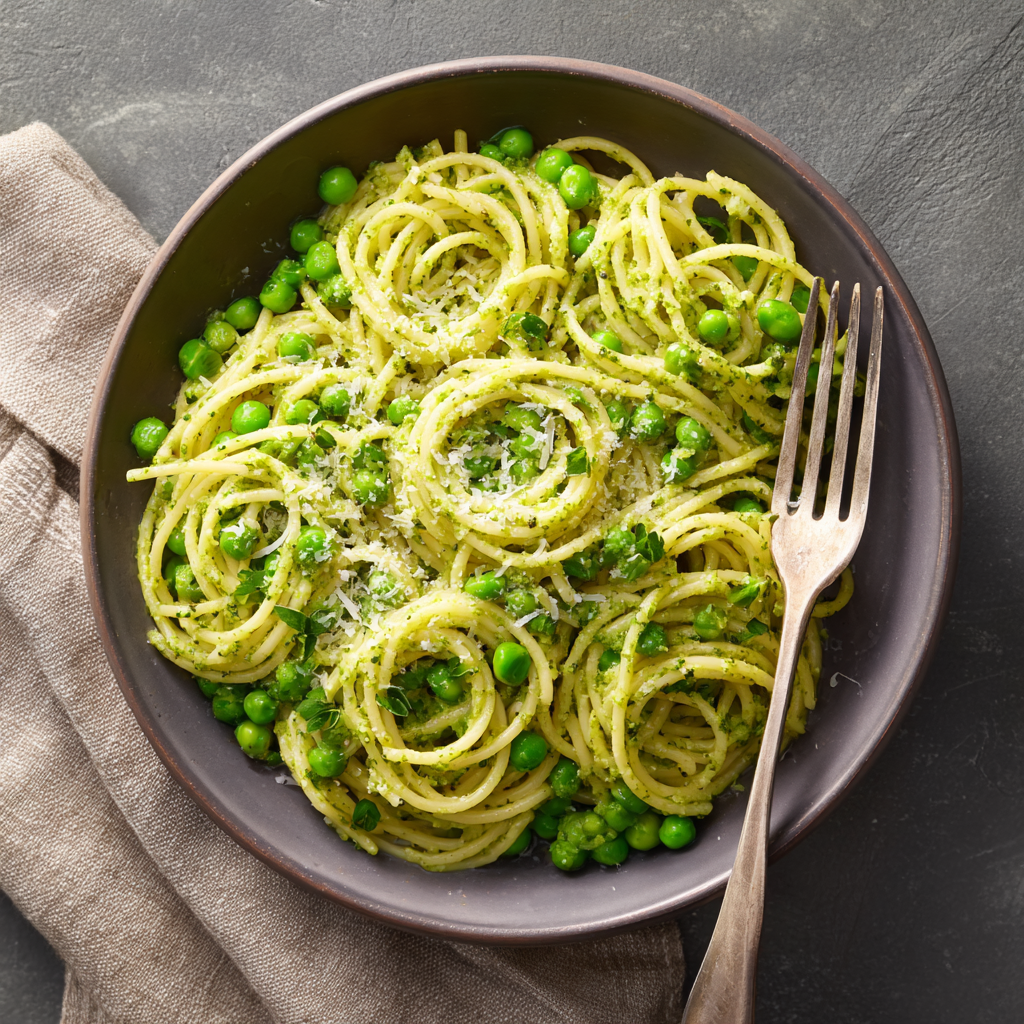
Pesto Pea Spaghetti : A Fresh Twist on a Classic
Pesto Pea Spaghetti: Your New 20-Minute Weeknight Hero
Hey friends, Beau here from Feastical! Let’s have a real talk for a second. We’ve all been there: it’s been a day, your energy is at zero, but your stomach is singing a hunger song that can’t be ignored. The temptation to call for takeout is strong. But what if I told you that in the same amount of time it takes for that delivery driver to get lost in your neighborhood, you could whip up a dinner that’s not just fast, but actually vibrant, satisfying, and feels like a little act of kitchen magic?
Enter my forever-favorite, always-reliable, Pesto Pea Spaghetti. This isn’t just another pasta dish. It’s a brilliant, bright-green hug in a bowl. It’s where the deep, herbaceous joy of pesto meets the gentle, sweet pop of peas, all tangled up in perfect al dente spaghetti. It’s comfort food that doesn’t weigh you down, and fancy-feeling food that demands zero fuss. Whether you’re cooking for one, two, or a whole hungry crew, this recipe is your ticket to a seriously delicious dinner without the drama. So, grab your favorite pot, and let’s turn a regular weeknight into something a little more… Feastical.
The Night That Sparked a Pasta Love Affair
This recipe takes me right back to my first tiny apartment kitchen, which was roughly the size of a postage stamp. I had one pot, one pan, and a budget that made dried pasta and a bag of frozen peas look like gourmet treasures. One particularly bleary Wednesday, after a long shift, I stared into my nearly empty fridge. There was a sad little jar of pesto, that trusty bag of peas, and a nub of Parmesan. Spaghetti was a pantry staple.
In a move born purely from hunger-fueled desperation, I threw them all together. But when I took that first forkful… guys, it was a revelation. The sweetness of the peas cut through the richness of the pesto in the most perfect way. The Parmesan melted into a salty, creamy glue that brought everything together. It was simple, but it was complete. That humble bowl taught me one of my core kitchen philosophies: incredible food isn’t about the number of ingredients; it’s about how a few good ones can play together to create something greater than the sum of their parts. This dish has been in my rotation ever since, a delicious reminder of where I started and why I love cooking.
Gathering Your Flavor Friends
Here’s the beautiful part – the ingredient list is short, sweet, and mighty. Every single one plays a key role. Let’s break it down:
- 12 oz Spaghetti: The classic foundation. I love the way spaghetti’s long strands cradle the sauce. Chef’s Insight: Don’t break the pasta! Let it soften as it slides into the boiling water for perfect, non-sticky strands.
- 1 cup Frozen Peas: Our sweet, green gem. Why frozen? They’re flash-frozen at peak freshness, so they’re often more vibrant and nutritious than “fresh” peas that have traveled for days. Thaw them quickly by running under warm water.
- 1/2 cup Pesto: The flavor powerhouse. A good store-bought pesto works in a pinch (no judgment here!), but if you have 10 extra minutes, homemade pesto will absolutely sing in this dish. Basil is classic, but don’t be afraid to try arugula or spinach pesto!
- 2 tbsp Olive Oil: For silky richness. This helps gently warm the pesto without cooking it harshly, preserving that fresh basil flavor. A good extra-virgin olive oil adds a fruity note.
- 1/4 cup Grated Parmesan Cheese: The salty, umami kick that ties the room together. Freshly grated from a block is infinitely better than the pre-shredded stuff (which has anti-caking agents that can make it clumpy in sauces).
- Salt & Black Pepper: Your essential flavor amplifiers. We salt the pasta water generously (it should taste like the sea!), and a crack of fresh black pepper at the end adds a subtle warmth.
- Optional: Fresh Basil & Lemon Zest: The grand finale. A few torn basil leaves add a gorgeous fragrance, and a sprinkle of lemon zest just before serving is like flipping on a brightness switch—it makes every other flavor pop.
Let’s Get Cooking: Your Foolproof Roadmap
Ready to make magic? Follow these steps, and you’ll have a restaurant-worthy plate in no time. I’m chatting you through every little tip I’ve learned over the years.
- Boil & Salt Like a Pro: Fill your largest pot with water, set it over high heat, and bring it to a rolling boil. Here’s my non-negotiable rule: salt the water aggressively. I’m talking a couple of big tablespoons. This is your one chance to season the pasta from the inside out. Add the spaghetti, give it a gentle stir to prevent sticking, and cook according to package directions for al dente – tender but with a pleasant bite. Before you drain it, scoop out about 1/2 cup of that starchy, salty pasta water. This liquid gold is our secret sauce thickener and helper.
- Unlock the Pea Potential: While the pasta cooks, take your thawed peas and give them a quick mash with a fork or pulse them 2-3 times in a food processor. We’re not making pea puree! We want a rough, chunky mash so some peas burst and thicken the sauce, while others stay whole for those delightful pops of sweetness. This one trick transforms the texture of the whole dish.
- Build the Sauce: Place a large skillet or (use the empty pasta pot for fewer dishes!) over medium heat. Add the olive oil and let it warm for 30 seconds. Add the pesto and your mashed peas. Stir and let them get friendly for just 1-2 minutes until everything is warm and fragrant. You’ll see the colors become even more vibrant.
- The Grand Toss – Where Magic Happens: Add the drained spaghetti directly into the skillet with the pesto-pea mixture. Now, start tossing! Use tongs to lift and coat every strand. The sauce might seem a bit tight at first. This is where you become a pasta boss: start adding that reserved pasta water, a few tablespoons at a time, tossing continuously. Watch as the starch in the water emulsifies with the pesto and oil, creating a creamy, glossy sauce that clings perfectly to the pasta. You may not need all the water—stop when the sauce looks silky and moves easily.
- The Finishing Touches: Take the pan off the heat. Stir in most of your grated Parmesan (saving a little for topping), and a few good cracks of black pepper. Give it one final, confident toss. Taste it! Does it need another pinch of salt? A little more pepper? This is your moment to adjust.
Plating Up with Pizzazz
You’ve done the hard work—now let’s make it pretty! I love serving this family-style in a big, shallow bowl for that rustic, “dig in!” feel. Use your tongs to lift and twirl generous nests of pasta into each individual bowl or plate. Top with the remaining grated Parmesan, a few artfully torn fresh basil leaves, and that all-important sprinkle of lemon zest. The zest isn’t just for looks; the citrus oils will perfume the whole dish as you serve it.
What to serve on the side? Keep it light and fresh. A simple arugula salad with a lemon vinaigrette balances the richness. For some protein, grilled shrimp or a piece of pan-seared lemon chicken breast alongside is absolutely divine. And don’t forget the crusty bread—it’s mandatory for swiping up every last bit of that glorious green sauce from your plate.
Make It Your Own: Delicious Twists & Swaps
The beauty of this recipe is its adaptability. Play with it! Here are some of my favorite riffs:
- Protein Power-Up: Add a can of drained, flaked sustainable tuna or a couple of handfuls of shredded rotisserie chicken when you toss the pasta with the sauce. For a vegetarian protein boost, a can of rinsed white beans or crispy pan-fried chickpeas are fantastic.
- Green Goddess Version: Blitz a handful of fresh spinach or arugula into the pesto (or use it instead of basil) and add a couple of chopped green onions with the peas. It’s a mega-dose of green goodness.
- Creamy Dreamy: Stir in a 1/4 cup of heavy cream, mascarpone, or even full-fat coconut milk (for a dairy-free option) along with the pesto for an ultra-luxurious, velvety sauce.
- Vegan & Dairy-Free: Easy! Use a vegan pesto (often made with nuts and nutritional yeast) and swap the Parmesan for a sprinkle of vegan “parm” or a tablespoon of nutritional yeast for that cheesy, savory flavor.
- Spring Fling: In spring, swap half the peas for fresh, thinly sliced asparagus spears, added to the skillet for the last minute of cooking. Finish with fresh mint instead of basil.
Beau’s Kitchen Notebook
This recipe has been my loyal companion for years, and it’s evolved in fun ways. I once made it for a first date, thinking I was being all impressive and chef-y. I was so busy talking that I accidentally used mint instead of basil in the pesto. Guess what? She loved it, and now “Minty Pea Pasta” is our anniversary dish! The lesson? Don’t fear the happy accident.
Another pro-tip: if you’re making homemade pesto, double the batch. Freeze the extra in an ice cube tray. Then, on any given night, you can pop out a pesto cube, grab some peas and pasta, and be 10 minutes from dinner glory. It’s the ultimate freezer hack for future-you.
Your Questions, Answered
Q: My sauce turned out oily/greasy. What happened?
A: This usually means the pesto got too hot and “broke.” Pesto is best warmed gently, not cooked. Make sure your skillet is only on medium heat, and add the pasta and a splash of that starchy water right away—the emulsification will bring it back together beautifully.
Q: Can I use fresh peas instead of frozen?
A> Absolutely! If you can get your hands on gorgeous, fresh spring peas, blanch them in the boiling pasta water for about 60 seconds before scooping them out, then proceed with the recipe. Their flavor is incredible.
Q: The pasta seems dry after I toss it. Help!
A> No panic! This is why we save the pasta water. Simply add a few more tablespoons of the reserved water and toss vigorously. The starch will loosen the sauce and make it creamy again. You can always add more water, but you can’t take it out, so go slow.
Q: How do I store and reheat leftovers?
A> Store in an airtight container in the fridge for up to 3 days. To reheat, add a splash of water or milk to a skillet over low heat and stir gently until warmed through. The microwave can make it a bit gummy, so the stovetop is best.
Pesto Pea Spaghetti : A Fresh Twist on a Classic
Description
Some nights you want dinner to be fast, comforting, and actually good for you — not just something quick. That’s where Pesto Pea Spaghetti saves the day. It’s bright, herby, slightly sweet from the peas, and wonderfully creamy without needing a heavy sauce. With just a few ingredients and one pot, you can have a vibrant, satisfying meal on the table in about 20 minutes.
Ingredients
-
12 oz (340 g) spaghetti
-
1 cup frozen peas, thawed
-
½ cup pesto (store-bought or homemade)
-
2 tablespoons olive oil
-
¼ cup grated Parmesan cheese
-
Salt and black pepper, to taste
-
Optional: fresh basil leaves, lemon zest, chili flakes
Instructions
-
Cook the pasta
Bring a large pot of salted water to a boil. Cook spaghetti until al dente according to package directions. Reserve ½ cup of pasta water, then drain. -
Mash the peas
Lightly mash the peas with a fork (leave some whole for texture). -
Warm the sauce base
In a large skillet or the empty pasta pot over medium heat, add olive oil, pesto, and mashed peas. Warm gently for 1–2 minutes, stirring. -
Combine
Add the drained spaghetti to the skillet. Toss to coat. Add reserved pasta water a few tablespoons at a time until the sauce becomes glossy and lightly creamy. -
Finish
Remove from heat. Stir in Parmesan and black pepper. Taste and adjust salt if needed. -
Serve
Top with extra Parmesan, basil, lemon zest, or chili flakes if desired.
Notes
-
Salt your pasta water well — it should taste like the sea for best flavor.
-
Don’t overheat pesto — gentle warming keeps the color bright and prevents oil separation.
-
Use pasta water gradually to control sauce texture.
-
Add protein easily — grilled chicken, shrimp, tuna, or white beans mix in well.
-
Make it creamy — stir in 2–3 tablespoons cream or Greek yogurt at the end if you want a richer sauce.
Nutritional Information (Approximate, per serving)
This dish is a wonderfully balanced meal! Here’s a general breakdown for one serving (based on 4 servings total):
Calories: ~420 | Protein: 12g | Carbohydrates: 55g | Fat: 18g | Fiber: 5g
It’s a great source of complex carbs for energy, and the peas pack a surprising amount of plant-based protein and fiber to keep you full. The fats from the olive oil, nuts (in the pesto), and cheese are the satisfying, heart-healthy kind. To lower the carbs, you can easily swap in your favorite legume-based or vegetable noodle. Remember, this info is an estimate – your specific brands and portion sizes will cause variation.
Final Thoughts
And there you have it, my foodie friend – your blueprint to a ridiculously easy, impossibly delicious dinner that’s ready before you can even scroll through delivery app reviews. This Pesto Pea Spaghetti is more than a recipe; it’s a reminder that good food doesn’t have to be complicated. It’s about simple ingredients, a little technique, and the joy of creating something nourishing and delightful with your own two hands.
I hope this dish becomes a trusted friend in your kitchen rotation, just like it is in mine. Give it a try, play with the variations, and make it yours. And when you do, I’d love to hear about it! Tag me @Feastical on socials so I can see your gorgeous creations. Now, go grab that fork and dig into something good. Happy cooking!
– Beau
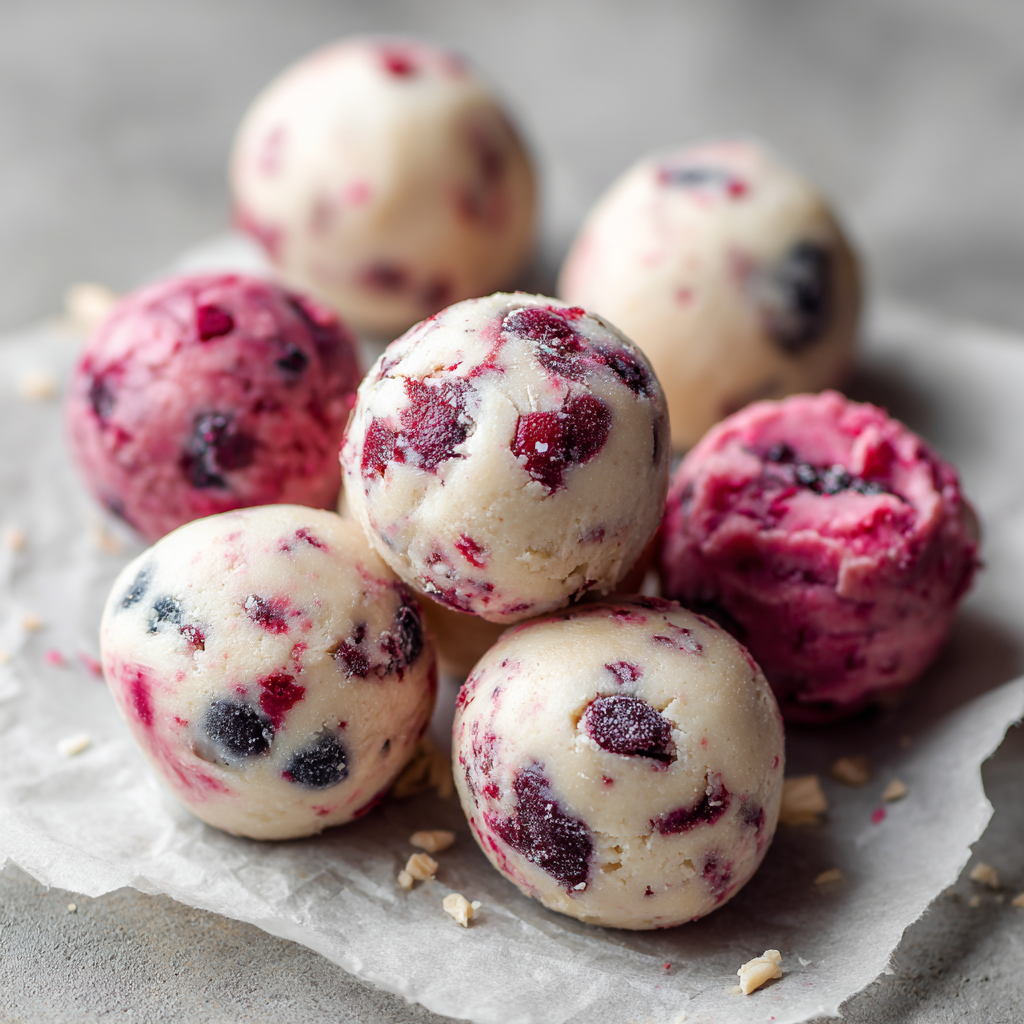
Frozen Berry Protein Bites: Creamy, Cold, and Packed with Protein
Frozen Berry Protein Bites: Your New Secret Weapon for a Sweet, Healthy Treat
Hey friends, Beau here from Feastical! Tell me if this sounds familiar: it’s that mid-afternoon lull, or maybe you’ve just rolled out your yoga mat after a good workout, and a craving hits. Not just any craving—a sweet, creamy, gotta-have-it-now kind of craving. But you’re also trying to be kind to your body, to fuel it with the good stuff. So you’re stuck in that classic standoff between the pint of ice cream calling your name from the freezer and the sensible voice reminding you about protein and nutrition.
Well, my foodie friends, I’m here to call a truce. What if I told you you could have a treat that’s cold, creamy, delightfully sweet, and packed with protein? A snack that feels like a cheat code but is made from just a handful of simple, wholesome ingredients? Enter the hero of our story today: Frozen Berry Protein Bites.
These little frozen gems are the snack I wish I’d invented years ago. They’re the perfect marriage of a thick, frosty bite of frozen yogurt and the satisfying punch of a protein shake, all rolled into one pop-in-your-mouth delight. They’re ridiculously easy to make (we’re talking 5 minutes of active time, scout’s honor), require zero fancy equipment, and are endlessly customizable. Whether you need a post-gym refuel, a poolside cool-down, or just a sweet bite that won’t derail your day, these bites have got your back. So, let’s ditch the dilemma and make a batch together. Your freezer (and your taste buds) are about to become best friends.
The “Aha!” Moment: From Melty Mess to Frozen Perfection
This recipe was born, like so many of my favorites, from a happy little kitchen accident. A few summers back, I was experimenting with a protein-packed smoothie bowl. I’d blended my Greek yogurt, berries, and protein powder into this glorious, thick paste. It was so good, I got a bit… overzealous. I made way more than I could possibly eat.
Not wanting to waste a single spoonful, I did what any sensible person would do: I dolloped the leftover mixture onto a plate, thinking I’d just save it for later. Fast forward two hours of forgetting it on the counter (we’ve all been there). When I finally remembered, it had turned into a sad, slightly separated puddle. In a last-ditch effort to salvage it, I scooped the dollops onto a parchment-lined tray and shoved them into the freezer, fully expecting to toss them the next day.
You can imagine my shock when I taste-tested one of those frozen blobs the following afternoon. That creamy, melt-in-your-mouth texture! The intense, cold berry flavor! It was like a healthy, grown-up version of those frozen yogurt dots I loved as a kid. The “Frozen Berry Protein Bite” was officially born. It was a reminder that sometimes, the best recipes aren’t planned—they’re discovered when you’re just playing around, trying not to waste good food. Now, I make them on purpose, and I’m so excited to share the proper method with you.
Gathering Your Simple, Star-Quality Ingredients
Part of the magic here is the short, sweet ingredient list. Each one plays a crucial role in creating that perfect creamy-yet-firm, sweet-yet-tangy bite. Let’s break it down:
- ½ cup thick Greek yogurt (plain or vanilla): This is our creamy base. I’m talking about the full-fat or 2% kind that’s so thick your spoon stands up in it. That thickness is non-negotiable—it ensures our bites hold their shape and don’t get icy. Chef’s Insight: If you’re dairy-free, a super thick coconut or almond-based yogurt can work, but you may need to add a touch more protein powder to help it set.
- 2 tablespoons mashed berries: The fruity heart of the bite! I love a mix of raspberries and blueberries for a tangy-sweet punch, but frozen strawberries or blackberries are fantastic too. Substitution Tip: No fresh berries? Use frozen! Just thaw and drain them really well to avoid excess liquid. You can even use a tablespoon of all-natural berry jam or preserves in a pinch.
- ½ scoop vanilla protein powder: Our protein powerhouse and natural sweetener. This acts as a binder, soaking up any excess moisture from the yogurt and berries. Chef’s Insight: The type of protein powder matters! For the creamiest texture, I swear by a good-quality casein or a blend. Whey protein isolate can work, but it sometimes sets a bit harder. Vegan pea or brown rice protein powders are great options too—just know the flavor and color will be more pronounced.
See? Just three friends hanging out, ready to make something incredible. Now, let’s get mixing!
Step-by-Step: Let’s Build Some Bites!
This is where the fun really begins. We’re not just making food; we’re creating tiny, edible treasures. Follow these steps, and you’ll be a Frozen Bite pro in no time.
- The Great Mash & Mix: In a small, sturdy bowl, add your berries. Grab a fork and mash them with gusto until you have a chunky, juicy pulp. Now, plop in your glorious, thick Greek yogurt. Sprinkle the protein powder over the top. Here’s my pro tip: Stir the powder into the yogurt just a little bit first before fully integrating it with the berries. This prevents the powder from clumping on contact with berry juice. Then, stir everything together until it’s one beautifully smooth, uniformly pink (or purple!) mixture. No streaks of white yogurt should remain.
- The Dollop Drop: Line a small baking sheet or plate with parchment paper. Using a teaspoon or a small cookie scoop (my secret weapon for uniform bites!), drop small, rounded spoonfuls of the mixture onto the paper. You’re aiming for the size of a large chocolate chip or a little smaller than a ping-pong ball. Don’t stress about perfection—rustic is charming! Chef’s Hack: If you have mini silicone molds (like for candy or mini muffins), use them! They give you perfect little domes and make removal a breeze. Simply spoon the mixture in and give the mold a tap on the counter to settle it.
- The Big Chill: Carefully transfer your tray or molds to the freezer. This is the test of patience! Let them freeze solid, which will take about 1.5 to 2 hours. The 30 minutes in the original concept is the minimum to be firm enough to handle, but for the ideal creamy-but-solid texture, give them a full two hours. I like to make these right after dinner so they’re rock-solid and ready for tomorrow’s snacks.
- Storage & Enjoyment: Once frozen, pop your bites off the parchment paper or out of the molds. Immediately transfer them to a freezer-safe bag or airtight container. This prevents them from picking up any freezer smells and stops them from sticking together into one giant bite-blob. To eat, just grab one (or three!) straight from the freezer. Let it sit on your tongue for a second to take the initial edge off the cold, then enjoy that creamy, berry-licious melt.
How to Serve Your Frozen Masterpieces
The beauty of these bites is that they are a complete, grab-and-go snack all on their own. But if you want to get fancy (or just extra delicious), here are a few of my favorite ways to serve them:
The Classic Pop: Straight from the container to your mouth. Ideal for a quick protein hit while running out the door.
The Power Bowl: Scatter a handful over a bowl of warm oatmeal or chia pudding. The contrast of hot and cold, creamy and creamy-er, is absolute magic.
The Dessert Platter: Want to impress guests? Arrange a few bites on a small plate with some fresh mint leaves, a drizzle of melted dark chocolate, and a few whole berries. It looks gourmet but took you minutes.
The Smoothie Topper: Blend up your favorite smoothie and drop 2-3 frozen bites on top. They act like delicious, melting protein-packed ice cream scoops.
Get Creative: 5 Flavor Twists to Try
Once you master the basic formula, the flavor world is your oyster! Here are some of my favorite riffs on the original:
- Tropical Escape: Swap the mixed berries for mashed ripe mango or pineapple. Use vanilla or unflavored protein powder, and add a tiny pinch of coconut extract. Roll the finished bites in unsweetened shredded coconut before freezing.
- Chocolate Peanut Butter Cup: Use chocolate protein powder. Instead of berries, mix in one tablespoon of natural peanut butter (or powdered peanut butter for less fat). You’ll have a frozen treat that tastes like your favorite candy.
- Lemon Blueberry Bliss: Use mashed blueberries only. Add the zest of one small lemon and a teaspoon of lemon juice to the yogurt mixture. It’s so bright, fresh, and tangy!
- Cookies & Cream: Use vanilla protein powder and plain yogurt. After mixing, gently fold in 1 tablespoon of crushed gluten-free or regular Oreo pieces. A fun, decadent-feeling twist.
- Vegan Berry Bomb: Use a thick, plain, unsweetened coconut yogurt and a vegan vanilla protein powder. Mash in your berries as usual. The coconut adds a lovely subtle flavor that pairs perfectly with the fruit.
Beau’s Kitchen Notes & Stories
Over countless batches, I’ve learned a thing or two. First, these bites have become my not-so-secret weapon for healthy-ish party snacks. I once brought a giant Tupperware of them to a backyard BBQ, and they disappeared faster than the chips! Kids especially go nuts for them, thinking they’re getting a special frozen candy.
Second, the evolution of this recipe has all been about texture. I’ve tried adding honey (made them too soft), chia seeds (fun crunch, but changes the vibe), and even blending everything (too airy). The simple mash-and-stir method truly is the gold standard. It gives you that perfect, dense, creamy bite that slowly melts instead of immediately turning to ice shards in your mouth. Trust the process, and trust your freezer!
FAQs: Your Questions, Answered
Q: My bites are super icy and hard. What went wrong?
A: This usually points to two things: 1) Your yogurt wasn’t thick enough, introducing more water that turns to ice. Next time, strain regular yogurt in a cheesecloth for an hour or seek out the absolute thickest brand. 2) You might have used a straight whey protein isolate. Try a casein blend next time for a creamier freeze.
Q: Can I make these without protein powder?
A: You can, but they won’t set as firmly and will be more like frozen yogurt drops. To help them along, try adding a teaspoon of almond flour or coconut flour to absorb moisture. The flavor and protein boost won’t be the same, but they’ll still be a tasty frozen treat.
Q: How long do they last in the freezer?
A: In an airtight container, they’ll keep beautifully for up to 2 months. After that, they might start to develop a little freezer frost or lose peak flavor.
Q: Can I double or triple the recipe?
A> Please do! This recipe scales up perfectly. It’s a fantastic way to meal-prep a healthy snack for the whole week. Just make sure you have enough parchment-lined space in your freezer for all those tasty bites to freeze flat initially.
Frozen Berry Protein Bites: Creamy, Cold, and Packed with Protein
Description
When a sweet craving hits but you still want something nourishing, these Frozen Berry Protein Bites are the perfect solution. They’re cold, creamy, naturally sweet, and packed with protein. Best of all, they take just minutes to prepare and live happily in your freezer for grab-and-go snacking. Great for post-workout fuel, lunchboxes, or a light dessert.
Ingredients
-
½ cup thick Greek yogurt (plain or vanilla)
-
2 tablespoons mashed berries (strawberries, blueberries, or raspberries)
-
½ scoop vanilla protein powder
-
Optional: 1–2 teaspoons honey or maple syrup (if you like it sweeter)
Instructions
-
Mash the berries in a small bowl with a fork until juicy and mostly smooth.
-
Add yogurt and protein powder to the bowl.
-
Mix well until fully combined and creamy with no dry pockets.
-
Line a small tray or plate with parchment paper.
-
Scoop small spoonfuls of the mixture onto the tray (about 1 teaspoon each).
-
Freeze for 1½–2 hours, or until completely firm.
-
Transfer to an airtight container and keep stored in the freezer.
Enjoy straight from frozen for the best texture.
Notes
-
Use very thick yogurt — Greek or strained yogurt gives the creamiest, least icy texture.
-
Drain thawed frozen berries before mashing to avoid excess water.
-
Taste before freezing and adjust sweetness if needed.
-
Try silicone mini molds instead of spooning for perfect shapes.
-
Flavor swaps: Use chocolate protein powder + peanut butter, or mango + coconut yogurt for a tropical version.
A Quick Look at the Nutrition (Per Bite, Approx.)
Remember, these are estimates and can vary based on your specific brands of yogurt and protein powder. But to give you an idea of the powerhouse you’re eating:
- Calories: ~40-50
- Protein: ~4-5 grams
- Carbohydrates: ~3-4 grams
- Sugar: ~2-3 grams (naturally occurring from yogurt and berries)
- Fat: ~1-2 grams
Compare that to a store-bought protein bar or a scoop of ice cream, and you’ll see why I’m so excited about these. You’re getting a satisfying, portion-controlled sweet treat with a meaningful protein payoff and very little added sugar. It’s a win-win-win.
Final Thoughts
And there you have it, friends—everything you need to know to conquer those sweet cravings with something that truly loves you back. These Frozen Berry Protein Bites are more than just a recipe; they’re a reminder that eating well doesn’t have to be complicated, expensive, or boring. It can be playful, colorful, and deeply satisfying.
I hope this recipe finds its way into your regular rotation, becoming your go-to for busy mornings, post-workout wins, or just because. If you make them, I’d love to hear about it! Tag me over on @Feastical or drop a comment on the blog. Tell me what flavor twist you tried, or share your own happy kitchen accident that turned into a favorite.
Now, go forth and freeze! Your spoon (and your muscles) will thank you.
With love and a full freezer,
Beau
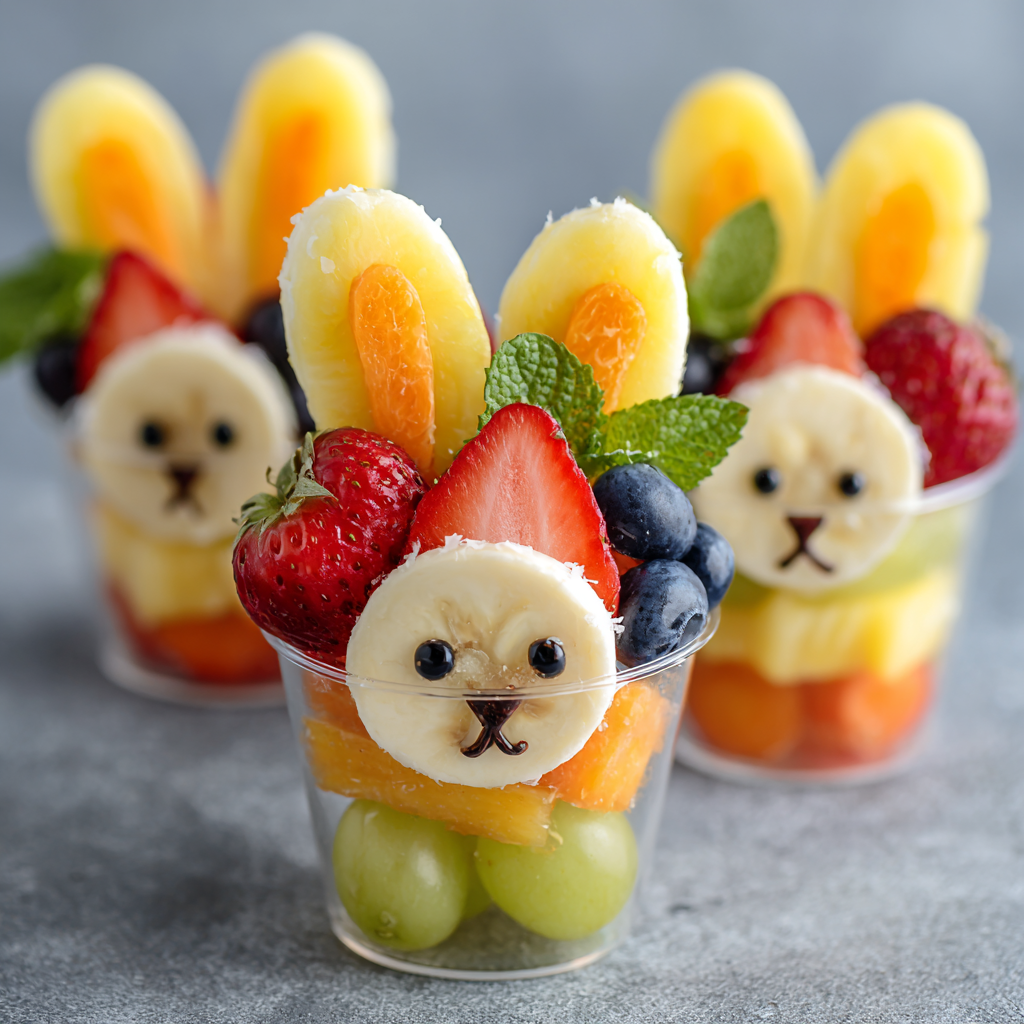
Easter Fruit Cups (Bunny & Chick Designs, Naturally Sweet)
Easter Fruit Cups: Wholesome Bunny & Chick Fun That’s Naturally Sweet!
Hey friends, Beau here from Feastical! Can you smell it? That fresh, hopeful scent of spring is finally in the air. The grass is getting greener, the flowers are starting to peek out, and my kitchen is buzzing with the promise of something festive. Easter is just around the corner, and for me, that means one thing: time to create food that brings pure, unadulterated joy.
But let’s be real for a second. Sometimes holiday treats can feel like a sugar-fueled sprint that leaves everyone (especially the kids) bouncing off the walls. I’m all for a good chocolate bunny (don’t look in my pantry), but I also believe in balance. I want the celebration to feel light, bright, and full of goodness.
That’s where these Easter Fruit Cups come in. We’re talking about a rainbow of fresh, juicy fruit, transformed with a little imagination into the cutest bunny and chick faces you’ve ever seen. They’re a feast for the eyes *and* the body. These cups are my answer to a festive dessert or side dish that’s vibrant, nourishing, and an absolute blast to make. It’s a kitchen activity that invites everyone to the counter, from tiny helpers to seasoned sous-chefs. So, let’s ditch the food coloring and complicated recipes. Grab your favorite paring knife and some clear cups, because we’re about to make a spring celebration that tastes as good as it looks!
The Easter Table That Started It All
This recipe takes me right back to my grandma’s house. Her Easter table was a legendary spread: a glazed ham the size of my childhood torso, scalloped potatoes that could make you weep, and this… thing… in the center. She called it her “Easter Basket Jell-O Mold.” It was a wobbly, lime-green dome with suspended fruit cocktail and a alarming number of mini marshmallows. We kids would stare at it with a mix of terror and fascination.
One year, I was deemed old enough to help. My job? To arrange the canned mandarin oranges into a “sunshine pattern” on top. I remember the concentrated silence, my tongue poking out, as I carefully placed each segment. When we brought it to the table, my cousins actually oohed. That moment—of taking simple ingredients and turning them into something that sparked delight—stuck with me. These fruit cups are my grown-up, fresh-fruit homage to Grandma’s wobbly masterpiece. It’s all about that same playful spirit, but with ingredients that make you feel fantastic. No marshmallow aliens required.
Gathering Your Rainbow: Ingredients & Chef Insights
This isn’t just a shopping list—it’s your artist’s palette! The beauty here is in the vibrant colors and textures. Use what’s fresh and looks good at your market. Here’s what I love to use, plus my insider tips for each.
- Strawberries, hulled and sliced: The quintessential spring red. They’re perfect for bunny ears and little chick beaks. Chef’s Insight: Look for firm, bright red berries with fresh green tops. A slightly underripe one is actually easier to slice into a clean triangle for a beak!
- Pineapple Chunks (fresh or canned in juice): Sunshine in fruit form! Their bright yellow is ideal for chick bodies. Substitution Tip: If fresh pineapple is a hassle, a can of pineapple chunks in 100% juice (drained) is a fantastic, time-saving swap. No syrup!
- Mandarin Orange Segments (fresh or canned in water): These little bursts of citrus are sweet, easy for little hands to eat, and another great chick color. Chef’s Insight: If using fresh, try clementines or satsumas—they’re usually seedless and super easy to peel.
- Blueberries: Our go-to for eyes! Their deep blue-purple color pops against the other fruit. Pro Hack: If your blueberries are huge, you can slice them in half flat-side down so they don’t roll around.
- Green Grapes, halved: They add a lovely pale green and a different shape to the fruit mix. Halving them prevents a choking hazard for little ones and makes them easier to eat with a fork.
- Banana, sliced into thick rounds: The classic bunny face! Their creamy texture and neutral color are perfect. Critical Tip: Prep the bananas LAST, right before assembly, to prevent browning. A tiny brush of lemon juice can help if you’re working ahead.
- Kiwi, peeled and sliced: That vibrant green is unmistakable. It’s fantastic for adding a grassy “field” look at the bottom of a cup or as a fun, speckled backdrop.
Optional Decorations (The Fun Extras!)
- Unsweetened Shredded Coconut: This is for the bunny’s “fur.” A little sprinkle on the cheeks or around the base adds wonderful texture and a snowy, fluffy look.
- Mini Chocolate Chips or Raisins: The final touch for eyes! Mini chips are adorable, while raisins offer a naturally sweet option.
- Fresh Mint Leaves: A sprig on top or as a little “collar” adds a gorgeous pop of green and a refreshing aroma.
Let’s Get Building: Step-by-Step to Cuteness
Okay, team! Clear off a big space on the counter. Put on some fun music. This is less about precise cooking and more about playful assembly. I like to set up a “fruit bar” with all my prepped ingredients in little bowls—it makes the process smooth and lets everyone customize their own.
- Wash and Prep Like a Pro. Give all your fruit a good rinse under cool water. Hull the strawberries, peel the kiwi and bananas (but wait on slicing the banana!), and separate your mandarin segments. I like to slice some strawberries into long “ear” shapes and a few into small triangles for beaks. Halve the grapes. Get everything into bowls. My Kitchen Mantra: “A clean prep is a happy chef.” Taking these 10 minutes to organize makes the artistic part so much more relaxing.
- Create Your Fruity Foundation. Grab your clear cups (plastic or glass both work great!). Start by adding a colorful mix of fruit to the bottom. I do a handful of pineapple chunks, a few blueberries, some grapes, and a kiwi slice. This isn’t just filler—it’s the delicious “nest” or “garden” your bunny or chick is sitting in. Pack it in fairly snug so the face has support.
- Bunny Brigade Assembly. Now for the magic! For each bunny: Take a thick banana slice and place it front-and-center against the side of the cup. Press two strawberry “ears” behind it so they stick up. Dab a tiny bit of honey or yogurt on the back if they’re being slippery. Use two blueberries or mini chocolate chips for eyes. A single mini chip or a sliver of raisin makes a perfect nose. Then, take a pinch of shredded coconut and gently press it onto the banana to make fluffy cheeks. SO CUTE.
- Chick Crew Assembly. For the chicks: Your base here should be nice and yellow. Use pineapple chunks and mandarin oranges. Create the face with two blueberry eyes side-by-side. Take a tiny triangle of strawberry or even a sliver of carrot and tuck it below the eyes for a beak. You can even use a small piece of orange peel for little feet at the bottom of the cup!
- Express Yourself! This is the best part. Make a sleepy bunny by placing the eyes lower. Make a surprised chick by spacing the eyes wider. Add a mint leaf hat! There are no rules. Let your kids or your inner child take the lead. The personality is what makes these unforgettable.
- The Chill Factor. Once your edible menagerie is complete, gently cover the cups with plastic wrap and pop them in the fridge for at least 30 minutes before serving. This chills the fruit, makes the flavors meld a tiny bit, and gives you one less thing to do right before your guests arrive.
Serving Up the Sunshine
Presentation is half the fun with these! Don’t just line them up on the counter. Create a little Easter scene. Arrange them on a platter lined with clean, fresh kale leaves or shredded lettuce to look like grass. You can even scatter a few extra blueberries or strawberries around the base like Easter eggs.
For a brunch buffet, they’re the perfect vibrant counterpoint to savory quiches and casseroles. At a kids’ table, they’re the star of the show—I promise they’ll get more attention than the sandwiches. Offer small spoons or cocktail forks so every last bit of that juicy fruit can be scooped up. And have your camera ready, because these cuties are definitely going to be the most photographed dish of the day!
Mix It Up! Fun Variations to Try
Once you’ve got the basics down, the fruit world is your oyster! Here are a few of my favorite twists to keep things fresh.
- Tropical Chick & Bunny: Use mango instead of pineapple for the chick, and dragon fruit slices for a stunning pink bunny face. Add a few pomegranate arils for eyes—so colorful!
- “Carrot Patch” Cups: Make all bunnies! Use a base of finely diced oranges and pineapple to look like “carrot” dirt. Stand a baby carrot (or a rolled slice of cantaloupe) next to the bunny like it’s munching.
- Yogurt Parfait Style: Layer the fruit with a scoop of vanilla Greek yogurt or coconut whipped cream in the bottom before adding the face. It becomes a more substantial, protein-packed treat.
- Allergy-Friendly/Dye-Free: For nut-free, just skip the coconut. For dye-free, use raisins for eyes instead of chocolate chips. It’s naturally beautiful as-is!
- Gourmet Grown-Up Twist: Add a base of lemon-thyme infused syrup (just honey, lemon juice, and a thyme sprig warmed together) to the fruit mix. Garnish the cups with a fresh thyme sprig and a delicate edible flower. Stunning for a spring shower.
Beau’s Chef Notes & Kitchen Confessions
This recipe has become a spring tradition in my house, and it evolves a little every year. One time, my nephew decided every chick needed eyebrows made from thin kiwi peel. It was hilarious and weirdly expressive! Another year, I was rushing and sliced the banana way too early… let’s just say we had some very “tan” bunnies by serving time. Lesson learned!
The real magic isn’t in perfection; it’s in the laughter around the kitchen island while you’re making them. If a blueberry eye rolls away, turn it into a beauty mark. If a bunny ear breaks, make a floppy-eared bunny. The goal is joy, not perfection. These cups are a reminder that the best food comes from a place of playfulness and love.
Your Questions, Answered!
- Q: Can I make these the night before?
A: You can prep *most* of it! Wash, chop, and store all the fruit (except bananas) in separate airtight containers in the fridge. Slice the bananas and assemble the cups the morning of your event. This keeps everything fresh and vibrant. - Q: My fruit is getting watery in the cup. Help!
A: This is natural, especially if using very juicy pineapple or oranges. To minimize it, make sure your fruit is thoroughly dried after washing, and don’t assemble too far in advance (2-3 hours max is ideal). The little bit of juice that collects at the bottom is actually delicious! - Q: What are the best cups to use?
A: I love clear 9-oz plastic punch cups or small mason jars—they’re the perfect size and show off the layers. For a zero-waste option, reusable acrylic dessert cups are fantastic. Avoid paper cups; you won’t see the cuteness! - Q: How do I keep the banana from browning?
A: The #1 trick is to cut it at the last possible second. If you must prep ahead, give the banana slices a very light brush with lemon, lime, or pineapple juice (the acid slows oxidation). But truly, last-minute is best.

Easter Fruit Cups (Bunny & Chick Designs, Naturally Sweet)
Description
These Easter Fruit Cups are a fun, wholesome spring treat made with fresh fruit and a little creativity. No baking, no food coloring, and no heavy sugar — just colorful fruit arranged into cute bunny and chick faces. Perfect for Easter brunch, kids’ tables, or a light festive dessert.
Ingredients
Fruit Base (mix and match):
-
1 cup strawberries, sliced
-
1 cup pineapple chunks
-
1 cup mandarin orange segments
-
1 cup green grapes, halved
-
1 cup blueberries
-
2 kiwis, peeled and sliced
-
2 bananas, cut into thick rounds (slice last)
Optional Decorations
-
Unsweetened shredded coconut (bunny “fur”)
-
Raisins or mini chocolate chips (eyes)
-
Small strawberry triangles or thin carrot slivers (beaks/noses)
-
Fresh mint leaves (garnish)
Instructions
1️⃣ Prep the Fruit
Wash and dry all fruit well.
Slice strawberries (some into long ear shapes, some into small triangles).
Halve grapes. Peel and slice kiwi.
Wait to slice bananas until just before assembly.
2️⃣ Build the Base
Spoon a colorful mix of fruit into the bottom of each clear cup, about ¾ full. Pack gently so the top decorations have support.
3️⃣ Make Bunny Faces
-
Place a thick banana slice against the inside wall of the cup.
-
Add two strawberry slices behind it as ears.
-
Use blueberries or raisins for eyes.
-
Add a mini chip or raisin piece for the nose.
-
Sprinkle a little coconut for fluffy cheeks.
4️⃣ Make Chick Faces
-
Use pineapple and mandarin pieces at the top for a yellow base.
-
Add two blueberry eyes.
-
Add a small strawberry triangle or carrot sliver for a beak.
5️⃣ Chill
Cover and refrigerate 30–60 minutes before serving for best flavor and freshness.
Notes
-
✅ Slice bananas last to prevent browning.
-
✅ If needed, lightly brush banana slices with lemon or pineapple juice.
-
✅ Dry fruit well so cups don’t get watery.
-
✅ Use clear cups or jars so the designs show.
-
✅ Let kids decorate — the more personality, the better.
Nourishment You Can Feel Good About
Let’s talk about why these fruit cups make you feel so good. This isn’t just empty calories; it’s a powerhouse of vitamins, fiber, and natural energy. The berries bring antioxidants, the citrus offers a hit of Vitamin C, and the pineapple has enzymes that are great for digestion. The natural sugars come packaged with fiber and water, which means they digest slowly and won’t cause a crazy sugar spike and crash like candy will. You’re celebrating with the very best of what nature has to offer in spring. It’s food that loves you back!
Approximate Nutrition Per Serving (1 cup): Calories: 85-95 | Carbohydrates: 22g | Fiber: 3g | Sugar: 15g (all natural) | Protein: 1g | Fat: 0g. Naturally gluten-free, dairy-free, and can easily be made vegan/nut-free.
Final Thoughts from My Kitchen to Yours
Friends, at the end of the day, Feastical is all about food that brings us together—food that’s simple, soulful, and satisfying. These Easter Fruit Cups are a perfect little embodiment of that mission. They’re uncomplicated, they spark joy, and they’re made to share.
This Easter, I hope you carve out a little time for play in the kitchen. Whether you’re making these for a big family brunch or just as a special treat for your own little crew, I hope they bring a smile to your face. Remember, the secret ingredient is always a dash of fun. Happy Easter, and happy cooking!
Let me know how your bunny and chick creations turn out! Tag me @feastical on social media so I can see your beautiful, edible artwork.
With love and a full fruit bowl,
Beau
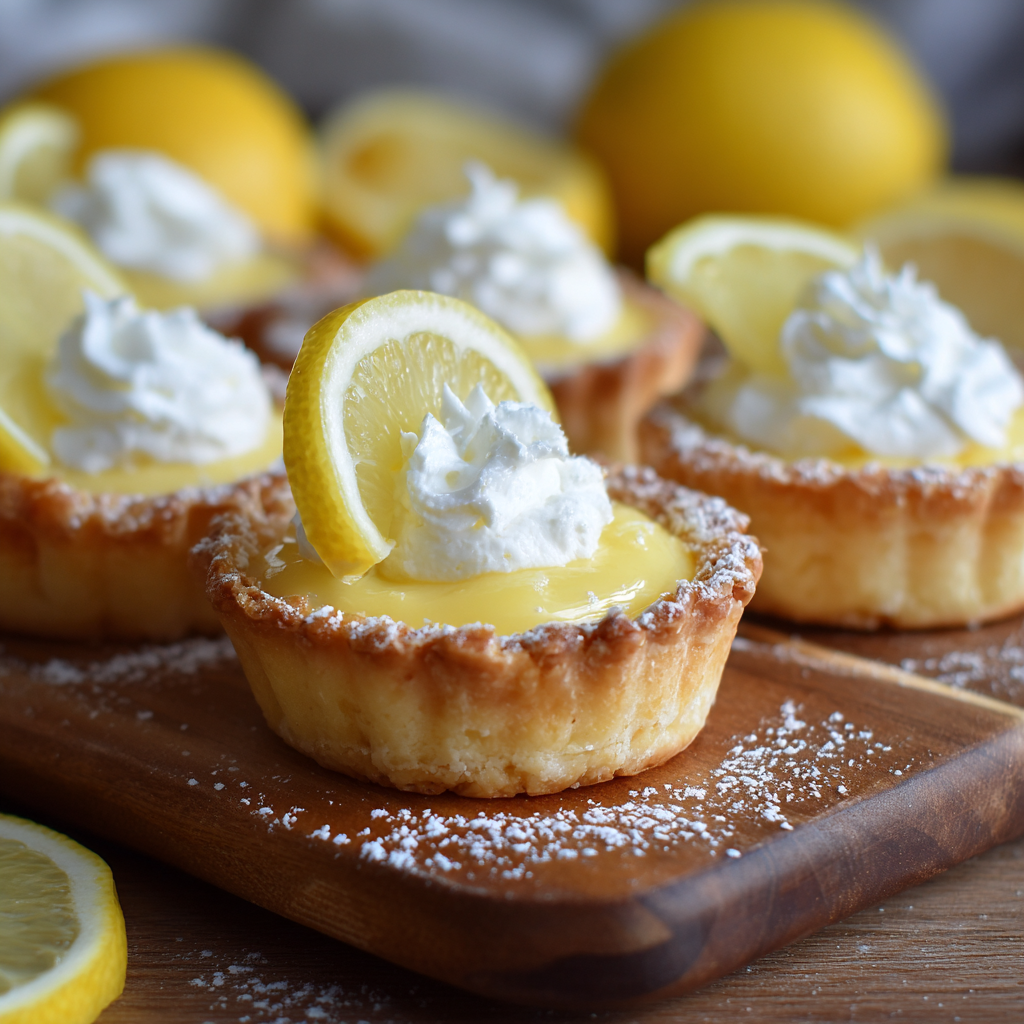
Mini Lemon Curd Tarts : Bright, Buttery & Elegant
Sunshine in a Bite: Your New Favorite Mini Lemon Curd Tarts
Hey friends, Beau here from Feastical! Grab a cup of coffee (or hey, a glass of crisp rosé) and pull up a stool. Today, we’re making magic. Not the rabbit-out-of-a-hat kind, but the kind that happens when you whisk together some simple ingredients and end up with a dessert so bright and joyful, it practically hums with happiness. I’m talking about my Mini Lemon Curd Tarts.
Picture this: a crisp, buttery, melt-in-your-mouth shortbread crust. Now, fill that little vessel with the smoothest, most luscious lemon curd you’ve ever tasted—tangy, sweet, and sunshine-yellow. Top it with a single perfect berry or a twist of zest. It’s elegant enough to make your guests think you studied pastry in Paris, but I promise you, the process is pure, simple, feel-good cooking.
These tarts are my go-to for spring gatherings, Easter brunch, baby showers, or those “I just need something beautiful today” moments. They feel fancy but are incredibly approachable. Whether you’re a confident baker or someone who considers store-bought dough a superhero-level kitchen hack, this recipe is for you. We’re keeping it soulful, satisfying, and absolutely delicious. So, preheat that oven, friends. We’re about to bake a little slice of sunshine.
The Tart That Started It All: Grandma Mabel’s Lemon Legacy
Every recipe has a heartbeat, a story that gives it flavor beyond the ingredients. For me, these tarts will always taste like my Grandma Mabel’s sun-drenched kitchen in July. She wasn’t a fancy cook, but she was a *great* one. Her signature move was a towering, slightly lopsided lemon meringue pie that appeared at every family picnic.
My job, as the shortest sous-chef in an apron two sizes too big, was to zest the lemons. I’d watch the yellow confetti pile up, the citrus oil misting the air, and she’d tell me, “Beau, the zest is where the soul of the lemon lives. Don’t you dare waste it.” Then, she’d let me lick the whisk after she made the curd—a tangy, sweet, electric shock of flavor that made my eyes go wide.
These mini tarts are my love letter to that memory. They capture that same perfect balance of her pie—the buttery crust, the puckery-sweet filling—but in a friendly, shareable, no-fuss size. They’re Grandma Mabel’s spirit, updated for our busy, beautiful lives. Every time I make them, I think of her, and I know she’d approve, especially of the part where you get to lick the spoon.
Gathering Your Sunshine: The Ingredients
Here’s the beautiful part: you don’t need a pantry full of obscure items. These ingredients are simple, but each one plays a starring role. Let’s break it down.
- For the Buttery Tart Shells:
- 1 ¼ cups all-purpose flour: The foundation. Spoon and level it into your measuring cup for accuracy—don’t scoop directly from the bag or you’ll pack in too much!
- ⅓ cup powdered sugar: This is our secret weapon for a tender, melt-in-your-mouth crust. Its fine texture keeps things delicate, unlike granulated sugar which can make it gritty.
- ¼ tsp salt: Never skip this! It’s the flavor enhancer that makes the butter and sugar sing.
- ½ cup (1 stick) unsalted butter, VERY cold and cubed: I can’t stress “COLD” enough. This is what creates those lovely flaky pockets in your crust. I pop my cubed butter in the freezer for 10 minutes before I start.
- 1 large egg yolk: The binder that brings our dough together and adds rich color and tenderness.
- 1-2 tbsp ice water: Just enough to bring it together. The ice prevents the butter from warming up.
- For the Luscious Lemon Curd Filling:
- ¾ cup fresh lemon juice (about 4-5 lemons): Fresh is non-negotiable for that vibrant, wake-up-your-taste-buds zing. Bottled juice just won’t give you the same magic.
- Zest of 2 lemons: Remember Grandma Mabel’s lesson! This is pure citrus gold, packed with aromatic oils.
- 1 cup granulated sugar: Balances the intense tartness of the lemon.
- 3 large eggs + 1 extra yolk: The eggs are the superstars that thicken our curd into a silky custard. The extra yolk adds even more luxurious texture.
- ½ cup (1 stick) unsalted butter, cut into tablespoons: Whisked in at the end, it creates that glossy, smooth, decadent finish. Use room temp butter so it incorporates seamlessly.
- Pinch of salt: Again, the flavor fairy. It rounds out all the sharp edges.
- For the (Optional) Light & Fluffy Boost & Garnish:
- ½ cup heavy whipping cream: Want a lighter, mousse-like filling? Whip this to stiff peaks and fold it into the cooled curd. It’s a game-changer!
- Fresh berries, mint sprigs, lemon zest twists: Your edible confetti. Blueberries, raspberries, a single blackberry—anything goes for that pop of color and freshness.
- Powdered sugar, for dusting: The final snowy touch that makes everything look professionally pretty.
Let’s Build Some Tarts: Step-by-Step with Chef Beau
Ready? Put on some good music, and let’s get our hands in the dough. This is the fun part.
- Make the Tart Dough (The “Pulse & Press” Method):In your food processor, pulse the flour, powdered sugar, and salt a couple times to combine. Scatter those icy-cold butter cubes over the top. Now, pulse in short bursts—about 10-12 times—until the mixture looks like coarse sand with some pea-sized butter bits still visible. That’s perfect! Those bits will steam in the oven for flakiness. Add the egg yolk and pulse a few times to combine. With the processor running, drizzle in the ice water, one tablespoon at a time, just until the dough *begins* to clump together. Don’t over-process! Tip it out onto plastic wrap, press it into a disc, wrap it tight, and chill for at least 1 hour. This relaxes the gluten and re-chills the butter, which is the key to a non-shrinky, super-flaky crust.
- Roll, Cut, & Dock:On a lightly floured surface, roll your chilled dough to about ⅛-inch thickness. Use a round cutter slightly larger than your mini tart pan wells (a 3.5-4 inch cutter works great). Gently press the rounds into your greased pans. Don’t stretch the dough—just let it settle in. Use a fork to prick the bottoms all over (this is called “docking”) to prevent air bubbles. Pop the whole tray in the freezer for 15 minutes. This is another pro hack for preventing shrinkage!
- Blind Bake to Golden Perfection:Preheat your oven to 375°F (190°C). Line your frozen tart shells with parchment paper or foil and fill with pie weights, dried beans, or uncooked rice. Bake for 15 minutes. Carefully remove the parchment and weights, then bake for another 8-10 minutes, until the shells are golden brown and dry. Let them cool completely in the pans on a wire rack.
- Create the Silky Lemon Curd (The “Low & Slow” Whisk):In a medium saucepan (non-reactive, like stainless steel), whisk together the lemon juice, zest, sugar, eggs, extra yolk, and salt. Place the pan over medium-low heat. Now, whisk. Constantly. And I mean it—don’t stop for a second. You’re coaxing the eggs to thicken the mixture without scrambling them. In about 8-10 minutes, it will transform into a thick pudding-like consistency that coats the back of a spoon. Immediately remove it from the heat!
- The Butter Finish & Chill:Strain the curd through a fine-mesh sieve into a bowl to catch any stray cooked egg bits and the zest (this guarantees absolute silkiness). While it’s still hot, whisk in the room-temperature butter, one tablespoon at a time, until it’s fully melted and incorporated. Press plastic wrap directly onto the surface of the curd to prevent a skin from forming and chill for at least 2 hours, until completely cold and set.
- Optional Fluffy Upgrade:If you want that airy texture, whip your heavy cream to stiff peaks in a chilled bowl. Gently fold it into the chilled lemon curd until no white streaks remain. It becomes a lemon cloud!
- Assemble & Garnish:Spoon or pipe your cooled lemon curd (or lemon mousse) into the completely cooled tart shells. Smooth the tops. You can chill them again for 30 minutes to firm up. Right before serving, add your garnish—a few berries, a twist of zest, a mint leaf. A light dusting of powdered sugar makes them look like they came from a patisserie.
How to Serve These Little Gems
Presentation is half the fun! Arrange these sunny tarts on a simple white platter or a tiered dessert stand for real “wow” factor. For a casual backyard gathering, I love setting them out on a rustic wooden board. They’re the perfect finger food dessert.
Pairing is key. These tarts are rich and citrusy, so they love a companion. Serve them with a dollop of lightly sweetened whipped cream or a scoop of vanilla bean ice cream for contrast. On a brunch table, they’re gorgeous next to a pot of coffee and a fruit salad. For a truly special occasion, a glass of Moscato d’Asti, a crisp Riesling, or even a lightly sweet sparkling wine is an absolute dream pairing. The bubbles and acidity cut through the richness beautifully.
Make It Your Own: Delicious Twists & Swaps
Once you’ve mastered the classic, the kitchen playground opens up! Here are a few of my favorite riffs:
- Berry Swirl: Before adding the lemon curd, drop a tiny spoonful of seedless raspberry or strawberry jam into each tart shell. Then add the curd and give it one quick swirl with a toothpick for a gorgeous marbled effect.
- Tropical Escape: Substitute half the lemon juice with fresh lime juice and add a teaspoon of toasted coconut to the crust mixture. Garnish with toasted coconut flakes.
- Lavender Dream: Infuse the cream (if using) or steep 1 tsp of culinary lavender in the warm lemon curd for 5 minutes before straining. It adds a beautiful, floral note that’s incredibly elegant.
- Dairy-Free Delight: Use a high-quality vegan butter (the kind that comes in sticks) in both the crust and the curd. For the curd, ensure your non-dairy butter has a high fat content for the best texture.
- Gingersnap Crust: Swap the shortbread crust for one made from crushed gingersnap cookies and butter. The spicy-sweet combo with the lemon is out-of-this-world good.
Beau’s Kitchen Notes & Stories
This recipe has been a living, evolving thing in my kitchen. The first time I made lemon curd, I got distracted by a phone call and turned the heat up too high. Let’s just say I ended up with sweet lemon scrambled eggs—a true culinary tragedy! The lesson? Low heat and patience are your best friends here.
I’ve also learned that the tart shells are incredibly forgiving. If a patch tears when you’re pressing it into the pan, just take a little scrap of dough, moisten it, and patch it up like you’re fixing a hole in drywall. No one will ever know. And if you’re in a serious time crunch, using high-quality store-bought mini tart shells and lemon curd is absolutely nothing to be ashamed of. It’s about the joy of sharing something delicious, not perfection. Some of my most memorable Feastical moments have come from “doctored-up” store-bought bases!
Your Questions, Answered
- Q: Can I make these ahead of time?A: Absolutely! You can bake the shells 1-2 days ahead and store them in an airtight container at room temp. The lemon curd can be made up to 5 days ahead and kept in the fridge. Assemble the tarts the day you plan to serve them for the crispiest crust.
- Q: My curd isn’t thickening! What did I do wrong?A: First, don’t panic. It likely just needs more time. Keep whisking over medium-low heat. If it’s still soupy after 15 minutes, you can temper in another egg yolk. Whisk a little of the hot curd into a bowl with the extra yolk, then whisk it all back into the pot. This should do the trick!
- Q: Why did my tart shells shrink so much?A: The two main culprits are not chilling the dough long enough and stretching it when you put it in the pan. Chilling relaxes the gluten, and not stretching it prevents it from snapping back. The freezer step before baking is also a critical shield against shrinkage.
- Q: Can I use a regular muffin tin instead of mini tart pans?A: You can! Grease the wells well, press the dough in, and follow the same baking process. They’ll be a bit deeper, so you might get 8-10 tarts instead of 12, and the shape will be more like a mini cup. Still totally delicious.
Mini Lemon Curd Tarts : Bright, Buttery & Elegant
Description
These Mini Lemon Curd Tarts are the kind of dessert that looks elegant but is totally doable at home. Each tart has a crisp, buttery shortbread-style shell filled with smooth, tangy lemon curd. They’re perfect for spring gatherings, brunch tables, or anytime you want a fresh, citrusy treat in a small, beautiful package.
Ingredients
Tart Shells
-
1¼ cups (155 g) all-purpose flour
-
⅓ cup (40 g) powdered sugar
-
¼ teaspoon salt
-
½ cup (115 g) unsalted butter, very cold and cubed
-
1 large egg yolk
-
1–2 tablespoons ice water
Lemon Curd
-
¾ cup (180 ml) fresh lemon juice
-
Zest of 2 lemons
-
1 cup (200 g) granulated sugar
-
3 large eggs + 1 egg yolk
-
Pinch of salt
-
½ cup (115 g) unsalted butter, cut in pieces
Optional Garnish
-
Fresh berries
-
Whipped cream
-
Powdered sugar
-
Extra lemon zest
Instructions
1️⃣ Make the Tart Dough
-
In a food processor, pulse flour, powdered sugar, and salt.
-
Add cold butter and pulse until mixture looks like coarse crumbs.
-
Add egg yolk and pulse briefly.
-
Add ice water 1 tablespoon at a time until dough just comes together.
-
Form into a disk, wrap, and chill at least 1 hour.
2️⃣ Shape & Bake Shells
-
Preheat oven to 375°F (190°C). Grease a mini tart pan or muffin tin.
-
Roll dough to about ⅛-inch thick and cut circles slightly larger than the wells.
-
Press gently into pan and prick bottoms with a fork.
-
Freeze 15 minutes.
-
Line with paper and weights (beans or rice).
-
Bake 15 minutes, remove weights, then bake 8–10 more minutes until golden.
-
Cool completely.
3️⃣ Make Lemon Curd
-
In a saucepan (not aluminum), whisk lemon juice, zest, sugar, eggs, yolk, and salt.
-
Cook over medium-low heat, whisking constantly, until thick enough to coat a spoon (about 8–10 minutes).
-
Remove from heat and strain through a sieve into a bowl.
-
Whisk in butter pieces until smooth.
-
Cover surface with plastic wrap and chill at least 2 hours.
4️⃣ Assemble
-
Spoon or pipe chilled lemon curd into cooled tart shells.
-
Add berries or whipped cream if desired.
-
Chill 30 minutes before serving for best texture.
Notes
-
✅ Use fresh lemon juice — bottled won’t taste as bright.
-
✅ Keep butter and dough cold for crisp, non-shrunken shells.
-
✅ Whisk curd constantly to prevent scrambled eggs.
-
✅ Straining the curd gives extra smooth texture.
-
✅ Shells and curd can be made ahead and assembled later.
Nutritional Information (Per Tart, Approximate)
Let’s keep it real—this is a dessert, a treat meant to be savored. One of these delightful mini tarts contains roughly: Calories: 280 | Total Fat: 16g | Saturated Fat: 10g | Cholesterol: 105mg |
Final Thoughts
So there you have it—your roadmap to sunshine in a pastry shell. These Mini Lemon Curd Tarts are more than just a dessert; they’re an experience. They’re the taste of a memory, the joy of a quiet afternoon in the kitchen, and the happy surprise on a friend’s face when they take that first bright, buttery bite.
Remember this: cooking, especially baking, isn’t about rigid perfection. It’s about the rhythm of the whisk, the scent of lemon zest hitting the air, the satisfying press of dough into a pan. It’s about creating something with your hands that brings a moment of pure, simple happiness to someone’s day. Whether you follow this recipe to the letter or scribble your own notes in the margins, you’re adding your own chapter to its story.
Don’t be intimidated. Embrace the patched crust, the slightly lopsided swirl, the proud dusting of powdered sugar. This is feel-good food. This is connection—to Grandma Mabel, to the friends around your table, and to the simple, profound pleasure of making something delicious.
So go on. Zest those lemons. Get a little flour on your apron. And bake a little bit of sunshine. I promise, it’s the best kind of magic there is.
With love and a full heart,
Beau @ Feastical
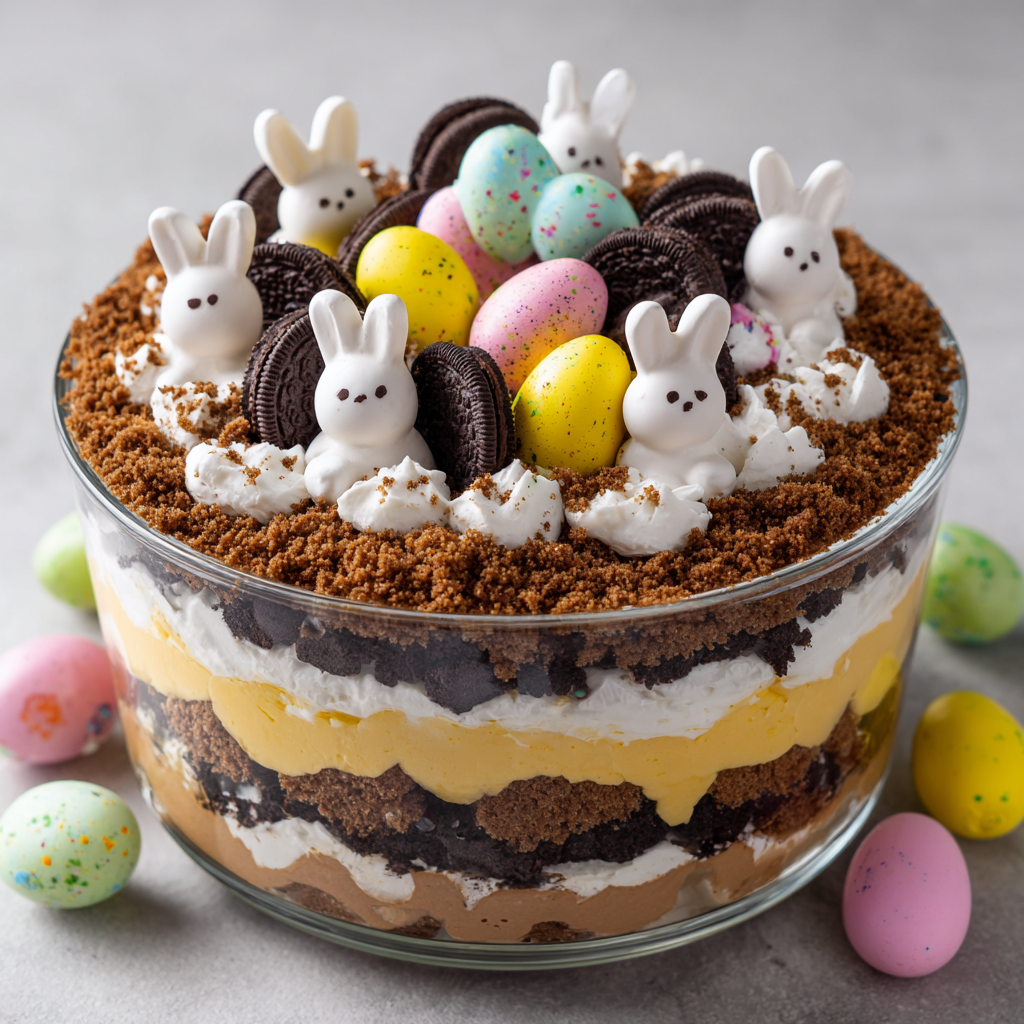
Easter Dirt Cake : Fun Layered Pudding Dessert for Kids
The Ultimate Easter Dirt Cake: A Fun-Filled, No-Bake Tradition
Hey friends, Beau here from Feastical! Pull up a chair and let’s talk about one of the most joy-sparking, crowd-pleasing desserts to ever grace a spring table: the legendary Easter Dirt Cake. Now, if you’ve never experienced the magic of a dirt cake, you’re in for a treat that’s equal parts delicious and downright whimsical. We’re talking layers of creamy, dreamy chocolate pudding, fluffy clouds of sweetened cream cheese, and that iconic “dirt” made from crushed chocolate cookies. All of it comes together in a no-bake masterpiece that ends with a garden of candy eggs and maybe a marshmallow bunny or two peeking out. It’s the dessert that gets kids (and let’s be honest, adults too) giggling with delight before they even take a bite.
In a season often filled with elaborate meals and fancy pastries, this dessert is our delicious rebellion. It’s unpretentious, it’s playful, and it’s an open invitation to have fun with your food. The best part? You don’t need to be a pastry chef to pull it off. Whether you’re hosting a big Easter brunch, need a showstopper for the school potluck, or just want to make a regular Tuesday feel special, this recipe is your secret weapon. It’s the kind of creation that builds memories – the process of layering the “dirt” and “worms” (well, candy eggs in this case!) is as much a part of the experience as eating it. So, grab your favorite mixing bowl and let’s create a dessert that’s guaranteed to bring smiles, spark conversation, and disappear from the serving dish faster than you can say “Happy Easter!”
Why This Recipe Holds a Special Place in My Kitchen
This recipe takes me straight back to my grandma’s linoleum-floored kitchen, where the rules were simple: if you made a mess, you’d better be creating something wonderful. One rainy spring Saturday, she pulled out a bag of chocolate cookies, a tub of cool whip, and a box of instant pudding. “We’re making mud pies, Beau,” she announced with a wink. My job, as her appointed five-year-old sous-chef, was to annihilate the cookies inside a plastic bag with a rolling pin. Flour flew, crumbs escaped, and I was utterly convinced I was the strongest kid alive. She let me “plant” the jelly bean flowers on top, my tiny fingers pressing them into the creamy layers with utmost seriousness.
When we served it after Sunday dinner, my uncles – normally stoic – cracked huge grins. My aunt pretended to be horrified we’d served actual dirt. The laughter around that table, the shared silliness over a dessert, is what food is all about for me. It wasn’t just a pudding cake; it was an experience, a moment of pure, unadulterated joy. That’s the spirit I want to bring to your table with this recipe. It’s more than ingredients; it’s a ticket to play, to connect, and to create a little delicious mischief together.
Gathering Your “Garden” Ingredients
Here’s everything you’ll need to build your edible Easter garden. Remember, cooking is an adventure, so don’t stress if you need to swap something out—I’ve got your back with tips!
- 400 g (about 36-40) Chocolate Sandwich Cookies: The “dirt”! Classic Oreos are perfect. For a fun twist, try the golden ones for “sandy soil.” Chef’s Insight: Don’t bother removing the cream filling—it just adds to the delicious texture and flavor. A quick pulse in a food processor is my go-zero-effort method.
- 2 boxes (3.4 oz / 96 g each) Instant Chocolate Pudding Mix: The rich, chocolatey layer that holds it all together. Instant is key here—no cooking required. Substitution Tip: Vanilla or butterscotch pudding makes a fantastic “blonde dirt” version!
- 700 ml Cold Milk: Whole milk gives the pudding its luscious, creamy body. Chef’s Hack: The colder the milk, the quicker and thicker your pudding will set. I sometimes pop my milk in the freezer for 10-15 minutes before I start.
- 225 g Cream Cheese, softened: This is the secret weapon for decadence. It adds a tangy depth that balances the sweetness. Pro Tip: Leave it on the counter for a good hour. Truly soft cream cheese blends seamlessly without any lumps.
- 100 g Powdered Sugar: Sweetens and smooths out the cream cheese mixture. Sift it if you have time to avoid any little sugar clumps.
- 225 g Whipped Topping (like Cool Whip), thawed: Adds incredible lightness. Substitution Tip: An equal amount of freshly whipped heavy cream works beautifully. Just whip 1 ½ cups of heavy cream with 2 tbsp of the powdered sugar until stiff peaks form.
- Candy Eggs, Marshmallow Bunnies, Gummy Worms: The Easter parade on top! This is where you and the kids can get creative. Robin’s eggs, speckled malted milk eggs, or even little chocolate bunnies make it festive.
Building Your Easter Masterpiece: Step-by-Step
Alright, team, let’s get our hands dirty (figuratively, of course!). Follow these steps for a foolproof, gorgeous dessert.
- Create the “Dirt”: Toss your chocolate cookies into a food processor and pulse until they resemble rich, dark soil. No processor? No problem! Seal them in a heavy-duty zip-top bag and channel your inner superhero with a rolling pin. Set this delicious dirt aside. Chef’s Hack: Reserve about ½ cup of the finest crumbs for the very top layer—it gives a beautiful, fine “earth” finish.
- Whip Up the Pudding Layer: In a large bowl, whisk both boxes of instant pudding mix with the 700 ml of ICE COLD milk. Whisk for a full two minutes—set a timer! It will seem thin at first but will thicken up right before your eyes. Let it sit for 5 minutes to fully set while you work on the next layer.
- Master the Creamy Cloud: In another large bowl, beat the softened cream cheese with the powdered sugar. Use an electric mixer on medium until it’s completely smooth, fluffy, and no lumps remain. This is crucial for a silky texture. Now, gently fold in the thawed whipped topping (or your freshly whipped cream) with a spatula. Use a folding motion (turn the bowl as you go) to keep it light and airy.
- Marry the Cream and Pudding: Here’s where the magic happens. Add the set chocolate pudding to the cream cheese mixture. Gently fold them together until you have one homogenous, luscious, chocolate-cream dream. No streaks! Be patient and gentle to preserve that fluffy texture.
- The Art of the Layer: Grab your serving dish—a clear glass trifle bowl, a 9×13 pan, or even individual cups. Start with a generous layer of cookie crumbs, patting it down lightly. Follow with a thick layer of your creamy pudding mixture. Repeat! I usually do 2-3 layers of each, always ending with a final dusting of cookie crumbs on top.
- Decorate and Chill: Now for the best part: the Easter garnish! “Plant” your candy eggs, tuck in a few gummy worms, and position your marshmallow bunnies. Then, and this is the hardest part, walk away. Cover it and refrigerate for at least 2 hours, ideally overnight. This chill time lets the flavors meld and the cookies soften just slightly into a cake-like texture. Trust me, it’s worth the wait.
How to Serve Your Easter Dirt Cake
Presentation is half the fun! If you used a clear trifle bowl, you’ve already got a showstopper—just set it in the center of the table. For a 9×13 pan, I love to create a mini “garden scene.” Use extra cookie crumbs to make little dirt mounds, place a few bunny figurines alongside the edible ones, and maybe even add a picket fence cookie for charm. When scooping servings, use a large spoon to dig all the way down, getting every glorious layer in each bite. Serve it in colorful bowls or even brand-new (clean!) terra cotta flower pots lined with foil for the ultimate garden-party vibe. A sprig of fresh mint on the side can add a lovely touch of green. The goal? Make it look as fun and festive as it tastes!
Get Creative: Fun Twists on the Classic
Once you’ve mastered the classic, the garden of creativity is yours to explore! Here are a few of my favorite spins:
- Carrot Patch Cake: Use golden Oreos for “sandy soil.” Mix orange food coloring into some of the cream mixture and pipe little “carrots” on top using a ziplock bag. Use chopped parsley or green licorice for the carrot tops!
- Cookies & Cream Bliss: Fold ½ cup of mini chocolate chips into the pudding mixture and use cookies and cream flavored pudding mix. Top with crushed peppermint patties for a cool twist.
- Peanut Butter Paradise: Add ½ cup of smooth peanut butter to the cream cheese mixture. Use peanut butter Oreos or Nutter Butters for the crumbs, and top with chopped peanut butter cups.
- Dairy-Free/Gluten-Free Garden: Use your favorite gluten-free chocolate sandwich cookies. For the filling, choose dairy-free cream cheese, plant-based milk, and coconut whipped topping. It’s just as delicious and inclusive for all your guests.
- Berry “Dirt” Cake: Make vanilla pudding and fold in 1 cup of finely chopped fresh strawberries. Use crushed graham crackers or vanilla wafers for the “dirt” and top with more berries and a drizzle of white chocolate.
Beau’s Chef Notes & Kitchen Confessions
This recipe has been my reliable joy-bringer for years, and it’s evolved in fun ways. I once, in a pre-coffee haze, accidentally used cooked vanilla pie filling instead of instant pudding. The result was a delicious, albeit *very* firm, “dirt brick.” We still ate it, but lesson learned! Over time, I’ve found that the overnight chill is non-negotiable for the perfect texture. I’ve also learned to double the recipe if kids are involved—it disappears at an alarming rate. The biggest evolution? Letting go of perfection. Some of the best versions have been assembled by tiny hands, with jelly beans buried deep and crumbs everywhere. That’s the real magic. It’s a dessert that encourages play, and that’s something we could all use a little more of.
Your Questions, Answered!
Q: My pudding mixture seems too runny. What did I do wrong?
A: Don’t panic! The most common culprit is not using cold enough milk, or not whisking for the full two minutes. Pop the whole bowl into the fridge for 20-30 minutes; it will continue to set up. Next time, ensure your milk is fridge-cold or even slightly colder.
Q: Can I make this ahead of time?
A> Absolutely, and I highly recommend it! Assemble the cake (without the final candy decorations if they might get soggy) up to 24 hours in advance. Cover and refrigerate. Add the candy eggs and bunnies just before serving so they stay fresh and bright.
Q: What can I use instead of a food processor for the cookies?
A> Your trusty rolling pin and a sturdy zip-top bag are the classic tools! You can also place cookies in a large bowl and use the bottom of a glass or mug to crush them. It’s a great way to release a little stress!
Q: The cream cheese is lumpy in my mixture. How can I fix it?
A> Prevention is key: ensure your cream cheese is truly soft at room temperature. If you have small lumps, you can try to beat the mixture vigorously with your electric mixer. If that doesn’t work, pushing the entire filling through a fine-mesh sieve can save it, though it’s a bit of a task.
Easter Dirt Cake : Fun Layered Pudding Dessert for Kids
Description
Easter Dirt Cake is one of those playful desserts that’s just as fun to make as it is to eat. With layers of creamy chocolate pudding, fluffy cream filling, and crushed chocolate cookies for the “dirt,” it’s a no-bake treat that always gets smiles. Perfect for Easter tables, family gatherings, or making with kids.
Ingredients
-
400 g (about 36–40) chocolate sandwich cookies
-
2 boxes (3.4 oz / 96 g each) instant chocolate pudding mix
-
700 ml cold milk
-
225 g cream cheese, softened
-
100 g powdered sugar
-
225 g whipped topping (Cool Whip), thawed
or 1½ cups heavy cream, whipped to stiff peaks -
Candy eggs, gummy worms, marshmallow bunnies (for decoration)
Instructions
-
Make the Cookie “Dirt”
Crush cookies in a food processor until fine crumbs form.
(Or place in a zip bag and crush with a rolling pin.) Set aside. -
Prepare the Pudding
In a large bowl, whisk pudding mix with cold milk for 2 minutes.
Let sit 5 minutes to thicken. -
Make the Cream Layer
In another bowl, beat softened cream cheese and powdered sugar until smooth.
Gently fold in whipped topping until light and fluffy. -
Combine
Fold the thickened pudding into the cream mixture until fully blended. -
Layer
In a trifle bowl or 9×13 pan:-
Add a layer of cookie crumbs
-
Add a layer of cream mixture
Repeat layers, finishing with cookie crumbs on top.
-
-
Decorate & Chill
Add candy eggs and decorations.
Cover and refrigerate at least 2 hours (overnight is best).
Notes
-
✅ Use very cold milk so the pudding sets properly.
-
✅ Make sure cream cheese is fully softened to avoid lumps.
-
✅ Chill overnight for the best cake-like texture.
-
✅ Add candy decorations just before serving so they stay colorful.
-
✅ Serve in clear cups or jars for fun individual portions.
Nutritional Information (Approximate)
Okay friends, let’s keep it real—this is a celebratory treat, meant to be enjoyed with joy and in good company. The following is an approximate nutritional breakdown per serving (based on 12 servings), but remember, your specific ingredients (brand of cookies, type of milk) will cause variations. If you have specific dietary needs, please calculate using your exact products.
- Calories: ~360 kcal
- Carbohydrates: 42 g
- Sugars: 28 g
- Fat: 20 g
- Saturated Fat: 11 g
- Protein: 5 g
- Sodium: 280 mg
Dietary Note: This information is provided as a courtesy estimate. For dietary swaps, please see the “Recipe Variations” section for gluten-free and dairy-free options that will alter these values.
Final Thoughts from My Kitchen to Yours
And there you have it—the complete guide to creating an Easter Dirt Cake that’s guaranteed to be the life of your party. More than just a recipe, I hope this gives you a framework for fun, a reason to gather your people around the kitchen counter, and permission to play with your food. The dishes that stick with us through the years aren’t always the most complicated; they’re the ones filled with laughter, shared effort, and a sprinkle of whimsy. This dirt cake is exactly that. So, from my Feastical family to yours, I wish you a spring season filled with delicious moments, messy hands, and hearts as full as your dessert bowls. Now, go make some magic—and save me a bite!
Easy Easter Fudge (No-Bake Pastel Candy Fudge)
Easy Easter Fudge: Your No-Bake Ticket to Springtime Bliss
Hey there, friend! Beau here, welcoming you back to the Feastical kitchen. Can you feel it? That little shift in the air? The days are getting longer, the flowers are starting to peek out, and there’s this unmistakable buzz of anticipation for sunny afternoons and gathered tables. For me, spring, and especially Easter, has always been about two things: vibrant color and shared sweetness. It’s about creating moments that feel as bright and joyful as a basket full of pastel eggs.
But let’s be real for a second. Sometimes, between planning the big meal, hiding eggs for the hunt, and playing host with the most, the thought of tackling a complicated dessert can feel… well, exhausting. That’s exactly why I’m head-over-heels for this Easy Easter Fudge. This isn’t just a recipe; it’s a lifeline. A promise that you can create something stunningly beautiful, incredibly delicious, and downright celebratory without ever turning on your oven.
Imagine the creamiest, dreamiest white chocolate fudge, so smooth it practically melts on your tongue, packed with cheerful bursts of colorful pastel candies. It looks like you fussed for hours, but our little secret is that it comes together in one saucepan in about 10 minutes flat. This fudge is the edible embodiment of a warm spring hug. It’s perfect for gifting to neighbors, setting out as the star of your dessert table, or simply stashing in the fridge for when you need a little square of pastel-perfect happiness. So, grab your favorite saucepan and let’s make some magic that’s as simple as it is spectacular.
A Sweet Slice of Memory
This recipe always takes me back to my grandma’s linoleum-floored kitchen. She was a wizard with a can of sweetened condensed milk, and Easter weekend was her grand performance. While the grown-ups were elbow-deep in ham glazes and potato salad, she’d beckon me over to her “candy station.” There was no fancy double boiler—just a trusty, well-loved saucepan and a wooden spoon.
I was her official “candy stirrer” and, more importantly, her “color consultant.” She’d pour out bags of bright jelly beans and those tiny, pastel-coated chocolate eggs, and my job was to pick the prettiest mix to fold into her glossy white fudge. The concentration was intense! She’d let me press a few extra pieces on top, creating a mosaic that felt like my own masterpiece. The real magic wasn’t in the eating (though that was divine), but in that shared, quiet moment of creation amidst the holiday chaos. It taught me that the best recipes aren’t about perfection; they’re about the stories and the smiles you stir into the pot. This is my homage to her—a no-fuss, all-joy treat that’s just begging for you to create your own sweet memory with it.
Gathering Your Pastel Palette: Ingredients & Insights
One of the best parts of this recipe is its beautiful simplicity. You only need a handful of pantry staples to create pure magic. Here’s what you’ll need, along with my little chef notes to guide you.
- 3 cups white chocolate chips: This is the foundation of our fudge. I recommend a good-quality brand for the smoothest melt and richest flavor. Chef’s Insight: White chocolate can be a bit finicky. Make sure yours is real white chocolate, which contains cocoa butter. If you’re feeling adventurous, you can swap half for semi-sweet or milk chocolate chips for a marbled effect!
- 1 (14 oz) can sweetened condensed milk: The secret weapon! This miracle ingredient gives the fudge its iconic creamy, firm-yet-soft texture and its luxurious sweetness. Substitution Tip: There’s no perfect 1:1 swap here, as this is the key to the no-bake structure. For a different vibe, you could try using canned vanilla or coconut frosting as a base in other fudge recipes, but for this classic, stick with the sweetened condensed milk.
- 2 tablespoons butter: Just a couple tablespoons adds a lovely richness and helps create a beautiful sheen on the finished fudge. Use unsalted or salted—your choice! I usually go with unsalted to control the overall saltiness.
- 1 teaspoon vanilla extract: A splash of pure vanilla is like adding a little background music—it enhances all the other flavors and rounds out the sweetness perfectly. For a fun twist, try almond or clear vanilla extract!
- 1 cup pastel Easter candies: The star of the show! This is where your personality shines. Chef’s Insight: I love a mix of textures. Try ½ cup chopped pastel candy-coated chocolates (like mini eggs) and ½ cup pastel M&M’s or sprinkles. If using larger candies like full-sized mini eggs, give them a rough chop so they distribute evenly and are easier to bite into.
Let’s Make Some Magic: Step-by-Step Fudge Fun
Ready? This is where the fun happens. Put on some tunes, and let’s transform these simple ingredients into a holiday showstopper.
Step 1: Prep Your Stage. Before you even turn on the stove, line an 8×8 inch baking pan with parchment paper. Let the paper overhang on two sides—this creates “handles” that will let you lift the entire slab of fudge out later for picture-perfect cutting. Trust me, this little hack is a game-changer. Give your pan a quick light spray under the parchment to help it stick in place.
Step 2: The Gentle Melt. In a medium-sized saucepan, combine your white chocolate chips, the entire can of sweetened condensed milk, and the butter. Now, here’s the crucial part: use LOW heat. We are not boiling, we are gently coaxing. Turn the burner to its lowest setting. Stir constantly and patiently with a wooden spoon or silicone spatula. Why constant stirring? It prevents the sweetened condensed milk from scorching on the bottom and encourages the chocolate to melt evenly without seizing. You’ll watch it go from a lumpy mess to a gloriously smooth, velvety lake in about 5-7 minutes.
Step 3: Flavor & Fold. Once your mixture is completely smooth and no lumps remain, remove the saucepan from the heat immediately. Stir in that teaspoon of vanilla extract—it will sizzle and smell amazing. Now, let the mixture cool for just 60-90 seconds. This brief cooldown is a pro tip: if the fudge base is too hot when you add the candies, they might melt or bleed their colors. We want pretty pops of color! After it cools slightly, gently fold in about ¾ of your pastel candies. Use a folding motion to distribute them evenly without deflating that creamy texture.
Step 4: Set & Sprinkle. Quickly pour your gorgeous, candy-studded mixture into your prepared pan. Use your spatula to spread it into an even layer. Now, take the remaining ¼ cup of candies and artfully press them onto the surface. This isn’t just for looks (though it is stunning); it tells everyone exactly what deliciousness is inside!
Step 5: The Big Chill. Pop the pan into the refrigerator, uncovered, for at least 2-3 hours, or until it’s completely firm to the touch. Don’t try to rush this at room temperature—the chill is what gives it the perfect fudge texture. For super clean cuts, you can even let it set overnight.
Step 6: The Grand Finale – Cutting! Use the parchment paper handles to lift the fudge slab onto a cutting board. With a large, sharp knife, wipe the blade clean with a hot, damp cloth between cuts for the cleanest, most professional-looking squares. I usually cut it into 16 generous pieces for sharing, or 64 tiny, two-bite pieces for a party platter.
Sharing the Sweetness: How to Serve Your Easter Fudge
This fudge is a superstar all on its own, but how you present it can turn it into an unforgettable part of your celebration.
For your Easter table, pile the squares on a beautiful cake stand or a vintage platter. Scatter a few extra loose pastel candies or edible flowers around the base for a truly Instagram-worthy moment. It pairs fantastically with a pot of after-dinner coffee or a glass of cold milk.
Thinking of gifts? This is my go-to! Pick up some clear cellophane bags and pastel ribbon from the craft store. Stack a few squares in a bag, tie it with a ribbon, and attach a handmade tag. It’s a heartfelt, homemade gift that neighbors, teachers, and friends will absolutely adore. You can even layer different colored fudges in a mason jar for a stunning “fudge jar” gift.
And for every day? Keep it in an airtight container in the fridge (it stays firmer and fresher that way). Then, whenever you need a little moment of spring or a sweet treat with your afternoon tea, it’s right there waiting for you.
Make It Your Own: Delicious Twists & Swaps
The beauty of this base recipe is its incredible versatility. Once you’ve mastered the classic, try one of these fun spins!
- Springtime Swirl: After pouring the fudge into the pan, drop small spoonfuls of prepared strawberry or key lime frosting on top. Use a toothpick to swirl it gently into the white fudge for a gorgeous pastel marbled effect.
- Bunny Bait Crunch: Before adding the candies, fold in 1 cup of pastel-colored popcorn, ½ cup of broken pretzel sticks, and ½ cup of mini marshmallows for a fun, crunchy, sweet-and-salty version.
- Dark Chocolate & Sea Salt: Swap the white chocolate chips for dark chocolate chips. Omit the pastel candies and instead, after smoothing into the pan, sprinkle the top generously with flaky sea salt and maybe some chopped toasted almonds.
- Fruity Pastel Bliss: Use ½ cup of freeze-dried raspberries or strawberries (lightly crushed) and ½ cup of white chocolate chips instead of pastel candies. The freeze-dried fruit adds an incredible pop of tart flavor and a beautiful color without any moisture.
- Vegan-Friendly Version: Use high-quality vegan white chocolate chips and a can of full-fat coconut milk mixed with ¾ cup of powdered sugar (simmered together to thicken slightly) as a substitute for the sweetened condensed milk. Fold in vegan-friendly candies or sprinkles!
Beau’s Kitchen Confidential: A Few Parting Thoughts
This recipe has been my springtime sidekick for years, and it’s evolved in the silliest ways. One year, in a pre-coffee haze, I accidentally used a whole stick of butter instead of two tablespoons. The result? An incredibly rich, almost butterscotchy fudge that my friends demanded I recreate! (I don’t recommend this regularly, but it was a happy accident.)
The biggest lesson this fudge has taught me is to not fear simplicity. In a world of intricate layer cakes and fancy techniques, there’s a profound joy in a dessert that just… works. Every single time. It’s forgiving, it’s fast, and it makes people ridiculously happy. That’s the Feastical spirit right there. Don’t stress if your candies sink a little or if your top isn’t perfectly symmetrical. That homemade charm is what makes it special. It means you made it with your own two hands, and that’s the sweetest ingredient of all.
Your Fudge Questions, Answered!
Q: My fudge turned out grainy. What happened?
A: This usually means the white chocolate got too hot or was stirred too vigorously, causing it to “seize.” Next time, keep the heat on low and stir gently and constantly. Also, ensure you’re using real white chocolate chips, not “white baking morsels” which have different properties.
Q: Can I use the microwave instead of the stove?
A: Absolutely! Combine ingredients in a large microwave-safe bowl. Heat in 30-second bursts, stirring well after each, until completely smooth. This method gives you even more control over the heat.
Q: How long does this fudge keep, and how should I store it?
A: Stored in an airtight container in the refrigerator, it stays fresh and firm for up to 2 weeks. You can also freeze it for up to 3 months! Just thaw in the fridge overnight. It’s best served chilled.
Q: My candies melted/bled color into the fudge! Help!
A: No worries—it still tastes amazing! This happens if the fudge base is too hot when you mix them in. Next time, let the melted mixture cool for a full 2 minutes off the heat before folding. Using higher-quality chocolate candies can also help, as their coating is often more stable.
Easy Easter Fudge (No-Bake Pastel Candy Fudge)
Description
This Easy Easter Fudge is the perfect quick dessert when you want something festive without turning on the oven. It’s smooth, creamy, and packed with pastel candies for a cheerful holiday look. With just a few ingredients and one pan, you can make a batch in minutes — great for Easter tables, gifts, or a simple sweet snack.
Ingredients
-
3 cups white chocolate chips
-
1 can (14 oz / 400 g) sweetened condensed milk
-
2 tablespoons butter
-
1 teaspoon vanilla extract
-
1 cup pastel Easter candies (mini eggs, pastel M&M’s, or chopped candy-coated chocolates)
Instructions
-
Prepare Pan
Line an 8×8-inch (20×20 cm) pan with parchment paper, leaving overhang on the sides for easy lifting. -
Melt the Base
In a saucepan over low heat, combine white chocolate chips, sweetened condensed milk, and butter. Stir constantly until fully melted and smooth (about 5–7 minutes).Microwave option: Heat in a microwave-safe bowl in 30-second bursts, stirring between each, until smooth.
-
Add Flavor
Remove from heat and stir in vanilla extract. Let cool for about 1 minute. -
Add Candies
Fold in about ¾ cup of the Easter candies. -
Spread & Decorate
Pour mixture into prepared pan and spread evenly. Press remaining candies on top. -
Chill
Refrigerate for 2–3 hours or until firm. -
Cut
Lift out using parchment, cut into squares, and serve.
Notes
-
✅ Use low heat — white chocolate can scorch or turn grainy if overheated.
-
✅ Let the mixture cool briefly before adding candies so colors don’t bleed.
-
✅ For cleaner cuts, warm your knife under hot water and wipe dry between slices.
-
✅ Store fudge in the fridge for best texture.
-
✅ Chop large candies so every piece gets some crunch.
A Quick Note on Nutrition
Let’s keep it real—this is a celebratory treat, a dessert meant to be savored and shared joyfully. While I’m all about balance in the kitchen, this fudge is pure, unapologetic indulgence. The estimated nutritional information below is for a single square (based on 16 servings from the recipe) and is provided as a general guideline. Actual values can vary based on the specific brands of ingredients you use and the exact size of your cuts.
Remember, the best “diet” for the soul sometimes includes a homemade square of pastel fudge made with love. Enjoy it mindfully, share it generously, and savor every sweet, creamy bite as part of your holiday celebration!
Wrapping It Up With a Bow (Or a Sprinkle!)
And there you have it, friend! Your guide to creating the easiest, most festive Easter treat imaginable. This pastel candy fudge is more than just a no-bake dessert; it’s a little edible piece of spring joy, a conversation starter for your table, and a testament to the fact that incredible food doesn’t have to be complicated.
I hope this recipe finds its way into your tradition, creating its own silly, sweet stories in your kitchen. Maybe you’ll be the cool aunt who brings the legendary fudge, or the neighbor who starts a delicious annual gifting tradition. However you share it, you’re sharing a little piece of that Feastical feeling: warmth, simplicity, and connection, one delicious square at a time.
Happy Easter, and happy cooking! Don’t forget to tag me @feastical if you make it—I love seeing your colorful creations.
With a full heart and a sweet tooth,
Beau Collier

Easter Egg Blondies : Soft & Chewy Easter Dessert Bars
The Easter Bake That Tastes Like a Sunny Spring Hug
Hey there, friend! Beau here, from Feastical. Can we just take a moment to appreciate the pure, unadulterated joy of a really good blondie? It’s not a brownie, it’s not a cookie—it’s this magical, chewy, buttery bar that sits squarely in the “perfect dessert” category. Now, imagine that wonderful base, but studded with little pockets of colorful, crunchy chocolate eggs that just scream springtime. That’s what we’re making today: Easter Egg Blondies.
I’m a firm believer that holiday baking should be more about creating joy than creating stress. You shouldn’t need a culinary degree or a pantry that rivals a grocery store to make something spectacular. This recipe is my love letter to simple, soul-satisfying baking. One bowl, one pan, and a handful of ingredients you probably already have (plus those adorable mini eggs, of course!). The result is a tray of bars with crispy, caramelized edges, a soft and slightly gooey center, and bursts of festive chocolate in every bite.
Whether you’re hosting the big Easter feast, need a show-stopping contribution for a potluck, or just want to make a regular Tuesday feel a bit more celebratory, these blondies are your answer. They’re foolproof, they’re gorgeous, and they have this magical ability to make everyone who eats them smile. So, preheat that oven, grab your favorite mixing bowl, and let’s bake up a little slice of springtime happiness together.
Why These Blondies Hold a Special Place in My Kitchen
This recipe always takes me back to my early days of figuring out this whole cooking thing. I was maybe 22, living in my first apartment with a kitchen the size of a postage stamp. Easter was rolling around, and I wanted to bring something homemade to my family’s dinner. Problem was, my baking skills were… let’s say ‘experimental.’ Layer cakes lopsided, cookies that spread into one giant sheet—you name it, I’d messed it up.
But bars? Bars felt safe. One pan, no fussy shaping. I cobbled together a basic blondie recipe from an old cookbook and, in a moment of pure inspiration (or desperation for color), I crushed up a bag of those pastel-coated mini eggs I’d bought for myself and stirred them right in. I held my breath the whole bake time. When I pulled them out, the kitchen smelled like a bakery, and the edges were perfectly golden. I cut them into squares, arranged them on my one nice plate, and brought them over.
They were the first thing to disappear. My grandma, a woman of few but meaningful compliments, took a bite, nodded slowly, and said, “Now *that’s* good.” That was the moment I realized the power of a simple, feel-good recipe. It wasn’t about being fancy; it was about creating something delicious that brings people together. Every time I make these Easter Egg Blondies, I remember that little victory in my tiny kitchen, and I hope they become a happy little tradition in your home, too.
Gathering Your Cast of Characters
Here’s everything you’ll need. I’ve added my little chef notes next to each one because knowing your ingredients is half the battle in becoming a kitchen rockstar!
- 170 g (¾ cup) unsalted butter, melted – This is our flavor foundation. Melting it gives us that dense, chewy texture we love in a blondie. Using unsalted lets you control the salt level. Chef Insight: Let it cool for a minute after melting so you don’t accidentally scramble your eggs in the next step!
- 200 g (1 cup packed) light brown sugar – This isn’t just sweetener; it’s the MVP. The molasses in brown sugar is what creates that beautiful, rich caramel flavor and the ultra-moist, soft crumb. Don’t swap it for white sugar if you can help it!
- 1 large egg + 1 extra egg yolk – The whole egg provides structure. The bonus yolk? That’s our secret weapon for extra richness, tenderness, and that gorgeous golden color. Sub Tip: No extra yolk? Just use 2 whole eggs; they’ll still be fantastic.
- 1 tsp pure vanilla extract – The flavor enhancer. It deepens all the buttery, caramel notes. Always go for pure extract over imitation for the best taste.
- 220 g (1 ¾ cups) all-purpose flour – Our trusty structure-builder. Chef Hack: For the fluffiest results, give it a quick whisk or fluff it with a fork before measuring. No one wants dense blondies!
- ½ tsp baking powder – A little lift for the perfect texture balance between fudgy and cakey.
- ¼ tsp salt – Crucial! It balances the sweetness and makes all the other flavors pop. If you only have salted butter, just omit this extra salt.
- 150 g (about 1 heaping cup) mini chocolate eggs, roughly chopped – The star of the Easter show! I like to give them a rough chop so you get more distributed chocolatey bursts. Fun Twist: Use a mix of mini eggs and pastel M&M’s for even more color variety!
Let’s Bake! Your Foolproof, Step-by-Step Guide
Ready? Apron on, music playing, let’s do this. It’s easier than you think.
- Prep Your Stage. Preheat your oven to 175°C (350°F). Line an 8×8 or 9×9 inch square baking pan with parchment paper, leaving a little overhang on two sides. This is your “slingshot” for lifting the whole slab of blondie out later for super clean cuts. Lightly grease any exposed pan. Chef Tip: A well-prepped pan is the difference between a messy struggle and a clean, Instagram-worthy slice!
- The Butter & Sugar Tango. In a large mixing bowl, combine the melted (and slightly cooled) butter and the packed brown sugar. Whisk it with gusto for a good 45-60 seconds until it’s completely smooth, glossy, and has lost any graininess. You’re not just mixing; you’re dissolving the sugar into the butter, which is key for that perfect chewy texture. It should look like liquid caramel.
- Bring in the Eggs. Add the whole egg, the extra egg yolk, and the vanilla extract to your beautiful butter-sugar mixture. Whisk again until everything is completely combined and the mixture looks thick, smooth, and paler in color. This is where the magic starts to come together.
- Gently Does It with the Dry Stuff. Switch to a spatula now. Add the flour, baking powder, and salt directly into the wet ingredients. Here’s the golden rule: Fold gently until you no longer see streaks of flour. A few tiny lumps are totally fine! Overmixing is the enemy of tender blondies, as it develops the gluten in the flour and can make them tough. We want fudgy, not tough-y.
- The Festive Finale. Toss in your roughly chopped mini chocolate eggs. Fold them in gently until they’re evenly distributed throughout the thick, luxurious batter.
- Pan & Bake. Transfer the batter to your prepared pan. Use your spatula to spread it into an even layer, getting right into the corners. For a perfectly flat top, I like to give the pan a few firm taps on the counter. Pop it in the center of your preheated oven and set that timer for 22 minutes.
- The Grand Finale – The Bake Test! At 22 minutes, take a peek. The edges should be set and pulling away from the pan, looking golden and delicious. The center should still look slightly soft and shiny, and a toothpick inserted about an inch from the edge should come out with a few moist crumbs, not wet batter. If it seems too jiggly, give it 2-4 more minutes, but watch it like a hawk! Overbaking is the only way to mess these up. Remember, they continue to set as they cool.
- The Hardest Part: The Wait. Place the pan on a wire rack and let the blondies cool completely. I mean it! This is non-negotiable for clean slices. If you cut into them while warm, they’ll be a gooey (albeit delicious) mess. For the ultimate clean cut, you can even pop the whole pan in the fridge for an hour after they’ve cooled to room temp.
How to Serve These Easter Stunners
You’ve waited patiently, and now it’s time for the reward! Using the parchment paper slingshot, lift the entire blondie slab onto a cutting board. Use a sharp chef’s knife to slice into squares or rectangles. For pristine edges, wipe the knife clean between each cut.
Presentation is half the fun! Pile them high on a rustic wooden board or a pretty pastel platter for your Easter table. They’re incredible all on their own, but let’s be extra:
- Dust with a light shower of powdered sugar for a snowy, festive look.
- Serve slightly warm with a scoop of vanilla bean ice cream for the ultimate “blondie sundae.”
- Add a dollop of freshly whipped cream and a few fresh berries on the side for a pop of color and freshness.
These bars are sturdy travelers, too, making them perfect for picnic baskets, bake sales, or gifting to neighbors in cute little cellophane bags tied with a spring ribbon.
Make It Your Own! 5 Fun Twists on the Classic
Love the base recipe? Here are some ways to switch it up for different tastes or just for fun!
- Cookie Dream: Stir in ½ cup of white chocolate chips and ½ cup of chopped macadamia nuts along with the mini eggs for a next-level flavor and texture party.
- Spring Fling: Swap the mini eggs for 1 cup of a pastel candy mix—think chopped Cadbury Eggs, pastel M&M’s, and even a handful of pastel-coated pretzels for a sweet-and-salty crunch.
- Fruity & Nutty: Fold in ⅔ cup of dried cranberries or chopped dried apricots and ½ cup of chopped pecans or walnuts. It’s like a spring harvest in a bar!
- Gluten-Free & Fabulous: Use a 1:1 gluten-free all-purpose flour blend (like Bob’s Red Mill or King Arthur). The result is just as chewy and delicious.
- “Brookie” Style: For the chocoholics, layer half the blondie batter in the pan, sprinkle with ½ cup of chocolate chips or chunks, dollop with spoonfuls of your favorite brownie batter, then top with the remaining blondie batter. Swirl gently and bake as directed. Mind. Blown.
Beau’s Kitchen Notes & Stories
This recipe has been my Easter workhorse for years, and it’s evolved in little ways. I used to just toss the whole mini eggs in, but chopping them? Game-changer. You get more chocolate in every bite, and it’s easier to slice through. One year, I was in a rush and used cold butter I’d hastily microwaved into a puddle, then immediately threw in the eggs. Let’s just say I got sweet buttery scrambled eggs. Lesson learned: let that melted butter cool for 5 minutes!
The beauty of this recipe is its resilience. It’s been doubled for sheet pans for big crowds, baked in a muffin tin for “blondie bites,” and even made with dark brown sugar when I was out of light (result: deeper, more molasses-y flavor—highly recommend trying it!). It’s a forgiving friend in the kitchen, and that’s exactly what I want all my Feastical recipes to be.
Your Questions, Answered
Q: My blondies came out cakey, not chewy. What happened?
A: This usually means you overmixed the batter after adding the flour, or you measured the flour by scooping directly from the bag (which packs it down). Next time, fluff your flour first, spoon it into the measuring cup, and level it off. And remember, fold just until the flour disappears!
Q: Can I use a different size pan?
A: Absolutely! For a 9×13 pan, simply double the recipe. Baking time might be slightly less, so start checking at 20 minutes. For a thicker, fudgier blondie in an 8×8, keep the recipe as is but bake for 25-28 minutes, watching the center carefully.
Q: How do I store these, and how long do they last?
A> Store them in an airtight container at room temperature for up to 4 days. They also freeze like a dream! Layer them between parchment paper in a freezer-safe container for up to 3 months. Thaw at room temperature or warm gently in the microwave.
Q: My mini eggs sank to the bottom. Help!
A> Tossing your chopped candies in a tablespoon of the measured flour before folding them in can help “grip” them and suspend them in the batter. Also, make sure your batter isn’t too thin (another reason to let that melted butter cool a bit!).

Easter Egg Blondies : Soft & Chewy Easter Dessert Bars
Description
If you want an easy Easter dessert that feels special but doesn’t require complicated steps, these Easter Egg Blondies are perfect. They’re soft and chewy with rich caramel notes from brown sugar and little bursts of chocolate from crunchy mini eggs. One bowl, simple ingredients, and big holiday flavor — ideal for sharing with family and friends.
Ingredients
-
¾ cup (170 g) unsalted butter, melted and cooled
-
1 cup (200 g) packed light brown sugar
-
1 large egg
-
1 large egg yolk
-
1 teaspoon vanilla extract
-
1¾ cups (220 g) all-purpose flour
-
½ teaspoon baking powder
-
¼ teaspoon salt
-
1 heaping cup (about 150 g) mini chocolate eggs, roughly chopped
Instructions
-
Prep
Preheat oven to 350°F (175°C). Line an 8×8-inch (20×20 cm) pan with parchment paper and lightly grease. -
Mix Wet Ingredients
In a large bowl, whisk melted butter and brown sugar until smooth and glossy.
Add egg, egg yolk, and vanilla. Whisk until fully combined. -
Add Dry Ingredients
Add flour, baking powder, and salt. Fold gently with a spatula until just combined. Do not overmix. -
Add Chocolate Eggs
Fold in chopped mini eggs evenly through the batter. -
Bake
Spread batter evenly in the pan.
Bake 22–26 minutes until edges are golden and the center looks slightly soft. A toothpick near the edge should show moist crumbs, not wet batter. -
Cool & Slice
Cool completely in the pan, then lift out and cut into squares.
Notes
-
✅ Let melted butter cool 3–5 minutes before adding eggs so they don’t cook.
-
✅ For extra chewiness, don’t overbake — the center should look slightly soft.
-
✅ Chop mini eggs so chocolate spreads through every bite.
-
✅ For clean slices, chill the blondies 30–60 minutes before cutting.
-
✅ Toss chopped candy in a little flour before mixing in to prevent sinking.
Nutritional Information*
Here’s a general breakdown per blondie (based on 12 servings from an 8×8 pan). Remember, this is an approximate guide, and specific values can vary based on ingredient brands and exact measurements.
- Calories: ~320 kcal
- Carbohydrates: 38 g
- Sugars: 24 g
- Fat: 18 g
- Saturated Fat: 10 g
- Protein: 4 g
- Sodium: 150 mg
*This information is provided as a courtesy and is an estimate based on online nutrition calculators. For precise dietary needs, please calculate using your specific ingredients.
Final Thoughts from My Kitchen to Yours
And there you have it! My go-to, never-fail, always-impresses Easter Egg Blondies. More than just a recipe, I hope this becomes a little tradition in your home—a simple, sweet ritual that marks the season. Baking should fill your home with wonderful smells and your heart with a sense of accomplishment. These bars do exactly that.
So, from my Feastical kitchen to yours, I wish you the happiest of springtimes filled with good food and even better company. If you make these (and I really hope you do!), tag me on social with #Feastical so I can see your beautiful creations. Now, go enjoy that blondie with a tall glass of cold milk. You’ve earned it!
Happy Baking,
Beau
Easter Egg Cereal Treats : Colorful No-Bake Marshmallow Bars
Easter Egg Cereal Treats: Your New Favorite Springtime Tradition!
Hey there, friends! Beau here, welcoming you back to the Feastical kitchen. Can you feel it? That little buzz of excitement in the air? The days are getting longer, the flowers are starting to peek out, and my brain is officially switching into full-on holiday mode. And by “holiday mode,” I mean I’m dreaming about all the fun, festive, and fantastically easy treats we can whip up together.
Today, we’re not just making dessert; we’re making memories. We’re taking a beloved classic—the humble, glorious rice cereal treat—and giving it a springtime makeover so cheerful, it’ll make your dessert table bloom. I’m talking about our Easter Egg Cereal Treats: soft, gooey, pastel-perfect bars shaped like little eggs of joy.
The best part? This is a zero-stress, maximum-reward situation. No oven required, just one big pot, a few simple ingredients, and a willingness to get your hands a little sticky (the fun kind of sticky, I promise). Whether you’re prepping for a big Easter brunch, packing a special surprise in the kids’ lunchboxes, or just need a hit of pure, sugary nostalgia, these colorful no-bake marshmallow bars are your answer. They’re the edible equivalent of a sunny spring day. So, let’s roll up our sleeves, crank up some tunes, and turn cereal into a celebration!
The Marshmallow Meltdown That Started It All
I have to confess, my love for these treats runs deep—straight back to my grandma’s linoleum-floored kitchen. Every year, a few days before Easter, she’d pull out her giant yellow pot and declare it “Marshmallow Melting Day.” My sister and I would jockey for position on our step-stool, wooden spoons at the ready, eyes wide as that mountain of white puffs slowly collapsed into a shiny, sweet lava.
One year, in a fit of artistic inspiration (or maybe just because she’d run out of vanilla), Grandma tossed in a few drops of pink food coloring. Our minds were blown. We weren’t just making squares anymore; we were making pink magic. She let us pat the warm mixture into a pan, and we spent the next hour pressing jelly beans into the top to look like speckled bird eggs. It was messy, it was brilliant, and it tasted like pure happiness. These Easter Egg Cereal Treats are my grown-up, slightly more polished homage to that day. They capture that same sense of playful wonder, proving that the simplest recipes, when made with a little love and a lot of color, become the traditions we cherish most.
Gathering Your Rainbow: What You’ll Need
Here’s the beautiful simplicity of it all. You probably have most of this in your pantry right now. This isn’t a fussy recipe; it’s a forgiving one. Let’s break it down:
- 6 cups crispy rice cereal: The classic backbone. That light, crispy texture is non-negotiable for the perfect chew. Chef’s Insight: Make sure your cereal is fresh and crispy! Stale cereal equals sad, soft treats.
- 40 g (about 3 tablespoons) unsalted butter: For rich flavor and that essential “non-stick” magic when melting the marshmallows. Substitution Tip: Salted butter works in a pinch, but I prefer unsalted to control the saltiness. For a dairy-free version, a good vegan butter substitute works beautifully.
- 300 g (about 10 ounces) mini marshmallows: The glue, the sweetness, the star of the show. Why minis? They melt faster and more evenly than the big ones, giving you a smoother “dough.”
- ½ tsp pure vanilla extract: Our secret weapon! A dash of vanilla adds a warm, round flavor that cuts the pure sugar sweetness and makes everything taste more homemade. Don’t skip it.
- Gel food coloring (pastel shades): This is where the fun begins! Pro Tip: I highly recommend gel over liquid food coloring. The gels are more potent, so you need less, and they won’t make your marshmallow mixture runny. Look for soft pink, lavender, mint, lemon yellow, and sky blue.
- Nonstick spray or extra butter for hands: Trust me on this. Greasing your hands is the #1 hack for shaping these without ending up in a sticky, hilarious predicament.
Let’s Get Shaping: Your Step-by-Step Guide
Ready? This is the fast, fun part. I’ll walk you through every step with all my favorite kitchen hacks to ensure perfect, pretty eggs every single time.
- Melt & Mingle: In your largest pot or Dutch oven, melt the butter over low heat. I know, I know—you want to rush it. But low and slow is the key here. We’re coaxing the butter to melt without browning. Once it’s liquid, pour in all of those mini marshmallows.
- The Great Melt: Keep that heat low! Stir the marshmallows almost constantly with a sturdy silicone spatula or wooden spoon. They’ll slowly go from fluffy puffs to a lumpy mass to a gloriously smooth, white, lava-like goo. This takes about 5-7 minutes. Chef’s Hack: Remove the pot from the heat just before the last marshmallow bit melts. The residual heat will finish the job, preventing you from accidentally overheating the sugar.
- Vanilla Victory: Take the pot off the burner. Immediately stir in that ½ teaspoon of vanilla extract. It will sizzle and smell amazing. This is the good stuff.
- Divide & Color: Here’s the fun! Quickly divide the marshmallow mixture into separate bowls. I usually do 4 or 5 bowls for a nice mix of colors. Working swiftly (the mixture sets as it cools), add a tiny drop of gel food coloring to each bowl and stir until you have beautiful, even pastel hues. A toothpick is perfect for controlling the amount of gel color.
- Cereal Time: Add about 1 to 1.5 cups of crispy rice cereal to each colored bowl. Gently fold it in until every single piece is coated in that vibrant, sticky marshmallow goodness. Don’t crush the cereal! We want light, airy treats.
- The Shape-Up: Lightly grease your palms with butter or nonstick spray. Grab a handful of one color and gently press and mold it into an egg shape. Don’t squeeze too tight! Just compact it enough so it holds together. Place each shaped egg on a baking sheet lined with parchment paper. Repeat with all the colored mixtures. Hot Tip: If the mixture in the bowl starts to firm up, pop it in the microwave for 5-10 seconds to make it pliable again.
- The Patient Wait: Let your beautiful pastel eggs set at room temperature for at least 30 minutes. They’ll firm up perfectly. No refrigeration needed!
How to Serve Up the Sunshine
Presentation is half the fun with these guys! You can simply pile them high on a cute platter for a gorgeous, casual look. For a real showstopper, create a “nest” on a serving board using shredded wheat or chow mein noodles. Arrange your pastel eggs in the center and sprinkle a few pastel M&M’s or jelly beans around for extra Easter vibes.
These are perfect for Easter baskets (wrap them individually in cellophane bags tied with ribbon), as a sweet end to a big holiday brunch, or packed into picnic boxes for a spring outing. They’re kid magnets, but I’ve seen plenty of adults sneak back for a second… or third. I won’t tell.
Mix It Up! Fun Twists on the Classic
The canvas is yours! Here are a few of my favorite ways to play with this recipe:
- Confetti Celebration: Stir 2-3 tablespoons of rainbow sprinkles into the marshmallow mixture along with the cereal for a confetti-inside effect!
- Chocolate-Dipped Dreams: Once set, dip half of each egg in melted white, milk, or dark chocolate. Let it set on parchment paper for an elegant, bakery-style finish.
- “Cadoo” for Cocoa: Swap out 1 cup of the crispy rice cereal for Cocoa Puffs or a similar chocolate cereal. Mix it into a pastel batch for a chocolatey, marbled look, or make a whole chocolate batch with brown food coloring!
- Spring Florals: Gently press a few edible flowers or pastel-colored sprinkles onto the eggs while they’re still slightly tacky for a beautifully decorated look.
- Gluten-Free & Vegan Friendly: Use a certified gluten-free crispy rice cereal and vegan marshmallows (like Dandies). With vegan butter, you’ve got an allergy-friendly treat that everyone can enjoy.
Beau’s Notes from the Counter
Over the years, this recipe has seen it all in my kitchen. I once attempted to make a “giant egg” the size of a football. It looked impressive for about three minutes before it slowly slumped into a very delicious, very colorful pancake. Lesson learned: stick to egg-sized eggs!
The beauty of this recipe is in its evolution. It started with my grandma’s single pink pan and has morphed into this colorful, shapeable celebration. Every time I make them, I remember that step-stool in her kitchen. Now, I get to create that same magic in my own home, and I’m so thrilled to share it with you. Food is memory, my friends. Let’s make some sweet ones.
Your Questions, Answered!
Q: My treats turned out really hard. What happened?
A: The most common culprit is overheating the marshmallows. Cooking them over too high heat or for too long causes the sugar to harden as it sets. Always use low heat and remove the pot from the burner when there are just a few unmelted bits left.
Q: Can I make these ahead of time?
A: Absolutely! They keep beautifully. Store them in a single layer in an airtight container at room temperature for up to 3 days. For longer storage, you can freeze them for up to a month. Let them thaw at room temperature before serving.
Q: My mixture is too sticky to shape! Help!
A: Grease your hands more! Don’t be shy with that butter or nonstick spray. If the mixture has cooled too much and become stiff, warm it up for a few seconds in the microwave to make it pliable again.
Q: Can I use regular-sized marshmallows?
A> You can, but minis are truly easier and faster. If you only have large marshmallows, give them a rough chop before melting to help them melt evenly.
Easter Egg Cereal Treats : Colorful No-Bake Marshmallow Bars
Description
These Easter Egg Cereal Treats are a colorful twist on classic marshmallow cereal bars. They’re soft, gooey, and shaped into cheerful pastel eggs — perfect for Easter baskets, parties, or a fun kitchen activity. Best of all, they’re completely no-bake and come together quickly with simple pantry ingredients.
Ingredients
-
6 cups crispy rice cereal
-
3 tablespoons (40 g) unsalted butter
-
10 oz (300 g) mini marshmallows
-
½ teaspoon vanilla extract
-
Gel food coloring (pastel colors)
-
Nonstick spray or extra butter (for hands and bowls)
Optional decorations
-
Sprinkles
-
Jelly beans
-
Melted white or milk chocolate (for dipping)
Instructions
-
Melt the Base
In a large pot over low heat, melt the butter. Add mini marshmallows and stir constantly until almost fully melted. Remove from heat and keep stirring until smooth. -
Add Flavor
Stir in the vanilla extract. -
Divide and Color
Divide the melted marshmallow mixture into 3–5 greased bowls. Add a small drop of gel food coloring to each and mix to create pastel colors. -
Mix with Cereal
Add about 1 to 1½ cups cereal to each bowl. Gently fold until evenly coated. -
Shape the Eggs
Grease your hands well. Scoop a handful of mixture and gently press into an egg shape. Don’t squeeze too tightly — light pressure keeps them soft and chewy. -
Set
Place shaped eggs on parchment paper and let them set at room temperature for about 30 minutes. -
Decorate (Optional)
Add sprinkles on top while still slightly warm, or dip half of each egg in melted chocolate and let it firm up.
Notes
-
✅ Use low heat when melting marshmallows — overheating makes treats hard.
-
✅ Grease hands generously to prevent sticking.
-
✅ Gel food coloring works better than liquid and keeps colors bright.
-
✅ If mixture gets too firm while shaping, microwave it for 5–10 seconds.
-
✅ Store in an airtight container at room temperature up to 3 days.
Nutritional Info (Because We’re Curious!)
Okay, let’s be real: this is a celebratory treat, a pure joy food. But here’s the approximate nutritional breakdown per 1 Easter egg treat (based on 12 servings):
- Calories: 170 kcal
- Carbohydrates: 30 g
- Sugars: 14 g
- Fat: 5 g
- Saturated Fat: 3 g
- Protein: 2 g
- Sodium: 90 mg
Remember, these are estimates. The exact numbers can vary based on the specific brands of ingredients you use. The key is to enjoy them mindfully as part of your holiday fun!
Final Thoughts: Share the Joy!
And there you have it! Your guide to creating the most cheerful, simple, and delicious Easter treat on the block. I hope these Easter Egg Cereal Treats bring a big smile to your face and your table. They’re proof that you don’t need complicated techniques or a ton of time to make something truly special.
If you make them (and I really hope you do), I’d love to see your colorful creations! Tag me @feastical on social media so I can share in your kitchen victory. Now, go forth, melt some marshmallows, and have a fantastically sweet Easter celebration. Until next time, keep your spoons ready and your kitchen full of laughter.
Happy cooking,
Beau