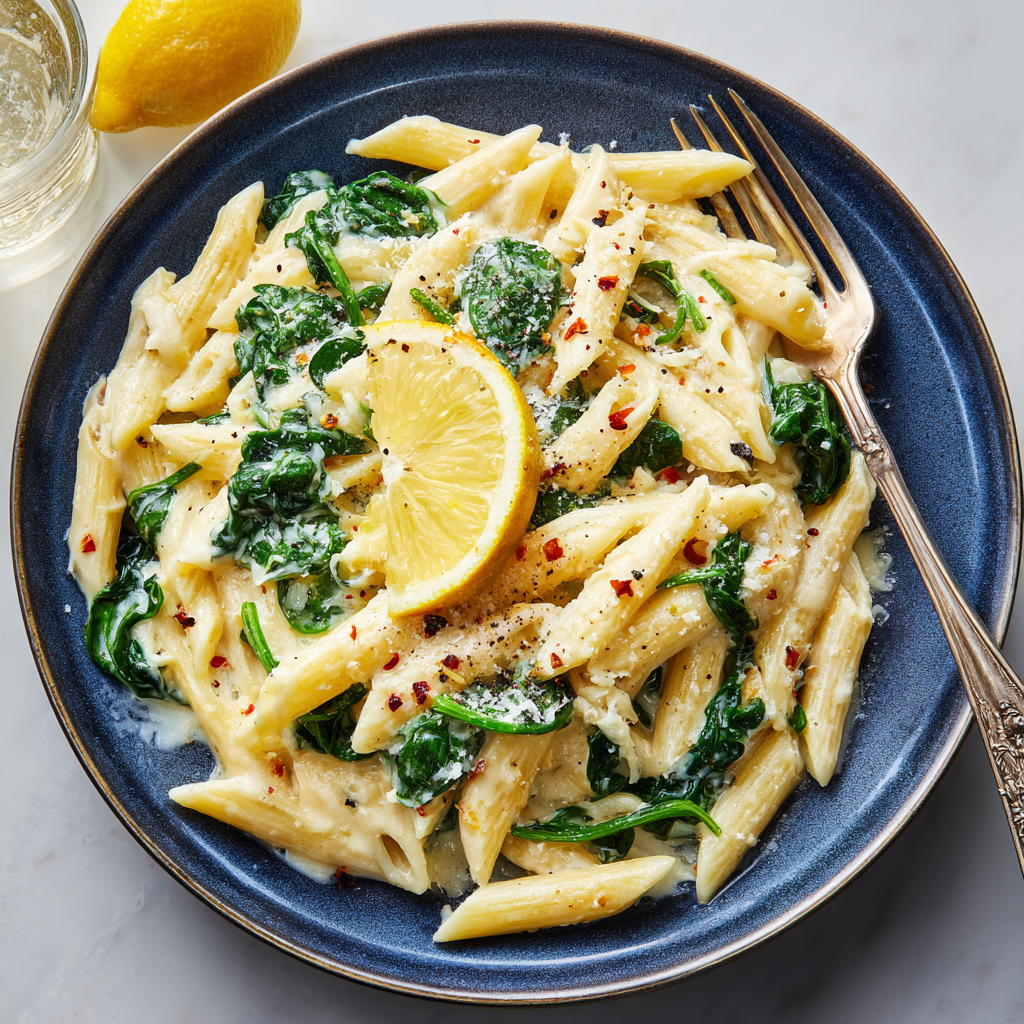
Creamy Lemon Ricotta Pasta with Spinach
Creamy Lemon Ricotta Pasta with Spinach: Your New 30-Minute Comfort Food Hero
Hey friends, Beau here! Let me paint you a picture. It’s been one of those days. You know the kind: the to-do list laughed at you, your inbox is a beast, and all you want is a meal that feels like a deep, calming breath. Something that says, “Hey, you did great today. Now let’s eat.” But the thought of a complicated recipe or a sink full of dishes? Absolutely not.
That right there is the exact moment this Creamy Lemon Ricotta Pasta with Spinach was born in my kitchen. It’s the culinary equivalent of your favorite cozy sweater. It’s not about fancy techniques or a million ingredients; it’s about simple, beautiful components coming together in a way that feels a little bit magical. We’re talking about the bright, sunny punch of fresh lemon, the lush, velvety embrace of ricotta, and the gentle, nutritious hug of baby spinach, all tangled up with your favorite pasta.
This isn’t a heavy, nap-inducing cream sauce. It’s light, it’s vibrant, and it comes together in the time it takes to boil water and cook pasta. Seriously, under 30 minutes from cupboard to couch. Whether you’re cooking for a crowd, making a special dinner for two, or just treating yourself to a stellar solo meal, this dish has your back. So, let’s grab a pot, a lemon, and turn the day around. Dinner is about to get seriously good.
The Little Lemon Tree That Could (And Did)
This recipe always takes me back to my Nonna’s tiny, sun-drenched backyard in California. She had this scraggly little lemon tree that, by all accounts, should not have thrived. But every year, without fail, it would be absolutely laden with the most fragrant, knobby, beautiful Meyer lemons. She’d call them “sunshine in a peel.”
One blustery spring afternoon, feeling a bit homesick and under the weather, I was rummaging through her fridge. I found a container of her homemade ricotta, a leftover lemon from the tree, and a half-bag of pasta. With a wink, she said, “When life feels sour, add cheese and pasta.” That throw-together meal of lemony, creamy pasta was a revelation. It was comfort, but it was also sunshine. It was home. This recipe is my polished-up, weeknight-friendly homage to that moment—a reminder that the best food often comes from simplicity, a little ingenuity, and a whole lot of heart.
Gathering Your Sunshine Squad: Ingredients & Tips
Here’s everything you’ll need to create this bowl of joy. Don’t stress about perfection—cooking is about playing, and I’ve got some easy swaps and chef secrets for you right here.
- 12 oz pasta (like penne, linguine, or fettuccine): This is your canvas! I love a short pasta like penne or rigatoni because it catches all the creamy sauce in its nooks. Chef’s Insight: Using a good quality bronze-die pasta makes a difference—it has a rougher surface that sauce clings to like a dream.
- 1 tablespoon olive oil: Our sauté starter. A good extra virgin olive oil adds a fruity base note.
- 3 cloves garlic, minced: The flavor foundation. Don’t rush the sauté—just until fragrant! Burnt garlic is bitter garlic.
- 5 oz baby spinach: It looks like a mountain when raw but wilts down into sweet, tender greens. Easy Swap: Use arugula for a peppery kick or kale (just remove the tough stems and chop it finely).
- 1 cup whole milk ricotta cheese: The star of our creamy, no-cook sauce. Pro-Tip: Let it sit out for 15-20 minutes to take the chill off. Room-temp ricotta blends smoother and feels more luxurious. For the best texture, seek out a good quality, whole milk ricotta.
- Zest and juice of 1 large lemon: This is where the magic lives! Chef’s Secret: Always zest your lemon before you juice it. It’s infinitely easier. And use a Microplane if you have one—you get fluffy zest without the bitter white pith.
- ½ cup grated Parmesan cheese: Our salty, umami booster. Freshly grated from a block is always superior to the pre-grated stuff, which can be coated to prevent clumping and won’t melt as smoothly.
- ¼ to ½ cup reserved pasta water: This is NOT optional! This starchy, salty liquid is the key to a silky, emulsified sauce that coats every noodle. It’s liquid gold. Reserve it with a mug before you drain!
- Salt and freshly ground black pepper: Season in layers. Taste as you go!
- Optional garnishes: Crushed red pepper flakes for heat, fresh torn basil for an herbal lift, or extra lemon zest for a pretty, fragrant finish.
Let’s Make Some Magic: Step-by-Step
Ready? Let’s cook. Put on some tunes, pour yourself a little something to drink, and let’s get into the zone.
- Cook the Pasta – The Foundation. Bring a large pot of well-salted water to a rolling boil. Think “as salty as the sea.” This is your one chance to season the pasta itself. Add your pasta and cook according to package directions for al dente—it should have a slight bite. This is crucial: Just before draining, carefully scoop out at least ½ cup of that starchy pasta water. Set it aside! Then drain the pasta. Chef Hack: I never rinse my pasta for sauces like this. You want that starch to help the sauce stick.
- Sauté the Garlic & Spinach – The Aromatics. While the pasta cooks, place a large skillet (big enough to hold the pasta later) over medium heat. Add the olive oil. Once it shimmers, add the minced garlic. Sauté for just 45-60 seconds until it’s fragrant and golden, but not browned. Now, toss in all that fresh spinach. It will seem like a lot, but trust the process. Using tongs, gently turn it in the garlicky oil. In 2-3 minutes, it will wilt down into a vibrant green layer. Remove the skillet from the heat for now.
- Make the No-Cook Sauce – The Heart of the Dish. In a medium bowl, combine the ricotta, lemon zest, lemon juice, and grated Parmesan. Give it a really good whisk. It’ll be thick. Now, add your first splash of that reserved pasta water—start with about ¼ cup. Whisk again until it transforms into a smooth, creamy, pourable sauce. Taste it! This is where you get a preview. Need a bit more lemon? More cheese? Now’s the time to adjust.
- The Grand Union – Bringing It All Home. Add the drained, hot pasta directly into the skillet with the spinach. Pour that beautiful lemony ricotta sauce over the top. Here’s the key: take the skillet off the heat if it isn’t already. We’re not cooking the sauce, just warming it through with the residual heat of the pasta and pan. Toss everything vigorously with your tongs. The sauce will coat everything, melt into the spinach, and become gloriously creamy. If it looks a bit tight or sticky, add more pasta water, a tablespoon at a time, until it’s perfectly silky and loose.
- Season & Serve – The Final Flourish. Give it one last taste. Season generously with freshly cracked black pepper and salt if needed (remember, the pasta water and Parmesan are salty). Toss once more, then immediately dish it up into warm bowls. Garnish with extra Parmesan, a sprinkle of red pepper flakes, a few basil leaves, or more lemon zest. The goal? Get it to the table while it’s still steaming and luxuriously creamy.
How to Serve This Sunshine on a Plate
This pasta is a complete meal in a bowl, but a little flourish makes it feel extra special. I love serving it in wide, shallow pasta bowls so you can see all the beautiful green spinach and flecks of lemon zest. For a casual weeknight, it’s perfect just as is. Want to turn it into more of an event?
Pair it with a simple, crisp side salad dressed with a light lemon vinaigrette (echoing those flavors!). A chunk of warm, crusty bread is non-negotiable for me—it’s the best tool for swiping up every last bit of sauce. For drinks, a chilled Pinot Grigio or Sauvignon Blanc loves the citrus notes, or keep it simple with sparkling water with a lemon slice. The most important serving suggestion? Enjoy it with good company, or savor it in a moment of peaceful, well-earned solo indulgence.
Make It Your Own: Fun Flavor Twists
Once you’ve mastered the base recipe, the playground is open! Here are a few of my favorite riffs:
- Protein Power-Up: Add a can of drained, flaked tuna or some shredded rotisserie chicken when you toss everything together. For a vegetarian boost, a can of rinsed white beans (like cannellini) is fantastic.
- Herb Garden Explosion: Stir in a big handful of fresh soft herbs with the spinach. Think basil, parsley, chives, or dill. It adds a layer of incredible freshness.
- Caramelized Lemon & Shallot: Thinly slice a lemon (seeds removed) and a large shallot. Sauté them slowly in the olive oil until soft and lightly caramelized before adding the garlic. It deepens the lemon flavor beautifully.
- The “Everything Bagel” Vibe: Finish the pasta with a sprinkle of everything bagel seasoning. The sesame, garlic, and onion add a crazy-good crunchy, savory element.
- Dairy-Free/Vegan Swap: Use a high-quality, plain almond milk ricotta (Kite Hill makes a great one) and a vegan Parmesan alternative. The sauce will be a bit thinner, so use less pasta water to start.
Beau’s Kitchen Notes & Stories
This recipe has seen some things, my friends. The first time I made it for a date, I was so nervous I zested my thumb instead of the lemon. (We’re married now, so the pasta clearly did its job). I’ve learned a few things along the way: letting the ricotta come to room temp is a game-changer for creaminess. And that pasta water? I once forgot to save it and tried to use plain hot water. It was… fine. But it wasn’t *magic*. The starch is what makes the sauce cling and shine.
This dish is also a fantastic “clean out the veggie drawer” candidate. Had it with roasted cherry tomatoes tossed in at the end, with sautéed mushrooms, even with some peas. It’s a forgiving, friendly recipe. The core principle is the bright lemon + creamy cheese + pasta + greens. Everything else is just a delicious variation on a very happy theme.
Your Questions, Answered!
- Q: My sauce seems grainy or separated. What happened?
A: This usually means the heat was too high when you combined everything. Ricotta can “break” or curdle if it’s shocked with intense heat. The fix is easy: always take the skillet off the heat before adding the sauce. The residual heat from the pasta and pan is plenty to warm it through smoothly. If it happens, a vigorous toss with an extra splash of pasta water can sometimes bring it back together. - Q: Can I make this ahead of time?
A: It’s truly best served fresh. The pasta will continue to absorb the sauce as it sits, making it drier and less creamy. If you must, prepare the sauce (ricotta mixture) and cook the spinach/garlic ahead. Store separately. When ready, cook fresh pasta, warm the spinach mixture, and combine as directed. You’ll get 90% of the magic. - Q: Is it too lemony? I’m worried about it being sour.
A: The ricotta and Parmesan beautifully balance the lemon’s acidity, making it taste bright and sunny, not sour. If you’re nervous, start with the zest and juice of half the lemon. You can always add more at the end! Remember, the zest holds the fragrant oils and less acidity, so don’t skip it. - Q: My sauce is too thick! Help!
A: No panic! This is why we reserved that pasta water. Simply add it back in, a tablespoon or two at a time, tossing constantly, until the sauce loosens up to your preferred creaminess. It’s the perfect fix.

Creamy Lemon Ricotta Pasta with Spinach
Description
This Creamy Lemon Ricotta Pasta with Spinach is a fast, cozy meal that feels fancy but uses simple ingredients. The sauce is creamy without heavy cream, bright from fresh lemon, and comes together while the pasta cooks. Perfect for busy nights when you want something warm and satisfying without a big cleanup.
Ingredients
-
12 oz (340 g) pasta (penne, linguine, or fettuccine)
-
1 tbsp olive oil
-
3 garlic cloves, minced
-
5 oz (140 g) baby spinach
-
1 cup whole-milk ricotta cheese
-
Zest of 1 lemon
-
2–3 tbsp fresh lemon juice
-
½ cup grated Parmesan cheese
-
¼–½ cup reserved pasta water
-
Salt and black pepper to taste
Optional: chili flakes, fresh basil, extra Parmesan
Instructions
1️⃣ Cook the Pasta
-
Boil pasta in well-salted water until al dente.
-
Before draining, save ½ cup pasta water.
-
Drain (don’t rinse).
2️⃣ Sauté Garlic & Spinach
-
Heat olive oil in a large skillet over medium heat.
-
Cook garlic about 1 minute until fragrant.
-
Add spinach and cook 2–3 minutes until wilted.
-
Turn off heat.
3️⃣ Make the Ricotta Lemon Sauce
-
In a bowl, whisk ricotta, lemon zest, lemon juice, and Parmesan.
-
Whisk in ¼ cup pasta water until smooth and creamy.
4️⃣ Combine
-
Add hot pasta to the skillet with spinach.
-
Pour sauce over pasta.
-
Toss well off heat until coated.
-
Add more pasta water if needed to loosen.
5️⃣ Finish & Serve
-
Season with salt and pepper.
-
Add chili flakes or basil if you like.
-
Serve warm with extra Parmesan.
Notes
-
Salt your pasta water well — it boosts flavor.
-
Zest the lemon before juicing.
-
Save pasta water — it makes the sauce silky.
-
Mix the sauce off heat so it stays smooth and creamy.
A Quick Note on Nutrition
I’m a chef, not a dietitian, but I believe in knowing what’s fueling you. This dish is a lovely balance. The pasta provides energizing carbohydrates, the ricotta and Parmesan offer satisfying protein and calcium, and the spinach packs in vitamins A, C, K, and iron. Using whole milk ricotta gives us richness and flavor, keeping you full. The olive oil provides heart-healthy fats. It’s a wholesome, feel-good meal that nourishes as much as it comforts. As always, these are estimates per serving (and trust me, servings are generous!).
Approximate Nutrition Per Serving (¼ of recipe): Calories: 465 | Protein: 19g | Carbohydrates: 55g | Sugars: 3g | Fat: 20g | Saturated Fat: 9g | Cholesterol: 40mg | Sodium: 280mg | Fiber: 3g
Final Thoughts
So there you have it—the story, the secrets, and the steps to what just might become your new kitchen staple. This Creamy Lemon Ricotta Pasta with Spinach is more than a recipe; it’s a reminder that great food doesn’t have to be complicated to feel special. It’s a 30-minute promise that even on the busiest, most worn-out days, you can still sit down to something that tastes like care—both for yourself and for whoever joins you at the table.
It’s the kind of dish that adapts to your mood, your pantry, and your season of life. It’s quiet comfort with a sunny disposition. It’s Nonna’s wisdom in a weeknight wrapper: when life feels sour, add cheese and pasta (and a little lemon, and some greens…).
I hope this recipe finds its way into your rotation, becomes your easy answer to “What’s for dinner?”, and maybe even earns a story of its own in your kitchen. Because that’s what cooking is really about—creating those small, delicious moments of joy, one simple, satisfying bowl at a time.
Now go grab that pot, and turn the day around. You’ve got this.
With love and a full plate,
Beau
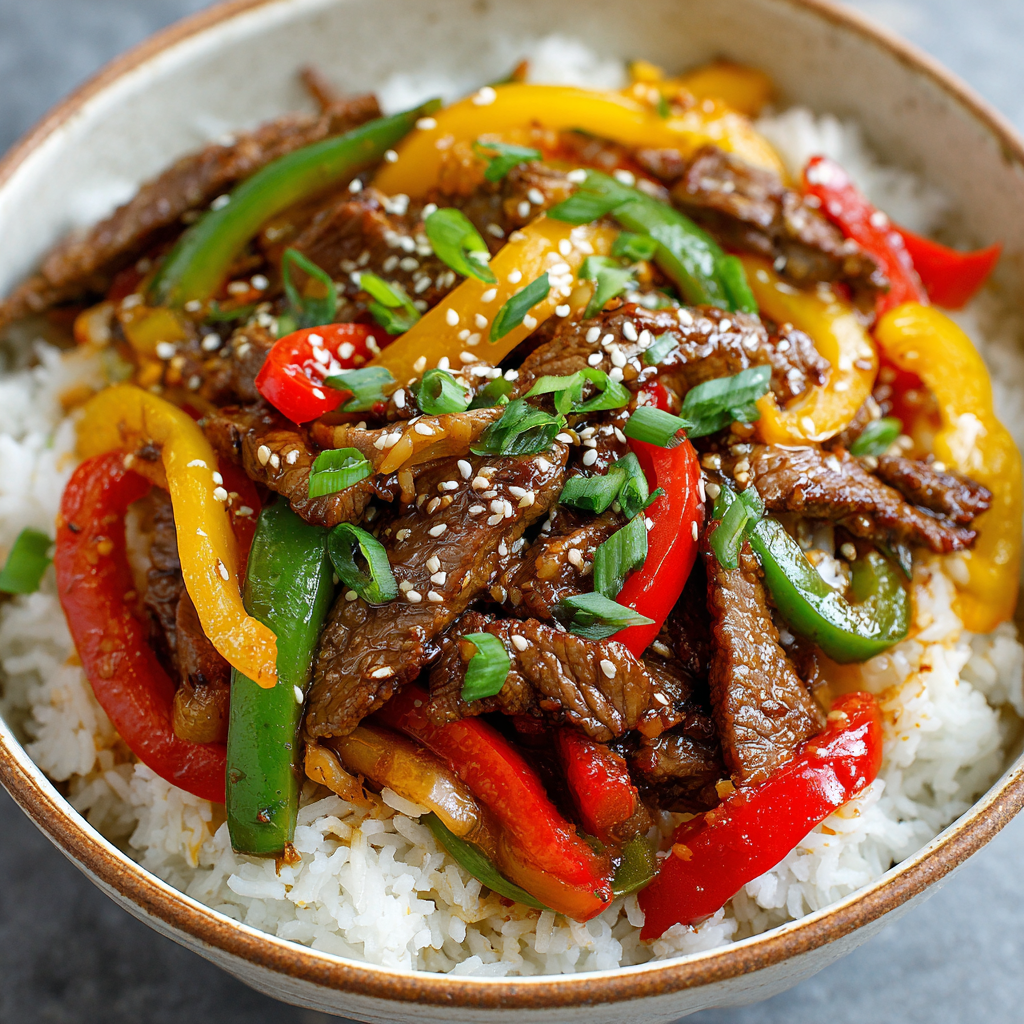
Beef and Pepper Rice Bowl : Quick, Savory, and Satisfying
Your New Weeknight Dinner Hero is Here!
Hey friend, Beau here from Feastical. Let’s talk about that magical, slightly frantic time we all know: the 6 PM hustle. You’re hungry, maybe a little hangry, and the siren call of takeout menus is getting louder by the minute. But what if I told you that something faster, fresher, and infinitely more satisfying is just a single pan and about 25 minutes away? That’s the promise of this Beef and Pepper Rice Bowl. It’s not just a recipe; it’s your kitchen’s secret weapon against the “what’s for dinner?” blues.
This dish is everything I love to create: big, bold flavors that feel gourmet, a method that’s straightforward enough for a Wednesday, and a final product that looks as vibrant as it tastes. We’re talking tender, savory strips of beef, sweet and crisp confetti-colored bell peppers, all glazed in a sticky, umami-rich sauce, and piled high over a fluffy mound of rice. It’s a complete meal in a bowl that delivers maximum comfort with minimal fuss. So, tie on your apron (or don’t, I won’t tell), grab your favorite skillet, and let’s turn a hectic evening into a delicious victory. Trust me, your spatula and your stomach will thank you.
The Simple Magic of a Hot Pan and a Hungry Dad
This recipe always takes me back to my dad’s kitchen on a busy weeknight. Dad was (and is) a master of the “clear out the fridge” stir-fry. I’d be doing homework at the counter, and I’d hear the familiar *sizzle-tshhh* of hitting a hot wok with cold meat. The kitchen would instantly fill with the most incredible aroma—garlic, searing beef, the sweet scent of peppers softening. It was the smell of dinner being solved.
He’d move with a kind of calm, efficient energy, a spatula in one hand, a bottle of soy sauce in the other. There was no fancy technique, just good heat and good timing. In what felt like mere moments, he’d slide a heaping bowl in front of me. “Fuel for the brain,” he’d say. It was never exactly the same twice, but it was always exactly what I needed: hot, savory, and made with a side of easygoing love. This Beef and Pepper Bowl is my homage to that feeling. It’s my dad’s “kitchen jazz” translated into a reliable, repeatable recipe that always hits the spot. It proves that the most satisfying meals aren’t about complexity; they’re about confidence and a little bit of delicious noise in a hot pan.
Gathering Your Flavor Arsenal
Here’s what you’ll need to build this flavor powerhouse. Don’t stress about perfection—cooking is about playing, and I’ve got tips for every item.
- 1 lb (450 g) flank or sirloin steak, thinly sliced: This is our star. Flank steak has amazing beefy flavor and stays tender when sliced thin against the grain. Sirloin is a great, often leaner, alternative. Chef’s Insight: Pop the steak in the freezer for 15-20 minutes before slicing. It firms up and makes getting those thin, perfect strips a total breeze.
- 1 tablespoon soy sauce + 1 tablespoon (extra) soy sauce: Our salty, umami base. We use it twice—once for the marinade, once for the sauce. Sub Tip: Use tamari for a gluten-free version, or coconut aminos for a slightly sweeter, soy-free option.
- 1 tablespoon cornstarch: The quiet hero! This creates a velvety coating on the beef, helping the marinade cling and giving the finished beef a beautiful, light sear. It also helps thicken our sauce later.
- 1 tablespoon vegetable oil, divided: A neutral oil with a high smoke point is key. We’ll use it in two stages to cook the veggies and the beef perfectly. Avocado or canola oil work great too.
- 1 red bell pepper & 1 green bell pepper, sliced: Color and crunch! The red is sweeter, the green has a brighter, almost grassy note. Using both makes the bowl a feast for the eyes. Feel free to throw in an orange or yellow pepper for more rainbow power.
- 2 cloves garlic, minced: Fragrant, pungent, non-negotiable. It’s the aromatic foundation. Chef’s Hack: Use a microplane to grate the garlic—it almost melts into the sauce.
- 2 cups cooked white or brown rice: The comforting base. Day-old, chilled rice is actually fantastic for stir-fries as it fries up beautifully without getting mushy.
- 2 tablespoons oyster sauce: The secret to that deep, savory, “restaurant-style” flavor. It’s rich and packed with umami. Sub Tip: For a vegetarian version, use mushroom stir-fry sauce.
- 1 teaspoon sesame oil: The finishing touch. This fragrant oil isn’t for cooking—we add it at the end for a wonderful, toasty aroma. A little goes a very long way!
- Salt and pepper to taste: Season as you go! Taste after adding the sauces before adding more salt.
- Optional toppings: green onions, sesame seeds, chili flakes: The jewelry for your bowl. Green onions for fresh bite, sesame seeds for nutty crunch, chili flakes for heat. Highly recommended!
Let’s Get Cooking: The Simple Steps to Stir-Fry Success
Ready to make some noise? Follow these steps, and you’ll have a sizzling, restaurant-worthy bowl in no time. I’m talking you through every little chef hack I know.
- Marinate the Beef: In a medium bowl, toss your thinly sliced beef with 1 tablespoon of soy sauce and the cornstarch. Use your hands to massage it in—this ensures every piece gets coated. Let it sit on the counter while you prep the peppers and garlic (about 10 minutes). This brief marinate tenderizes and flavors the beef. Pro Tip: Letting the beef come closer to room temperature helps it sear better, avoiding a steamed texture.
- Stir-Fry the Peppers: Heat half of your vegetable oil in a large skillet or wok over medium-high heat. You want it nice and hot—a drop of water should skitter and evaporate instantly. Add your bell pepper strips. Now, here’s the key: don’t overcrowd! Let them sit for a minute to get a little char, then stir and cook for 2-3 minutes total. We want them softened but still proudly crisp (“tender-crisp” is the chef term). Once done, scoop them out onto a clean plate and set aside.
- Cook the Beef: Add the remaining oil to the same hot pan. Swirl it around. Add the marinated beef in a single layer if possible. This is crucial—LET IT SEAR! Resist the urge to stir immediately. Give it a good 60-90 seconds to develop a beautiful brown crust. Then, flip and stir-fry for another 2-3 minutes until it’s just cooked through and no longer pink. Add the minced garlic and stir for just 30 seconds—until fragrant. Garlic burns in a heartbeat, so be quick!
- Bring It All Together: Time for the grand reunion! Return the cooked peppers to the pan with the beef. Pour in the oyster sauce, the extra tablespoon of soy sauce, and the magical teaspoon of sesame oil. Add a good crack of black pepper. Toss, toss, toss! Keep everything moving over the heat for about 1 minute until the sauce glazes every piece of beef and pepper beautifully. Give it a taste—this is when you adjust with a pinch of salt if needed.
- Serve with Flair: Spoon a generous bed of warm rice into bowls. Pile the hot, saucy beef and peppers right on top. The steam from the stir-fry will perfume the rice underneath. Now, garnish! A shower of sliced green onions, a sprinkle of sesame seeds, and a dash of chili flakes if you like it spicy. Serve immediately while it’s all hot and sizzling.
Plating Your Masterpiece
How you serve this bowl can turn a weeknight meal into a mini celebration. I’m a big believer in eating with your eyes first! For a classic look, pack fluffy white or brown rice into a small bowl, then invert it right into the center of your serving plate or shallow bowl for a perfect, neat dome. Spoon the beef and peppers lavishly around and over it, letting the vibrant sauce pool enticingly.
Want to make it a full feast? This bowl plays incredibly well with others. Serve it alongside a simple cucumber salad dressed with rice vinegar, a pot of steamed edamame for sprinkling with coarse salt, or even a few crispy vegetable spring rolls. For a fun, interactive meal, set out all the garnishes—the green onions, sesame seeds, extra chili flakes, maybe even some quick-pickled red onions—and let everyone build their own perfect bite. Don’t forget the drinks: a cold lager, a crisp white wine, or even a sparkling water with lime wedge cuts through the richness perfectly.
Make It Your Own: Delicious Twists & Swaps
The beauty of this framework is its flexibility. Here are a few of my favorite ways to mix it up:
- Sweet & Spicy Kick: Add 1-2 tablespoons of sweet chili sauce or a big squirt of sriracha to the sauce mixture. Finish with a squeeze of fresh lime juice for brightness.
- Teriyaki Twist: Swap the oyster sauce for 3 tablespoons of your favorite teriyaki sauce. Add a small handful of pineapple chunks with the peppers for a sweet, tropical vibe.
- Veggie-Packed Power Bowl: Bulk up the veggies! Add sliced mushrooms (cook them with the peppers), a handful of snap peas, or some broccoli florets (blanch them first for tender-crisp results).
- Protein Swap: Not feeling beef? Thinly sliced chicken breast or thigh works wonderfully. For a vegetarian version, use extra-firm tofu (pressed and cubed) or thick slices of portobello mushroom. Marinate them just the same!
- Low-Carb/Cauliflower Rice Bowl: Ditch the grain entirely and serve the saucy beef and peppers over a bed of riced cauliflower sautéed in a little oil. It’s just as satisfying and packed with flavor.
Beau’s Kitchen Confidential
This recipe has lived in my back pocket for years, and it’s evolved from my dad’s “a bit of this, a dash of that” method into this foolproof formula. The biggest lesson I learned? Mise en place. It’s a fancy French term that just means “get everything in its place.” Before you even turn on the stove, slice your beef, chop your peppers, mince your garlic, and mix your sauce ingredients in a small bowl. Stir-frying happens fast, and having your ingredients prepped and ready is the difference between a calm, enjoyable cook and a frantic kitchen scramble. Also, don’t be afraid of the high heat! A screaming hot pan is what gives you that coveted “wok hei” (breath of the wok) flavor—that slight, delicious char. Embrace the sizzle!
Your Questions, Answered
Q: My beef turned out tough. What went wrong?
A: Two likely culprits! First, make sure you’re slicing against the grain of the meat. Look for the lines running through the steak and cut perpendicular to them. This shortens the muscle fibers, making each bite tender. Second, don’t overcook it. Beef in a stir-fry cooks incredibly quickly—just until it loses its pink color.
Q: Can I make this ahead of time for meal prep?
A: Absolutely! Cook the beef, peppers, and sauce as directed. Let it cool completely, then store it separately from the rice in airtight containers in the fridge for up to 4 days. Reheat the beef mixture gently in a skillet or microwave, and assemble your bowl fresh.
Q: My stir-fry got soupy/watery. How do I fix it?
A: This usually happens if the pan wasn’t hot enough (causing the veggies/beef to steam and release water) or if there were too many ingredients crowded in the pan. The cornstarch in the marinade should help thicken the sauce, but if it’s too thin, mix 1 tsp of cornstarch with 1 tbsp of cold water and stir it into the simmering sauce at the very end. It will thicken up almost instantly.
Q: I don’t have oyster sauce. Is there a substitute?
A> Yes! You can use hoisin sauce for a sweeter note, or more soy sauce mixed with a tiny bit of brown sugar for depth. As mentioned, mushroom stir-fry sauce is a great vegetarian alternative.

Beef and Pepper Rice Bowl : Quick, Savory, and Satisfying
Description
This Beef and Pepper Rice Bowl is a quick, one-pan dinner packed with flavor. Tender strips of beef, colorful peppers, and a savory glaze come together in about 25 minutes. It’s perfect for busy nights and easy to customize with what you have on hand.
Ingredients
-
1 lb (450 g) flank or sirloin steak, thinly sliced
-
2 tbsp soy sauce, divided
-
1 tbsp cornstarch
-
1 tbsp vegetable or canola oil, divided
-
1 red bell pepper, sliced
-
1 green bell pepper, sliced
-
2 cloves garlic, minced
-
2 cups cooked rice (white or brown)
Sauce
-
2 tbsp oyster sauce
-
1 tsp sesame oil
-
Black pepper to taste
Optional Toppings
-
Sliced green onions
-
Sesame seeds
-
Chili flakes
Instructions
1️⃣ Marinate the Beef
-
Toss sliced beef with 1 tbsp soy sauce + cornstarch.
-
Let sit about 10 minutes while you prep vegetables.
2️⃣ Cook the Peppers
-
Heat half the oil in a hot skillet.
-
Stir-fry peppers 2–3 minutes until tender-crisp.
-
Remove to a plate.
3️⃣ Sear the Beef
-
Add remaining oil to pan.
-
Spread beef in one layer and let it sear before stirring.
-
Cook 3–4 minutes until just done.
-
Add garlic and cook 30 seconds.
4️⃣ Combine & Glaze
-
Return peppers to pan.
-
Add remaining soy sauce, oyster sauce, sesame oil, and pepper.
-
Toss over heat 1 minute until glossy.
5️⃣ Serve
-
Spoon over warm rice.
-
Add toppings if you like and serve hot.
Notes
-
Slice beef thin and against the grain for tenderness.
-
Use a very hot pan so the meat sears instead of steams.
-
Prep everything first — stir-frying goes fast.
-
Day-old rice works best, but fresh rice is fine too.
Nutritional Information*
*Please note: The following is an estimated nutritional breakdown per serving (assuming recipe serves 3), calculated using standard ingredients. Values can vary based on specific brands, exact measurements, and substitutions used.
- Calories: ~450
- Protein: ~28g (Great for keeping you full and satisfied!)
- Carbohydrates: ~38g (Primarily from the rice, providing energy.)
- Dietary Fiber: ~3g (Thanks to those bell peppers!)
- Total Fat: ~20g
- Sodium: ~900mg (The majority comes from the soy and oyster sauces. To reduce sodium, use low-sodium soy sauce and reduce
Final Thoughts
This Beef and Pepper Rice Bowl is more than just a quick dinner—it’s a reminder that delicious, satisfying meals don’t have to be complicated. In about 25 minutes, you can transform simple ingredients into something vibrant, flavorful, and deeply comforting. It’s a recipe built for real life: forgiving, flexible, and guaranteed to become a regular in your rotation.
Whether you’re cooking for yourself, your family, or a friend in need of a good meal, this dish delivers. It’s a celebration of sizzle, color, and that irreplaceable feeling of sitting down to something you made with your own two hands. So next time the 6 PM panic starts to creep in, remember—your skillet, a few staples, and a little confidence are all you need to create a mealtime victory.
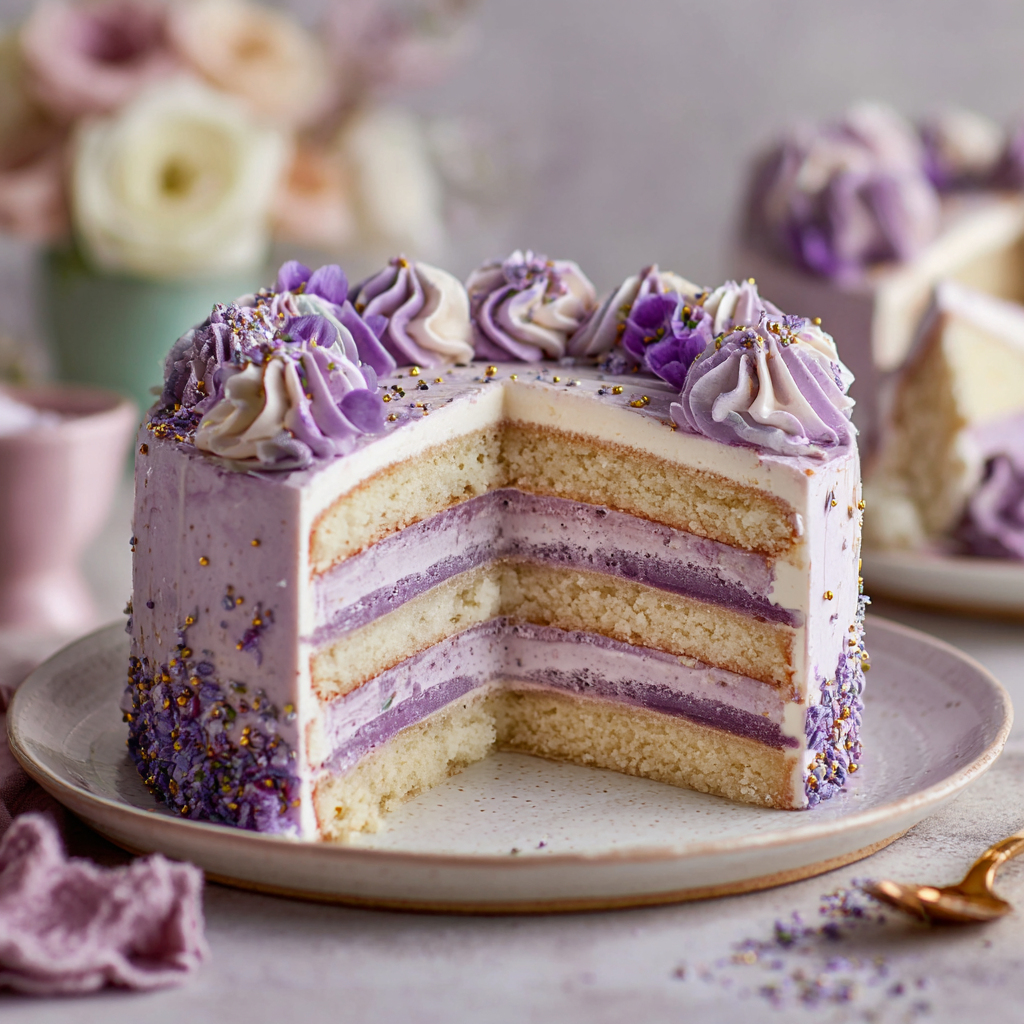
Purple Birthday Cake
Purple Birthday Cake – Soft Vanilla Layers with Lavender Buttercream
Let’s Bake Some Birthday Magic!
Hey friends, Beau here! Is there anything in the world that sings “celebration” quite like a homemade birthday cake? I don’t think so. That moment when you carry it out, candles flickering, and everyone’s face lights up… it’s pure, edible joy. But today, we’re not making just any cake. We’re making a Purple Birthday Cake—a towering, dreamy, lavender-hued masterpiece that’s as fun to make as it is to devour.
This isn’t about complicated techniques or hard-to-find ingredients. This is about soft, fluffy vanilla layers that taste like a cloud, wrapped in the creamiest vanilla buttercream we’ve ever tinted a glorious shade of purple. It’s whimsical, it’s nostalgic, and it’s guaranteed to be the star of the party. Whether you’re baking for your kiddo, your best friend, or just because you deserve a slice of purple happiness (the best reason!), this cake is your project. So tie on your favorite apron, crank up some good tunes, and let’s get ready to create something spectacular. This is more than baking; it’s making a memory, one delicious layer at a time.
Why Purple? A Little Slice of My Story
Let me take you back to my 8th birthday. My mom, the queen of kitchen adventures, asked me what color I wanted my cake to be. “Purple!” I yelled, without a second thought. Not blue, not red. Purple. The color of grapes, of twilight sky, of my favorite cartoon dinosaur (Barney, I’m looking at you). What I remember isn’t just the cake—it was the look of sheer determination on her face as she whisked and dripped food coloring, creating a batter that looked like lilac soup. The final product was a lopsided, deeply violet two-layer cake with slightly gray frosting (a lesson in color theory we’d later master!). But to me, it was the most magnificent thing I’d ever seen. It tasted like love and a little bit of food coloring. That cake taught me that food is about personality. It’s about injecting a piece of who you are, or who you’re celebrating, right into the recipe. That’s the spirit we’re bringing today. We’re going for that same wow-factor, but with a few pro-hacks to make sure our purple is vibrant and our frosting is flawless. Let’s make that magic!
Gathering Your Purple Party Ingredients
Here’s everything you’ll need to build this beauty. I’ve added my little chef notes next to each one because knowing your ingredients is half the battle won!
For the Cake Layers:
- 2½ cups all-purpose flour: The trusty foundation. Spoon and level it into your measuring cup to avoid a dense cake. For a slightly softer crumb, you can swap ½ cup with cake flour.
- 2½ teaspoons baking powder: Our lift and fluff agent. Make sure it’s fresh for maximum rise! Give the can a sniff—it should smell sharp, not dull.
- ½ teaspoon salt: The flavor enhancer. It balances all the sweetness and makes the vanilla pop. Never skip it!
- ¾ cup unsalted butter, softened: This is where flavor and texture begin. “Softened” means it yields to a gentle press but isn’t oily. Leave it out for 45-60 minutes. For dairy-free, a high-quality plant-based butter works great.
- 1¾ cups granulated sugar: Sweetness and, importantly, it helps create a tender crumb by creaming beautifully with the butter.
- 4 large eggs, room temp: The binding superstars. Room temperature eggs incorporate much more smoothly, giving you a uniform, lofty batter. Place them in warm water for 5 minutes if you forgot to take them out!
- 1 tablespoon vanilla extract: Go for the good stuff! Pure vanilla extract makes all the difference. This is a whole tablespoon for major cozy flavor.
- 1 cup whole milk, room temp: Moisture and tenderness. Whole milk gives the best richness, but 2% will work. Again, room temp is key for even mixing.
- Purple gel food coloring: The star of the show! I insist on gel over liquid. It’s more concentrated, so you get vivid color without watering down your batter. Start with a little—you can always add more!
For the Lavender Buttercream:
- 1½ cups unsalted butter, softened: Yes, more butter. This is buttercream, my friends, and it’s going to be silky, dreamy, and perfect for piping.
- 5 cups powdered sugar, sifted: Sifting is non-negotiable here. It prevents lumps and makes the frosting irresistibly smooth.
- 2 teaspoons vanilla extract: Keeping the flavor consistent and delightful.
- 3–4 tablespoons heavy cream or milk: This is your texture control. Start with 3, add the 4th if you want a slightly softer, more spreadable frosting.
- Purple food coloring: Use the same gel coloring. For a cool ombré effect, you can divide the frosting and tint each portion a different shade.
Optional Decorations:
Go wild! Sprinkles, edible glitter, silver dragees, piped buttercream rosettes, fresh flowers, or a simple “Happy Birthday” scrawled in white chocolate. It’s your canvas!
Let’s Build This Beautiful Beast: Step-by-Step
Follow these steps, read my little asides, and you’ll have a flawless cake. Promise!
- Prep Like a Pro. Preheat your oven to 350°F (175°C). Grease three 8-inch round cake pans with butter or baking spray, then line the bottoms with parchment paper circles. This duo guarantees a clean release every single time. Trust me, the parchment is your best friend.
- Whisk the Dry Team. In a medium bowl, whisk together the flour, baking powder, and salt. This isn’t just mixing; it’s ensuring our leavening is evenly distributed so every bite is perfectly risen. Set this aside.
- Creaming is Key. In your stand mixer or a large bowl with a hand mixer, beat the softened butter and granulated sugar together on medium-high speed for a full 3-4 minutes. We’re not just combining them; we’re aerating the mixture until it’s pale, fluffy, and almost white. This step builds the cake’s structure and tenderness. Scrape the bowl down once halfway through.
- Egg-cellent Incorporation. With the mixer on medium, add the eggs one at a time, letting each fully blend in before adding the next. Add the vanilla with the last egg. This patience prevents the batter from breaking or curdling. It should look gloriously smooth and emulsified.
- The Alternating Dance. Reduce mixer speed to low. Add about one-third of your flour mixture, mix until just combined. Follow with half the milk. Repeat with another third of flour, the rest of the milk, and finish with the final third of flour. Mix each addition only until the streaks disappear. Overmixing at this stage develops gluten and leads to a tough cake. Be gentle!
- Paint it Purple. Now for the fun! Add your purple gel food coloring a few drops at a time. Fold or mix on low until you achieve a uniform, dreamy lavender batter. Remember, the color will bake slightly darker. Pour the batter evenly into your three prepared pans and smooth the tops.
- Bake to Perfection. Bake for 25-28 minutes. Rotate the pans halfway through for even baking. They’re done when the tops spring back lightly to the touch and a toothpick inserted in the center comes out with a few moist crumbs (not wet batter).
- The Patience Phase. Let the cakes cool in their pans on a wire rack for 10 minutes. Then, run a knife around the edges, invert them onto the rack, peel off the parchment, and let them cool completely. I repeat: completely. Frosting a warm cake is a recipe for a melting, sliding mess.
- Whip Up the Buttercream. While cakes cool, make the frosting. Beat the softened butter on medium speed for 2-3 minutes until it’s smooth and creamy. Gradually add the sifted powdered sugar, one cup at a time, on low speed (unless you want a sugar cloud!). Add vanilla and 3 tablespoons of cream. Beat on medium-high for 2-3 minutes until incredibly light and fluffy. Tint with purple gel coloring. If it’s too thick, add the extra cream.
- Assemble Your Masterpiece. Place one cake layer on your serving plate or turntable. Spread a generous, even layer of buttercream. Repeat with the second layer. Top with the third layer. Apply a thin “crumb coat” of frosting all over the cake, then chill for 15 minutes to lock in crumbs. Finally, pile on the remaining frosting and smooth or swirl it to your heart’s content. Decorate and celebrate!
How to Serve This Showstopper
Presentation is part of the joy! For clean slices, dip your sharp knife in hot water and wipe it dry between each cut. This gives you beautiful, crisp layers in every piece. Serve on simple, elegant plates to let the purple really shine. A scoop of vanilla bean ice cream or a dollop of whipped cream on the side is never a bad idea. And of course, don’t forget the candles—sparkly ones, number candles, or a whole forest of them! The goal is to make the moment as special as the cake itself. Pour the milk, gather your people, and get ready for the “oohs” and “aahs.”
Make It Your Own: Fun Variations
Love the purple vibe but want to mix it up? Here are some delicious twists:
- Purple Velvet: Add 2 tablespoons of black cocoa powder or regular cocoa powder to the dry ingredients for a subtly chocolatey, deeper purple hue with that classic velvet tang.
- Lemon-Lavender: Add the zest of two lemons to the cake batter and swap the vanilla in the frosting for 1 teaspoon of culinary lavender extract (use sparingly!). It’s floral, bright, and incredibly elegant.
- Funfetti Inside! Fold ½ cup of rainbow sprinkles (jimmies, not nonpareils) into the purple batter before dividing into pans. The colorful surprise inside is a total party!
- Dairy-Free & Vegan: Use plant-based butter and milk, and replace each egg with a flax egg (1 tbsp ground flax + 2.5 tbsp water per egg). The color and fun remain 100% intact.
- Ombré Frosting: Divide your buttercream into three bowls. Leave one white, tint one light purple, and one dark purple. Frost the cake with the darkest at the bottom, graduating to white at the top for a stunning sunset effect.
Beau’s Back-Pocket Tips & Stories
This recipe has seen a few iterations in my kitchen. The first time I made it for the blog, I got over-zealous with the gel coloring and ended up with what my nephew lovingly called a “Galaxy Grimace Cake.” It was… intensely purple. Lesson learned: a little gel goes a long way! Start with a toothpick dip of color. Also, I used to just do two thick layers, but splitting it into three thinner layers not only looks more impressive, it gives you that perfect frosting-to-cake ratio in every bite. One last thing: if your kitchen is warm and the buttercream feels soft, don’t panic. Just pop the bowl in the fridge for 10 minutes, then re-whip. Baking is about the journey, laughs, and delicious adjustments along the way.
Your Questions, Answered
Q: Can I make this cake ahead of time?
A: Absolutely! You can bake the layers up to 2 days ahead. Let them cool completely, wrap each tightly in plastic wrap, and store at room temp. You can also frost the entire cake and refrigerate it (covered) for up to 24 hours before serving. Let it sit at room temperature for an hour before serving for the softest texture.
Q: My cake layers domed in the middle! How do I get them flat?
A: A slight dome is normal, but for perfect layers, try using cake strips! You soak fabric strips in water, wrap them around the outside of the pan, and they insulate the edges so the cake bakes evenly. No strips? Just use a serrated knife to carefully slice the dome off each cooled layer to create a flat surface. (Chef’s snack time!)
Q: Why did you specify gel food coloring?
A: Liquid food coloring is mostly water. To get a vibrant purple, you’d need so much that you’d throw off the liquid balance of your batter or frosting, potentially making it runny or affecting the bake. Gel color is potent, so you use less and get a bold, beautiful color without compromise.
Q: My buttercream looks grainy or curdled. Help!
A: This usually means your butter was too cold or the ingredients weren’t fully incorporated. The fix is easy: keep beating! Turn your mixer to medium-high and let it whip for another 3-5 minutes. The friction and continued emulsification will almost always bring it back to smooth, silky perfection.

Purple Birthday Cake
Description
This Purple Birthday Cake is a fun, colorful celebration cake with soft vanilla layers and creamy purple buttercream. It looks impressive but uses basic baking steps and easy ingredients. Perfect for birthdays, parties, or anytime you want a cheerful showstopper.
Ingredients
Vanilla Cake Layers
-
2½ cups all-purpose flour
-
2½ tsp baking powder
-
½ tsp salt
-
¾ cup unsalted butter, softened
-
1¾ cups granulated sugar
-
4 large eggs, room temperature
-
1 tbsp vanilla extract
-
1 cup whole milk, room temperature
-
Purple gel food coloring
Lavender Buttercream (Purple Vanilla Frosting)
-
1½ cups unsalted butter, softened
-
5 cups powdered sugar, sifted
-
2 tsp vanilla extract
-
3–4 tbsp heavy cream or milk
-
Purple gel food coloring
Optional: sprinkles, edible glitter, piped decorations
Instructions
1️⃣ Prep
-
Heat oven to 350°F (175°C).
-
Grease and line three 8-inch round pans with parchment.
2️⃣ Mix Dry Ingredients
-
Whisk flour, baking powder, and salt in a bowl. Set aside.
3️⃣ Cream Butter & Sugar
-
Beat butter and sugar 3–4 minutes until pale and fluffy.
4️⃣ Add Eggs & Vanilla
-
Add eggs one at a time, mixing well after each.
-
Mix in vanilla.
5️⃣ Combine Wet & Dry
-
Mix in flour mixture and milk in this order:
flour → milk → flour → milk → flour -
Mix just until combined.
6️⃣ Color the Batter
-
Add purple gel coloring a little at a time until you reach your shade.
7️⃣ Bake
-
Divide batter evenly between pans.
-
Bake 25–28 minutes until a toothpick comes out with light crumbs.
-
Cool 10 minutes in pans, then turn out and cool completely.
Notes
-
Lemon Purple Cake: Add lemon zest to batter.
-
Funfetti Purple: Stir in ½ cup rainbow sprinkles.
-
Ombre Frosting: Use light and dark purple shades.
-
Chocolate Purple: Replace ¼ cup flour with cocoa powder.
Nutritional Information*
Okay friends, let’s keep it real. This is a celebration cake, meant to be enjoyed with joy and maybe a glass of cold milk. Here’s a rough breakdown per slice (based on 12 servings), so you can savor it mindfully.
- Calories: ~510
- Total Fat: 26g
- Saturated Fat: 16g
- Carbohydrates: 64g
- Sugar: 51g
- Protein: 4g
*This is an estimate generated using a standard nutrition calculator. Values can vary based on specific ingredient brands, precise measurements, and any substitutions you make.
Final Slice of Thought
And there you have it, my friends—your guide to creating a Purple Birthday Cake that’s full of heart, flavor, and pure festive spirit. Remember, baking this cake isn’t about achieving some unattainable magazine perfection. It’s about the flour on your counter, the smell of vanilla in your kitchen, and the proud smile when you present something made with your own two hands. If it’s lopsided, call it rustic. If the purple is a little wild, call it avant-garde. The love is the main ingredient. Thank you so much for baking with me today. I hope this cake brings as much happiness to your table as it has to mine over the years. Now go forth, bake, and celebrate! Don’t forget to tag @Feastical if you share your creation—I love seeing your kitchen wins.
Until next time, keep it flavorful,
Beau
Dubai Chocolate Balls Recipe : A Luxurious Middle Eastern Treat
Dubai Chocolate Balls: Your Passport to a Luxurious, Crunchy, Chocolatey Bite
Hey friends, Beau here! Welcome back to the Feastical kitchen. Today, we’re packing our culinary bags and taking a flavor trip somewhere truly magical. Close your eyes and imagine: the glittering skyline of Dubai, the scent of exotic spices in the air, and the dazzling window displays of gourmet sweet shops filled with treasures you just have to try. Among those treasures? The kind of dessert that makes you stop in your tracks: impossibly elegant chocolate balls, crackling with golden pastry, whispering secrets of rich pistachios, and cloaked in a robe of glossy dark chocolate.
I’m telling you, these aren’t your average truffles. They’re a textural symphony. A celebration of crunch and creaminess that feels as luxurious as a gold-leaf latte but is, believe it or not, totally achievable in your home kitchen. I know the thought of “kataifi pastry” or “tempering chocolate” might sound like chef-level challenges, but stick with me. We’re going to break it all down into simple, fun, and absolutely foolproof steps. No fancy diploma required—just a love for incredible food and a willingness to get a little chocolate on your fingers (the best part, honestly). So, are you ready to impress your friends, treat your family, or just have a secret stash of something spectacular? Let’s turn your kitchen into a corner of a Dubai sweet shop and make some magic happen.
The Sweet Bite That Started It All
My love affair with these bites began not in a fancy restaurant, but in a bustling, fragrant market alley. I was visiting a friend who’d moved to Dubai, and she dragged me, jet-lagged and wide-eyed, to a tiny, unassuming shop that was famous with locals. The air was thick with the smell of butter, honey, and roasting nuts. Behind the counter, a man moved with calm precision, his hands a blur as he shaped these gorgeous orbs. He offered me one with a smile that said, “You’re about to experience something.”
I took a bite, and friends, it was a revelation. The initial snap of the dark chocolate gave way to this incredible, crispy, almost hay-like interior that immediately melted into the most luscious, nutty, not-too-sweet heart. It was complex yet comforting, foreign yet instantly familiar. I bought a whole box, and we ate them slowly with tiny cups of strong Arabic coffee, watching the world go by. That moment—the connection, the surprise, the pure joy of a perfect bite—is what I want to bring to your table today. It’s more than a recipe; it’s a little edible souvenir.
Gathering Your Luxurious Line-Up
Here’s everything you need to build these flavor towers. Don’t let the specialty items scare you—I’ve got all the swaps and secrets right here.
- 7 oz (200 g) Kataifi Pastry: This is the star of our crunch! Kataifi (also called shredded phyllo) looks like a nest of angel-hair pasta. Find it in the freezer section of Middle Eastern or international markets. Chef’s Insight: Keep it frozen until the moment you’re ready to use it to prevent drying out.
- ⅓ cup (75 g) Unsalted Butter, melted: Our golden glue. It’s going to coat every strand of that kataifi and turn it into a crispy, buttery wonderland as it bakes.
- 5.3 oz (150 g) White Chocolate, chopped: The base of our filling. It adds sweetness and a smooth structure. Use a good quality baking bar for best results. Easy Sub: Vanilla candy melts will work in a pinch!
- 5.3 oz (150 g) Natural Pistachio Butter: The soul of the dish. That iconic, vibrant green flavor. Look for it near other nut butters. Can’t find it? Blend 150g of shelled, roasted, unsalted pistachios in a food processor with 1-2 tbsp of a neutral oil until super smooth.
- 1 pinch Sea Salt: Our flavor enhancer. It’s going to make the chocolate taste more chocolatey and the pistachios pop. Trust me on this.
- 1½ tsp Neutral Vegetable Oil (optional): A little insurance policy. If your pistachio butter is very thick, this helps create a rollable, creamy filling.
- 14.1 oz (400 g) Dark Chocolate (55–65% cocoa), chopped: For the luxurious outer shell. We’ll use a simple “cheat’s tempering” method for that perfect snap and shine. Using a chocolate bar you love eating is key here.
- 3 tbsp Chopped Pistachios, for garnish: The finishing touch! They add a beautiful pop of color, texture, and tell the world exactly what’s inside.
Let’s Build Some Magic: Step-by-Step
Follow these steps, read my little hacks in between, and you’ll have a tray of beauties before you know it.
- Bake the Kataifi to Golden Perfection: Preheat that oven to 350°F (175°C). Grab your frozen kataifi and gently pull it apart into loose strands—no need to be perfect! Toss it all in that glorious melted butter until every strand is lightly coated. Spread it thinly on a baking sheet. Now, bake for 12-15 minutes. You’re looking for a beautiful, even golden brown color. Pro Tip: Give it a stir halfway through for even browning. Let it cool completely on the sheet. This crunch is our foundation!
- Whip Up the Dreamy Pistachio Filling: While the kataifi cools, let’s make the heart of our ball. Chop your white chocolate and melt it gently. I do 30-second bursts in the microwave, stirring well in between, until it’s just smooth. In a medium bowl, combine the melted white chocolate, pistachio butter, and that pinch of salt. Stir, stir, stir until it’s one homogenous, creamy, pale green wonder. Taste it (a cook’s privilege!) and marvel. If it seems very stiff, stir in that optional oil.
- Combine, Crunch, and Roll: Time to bring it together! Take your cooled, baked kataifi and give it a rough chop on the cutting board. You want small, crunchy bits, not powder. Fold this crunchy goodness into the pistachio mixture. It might seem like a lot of crunch, but it’s what makes these special. Now, with lightly oiled hands (this prevents sticking!), scoop out portions about the size of a whole walnut. Roll them into smooth balls and place them on a parchment-lined tray. Pop the whole tray into the fridge for a firm 30-minute chill. This step is non-negotiable—it makes coating them in chocolate a breeze.
- The Glossy Chocolate Coat & Garnish: This is the fun, slightly messy, totally rewarding part! Melt about 2/3 of your chopped dark chocolate. Once melted and smooth, remove from heat and stir in the remaining 1/3 of the chopped chocolate until it’s all melted. This “seeding” method helps give us a stable, snappy coating. Using a fork or dipping tools, dip each chilled ball, let the excess chocolate drip off, and place it back on the parchment. Immediately, while the chocolate is still wet, sprinkle the tops with your chopped pistachios. Work quickly and with confidence!
- The Final Set: Let your gorgeous creations set at room temperature for about 15 minutes, then you can move them to the fridge to fully harden. That’s it! You’ve just created edible luxury.
Serving Your Dubai-Inspired Masterpiece
Presentation is part of the joy! Arrange these chocolate balls on a beautiful platter or in petite paper liners. They are the star of any dessert table. For the full experience, serve them with tiny cups of strong black coffee, fragrant cardamom tea, or even a glass of cold milk. They make an unbelievable gift, too—place them in a elegant gift box lined with tissue paper. I promise, receiving a box of these feels like getting a box of jewels.
Make It Your Own: Delicious Twists
Once you’ve mastered the classic, the world is your oyster (or should I say, your pistachio?).
- Hazelnut Dream: Swap the pistachio butter for roasted hazelnut butter and garnish with crushed, toasted hazelnuts. A Nutella-lover’s paradise.
- Rose & Cardamom: Add ¼ tsp of ground cardamom and ½ tsp of rose water to the pistachio filling. Garnish with a tiny, edible dried rose petal for a stunning, aromatic twist.
- Cashew & White Chocolate: Use smooth cashew butter and coat the balls in melted white chocolate instead of dark. It’s a beautiful, creamy, and elegant variation.
- Dairy-Free Delight: Use vegan white chocolate, coconut oil instead of butter on the kataifi, and ensure your dark chocolate is dairy-free. Easy and inclusive!
- The “Baklava” Ball: Add a tablespoon of honey and a sprinkle of cinnamon to the filling. After coating in chocolate, drizzle with a little more honey. Instant baklava vibes!
Beau’s Kitchen Notes & Stories
This recipe has become my go-to “wow” dish for dinner parties. I once made a double batch for a holiday party and hid them in the back of the fridge… or so I thought. My friend’s teenager, with a radar for chocolate only a teen can possess, found them and proclaimed them “the best thing I’ve ever baked.” High praise! Over time, I’ve learned that the quality of your pistachio butter makes the biggest difference—splurge on the good stuff if you can. And don’t stress if your first few chocolate coats aren’t magazine-perfect. The flavor is 100% there, and a little rustic charm just shows they’re homemade with love.
Your Questions, Answered
Q: My kataifi is browning unevenly. Help!
A: No worries! Just make sure to break up any large clumps before baking and give it a good stir/toss on the baking sheet about halfway through the bake time. An even, thin layer is the goal.
Q: Can I make these ahead of time?
A: Absolutely! They are perfect for making ahead. Store them in an airtight container in the fridge for up to a week, or freeze them for up to 2 months. Let them come to room temperature for about 10 minutes before serving for the best texture.
Q: My filling is too soft to roll. What do I do?
A: This usually means the kataifi wasn’t fully cooled before mixing, or the mixture just needs more firming up. Pop the whole bowl of filling into the fridge for 20 minutes, then try rolling again with oiled hands.
Q: My chocolate coating isn’t shiny or it got streaky.
A: This is likely due to the chocolate getting too warm or not being tempered. The “seeding” method I described is a great cheat. If it streaks, it’s purely cosmetic—the taste is still fantastic!

Dubai Chocolate Balls Recipe : A Luxurious Middle Eastern Treat
Description
These Dubai Chocolate Balls are rich, crunchy, and filled with pistachio flavor inside a crisp chocolate shell. They look impressive but are surprisingly simple to make at home. Perfect for parties, gifts, or when you want a small, fancy treat without complicated baking.
Ingredients
-
7 oz (200 g) kataifi pastry (shredded phyllo), thawed
-
⅓ cup (75 g) unsalted butter, melted
-
5 oz (150 g) white chocolate, chopped
-
5 oz (150 g) pistachio butter (or very finely blended pistachios)
-
Pinch of salt
-
1–2 tsp neutral oil (only if pistachio butter is very thick)
-
14 oz (400 g) dark chocolate (55–65%), chopped
-
3 tbsp chopped pistachios (for garnish)
Instructions
-
Bake the kataifi
-
Preheat oven to 350°F (175°C).
-
Loosen pastry strands and toss with melted butter.
-
Spread on a baking sheet and bake 12–15 minutes until evenly golden, stirring once halfway.
-
Cool completely, then roughly chop.
-
-
Make the filling
-
Melt white chocolate gently (microwave in short bursts, stirring).
-
Stir in pistachio butter and salt until smooth.
-
Add a little oil if mixture is too thick.
-
-
Add crunch
-
Fold chopped baked kataifi into the pistachio mixture.
-
-
Shape
-
Scoop and roll into walnut-size balls with lightly oiled hands.
-
Place on a lined tray and chill 30 minutes.
-
-
Coat in chocolate
-
Melt ⅔ of the dark chocolate.
-
Remove from heat and stir in remaining ⅓ until smooth (helps texture and shine).
-
Dip each chilled ball, let excess drip off, and return to tray.
-
-
Garnish & set
-
Sprinkle chopped pistachios on top while coating is wet.
-
Let set at room temp, then refrigerate to firm.
-
Notes
-
Keep kataifi frozen until ready so it doesn’t dry out.
-
Bake kataifi in a thin layer for even crispness.
-
Cool the crunch fully before mixing — warm pastry makes the filling too soft.
-
Chill balls before dipping so coating is neat and easy.
-
Use chocolate you enjoy eating — flavor really shows here.
A Note on Nutrition (Because We’re All Friends Here)
Let’s be real: this is a celebratory treat, meant to be savored and enjoyed mindfully. Each ball is a rich, satisfying bite. They contain healthy fats from the nuts and dark chocolate, and making them at home means you control the quality of ingredients. While they’re not a health food, they are a perfect example of how a little bit of something truly exquisite can be far more satisfying than a lot of something mediocre. Enjoy them guilt-free as the special occasion treat they are!
Final Thoughts from My Kitchen to Yours
And there you have it, friends—your ticket to creating a little bit of Dubai’s sweet magic right on your countertop. I hope this recipe fills your kitchen with the incredible smells of toasting pastry and melting chocolate, and fills your home with the kind of joy that comes from sharing something made with your own hands. Remember, cooking is an adventure, not a test. So if your balls aren’t perfectly round, or you get more chocolate on you than on them, you’re doing it right. The real goal is to have fun and create something delicious. Now, go grab a fork (or just your fingers), make a pot of coffee, and dig into your own luxurious creation. You’ve earned it. Until next time, keep making it feastical!
Beau 😊
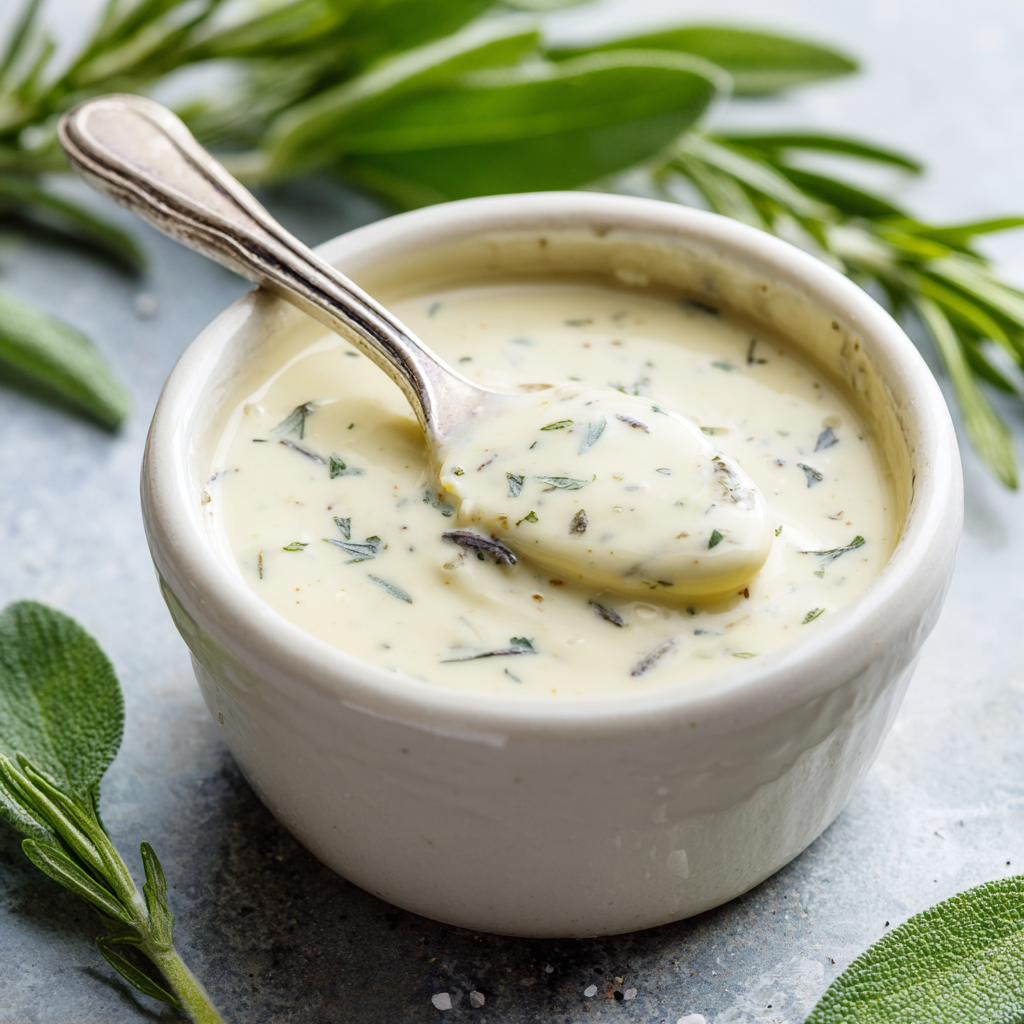
Creamy Italian Dressing
Your New Favorite Dressing: Homemade Creamy Italian
Hey friends, Beau here from Feastical! Let’s talk about a little magic in a jar—or, more accurately, in a whisking bowl. We’ve all been there: staring at the salad dressing aisle, feeling overwhelmed by the bottles with their mile-long ingredient lists, mysterious preservatives, and flavors that sometimes taste more like a chemistry project than a kitchen creation. What if I told you that in about five minutes, with ingredients you probably already have, you could whip up a Creamy Italian Dressing so good, so vibrantly alive, that it’ll make those bottled versions blush?
This isn’t just a dressing; it’s a flavor transformer. It’s the secret handshake of the potluck world. Imagine a dressing that’s luxuriously creamy, yet bright and zesty, with herby whispers of oregano and basil, a gentle garlicky hum, and a tang that makes your taste buds sit up and pay attention. It clings to every leaf of romaine, coats every noodle in a pasta salad, and turns a simple plate of roasted veggies into a showstopper. It’s versatile, it’s forgiving, and it’s about to become your new kitchen staple. So, grab your favorite mixing bowl and let’s make something spectacular together.
More Than Just Dressing: A Backyard Memory
This recipe always takes me straight back to my grandma’s sprawling backyard, the sound of cicadas humming, and the giant, slightly wobbly picnic table weighed down with food. Every summer gathering featured “The Salad”—a massive, bowl-of-plenty situation that was more of a community project than a side dish. My job, from the time I could see over the counter, was to make the dressing.
Grandma would hand me her old ceramic pitcher and a whisk, and I’d feel like a tiny, powerful alchemist. She never measured a thing. “A glug of this, a pinch of that, Beau. Taste it! Does it need more zip? More sweet?” That pitcher, with its creamy, herby contents, was the heart of that salad. Watching everyone go back for seconds, specifically mentioning “this amazing dressing,” planted the first seed in me that food made with intention and a little love could be a simple, profound joy. This is my measured, written-down homage to that feeling. Every time I make it, I’m back at that picnic table, and I hope it brings a little of that connective magic to your table, too.
Gathering Your Flavor Arsenal
Here’s the beautiful part: simplicity. No weird stabilizers, no colors you can’t pronounce. Just honest, flavorful ingredients coming together for a party. Let’s break it down:
-
- ½ cup mayonnaise – This is our creamy base. Use a good-quality, full-fat mayo for the richest texture and flavor. It’s the canvas for our painting. Chef’s Insight: For a tangier twist, swap in ¼ cup mayo and ¼ cup full-fat Greek yogurt or sour cream.
- ¼ cup buttermilk – The secret to that perfect, drizzle-able consistency and a subtle tang. No buttermilk? No sweat! Make a quick “sour milk”: Stir ¾ teaspoon of white vinegar or lemon juice into ¼ cup of regular milk. Let it sit for 5 minutes until it curdles slightly. Boom. DIY buttermilk.
- 2 tablespoons white wine vinegar – Our primary source of zip! It’s brighter and fruitier than plain white vinegar. Substitution Tip: Apple cider vinegar works beautifully here for a slightly sweeter tang, or fresh lemon juice for ultimate brightness.
- 1 teaspoon Dijon mustard – The unsung hero. It adds depth, a slight sharpness, and helps emulsify everything into a smooth, cohesive dressing.
- 1 teaspoon sugar – Just a touch to balance the acidity. Don’t worry, it won’t taste sweet. Chef’s Insight: Honey or maple syrup are fantastic natural swaps here.
- ½ teaspoon garlic powder & ½ teaspoon onion powder – These provide a consistent, mellow allium flavor without the raw bite of fresh garlic or onion, which can overpower over time. Want a punch? Add 1 small minced garlic clove, but know it’ll get stronger as it sits!
- ½ teaspoon dried oregano & ¼ teaspoon dried basil – The soul of “Italian” flavor. Rubbing the dried herbs between your palms before adding them wakes up their oils and intensifies their aroma dramatically.
Salt and freshly ground black pepper, to taste – Essential seasonings. Always start with a little; you can always add more.
- Optional: 2 tablespoons grated Parmesan – This is the “chef’s kiss” for an extra layer of savory, umami richness. Highly recommended if you have it on hand!
Let’s Make It: Your Path to Dressing Glory
Ready? This is the fun part. We’re not just mixing; we’re building layers of flavor.
- The Foundation: In a medium-sized bowl, combine the mayonnaise, buttermilk, white wine vinegar, and Dijon mustard. Now, take your whisk and go to town! Whisk vigorously for a good 30-45 seconds until the mixture is completely smooth, creamy, and homogenous. You’re creating a stable base. Chef’s Hack: Using a bowl with a slight lip or a large glass measuring cup makes pouring later a breeze.
- The Flavor Build: Sprinkle in the sugar, garlic powder, onion powder, oregano, and basil. Remember to rub those dried herbs! Give everything another good whisk until all the powders and herbs are fully incorporated and you see no dry specks.
- Season & Customize: Now, taste. This is the most important step. Dip a clean lettuce leaf or the tip of a spoon. Does it need a pinch of salt? A few cracks of black pepper? This is your dressing—adjust it to your palate. If you’re using the Parmesan, stir it in now. It will thicken the dressing slightly and add that wonderful savory note.
- The Patience Payoff: Pour your beautiful creation into a jar or bottle with a tight-fitting lid. Here’s the hard part: place it in the refrigerator for at least 30 minutes. I know, I know, you want to use it now! But trust me, this chill time is non-negotiable magic. It allows the flavors to meld, the herbs to soften and infuse, and the whole thing to become greater than the sum of its parts. The dressing will also thicken up a touch as it chills.
- Serve & Store: After its beauty rest, give the dressing a good shake or stir. It’s ready to transform your meal! Store any leftovers in the sealed jar in the fridge for up to 1 week. The flavors often get even better on day two.
How to Serve This Superstar Dressing
This creamy Italian is a social butterfly—it gets along with everyone! Here are my favorite ways to let it shine:
- The Classic Salad: Obviously! It’s phenomenal on a crisp romaine and tomato salad, a hearty Italian chopped salad with salami and chickpeas, or a simple wedge of iceberg.
- Pasta Salad Powerhouse: This is its destiny. Toss it with cooled rotini, chopped bell peppers, red onion, olives, and cherry tomatoes for the ultimate potluck contribution. It clings to every nook and cranny.
- Veggie Dip or Drizzle: Need a quick veggie platter dip? This is it. It also makes a fantastic sauce drizzled over roasted asparagus, broccoli, or a medley of grilled zucchini and bell peppers.
- Sandwich Spread: Tired of mayo? Slather this on your sub roll before piling on the deli meats and cheeses for an instant flavor upgrade.
- Marinade Magic: Use it as a quick marinade for chicken breasts or thighs before grilling or baking. The acid and herbs work wonders.
Make It Your Own: Fun Twists & Swaps
Once you’ve mastered the base, the playground is open! Here are a few ways to riff on this recipe:
- Herb Garden Fresh: In the summer, swap the dried oregano and basil for 1 tablespoon each of finely chopped fresh basil and fresh parsley. The flavor will be incredibly vibrant and green.
- Spicy Calabrian Kick: Love heat? Add 1-2 teaspoons of chopped Calabrian chili peppers (or a pinch of red pepper flakes) to the mix. It adds a smoky, spicy dimension that’s absolutely addictive.
- Lemon-Zested Bliss: Replace the white wine vinegar with the juice of one fresh lemon and add a teaspoon of its zest. This creates a beautifully bright, sunny version perfect for spring and summer salads.
- Dairy-Free & Vegan-Friendly: Use a vegan mayonnaise and swap the buttermilk for unsweetened plain almond milk or oat milk mixed with ¾ tsp lemon juice. Skip the Parmesan or use a vegan alternative. Just as creamy, totally plant-based.
- “Everything Bagel” Dressing: Stir in 1-2 teaspoons of everything bagel seasoning at the end. It adds onion, garlic, sesame, and poppy seeds for a fantastic crunch and flavor bomb.
Beau’s Kitchen Notes & Stories
This recipe has been my faithful companion for years, and it’s evolved in fun ways. I once accidentally used smoked paprika instead of garlic powder (similar containers, late night cooking!). It was such a happy accident that a “Smoky Paprika Italian” variation was born. The point is, don’t be afraid to play.
I also learned the hard way that adding fresh, raw garlic can be a bit of a gamble for a dressing you want to keep for a few days—its flavor intensifies and can become quite sharp. That’s why I usually stick with garlic powder for its consistent, mellow vibe. But if I’m making it for immediate consumption at a party, I’ll often throw in a fresh minced clove for that punchy, authentic kick. Cooking is about context, friends!
Your Questions, Answered
- Q: My dressing seems too thick. How can I thin it out?
A: Easy fix! Just whisk in a teaspoon of buttermilk, water, or even more vinegar at a time until it reaches your desired, drizzle-able consistency. - Q: Can I make this ahead of time?
A: Absolutely! In fact, I recommend it. Making it a few hours or even a day ahead allows the flavors to develop beautifully. Just store it airtight in the fridge. - Q: Why did my dressing separate after a few days?
A: A little separation is natural, especially with a mayo base. Simply give it a vigorous shake or stir before using, and it will come right back together. - Q: I don’t have white wine vinegar. What’s the best substitute?
A: You have great options! Apple cider vinegar is my #1 sub for a fruitier tang. Fresh lemon juice is #2 for ultimate brightness. Plain white vinegar will work in a pinch but is a bit harsher, so you might want to use a tiny bit less.
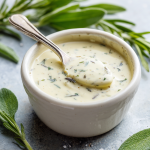
Creamy Italian Dressing
Description
Skip the bottled dressings — this homemade Creamy Italian Dressing is fresh, simple, and packed with flavor. It’s smooth and tangy with classic Italian herbs and just the right amount of garlic kick. Perfect for salads, pasta salads, wraps, or as a veggie dip. Best part: you can make it in one bowl with everyday ingredients.
Ingredients
-
½ cup mayonnaise
-
¼ cup buttermilk
(or ¼ cup milk + ¾ tsp lemon juice or vinegar) -
2 tbsp white wine vinegar (or apple cider vinegar)
-
1 tsp Dijon mustard
-
1 tsp sugar or honey
-
½ tsp garlic powder
-
½ tsp onion powder
-
½ tsp dried oregano
-
¼ tsp dried basil
-
Salt and black pepper to taste
-
Optional: 2 tbsp finely grated Parmesan cheese
Instructions
-
Whisk base
In a medium bowl, whisk together mayonnaise, buttermilk, vinegar, and Dijon mustard until smooth. -
Add seasonings
Stir in sugar, garlic powder, onion powder, oregano, and basil. -
Season
Add salt and black pepper to taste. Stir in Parmesan if using. -
Chill
Cover and refrigerate at least 30 minutes before using to let flavors blend. -
Shake or stir before serving.
Store in a sealed jar in the fridge up to 1 week.
Notes
-
Too thick? Whisk in a little milk or water, 1 teaspoon at a time.
-
Too tangy? Add a small pinch more sugar or a bit more mayo.
-
Want extra punch? Add a small clove of very finely minced garlic (use same day for best taste).
-
Great as a marinade for chicken or a spread for sandwiches.
Nutritional Information*
*This is an estimate provided for informational purposes. Values can vary based on specific ingredients and brands used.
Per Serving (approximately 2 tablespoons):
Calories: ~120 | Total Fat: 12g | Saturated Fat: 2g | Cholesterol: 5mg | Sodium: ~160mg | Total Carbohydrates: 2g | Dietary Fiber: 0g | Sugars: 1g | Protein: 1g
While it contains fats from the mayonnaise, remember that these are part of a balanced diet and help your body absorb the fat-soluble vitamins (A, D, E, K) from your gorgeous salad veggies! For a lighter version, refer to the variations above using Greek yogurt.
Final Thoughts: The Joy of Homemade
And there you have it, friends—not just a recipe, but a trusty kitchen friend. This Creamy Italian Dressing is proof that the best foods are often the simplest, made with intention and a dash of nostalgia. It’s about taking control of what’s on your table and knowing exactly what’s in your food. More than that, it’s about the experience: the sound of the whisk, the smell of the herbs, the satisfaction of creating something delicious from scratch.
I hope this recipe finds its way into your regular rotation, onto your crisp summer salads, and into your favorite pasta dishes. When you make it, you’re not just making dressing; you’re making a moment a little more special. Now go forth, drizzle with confidence, and as always, let’s keep making life delicious, one simple recipe at a time. Thanks for cooking with me!
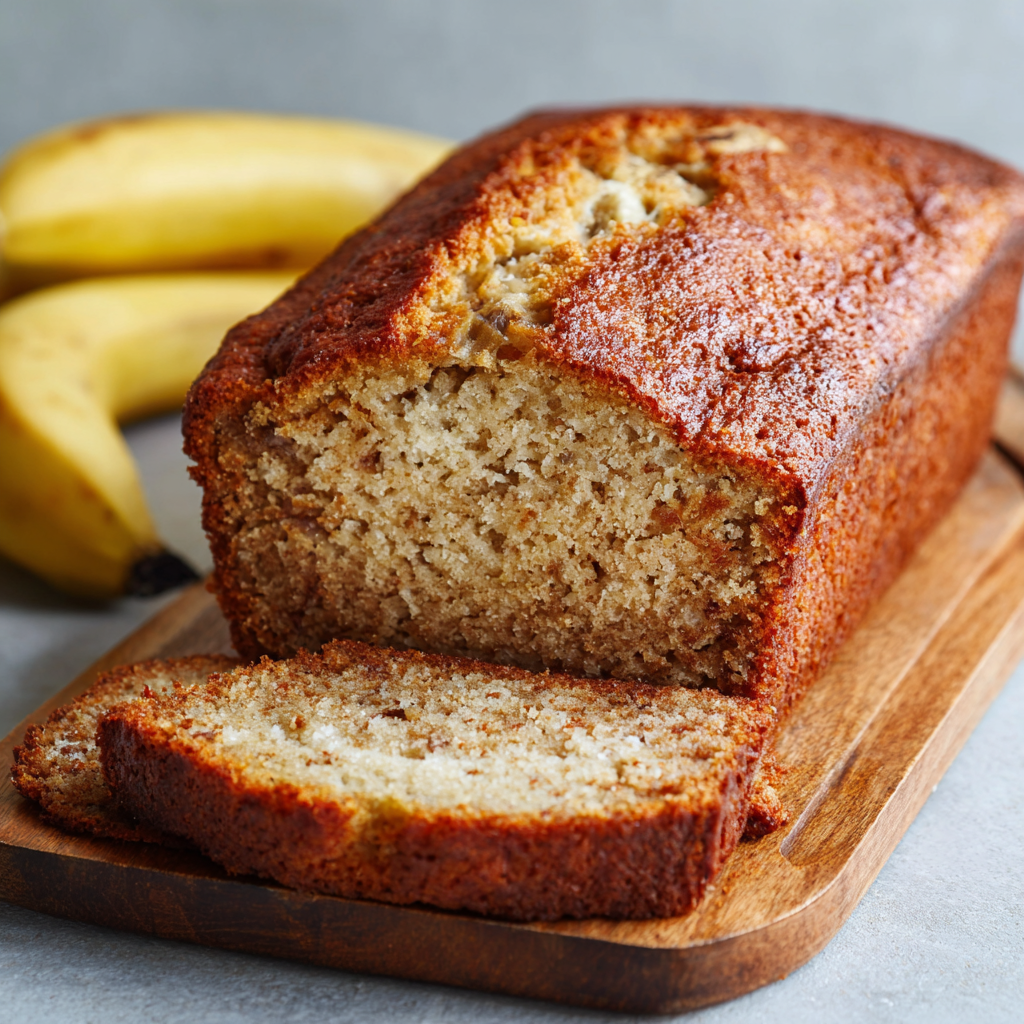
Moist Banana Bread Recipe with a Golden Crust
The Unbeatable Joy of a Perfectly Moist Banana Bread
Hey there, friend! Beau here, welcoming you back to my kitchen at Feastical. Let’s talk about a universal kitchen truth: those sad, speckled bananas on your counter aren’t a failure—they’re a prophecy. A prophecy of something warm, sweet, and incredibly comforting headed your way. I’m talking about the holy grail of home baking: a loaf of moist banana bread with a crust that shatters like a golden sunrise. You know the one. The kind that makes your entire house smell like a hug, the kind that’s equally perfect at 7 AM with a strong cup of coffee as it is at 10 PM standing in front of the fridge (we’ve all been there, no judgment here).
This isn’t just another recipe. This is my best-ever, go-to, never-fail masterpiece. It’s the loaf I’ve baked a hundred times, the one my friends text me for, the one that turns “baking novice” into “kitchen hero” in about an hour. We’re keeping it soulful and simple, because that’s how the best memories are made. No fancy techniques, no mysterious ingredients—just honest, feel-good food that brings people together. So, if you’re ready to turn those forgotten bananas into a legendary treat, grab your bowl and your favorite spatula. Let’s bake some magic.
My Grandmother’s Countertop and the Birth of a Baker
My love affair with banana bread started not in a culinary school, but on a wobbly step-stool at my Grandma Eleanor’s laminate countertop. She was a woman who believed waste was a sin, especially when it came to food. I’d point at the browning bananas in her fruit bowl with a wrinkled nose, and she’d just smile, her eyes twinkling. “Beau, honey,” she’d say, pulling down her speckled mixing bowl, “that’s not ugly. That’s flavor waiting to happen.”
She’d let me mash the bananas with an old wooden fork until they were a smooth, fragrant pulp. She taught me to listen for the specific thwump-thwump sound of the batter when it was just right—not overmixed, but perfectly combined. The wait for it to bake was agony, but the reward… oh, the reward. That first slice, still warm enough to melt the pat of butter she’d slather on it, was a lesson in alchemy. She showed me how something seemingly past its prime could be transformed into pure, unadulterated joy. Every time I bake this loaf, I’m back on that stool, covered in flour, learning that the best things in life and in the kitchen are often the simplest. This recipe is my tribute to her.
Gathering Your Flavor Arsenal
Here’s everything you’ll need to create this masterpiece. Remember, baking is part science, part soul. Quality ingredients make a difference, but don’t stress—I’ve got swaps for you!
- 3 ripe (very ripe!) bananas, mashed – This is the STAR. We’re talking black-speckled, super-soft bananas. The darker, the sweeter and more flavorful your bread will be. No ripe bananas? Bake unripe ones at 300°F for 15-20 minutes until the skins blacken!
- ½ cup (113g) unsalted butter, melted – Melted butter gives us an incredibly tender crumb and that rich, comforting flavor. For a dairy-free version, an equal amount of melted coconut oil works wonders and adds a lovely subtle note.
- ¾ cup (150g) brown sugar – I prefer brown sugar over white for its deep molasses flavor and moisture. It’s the secret to that moist texture. Light or dark brown works—dark will give a slightly deeper, almost caramel tone.
- 2 large eggs – They bind our loaf and add structure. Make sure they’re at room temperature to blend seamlessly into the batter. In a pinch, you can warm cold eggs in a bowl of hot water for 5 minutes.
- 1 teaspoon pure vanilla extract – The flavor booster. It rounds out all the other sweetness. Don’t skip it!
- 1 ½ cups (190g) all-purpose flour – The foundation. For a slightly denser, nuttier loaf, you can swap up to half for whole wheat flour.
- 1 teaspoon baking soda – Our leavening agent. It reacts with the acidic bananas to give the bread its perfect rise. Make sure it’s fresh for best results.
- ½ teaspoon salt – Crucial! Salt balances the sweetness and makes all the flavors pop. I use fine sea salt.
- Optional Flavor Boosters:
- ½ teaspoon ground cinnamon – My personal must-add. It whispers “cozy” into every bite.
- ½ cup chopped walnuts or pecans – For a delightful crunch and toasty flavor.
- ½ cup chocolate chips (semi-sweet or dark) – Because sometimes, chocolate is the answer.
Let’s Get Baking: Your Step-by-Step Roadmap to Bliss
Follow these steps, throw in a little love, and watch the magic happen. I’m talking you through each one with my favorite chef hacks.
Step 1: Prep Your Oven & Pan. First things first: preheat your oven to 350°F (175°C). This isn’t just a suggestion—a properly preheated oven is key to that initial rise and perfect crust. While it’s warming up, grab your 9×5-inch loaf pan. Grease it generously with butter or non-stick spray, or for the ultimate easy release, line it with parchment paper so it hangs over the sides. Think of it as a sling for your beautiful loaf!
Step 2: The Wet Mix – Where the Magic Begins. In a large mixing bowl, take your mashed bananas. I like to leave them a little bit chunky for tiny pockets of pure banana flavor. Add the melted (and slightly cooled) butter, brown sugar, eggs, and vanilla. Now, grab your whisk or a sturdy fork and mix until you have a smooth, homogenous, caramel-colored liquid. You’ll see the sugar has mostly dissolved. This is your flavor base. Chef’s Hack: If your brown sugar is lumpy, press it through your fingers or a sieve before adding it. No one wants a sugar lump surprise!
Step 3: Bringing It All Together – The Dry Ingredients. Here’s the most important tip in the whole recipe: DO NOT OVERMIX. Place a sieve over your bowl of wet ingredients and sift in the flour, baking soda, and salt (and cinnamon if using). This prevents lumps and aerates the flour. Now, put the whisk away. Grab a spatula or a wooden spoon and fold the dry ingredients into the wet. Use a gentle, sweeping motion from the bottom of the bowl up and over. Stop the moment you no longer see dry streaks of flour. A few small lumps are perfectly fine—they’re better than a tough, overmixed loaf!
Step 4: The Fun Part – Fold in Your Extras! Now’s the time to gently fold in those walnuts or chocolate chips, if you’re using them. Just a few turns to distribute them evenly.
Step 5: Bake to Golden-Brown Perfection. Pour the thick, glorious batter into your prepared loaf pan. Smooth the top with your spatula. Slide it into the middle of your preheated oven and set your timer for 50 minutes. The true test is the toothpick test: after 50 minutes, insert a toothpick or a thin skewer into the very center of the loaf. If it comes out with a few moist crumbs clinging to it, it’s perfect. If it’s wet with batter, give it another 5-10 minutes. Chef’s Hack: If the top is browning too quickly (a common issue!), loosely tent a piece of aluminum foil over the top for the last 15 minutes of baking. This lets it cook through without burning the crust.
Step 6: The Test of Patience – Cooling. This is the hardest part! When done, pull the loaf from the oven. Let it cool in the pan on a wire rack for 10 minutes exactly. This allows it to set so it doesn’t fall apart. Then, using the parchment paper sling or a knife around the edges, lift it out and let it cool completely on the rack. I know, I know… waiting is torture. But slicing into a warm loaf can make it gummy. For a clean slice, let it cool. For pure, buttery, melt-in-your-mouth joy, break the rules and have a warm piece. I won’t tell.
How to Serve Your Masterpiece
Presentation is part of the fun! For a classic, homey look, place the whole, cooled loaf on a wooden cutting board and slice it right at the table. The sound of the knife cutting through that crust is pure music.
A plain slice is a beautiful thing, but let’s gild the lily:
- The Classic: A thick slice, lightly toasted, slathered with good salted butter. Watch it melt into all the nooks and crannies.
- The Decadent: A schmear of creamy peanut butter or almond butter, topped with a drizzle of honey.
- The À La Mode: A warm slice with a scoop of vanilla bean ice cream melting over the top. This is dessert heaven.
- The Brunch Star: Slice it thick, griddle it in a little butter until caramelized, and serve alongside crispy bacon and a cup of strong coffee.
Make It Your Own: Delicious Twists & Swaps
The beauty of this recipe is its versatility. Once you’ve mastered the base, play with it! Here are some of my favorite riffs:
- Brown Butter Bliss: Take your melted butter to the next level. Cook it in a saucepan over medium heat until it foams, turns golden brown, and smells nutty. Let it cool before using. This adds an incredible depth of flavor.
- Double Chocolate Chunk: Fold in ½ cup chocolate chips AND replace ¼ cup of the flour with unsweetened cocoa powder for the ultimate chocolate lover’s banana bread.
- Gluten-Free & Fabulous: Swap the all-purpose flour for a 1:1 gluten-free baking blend. The recipe works like a charm!
- Tropical Escape: Fold in ½ cup shredded sweetened coconut and ¼ cup chopped macadamia nuts. It’s like a vacation in a loaf pan.
- Marble Magic: Divide your finished batter in half. Mix 2 tablespoons of cocoa powder and 1 tablespoon of milk into one half. Alternate spoonfuls of plain and chocolate batter into the pan, then swirl with a knife.
Beau’s Kitchen Notes & Stories
This recipe has been a living, breathing thing in my kitchen for years. I once, in a sleepy morning haze, accidentally used a whole cup of baking soda instead of one teaspoon. Let me tell you, the volcanic eruption that occurred in my oven and the resulting bitter, green-tinged “loaf” is a cautionary tale I’ll never forget! Always double-check your measurements, friends.
Over time, I’ve learned that the ripeness of the banana is non-negotiable for maximum flavor. I also started adding the cinnamon by default—it just feels right. The recipe is forgiving, but it rewards attention to those little details. It’s evolved from my grandma’s simple recipe into my own signature, but its soul—that magic of transformation—remains exactly the same.
Your Questions, Answered
Q: My banana bread is raw in the middle but dark on top! What happened?
A: This usually means your oven is too hot. Oven temperatures can be inaccurate! Invest in an inexpensive oven thermometer. If it’s browning too fast, tent it with foil earlier (at the 30-minute mark). Also, ensure you’re using the correct pan size; a smaller pan will cause the batter to be too deep and bake unevenly.
Q: Why is my bread dense and gummy?
A> The #1 culprit is overmixing the batter after adding the flour. You develop the gluten, which leads to a tough, dense texture. Mix just until combined! Also, make sure your baking soda is fresh and your bananas are adequately mashed.
Q: Can I make this into muffins?
A: Absolutely! This batter makes fantastic muffins. Divide it into a lined muffin tin, filling each cup about ⅔ full. Bake at the same temperature (350°F) for 18-22 minutes, or until a toothpick comes out clean.
Q: How do I store it to keep it moist?
A> Once completely cool, wrap the loaf tightly in plastic wrap or store it in an airtight container at room temperature for up to 3 days. For longer storage, wrap it well and freeze it for up to 3 months. Slice it before freezing for easy single servings!
Moist Banana Bread Recipe with a Golden Crust
Description
Got a few overripe bananas on the counter? Perfect — you’re halfway to one of the best homemade treats ever. This moist banana bread is simple, reliable, and packed with cozy flavor. It’s great for breakfast, snacks, or dessert, and it doesn’t require any fancy equipment — just a bowl, a spoon, and a loaf pan.
Ingredients
-
3 very ripe bananas, mashed
-
½ cup (113 g) unsalted butter, melted and cooled
-
¾ cup (150 g) brown sugar
-
2 large eggs, room temperature
-
1 tsp vanilla extract
-
1½ cups (190 g) all-purpose flour
-
1 tsp baking soda
-
½ tsp salt
-
½ tsp ground cinnamon (optional but recommended)
Optional add-ins (choose one or mix):
-
½ cup chocolate chips
-
½ cup chopped walnuts or pecans
-
¼ cup shredded coconut
Instructions
-
Preheat oven to 350°F (175°C). Grease or line a 9×5-inch loaf pan with parchment.
-
Mash bananas in a large bowl until mostly smooth (a few small lumps are fine).
-
Mix wet ingredients
Stir in melted butter, brown sugar, eggs, and vanilla until well combined. -
Add dry ingredients
Add flour, baking soda, salt, and cinnamon. Gently fold with a spatula just until no dry flour remains. Do not overmix. -
Fold in extras if using (chips or nuts).
-
Transfer to pan and smooth the top.
-
Bake 50–60 minutes, or until a toothpick inserted in the center comes out with a few moist crumbs.
-
Cool in the pan for 10 minutes, then remove and cool fully on a rack before slicing (if you can wait!).
Notes
-
Use very ripe bananas — dark spots mean more sweetness and stronger flavor.
-
If your bananas aren’t ripe, bake them (unpeeled) at 300°F / 150°C for about 15–20 minutes until dark. Cool, then use.
-
Don’t overmix after adding flour — this keeps the loaf tender, not dense.
-
If the top browns too fast, loosely cover with foil for the last 15 minutes.
-
For extra moisture, replace 2 tablespoons of butter with yogurt or sour cream.
Nutritional Information (A General Guide)
Hey, we’re all about balance here! This info is for the plain loaf, sliced into 10 servings. Adding chocolate chips or nuts will change these values. I’m not a nutritionist, but I believe in mindful eating. This bread is a treat, a comfort, and a way to use up food that might otherwise be wasted—that’s a win in my book.
- Calories: ~210 per slice
- Fat: 9g
- Carbohydrates: 30g
- Sugars: 15g (primarily from the natural bananas and brown sugar)
- Protein: 3g
Final Thoughts from My Kitchen to Yours
And there you have it, friend—my heart and soul baked into one simple loaf. This moist banana bread is more than a recipe; it’s a reminder that the simplest ingredients, a little patience, and a lot of love can create something truly extraordinary. It’s about the joy of sharing, the comfort of a familiar smell, and the satisfaction of creating something with your own two hands.
I hope this recipe finds a permanent spot in your own recipe box, gets stained with batter and butter, and becomes a story you tell. Now, go preheat that oven and rescue those bananas. And when you pull that golden, crackly-topped loaf out of the oven, think of me and my grandma, and know you’re part of a long, delicious tradition of turning simple ingredients into shared happiness. Happy baking, and as always, thanks for letting me share my table with you.
With a full heart and an empty mixing bowl,
Beau
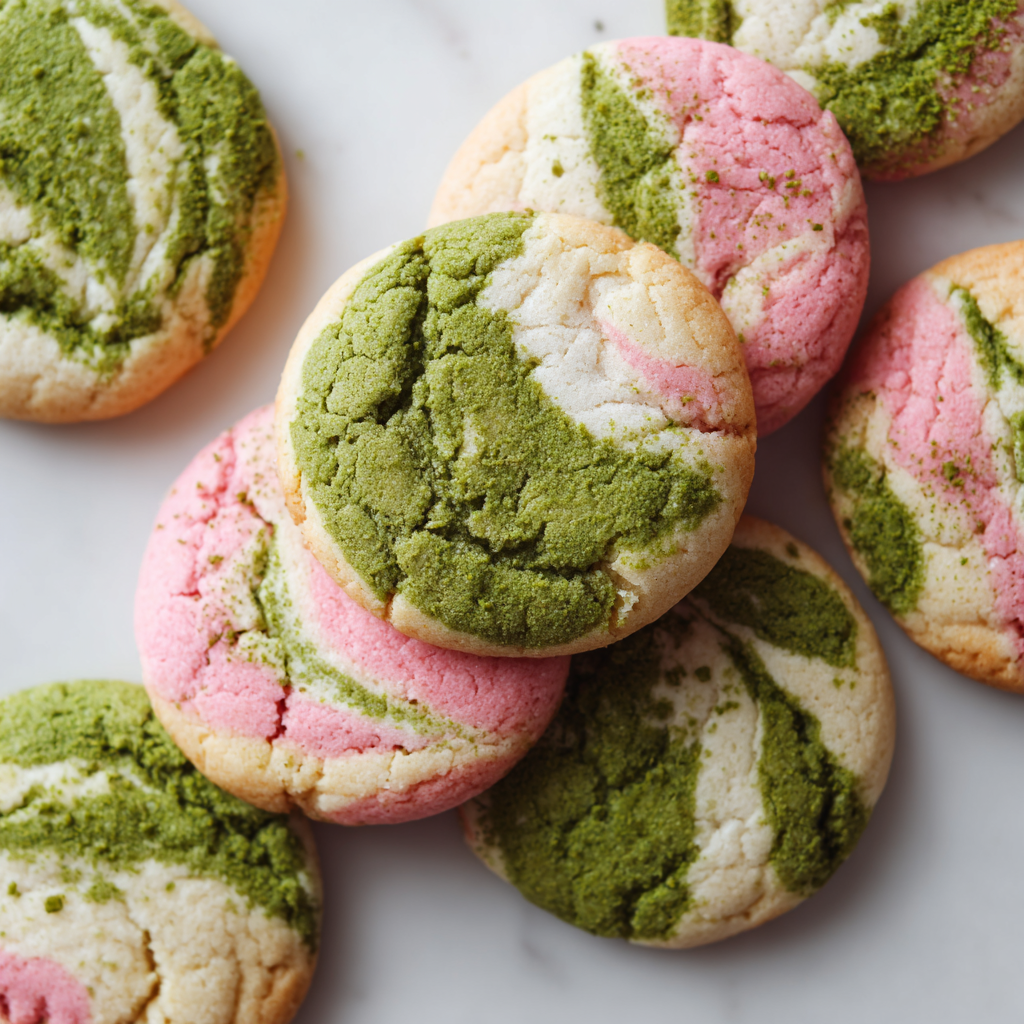
Strawberry Matcha Marble Cookies Recipe
Strawberry Matcha Marble Cookies – Swirled Butter Cookies with Tea and Berry Flavors
Let’s Bake Some Happy (and a Little Magic!)
Hey friends, Beau here! Grab your favorite apron and let’s have some fun. Today, we’re not just baking cookies; we’re creating edible artwork. I’m talking about my Strawberry Matcha Marble Cookies – buttery, soft, and absolutely breathtaking. Imagine the deep, earthy whisper of ceremonial-grade matcha, the sunny, fruity kiss of strawberry, and the classic comfort of vanilla, all swirled together in one gorgeous, melt-in-your-mouth bite.
I know “marble” might sound like a fancy-pants baking challenge, but trust me, it’s pure, simple kitchen joy. It’s the kind of recipe that makes you feel like a pastry wizard with minimal effort. These cookies are my go-to when I want to impress at a tea party, pack a seriously lovely gift box, or just turn a regular Tuesday into something special. They look like you fussed for hours, but our little secret? It’s mostly just playful squishing and twisting. So, preheat that oven, and let’s dig into the marbling magic together!
The Day I Discovered Marbling (And a Happy Mess)
This recipe was born from a happy accident, as the best ones often are. A few years back, I was determined to make my nephew’s birthday cookies “extra.” I had a batch of green matcha dough and a batch of pink strawberry dough ready to go. Then, in a classic Beau move, I got distracted by a bubbling pot on the stove. When I turned back, my then-toddler nephew had “helped” by smooshing the two colorful dough balls together into one magnificent, marbled lump.
Instead of starting over, I rolled it out, cut some shapes, and crossed my fingers. What came out of the oven was a revelation! Each cookie was a unique, stunning landscape of green and pink swirls. The flavors melded perfectly, and the textures were somehow even better. It taught me that sometimes, the best recipes come from letting go of perfect separation and embracing the beautiful blend. Now, every time I make these, I think of that messy, joyful kitchen moment and smile.
Your Cookie Canvas: What You’ll Need
Here’s the lineup for our masterpiece. I’ve added my little chef notes next to each one because knowing the “why” makes you a more confident baker!
For the Base Dough:
- 1 cup (227g) unsalted butter, softened – This is the soul of our cookie. True softness is key – it should dent easily when poked but not be oily or melted. This creams into the sugar perfectly for that tender crumb.
- 1 cup (200g) granulated sugar – Our sweetener and texture-helper. It helps the cookies spread just right and get those lightly crisp edges.
- 2 large eggs – They bind everything together and add richness. Make sure they’re at room temperature to play nicely with the butter.
- 1 teaspoon vanilla extract – The flavor backbone. Use the real stuff! It rounds out the matcha and strawberry beautifully.
- 2 ¾ cups (345g) all-purpose flour – The structure. I fluff my flour in the container before gently spooning it into the measuring cup and leveling it off. This avoids dense, dry cookies.
- ½ teaspoon baking powder + ½ teaspoon baking soda – Our dynamic leavening duo. The powder gives lift, the soda encourages spread and browning. Yes, we need both!
- ¼ teaspoon salt – The flavor enhancer. It makes all the other flavors pop and balances the sweetness. Don’t skip it.
For the Flavor & Color Swirls:
- 1 tablespoon matcha powder – Chef’s Insight: Splurge on a good culinary or ceremonial-grade matcha if you can. The color will be a vibrant jade green, and the flavor will be smooth and complex, not bitter. This is where the magic happens!
- 1 tablespoon freeze-dried strawberry powder – My #1 recommended option. It gives an intense, natural strawberry flavor and that gorgeous pink hue without adding extra moisture. You can buy it or make it by blitzing freeze-dried strawberries in a clean coffee grinder until powdery.
- Substitution Tip: No powder? Use ½ teaspoon strawberry extract + a tiny drop of pink food gel. The extract gives flavor, the gel gives color. Natural food colorings work great too!
- 2–3 teaspoons flour (optional) – Sometimes, especially if your kitchen is warm, the dough can get a tad sticky after adding the flavorings. A dusting of extra flour helps you handle it for perfect marbling.
Let’s Create the Swirl: Step-by-Step
Follow these steps, and you’ll have a tray of edible art in no time. I’m walking you through every twist and turn!
- Make the Master Dough. In a large bowl, cream your softened butter and sugar together with a hand mixer or stand mixer fitted with the paddle attachment. Don’t rush this! Beat on medium-high for a solid 2-3 minutes until it’s pale, fluffy, and almost looks like whipped cream. This incorporates air, which equals a lighter cookie. Scrape down the bowl. Add the eggs one at a time, beating well after each so they fully incorporate. Mix in the vanilla.
- Bring It Together. In a separate bowl, whisk together your flour, baking powder, baking soda, and salt. With your mixer on low, add the dry ingredients to the wet in two additions. Mix just until no dry flour remains. Overmixing at this stage leads to tough cookies. We want tender!
- Divide and Conquer. Now, weigh or eyeball dividing your dough evenly into three separate bowls. (Yes, three! One for matcha, one for strawberry, and one for plain vanilla. The vanilla acts as a beautiful, neutral canvas that lets the other colors shine.)
- Color and Flavor Time!
- Bowl 1 (Pink): Add your strawberry powder (or extract+color). Mix with a spatula or your hands until the color is fully, evenly distributed. It smells amazing already, right?
- Bowl 2 (Green): Add your matcha powder. Mix thoroughly. You’ll see that beautiful earthy green come to life.
- Bowl 3 (Vanilla): Leave this one just as it is – our buttery masterpiece.
Chef Hack: If any dough feels too sticky to handle comfortably for marbling, work in 1 teaspoon of flour at a time until it’s pliable but not dry.
- The Marbling Magic – Choose Your Adventure!Method A: The Color Block (My Go-To): Pinch off small, rough pieces of each color of dough (about marble-sized). Press them together randomly into a ball about the size of a golf ball. Give it a gentle twist, then flatten it slightly into a thick disc on your baking sheet. This method gives awesome abstract swirls.
Method B: The Elegant Spiral: Roll a small piece of each color into a short rope. Lay the three ropes side-by-side and pinch them together at one end. Twist them together gently, then coil the twist into a spiral (like a cinnamon bun). Flatten slightly. This gives a stunning, defined swirl pattern.
- Bake to Perfection. Preheat your oven to 350°F (175°C). Line your baking sheets with parchment paper. Space your cookie dough discs about 2 inches apart—they’ll spread a little. Bake for 9 to 11 minutes. You’re looking for the edges to be just barely turning golden. The centers will still look soft—this is perfect! They’ll firm up as they cool. Overbaking is the enemy of a soft, chewy cookie.
- The Patient Part. Let the cookies cool on the hot baking sheet for 5 full minutes. This lets them set. Then, use a spatula to transfer them to a wire rack to cool completely. I know it’s hard to wait, but this prevents breakage and lets the flavors settle.
How to Serve These Showstoppers
Presentation is half the fun with these beauties! For a simple afternoon treat, pile them high on a rustic wooden board or a vintage plate. They pair divinely with a cup of hot green tea, a latte, or a glass of cold milk.
Want to make them gift-ready? Stack a few in a clear cellophane bag tied with baker’s twine, or arrange them in a decorative tin lined with parchment. They’re the perfect “just because” or “thank you” gift that always wows. For a party, create a dessert platter with these, some dark chocolate-dipped fruits, and maybe some mini macarons. The color combo is simply unforgettable.
Make It Your Own: Fun Variations
Love the marble technique? Let’s play with it! Here are a few of my favorite twists:
- Chocolate Matcha Marble: Swap the strawberry powder for 2 tablespoons of sifted unsweetened cocoa powder. You get a stunning dark brown and green swirl with a classic chocolate-matcha pairing.
- Lemon Blueberry Marble: Use the zest of one lemon and a drop of yellow coloring for one portion. For another, use 1 tablespoon of powdered dried blueberries (processed like the strawberries) for a purple-blue hue. Keep the third vanilla. Bright and zingy!
- “Everything But The…” Marble: Feeling adventurous? Divide dough into four parts. Do matcha, strawberry, cocoa, and leave one vanilla. Combine small pieces of all four for a wild, confetti-like cookie that’s pure fun.
- Gluten-Free Swap: Use a 1:1 gluten-free all-purpose flour blend (I like the ones with xanthan gum already included). The texture will be slightly more delicate but just as delicious.
- Vegan Version: Use a high-quality plant-based butter (sticks, not tubs) and a flax egg (1 tbsp ground flax + 3 tbsp water per egg, set for 5 mins). The marbling works the same way!
Beau’s Kitchen Notes & Stories
Over the years, I’ve learned a few things. First, every batch will be uniquely beautiful—embrace it! No two cookies have the same swirl, and that’s the charm. Second, if your dough gets too soft while you’re working, just pop it in the fridge for 10-15 minutes to firm up. Chilled dough also spreads a little less, giving you a slightly thicker cookie.
This recipe has evolved from that first toddler-assisted batch. I added the vanilla portion later to give the eye a place to rest between the vibrant colors, and I found the freeze-dried berry powder was a game-changer for flavor. Baking, like life, is all about happy evolution. Don’t be afraid to make it your own!
Your Questions, Answered
- Q: My colors bled together into a muddy brown/green. What happened?A: This usually means the dough was too warm or was over-mixed when combining the colors. Work with cool dough, and when you press the colors together, do it gently and just enough to adhere. We’re marbling, not fully blending!
- Q: Can I make the dough ahead of time?A: Absolutely! You can prepare the three colored doughs, wrap them tightly in plastic wrap, and refrigerate for up to 2 days. Let them sit at room temp for 15-20 minutes to become pliable before marbling and baking.
- Q: My matcha tastes bitter. How can I prevent that?A: Two tips: 1) Use a higher-quality matcha meant for drinking (ceremonial grade). Lower-grade “culinary” matcha can be harsh. 2) Ensure your baking powder and soda are fresh. Old leaveners can create a bitter aftertaste that amplifies the matcha’s bitterness.
- Q: The cookies spread too much and lost their swirl definition.A: Your butter was likely too soft or the dough wasn’t chilled. Next time, ensure your butter is just soft, not melty. If your kitchen is hot, chill the shaped cookies on the baking sheet for 10 minutes before putting them in the oven.
Strawberry Matcha Marble Cookies Recipe
Description
These Strawberry Matcha Marble Cookies are soft, buttery, and beautifully swirled with natural green tea and strawberry flavors. They look fancy but are actually simple to make. Perfect for tea time, gifts, or when you want cookies that stand out on the plate.
Ingredients
Base Dough
-
1 cup (227 g) unsalted butter, softened
-
1 cup (200 g) granulated sugar
-
2 large eggs, room temperature
-
1 tsp vanilla extract
-
2¾ cups (345 g) all-purpose flour
-
½ tsp baking powder
-
½ tsp baking soda
-
¼ tsp salt
Flavor Swirls
-
1 tbsp matcha powder
-
1 tbsp freeze-dried strawberry powder
(or ½ tsp strawberry extract + tiny drop pink food color) -
2–3 tsp extra flour (only if dough gets sticky)
Instructions
-
Preheat oven to 350°F (175°C). Line baking sheets with parchment.
-
Cream butter & sugar
Beat butter and sugar for 2–3 minutes until light and fluffy. -
Add wet ingredients
Mix in eggs one at a time, then vanilla. -
Mix dry ingredients
In another bowl whisk flour, baking powder, baking soda, and salt. -
Combine
Add dry ingredients to wet and mix just until a soft dough forms. -
Divide dough
Split evenly into 3 bowls. -
Flavor & color
-
Bowl 1: mix in matcha powder
-
Bowl 2: mix in strawberry powder
-
Bowl 3: leave plain vanilla
If sticky, mix in a little extra flour.
-
-
Marble the dough
Pinch small pieces of each color, press together, gently twist, and roll into balls. Flatten slightly into thick discs. -
Bake
Place 2 inches apart. Bake 9–11 minutes until edges are lightly golden and centers look soft. -
Cool
Let rest 5 minutes on tray, then move to rack.
Notes
-
Use soft, not melted butter for good texture.
-
Don’t overmix after adding flour — keeps cookies tender.
-
If dough gets warm, chill 10–15 minutes before shaping.
-
Twist colors gently — too much mixing will blur the marble.
-
Better matcha = brighter color and smoother flavor.
Nutritional Info (Because We Like to Know!)
Here’s a general estimate per cookie (based on a yield of 24). Remember, this is a treat meant to be savored for its joy and flavor!
- Calories: ~140
- Fat: 7g
- Carbohydrates: 18g
- Sugar: 9g
- Protein: 2g
These values are approximate and can vary based on specific ingredients used and cookie size. The matcha does provide a small dose of antioxidants (like EGCG) and a gentle lift from natural caffeine, while the strawberry powder adds a touch of vitamin C. Mostly, though, they provide a big dose of baking happiness!
Final Thoughts from My Kitchen to Yours
And there you have it, friends – the full story of my beloved Strawberry Matcha Marble Cookies. More than just a recipe, I hope this is an invitation to play in the kitchen, to embrace beautiful imperfections, and to create something that delights all the senses.
The best part about these cookies isn’t just how stunning they look on Instagram (though, go ahead, snap that pic!). It’s the moment you break one in half to see the unique swirl inside, or the smile on someone’s face when you offer them a plate. It’s food that feels like a celebration. So, give it a whirl, make a glorious mess, and taste the magic. Happy baking!
Always remember – in my kitchen and yours, food should taste like a warm hug. Now, go enjoy your well-earned cookies!

Crab Stuffed Salmon Pinwheels
Crab Stuffed Salmon Pinwheels – Your New Go-To Elegant Seafood Dinner
Hey there, friend! Beau here from Feastical. Tell me if this sounds familiar: You want to make a meal that feels special, maybe for a date night at home or when you’ve got friends coming over. You want that “wow” factor, the kind of dish that makes everyone’s eyes light up when you bring it to the table. But you also don’t want to spend your entire evening slaving over a hot stove, juggling seventeen pans, and feeling like you need a sous chef just to get through it.
I’ve been there more times than I can count. That’s why I’m absolutely obsessed with these Crab Stuffed Salmon Pinwheels. They look like you trained under a Michelin-starred chef, but the process is so straightforward and forgiving. We’re taking beautiful, flaky salmon and rolling it around a luxurious, flavorful crab stuffing that’s inspired by the best parts of a classic crab cake. Then we bake it until it’s just perfectly cooked. The result? A gorgeous spiral of tender salmon and creamy, savory filling that’s bursting with flavor in every single bite.
This recipe is the definition of “elevated easy.” It’s the secret weapon in my back pocket for making any dinner feel like a celebration. So, tie on your apron, grab your favorite baking sheet, and let’s create some kitchen magic that’s guaranteed to get you compliments. Trust me, this is one of those recipes you’ll come back to again and again.
The Beach Trip That Inspired a Feast
This recipe always takes me back to a chaotic, wonderful family trip to the Oregon coast a few summers ago. We rented a tiny cabin with an even tinier kitchen, and I was tasked with cooking a “nice dinner” one night with groceries we’d just grabbed from a local fish market. I had stunning wild-caught salmon and a container of fresh Dungeness crab meat staring back at me.
The problem? Minimal tools. One pan, a wonky oven, and a very skeptical audience (my nieces were deep in a chicken nugget phase). I knew I had to make something impressive but foolproof. I remembered the technique of rolling meat around a filling from an old cookbook and just went for it, mixing the crab with whatever we had on hand—some crackers, mayo, and veggies. When those pinwheels came out of the oven, golden and smelling like the sea, the whole crowd went silent… then devoured them. It was the hit of the trip. It proved that great food isn’t about fancy equipment; it’s about simple, good ingredients combined with a little bit of love and courage. That’s the spirit I want to bring to your kitchen today.
Gathering Your Flavor Team: Ingredients & Insights
Here’s everything you’ll need to build these beautiful pinwheels. Think of this as your flavor team, and each player has an important role!
- 2 lbs center-cut skinless salmon filet: This is your canvas. A center-cut piece is more uniform in thickness, which makes rolling so much easier. You can ask your fishmonger to remove the skin, or do it yourself with a sharp, flexible knife. Chef’s Insight: If wild salmon is available, its firmer texture and richer flavor are fantastic here, but a good quality farm-raised Atlantic salmon works beautifully and is often more budget-friendly.
- ½ lb lump crab meat: The star of the stuffing! I prefer fresh lump crab for its sweet, delicate flavor and nice chunks. Substitution Tip: Canned lump crab (drained well) or even high-quality claw meat are perfect, cost-effective alternatives. Just avoid “surimi” (imitation crab stick) for this—it changes the flavor profile completely.
- ¾ cup mayonnaise: This is our binder and adds wonderful creaminess. Chef’s Insight: A good, full-fat mayo is key here for flavor and structure. For a tangier twist, you could swap half with sour cream.
- ¾ cup plain Italian breadcrumbs: They soak up moisture, add texture, and the subtle herbs in Italian-style crumbs are a bonus. Substitution Tip: Panko breadcrumbs will give a slightly airier texture. For a gluten-free version, use gluten-free breadcrumbs or crushed pork rinds for a low-carb option.
- The “Holy Trinity” Sauté: ¼ cup each of diced yellow onion, celery, and green bell pepper. This classic combo builds a foundational layer of savory flavor. Sautéing them first is non-negotiable—it softens their bite and sweetens them up.
- 4 tablespoons unsalted butter + 2 tablespoons olive oil: We use both for sautéing. The butter gives incredible flavor, and the olive oil raises the smoke point so the butter doesn’t burn. A perfect partnership!
- 1 tablespoon fresh lemon juice: Brightness is essential with rich seafood. Chef’s Insight: Please, please use fresh lemon juice here. The bottled stuff just doesn’t bring the same vibrant, clean acidity.
- 1 teaspoon Worcestershire sauce: Our secret umami booster. It adds a deep, savory note that makes the filling taste “complete.”
- 1 teaspoon paprika: For a warm, subtle color and a hint of sweetness. Smoked paprika is a fun twist if you love a smoky flavor.
- Fresh Herbs: 3 tablespoons chopped parsley & 2 tablespoons chopped chives, divided. We mix most into the filling and save some for a fresh, green garnish at the end. They add a pop of color and a garden-fresh flavor.
- Kosher salt and freshly ground black pepper: Season at every stage! Taste your filling before adding the crab.
Let’s Get Rolling: Step-by-Step Instructions
Don’t let the fancy look intimidate you. We’re going to break this down into simple, manageable steps. I’ll be with you the whole way with my best tips and hacks.
- Prep Your Station & Preheat: Crank your oven to 400°F (200°C). This high heat will give us a beautiful cook on the salmon and a lightly golden top. While it heats, chop all your veggies and herbs. This “mise en place” (everything in its place) makes the actual cooking process a calm, joyful breeze.
- Sauté the Veggie Trinity: In a medium sauté pan, heat the olive oil and 2 tablespoons of the butter over medium heat. Once the butter melts and foams a bit, add the diced onion, celery, and bell pepper. Cook, stirring occasionally, for about 5-6 minutes. You want them soft and fragrant, but not browned. Take the pan off the heat and let this mixture cool for a few minutes. Chef’s Hack: Spreading them on a plate speeds up the cooling!
- Build the Crab Filling: In a medium mixing bowl, combine the cooled sautéed veggies, mayonnaise, breadcrumbs, lemon juice, Worcestershire, paprika, and about two-thirds of your chopped parsley and chives. Mix it well until it’s a cohesive, creamy mixture. Now, season it generously with salt and pepper. Here’s the crucial part: gently fold in the crab meat. Use a spatula and a light touch—we want to preserve those beautiful lumpy pieces, not turn it into paste.
- Prepare the Salmon Canvas: Pat your salmon filet completely dry with paper towels. Place it on a cutting board. Using a sharp knife, slice the filet in half lengthwise, so you have two long, thinner strips. Lightly season both sides of each strip with salt and pepper.
- The Roll-Up: Divide the crab filling evenly between the two salmon strips, spreading it in an even layer over the entire surface, leaving just a tiny border at one of the short ends. Starting from the opposite short end, tightly roll up the salmon jelly-roll style. Don’t be shy—a tight roll is a good roll! If they feel a little loose, you can secure the seam with a couple of toothpicks. Chef’s Hack: For easier slicing, pop the rolls in the freezer for 10-15 minutes to firm up.
- Slice & Bake: Using a very sharp serrated knife, carefully slice each log in half, creating two large pinwheels per roll (four total). Place them seam-side down on a parchment-lined or lightly greased baking sheet. Melt the remaining 2 tablespoons of butter and brush it lightly over the tops of each pinwheel—this promotes gorgeous browning.
- Bake to Perfection: Slide the baking sheet into your preheated oven. Bake for 15-18 minutes. The salmon should be opaque and flake easily with a fork, and the filling should be hot and golden on top. Because ovens vary, start checking at 15 minutes. Remember, salmon continues to cook a bit after it comes out, so it’s okay if it looks *just* done in the center.
- Garnish & Serve: Once out of the oven, let the pinwheels rest for 2-3 minutes. This lets the juices settle. Then, sprinkle with the remaining fresh parsley and chives for that final touch of color and freshness. Time to plate up!
Plating Up Your Masterpiece
Presentation is part of the fun! I like to place one gorgeous pinwheel in the center of a warm plate. The golden-brown top and the spiral are the showstoppers, so don’t cover them up. Here are a few ways to complete the plate:
- Keep it Light & Fresh: A simple arugula salad with a lemon vinaigrette or a pile of roasted asparagus is perfect. The freshness cuts through the richness.
- Go for Comfort: For a truly decadent meal, serve alongside creamy garlic mashed potatoes or fluffy jasmine rice. Spoon any pan juices over the top.
- Add a Sauce: While they don’t *need* it, a little dish of lemon-dill aioli or a simple beurre blanc takes it to a whole new restaurant level.
- Garnish Smart: A thin lemon wheel or twist on the side, plus those fresh herbs, makes everything look intentional and elegant.
Make It Your Own: Delicious Recipe Variations
Once you’ve mastered the classic, play around! Here are some of my favorite twists:
- The “Cajun Kick”: Add 1 tsp of Creole or Cajun seasoning to the filling, and swap the green pepper for diced andouille sausage. Brush the tops with a little hot sauce mixed into the melted butter.
- Herb Garden Delight: Swap the parsley for fresh dill or tarragon, which pair phenomenally with both salmon and crab. Add a teaspoon of Dijon mustard to the filling for extra zing.
- Lemon-Zested Bliss: Add the zest of one whole lemon to the filling for an incredible burst of citrus fragrance. It brightens the entire dish.
- Dairy-Free & Lighter: Use a high-quality avocado oil mayonnaise and replace the butter for sautéing with all olive oil. It’s still incredibly flavorful.
- Shrimp Scampi Twist: No crab? No problem! Use an equal amount of finely chopped cooked shrimp and add a clove of minced garlic to the veggie sauté.
Beau’s Chef Notes & Kitchen Confessions
This recipe has seen many iterations in my kitchen. I once, in a pre-dinner panic, used crushed Ritz crackers instead of breadcrumbs because it was all I had. Guess what? It was outrageously delicious and added a buttery note everyone loved. So don’t stress about perfection.
The biggest lesson I’ve learned is the power of the “chill before slicing” step. That first time on the beach, I didn’t do it, and my rolls were a bit messy. A short rest in the freezer firms everything up and gives you those clean, photo-worthy slices. It’s a game-changer. Also, these are fantastic for making ahead! Assemble the whole rolls, wrap them in plastic, and refrigerate for up to 8 hours before slicing and baking. It turns dinner party stress into serene confidence.
Your Questions, Answered: FAQs & Troubleshooting
Q: My salmon pinwheel unrolled in the oven! What happened?
A: This usually means the roll wasn’t quite tight enough, or the filling was too wet (excess liquid from the crab or veggies). Make sure to drain your crab well and cool your sautéed veggies completely. Also, don’t overfill—a ½-inch layer is plenty. The toothpick trick is your friend, and chilling before baking helps the roll hold its shape.
Q: Can I use frozen salmon?
A: Absolutely. Thaw it completely in the refrigerator overnight, then pat it extremely dry. Thawing slowly in the fridge is key to preserving texture.
Q: How do I know when the salmon is done without overcooking it?
A: The visual and texture test is best. The salmon will turn from translucent to opaque pink, and it will flake easily when nudged with a fork. An instant-read thermometer inserted into the thickest part of the salmon (not just the filling) should read between 125°F and 135°F for medium-rare to medium. It will carryover cook to the safe 145°F.
Q: What’s the best way to reheat leftovers?
A: To prevent dryness, reheat gently. Place pinwheels in a covered oven-safe dish with a splash of water or broth at 325°F for 10-12 minutes, or use the microwave at 50% power in short bursts. They’re also fantastic cold on a salad the next day!

Crab Stuffed Salmon Pinwheels
Description
If you want a dinner that looks restaurant-level but is totally doable at home, these crab stuffed salmon pinwheels are a perfect choice. Tender salmon is rolled around a creamy, savory crab filling and baked until flaky and golden. They’re ideal for date nights, small dinner parties, or anytime you want a meal that feels special without complicated steps.
Ingredients
Servings: 4
Prep Time: 20 minutes
Cook Time: 15–18 minutes
Ingredients
For the salmon
-
2 lb center-cut skinless salmon fillet
-
Salt and black pepper
-
2 tablespoons melted butter (for brushing)
For the crab filling
-
½ lb lump crab meat, well drained
-
¾ cup mayonnaise
-
¾ cup Italian breadcrumbs (or panko)
-
¼ cup finely diced onion
-
¼ cup finely diced celery
-
¼ cup finely diced green bell pepper
-
2 tablespoons olive oil
-
2 tablespoons butter
-
1 tablespoon fresh lemon juice
-
1 teaspoon Worcestershire sauce
-
1 teaspoon paprika
-
3 tablespoons chopped fresh parsley
-
2 tablespoons chopped fresh chives
-
Salt and pepper to taste
Instructions
-
Preheat oven
Heat oven to 400°F (200°C). Line a baking sheet with parchment or lightly grease it. -
Sauté the vegetables
Heat olive oil and 2 tablespoons butter in a pan over medium heat. Add onion, celery, and bell pepper. Cook 5–6 minutes until soft. Cool slightly. -
Make the filling
In a bowl, mix sautéed vegetables, mayonnaise, breadcrumbs, lemon juice, Worcestershire, paprika, and most of the herbs. Season with salt and pepper. Gently fold in crab meat so the lumps stay intact. -
Prepare the salmon
Pat salmon dry. Slice lengthwise into two long, thinner pieces. Season both sides with salt and pepper. -
Fill and roll
Spread crab mixture evenly over each salmon strip, leaving a small border at one short end. Roll up tightly from the opposite end. Secure with toothpicks if needed. -
Chill briefly (recommended)
Chill rolls in the freezer for 10–15 minutes to firm up for easier slicing. -
Slice and arrange
Cut each roll in half to create pinwheels. Place seam-side down on the baking sheet. Brush tops with melted butter. -
Bake
Bake 15–18 minutes until salmon is opaque and flakes easily and the tops are lightly golden. -
Finish
Rest 2–3 minutes, then sprinkle with remaining herbs and serve.
Notes
-
Drain crab well so the filling isn’t too wet.
-
Cool the sautéed veggies before mixing — heat can loosen the filling.
-
Roll tightly to keep the spiral shape.
-
Use a sharp serrated knife for clean slices.
-
Salmon is done when it flakes easily or reaches about 125–135°F in the fish portion.
Nutritional Information (Per Serving)
Please note: The following is an estimate based on the specific ingredients listed. Values will vary with substitutions.
- Calories: 914
- Protein: 59g
- Carbohydrates: 18g
- Dietary Fiber: 2g
- Total Fat: 66g
- Saturated Fat: 16g
- Sodium: 1170mg
This dish is an excellent source of high-quality protein and heart-healthy omega-3 fatty acids from the salmon. The majority of the fat content comes from these beneficial fats, along with the oils and butter used in cooking. To reduce sodium, you can use low-sodium breadcrumbs and mayonnaise, and be mindful of added salt.
Final Thoughts from My Kitchen to Yours
There you have it, my friend—the recipe that turns a simple Tuesday into a special occasion and makes holiday dinners effortlessly impressive. What I love most about these Crab Stuffed Salmon Pinwheels is that they celebrate the joy of cooking: taking a few fantastic ingredients, using a simple but clever technique, and creating something that truly delights the people you share it with.
So, the next time
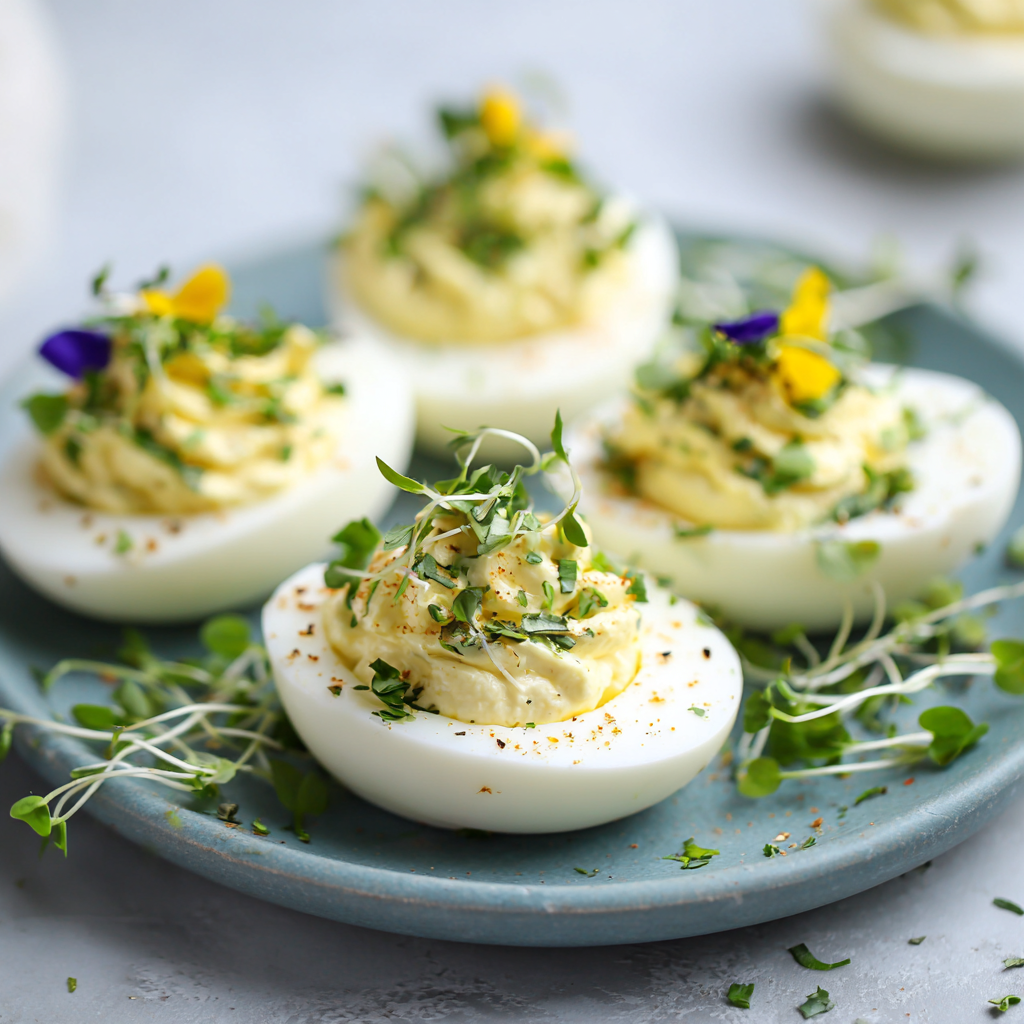
Lemon Herb Ricotta Deviled Eggs : Light, Fluffy & Perfect for Spring
Lemon Herb Ricotta Deviled Eggs – Light, Fluffy & Perfect for Spring
Hey there, friends! Beau here, welcoming you back to my kitchen at Feastical. Can you feel it? That little shift in the air, the extra hour of golden sunlight, the first brave blooms pushing through the soil? Spring isn’t just a season on the calendar; it’s a full-body sigh of relief and a burst of creative energy, especially in the kitchen. It’s the time we start craving food that feels as bright and renewed as the world outside our window. We want flavor that sings, colors that pop, and dishes that gather people around the table without keeping us tied to the stove all day.
And that, my friends, is exactly where our beloved deviled eggs saunter in. Now, don’t get me wrong—I will defend a classic, mayo-heavy, paprika-dusted deviled egg to my last breath at a summer potluck. They’re iconic for a reason! But for spring? I want something that feels a little more elegant, a little lighter on its feet, but still delivers that soul-satisfying, creamy-rich bite we all love.
So, I started tinkering. I wanted clouds. I wanted a filling so airy and light it practically floats onto the spoon. I wanted the zesty, sunny kiss of lemon and the fresh, green confetti of herbs in every bite. After a few happy (and a couple of hilarious) kitchen experiments, I landed on this magical combination: Lemon Herb Ricotta Deviled Eggs. By folding whole-milk ricotta into the filling, we create a texture that’s incredibly fluffy and subtly rich, while cutting through the heaviness. The lemon zest and juice wake everything up, and the herbs make it taste like you just gathered them from the garden.
These aren’t just deviled eggs; they’re little, edible promises of warmer days. They’re perfect for your Easter brunch spread, a baby or bridal shower, a Mother’s Day gathering, or just because you want a Tuesday afternoon snack that feels like a celebration. They come together in under 20 minutes, look gorgeous on any platter, and never fail to get those “what IS in these?” compliments. So, let’s grab our favorite bowl and whisk, and make something beautiful together!
The Picnic That Inspired a Lighter Bite
This recipe has a little bit of my Grandma Ethel in its DNA, though she’d probably raise an eyebrow at the ricotta. My most vivid childhood food memories orbit around her towering platters of deviled eggs for every family reunion. They were a production. She’d hum while she carefully popped the yolks through a sieve, claiming it was the only way to get them “silky smooth.” The filling was rich, decadent, and always, always dusted with a perfect red circle of paprika from her special tin.
A few springs ago, my wife and I planned an ambitious picnic—the kind with a real wicker basket and a checkered blanket. I wanted to bring a nod to Grandma Ethel’s tradition, but a full mayo-based version felt too heavy for the fresh asparagus and strawberry salad we’d packed. Staring into the fridge, I saw a container of ricotta I’d bought for lasagna. On a whim, I swapped half the mayo for a big spoonful of it. I grated some lemon zest over the bowl, thinking of the lemon trees in our backyard, and snipped some chives from the window box.
The result was a revelation. The filling was cloud-light, yet still satisfying. The lemon made it taste sunny, and the fresh chives were like a bite of spring itself. When we bit into them on that blanket, with the sun on our faces, it felt like I’d successfully updated a classic for a new season—both literally and figuratively. Now, every time I make these, I think of that perfect picnic and hope they bring a little bit of that easy, sunny joy to your table, too.
Gathering Your Sunshine Ingredients
Here’s the beautiful part: the ingredient list is short, sweet, and focused on quality. Each one plays a starring role, so let’s break it down. This isn’t just a list; it’s your flavor roadmap.
- 6 large eggs, hard-boiled and peeled: The foundation! I find older eggs (about 7-10 days old) peel more easily than super-fresh ones. For the absolute perfect hard-boiled egg with a creamy, not chalky, yolk and no green ring, check my chef’s hack in the instructions below.
- ¼ cup whole-milk ricotta cheese: Our secret weapon for fluffiness! The mild, slightly sweet creaminess of ricotta lightens the filling beautifully. For the best texture, let it drain in a fine-mesh sieve for 10 minutes if it seems watery. A good, full-fat ricotta makes all the difference here.
- 1½ tbsp mayonnaise: This binds everything together and adds that familiar, tangy richness. Chef’s Insight: For an even brighter, tangier twist, you can substitute an equal amount of full-fat plain Greek yogurt. It’s fantastic!
- Zest of ½ lemon + 1 tsp lemon juice: Sunshine in two forms! The zest gives powerful, aromatic lemon oil without the sour punch, while the juice adds the necessary bright acidity. Always zest your lemon before you juice it—it’s a game-changer.
- 1 tbsp chopped fresh herbs: The green confetti! I love a mix of parsley for freshness, dill for its grassy note, and chives for a mild onion flavor. Use what you love or have on hand. Pro Tip: In a pinch, 1 teaspoon of a high-quality dried dill can work, but fresh is truly magical here.
- Salt and pepper to taste: Don’t underestimate these. They are the conductors that make the whole flavor orchestra sing. Season thoughtfully!
- Optional garnishes: This is where you make them look like spring on a plate! I adore microgreens (pea shoots are perfect), tiny edible flowers like pansies, a sprinkle of paprika for that classic touch, or just a tiny leaf of fresh dill.
Step-by-Step: Crafting Your Fluffy Clouds
Ready to make some magic? Let’s walk through this together. I’ll share all my little kitchen hacks to ensure your deviled eggs are nothing short of spectacular.
- The Perfect Hard-Boiled Egg (My Foolproof Method): Place your eggs in a single layer in a saucepan and cover with cold water by about an inch. Bring the pot to a rolling boil over high heat. As soon as it hits a full boil, put the lid on and turn the heat OFF. Let the eggs sit in that hot, covered pot for exactly 12 minutes. Meanwhile, prepare an ice bath (a big bowl of water and ice). After 12 minutes, use a slotted spoon to immediately transfer the eggs to the ice bath. Let them chill for at least 15 minutes. This method gives you tender whites and a creamy, perfectly yellow yolk every single time. Peeling under a tiny stream of running water also helps!
- Prep the Egg Whites: Once your eggs are cool and dry, gently tap them on the counter and roll them to crack the shell all over. Peel carefully. Using a sharp knife, slice each egg in half lengthwise. Pop the yolks out into a medium mixing bowl. Place the pristine white halves on your serving plate or a tray. Chef’s Hack: If you want your whites to sit flat and not wobble, take a tiny slice off the bottom of each half. It creates a stable base!
- Create the Fluffy Filling: To the bowl with yolks, add your drained ricotta, mayonnaise (or yogurt), lemon zest, lemon juice, and chopped herbs. Now, here’s my favorite part: instead of just mashing, I like to use a fork to whip and fold everything together. You’re aiming for a smooth, homogeneous, and airy mixture. Get in there and really whip it for a minute—it makes the texture incredible. Season generously with salt and freshly cracked black pepper. Taste it! Does it need more lemon? More herb? Adjust to your heart’s content.
- Fill ‘Em Up: You can spoon the filling neatly into the wells of the egg whites, but for a truly professional (and gorgeous) look, piping is the way to go. Scoop your filling into a plastic zip-top bag, push it down to one corner, and snip about a ½-inch off that corner. Instant piping bag! Gently squeeze fluffy clouds of filling into each egg white half. Swirl the bag as you lift for a pretty little peak.
- The Final Flourish (Garnish & Chill): This is where your personality shines! Scatter over your microgreens, place a tiny herb leaf on each, or add a delicate edible flower. Once garnished, cover the platter loosely with plastic wrap and pop it in the fridge for at least 30 minutes before serving. This chilling time lets the flavors really get to know each other and firms up the filling perfectly.
Serving Your Spring Masterpiece
Presentation is half the fun with a dish like this! You’ve created little bites of art, so let’s show them off. I love using a simple, rustic wooden board or a pristine white platter—both make the colors of the eggs and garnishes really pop. Arrange them in a swirling circle or in neat rows. Tuck in a few extra sprigs of the herbs you used around the edges of the platter for a gorgeous, organic look.
These Lemon Herb Ricotta Deviled Eggs are the ultimate team players. They’re the star of any spring or summer appetizer spread. Pair them with a crisp, dry rosé or a sparkling lemonade. They’re perfect alongside a fresh green salad with a lemon vinaigrette, a platter of roasted asparagus, or as part of a grand brunch with smoked salmon and buttery croissants. Honestly, they’re so good, I’ve been known to make a batch just for myself as a high-protein, satisfying lunch with a side of sliced cucumbers. No judgment here!
Make It Your Own: Delicious Twists & Swaps
The beauty of this recipe is its incredible flexibility. Once you master the basic fluffy formula, the flavor world is your oyster! Here are a few of my favorite riffs:
- The “Everything Bagel” Twist: Omit the lemon and herbs. To the filling, add 1 tablespoon of Everything Bagel seasoning, plus an extra teaspoon of finely minced fresh chives. Garnish with more seasoning and a tiny piece of smoked salmon on top. Unreal.
- Mediterranean Sunshine: Add 1 tablespoon of finely crumbled feta cheese to the filling along with the ricotta. Swap the herbs for fresh oregano and mint. Garnish with a sliver of Kalamata olive and a tiny drizzle of extra virgin olive oil.
- Keto/Low-Carb Friendly: This recipe is already a great fit! Just ensure your mayonnaise is made with a keto-friendly oil (like avocado oil), and you’re golden. The ricotta adds fat and protein with minimal carbs.
- Herb Garden Explosion: Go wild with soft herbs! Try a combination of tarragon (just a little—it’s potent), chervil, basil, and parsley. Each bite will be a little different and wonderfully complex.
- Spicy Chipotle Lime: For a smoky, spicy kick, replace the lemon with lime zest and juice. Add ½ teaspoon of chipotle powder (or adobo sauce from a can) to the filling. Garnish with a thin slice of jalapeño.
Beau’s Kitchen Notes & Stories
This recipe has become such a staple in my home that it’s evolved in funny ways. The first time I served them to my brother, a devout classic-deviled-egg purist, he took one bite, paused, and said, “Okay, you’ve ruined me for the old kind.” High praise!
One of my favorite kitchen “hacks” is actually a mindset one: don’t stress about making them look absolutely perfect. A slightly rustic, hand-spooned filling has its own charming, homemade appeal. I’ve also learned that if your filling seems a bit too loose after mixing (ricotta brands vary), you can pop the whole bowl in the fridge for 15 minutes to firm up before piping. And the biggest lesson? Always make a couple extra eggs. There’s a universal kitchen law that at least two egg white halves will mysteriously disappear to the taste-tester (usually me) before they even hit the platter.
Your Questions, Answered (FAQs & Troubleshooting)
Q: Can I make these ahead of time?
A: Absolutely! They are a fantastic make-ahead appetizer. You can boil and peel the eggs up to 2 days in advance. Store the whites and yolk mixture separately in airtight containers in the fridge. Assemble and garnish no more than a few hours before serving for the freshest look and taste.
Q: My filling is a bit runny. What did I do wrong?
A: No worries! This usually happens if the ricotta was particularly wet or the yolks were still warm. First, chill the mixture for 20-30 minutes. If it’s still too soft, you can gently fold in a tiny sprinkle of finely grated Parmesan cheese—it will absorb moisture and add a nice salty depth.
Q: I don’t have fresh herbs. Can I use dried?
A: You can, but the flavor will be more muted and earthy than bright and fresh. If using dried, reduce the amount to 1 teaspoon total (dried herbs are more concentrated), and consider adding an extra tiny squeeze of lemon juice at the end to compensate for the lost freshness.
Q: How long do they last in the fridge?
A: Once assembled, they’re best enjoyed within 24 hours. The whites can start to get a little rubbery and the herbs can wilt after that. They’re so delicious, though, I doubt they’ll last that long!
Lemon Herb Ricotta Deviled Eggs : Light, Fluffy & Perfect for Spring
Description
These lemon herb ricotta deviled eggs are a fresh, elegant twist on the classic version. Ricotta makes the filling extra light and creamy, while lemon and herbs add a bright, garden-fresh flavor. They’re quick to prepare, beautiful on a platter, and perfect for spring brunches, showers, or warm-weather gatherings.
Ingredients
-
6 large eggs
-
¼ cup whole-milk ricotta cheese (well drained if watery)
-
1½ tablespoons mayonnaise (or Greek yogurt)
-
Zest of ½ lemon
-
1 teaspoon fresh lemon juice
-
1 tablespoon finely chopped fresh herbs (parsley, dill, chives, or mix)
-
Salt and black pepper, to taste
Optional Garnish
-
Extra herbs
-
Microgreens
-
Light sprinkle of paprika
-
Lemon zest strands
Instructions
-
Cook the eggs
Place eggs in a saucepan and cover with cold water by about 1 inch. Bring to a boil, then cover and turn off heat. Let sit 12 minutes. -
Cool and peel
Transfer to an ice bath for 10–15 minutes. Peel and pat dry. -
Slice and separate
Cut eggs in half lengthwise. Remove yolks to a bowl and arrange whites on a plate. -
Make the filling
Mash yolks finely with a fork. Add ricotta, mayonnaise, lemon zest, lemon juice, and herbs. Whip with a fork until smooth and fluffy. Season with salt and pepper to taste. -
Fill the eggs
Spoon or pipe filling into egg white halves. -
Garnish and chill
Add garnishes if using. Chill at least 30 minutes before serving for best texture and flavor.
Notes
-
Drain ricotta if needed — excess moisture makes the filling loose.
-
Zest before juicing the lemon — it’s much easier.
-
Use fresh herbs for the brightest flavor.
-
Pipe with a zip-top bag for a neat, bakery-style look.
-
If filling is soft, chill it 20 minutes before piping.
Nutritional Breakdown (Because We’re Curious!)
While we’re all about the joy of food here at Feastical, I know some folks like to have the facts. Here’s a general nutritional estimate for two deviled egg halves (because who eats just one?). Please note, these are estimates and can vary based on your specific ingredient brands and amounts used.
Per Serving (2 halves): Calories: ~100 | Protein: 6g | Total Fat: 8g | Saturated Fat: 2.5g | Carbohydrates: 1g | Fiber: 0g | Sugar: 0.5g | Sodium: 90mg
Final Thoughts
These Lemon Herb Ricotta Deviled Eggs are so much more than just an appetizer—they’re a little taste of spring, a lightened-up classic, and a guaranteed conversation starter at any gathering. By folding whole-milk ricotta into the filling, we’ve created something truly special: a texture that’s ethereally fluffy yet satisfyingly rich, brightened with sunny lemon and confettied with fresh herbs.
What I love most about this recipe is how it bridges tradition and freshness. It honors the beloved, comforting essence of deviled eggs while feeling perfectly suited for brighter days and lighter meals. They come together in minutes but taste like you fussed for hours—the kind of effortless elegance that makes hosting feel joyful, not stressful.
Whether you’re setting them out for Easter brunch, a spring picnic, or just a weeknight treat, these eggs carry with them a sense of celebration. They remind us that good food doesn’t have to be complicated to be memorable. It just needs to be made with a little attention, a few quality ingredients, and maybe a story or two stirred in.
So here’s to sunny days, shared tables, and recipes that feel like a breath of fresh air. I hope these become a bright spot in your spring and summer gatherings, just as they have in mine.
Happy cooking, friends — and may your kitchen always be filled with flavor and light.
Beau
Pesto Deviled Eggs : Fresh, Bright & Full of Flavor
Pesto Deviled Eggs – Fresh, Bright & Full of Flavor
Hey friends, Beau here from Feastical! Let’s talk about that magical moment at any gathering—you know the one. You’ve got a plate in hand, you’re scanning the appetizer table, and your eyes lock onto something familiar yet intriguing. That’s where these Pesto Deviled Eggs live. They’re the guest of honor that shows up wearing a fabulous green accessory, turning heads and prompting that wonderful, “Oh, what’s *this*?”
We all love a classic deviled egg. It’s a creamy, comforting bite of nostalgia. But today, we’re giving that beloved bite a sun-drenched, Italian-inspired makeover. We’re blending those rich, velvety yolks with vibrant, herbaceous basil pesto. The result? A flavor that’s like a garden party in your mouth—fresh, savory, and utterly irresistible. Topped with a juicy, sweet cherry tomato half, it’s the perfect one-bite balance. They’re deceptively simple to make, but they scream “you fussed,” in the very best way. Whether it’s a picnic, a holiday bash, or just a Tuesday night treat because you deserve it, these eggs are your new secret weapon. So, let’s roll up our sleeves, grab a bowl, and make something deliciously memorable together.
The Picnic That Started It All
This recipe has a little story, as the best ones often do. A few summers back, my friends threw a last-minute “bring-a-dish” picnic in the park. I was in a rush, staring into a fridge that held the usual suspects: eggs, a half-used jar of pesto from pasta night, and some cherry tomatoes threatening to go soft. The classic deviled egg recipe felt… expected. In a moment of “what the heck” inspiration, I swirled that glorious green pesto right into the yolk filling. The transformation was instant! That first taste was a revelation—the familiar comfort of the egg, now singing with the bright, garlicky notes of basil and Parmesan. They were the first empty plate on the blanket that day. Friends who usually passed on deviled eggs were coming back for seconds. It was a beautiful reminder that the most celebrated dishes often come from a little playful experimentation and using what you’ve got. Now, I can’t imagine a party without them. They’re my edible little memory of a perfect, sunny afternoon.
Gathering Your Flavor Allies
Here’s the beautiful part: the ingredient list is short and sweet. This is all about letting a few high-quality components shine. Let’s break it down.
- 6 large eggs: The foundation. Large eggs are the sweet spot for deviled eggs—great yolk-to-white ratio. Pro tip: Older eggs (about 7-10 days in your fridge) peel easier than super fresh ones! The membrane just lets go better.
- 2 tbsp mayonnaise: Our creamy binder. It adds richness and that signature smooth texture. For a tangier kick, swap in Greek yogurt or sour cream. If you’re a mayo purist, Duke’s or Hellmann’s are my go-tos.
- 1½ tbsp basil pesto: The STAR. This is where the magic happens. A good store-bought pesto works wonderfully in a pinch (look for one with olive oil and real Parm near the top of the ingredient list). But if you have 10 minutes, my homemade pesto will absolutely blow your mind. It’s fresher, brighter, and you control the garlic punch!
- Salt and black pepper, to taste: The essential enhancers. Don’t skip seasoning your filling! Taste as you go. The pesto and mayo have salt, so you might just need a pinch and a good crack of pepper.
For the Toppings:
- Cherry tomato halves: The perfect juicy, sweet counterpoint to the rich filling. They look like little ruby jewels on top. Pat them dry with a paper towel so they don’t slide off!
- Extra pesto drizzle & fresh basil (optional): These are your “chef’s kiss” garnishes. A tiny extra dot of pesto and a shred of fresh basil add a pop of color and an extra layer of flavor that says, “I care about the details.”
Let’s Build Some Bites: Your Foolproof Roadmap
Ready? This process is a breeze. I’ll walk you through each step with my favorite kitchen hacks to ensure deviled egg perfection.
- The Perfect Boil & Peel:Place your eggs in a single layer in a saucepan. Cover them with cold water by about an inch. Bring the pot to a full, rolling boil over high heat. Now, here’s my favorite hack: as soon as it boils, turn off the heat, cover the pot, and set your timer for 11 minutes. This “steam-boil” method is gentler and leads to more consistent, tender whites without that grey ring around the yolk. While they cook, prepare an ice bath (a big bowl of ice water). When the timer goes off, immediately transfer the hot eggs to the ice bath with a slotted spoon. Let them chill for at least 5 minutes. This stops the cooking and contracts the egg inside the shell, making peeling a dream. To peel, gently tap the egg all over on the counter, then roll it under your palm to crackle the shell. Start peeling from the wider end (where there’s an air pocket)—it usually comes off in satisfying sheets.
- Creating the Filling Masterpiece:Slice your perfectly peeled eggs in half lengthwise. Gently pop the yolks out into a medium bowl. Arrange your egg white halves on a serving plate—see? You’re already halfway there! Now, to the yolks: mash them finely with a fork. You want a uniform, crumbly base. Add the mayo, pesto, a pinch of salt, and a few cranks of black pepper. Now, get in there with the fork and stir, stir, stir until it’s incredibly smooth and creamy. No lumps allowed! This is your moment to taste. Need more pesto? Add a teaspoon. Need more zip? A tiny squeeze of lemon juice is divine. Make it yours.
- The Art of Assembly:You can simply spoon the filling back into the wells of the egg whites, and it will be delicious. But for that pro-level look, let’s pipe it. Spoon your filling into a zip-top bag, push it down to one corner, and snip about a ½-inch off that corner. Instant piping bag! Now, pipe a generous, elegant swirl into each egg white. It feels fancy and ensures every bite has the perfect filling-to-white ratio. So satisfying.
- The Grand Finale (Garnish!):Take your halved, patted-dry cherry tomatoes and gently press one onto the peak of each piped filling. If you’re feeling extra (and you should!), use a toothpick to add a tiny drizzle of pesto over the tomatoes or a small leaf or chiffonade of fresh basil. Step back and admire your work. You just made edible art!
Setting the Stage: How to Serve Them
Presentation is part of the joy! Don’t just plop these beauties on a plate. A dedicated deviled egg tray with little divots is a great investment and keeps them from sliding around. No tray? No problem. Line a flat platter or even a rustic wooden board with a bed of greens—arugula, kale, or fresh parsley work beautifully. It adds color and makes the green in the eggs pop even more. Scatter a few extra whole cherry tomatoes and basil sprigs around the platter for that abundant, “just picked from the garden” feel. For a crowd, I like to label them with a little cute sign that says “Pesto Deviled Eggs”—it sparks conversation and lets folks with allergies know what’s inside. Serve them chilled, straight from the fridge for the best texture and flavor.
Make It Your Own: Creative Twists
The basic formula is a canvas for your creativity. Here are a few of my favorite spins:
- The “Everything but the Kitchen Sink”: Add 2 tablespoons of finely crumbled crispy bacon or pancetta to the filling. Top with the tomato and a tiny sprinkle of the bacon bits. Smoky, salty, incredible.
- Sun-Dried Tomato Pesto Swap: Use a sun-dried tomato pesto instead of basil pesto. The filling turns a gorgeous rosy color and has a deeper, sweeter tomato flavor. Top with a small piece of the sun-dried tomato itself.
- Lighter & Brighter: Swap the mayonnaise for an equal amount of plain, full-fat Greek yogurt. You’ll get a fantastic tang and a protein boost. The texture remains beautifully creamy.
- Vegan Marvel: Use your favorite plant-based mayo. For the “egg,” try firm tofu blocks, sliced and shaped with a spoon or melon baller to create a well for the filling. The pesto filling is already dairy-free if you use vegan pesto (or omit the cheese in homemade).
- Herb Garden Explosion: Fold 1 tablespoon of finely chopped fresh chives or dill into the filling along with the pesto. It adds another layer of fresh herb flavor that’s absolutely divine.
Beau’s Kitchen Notes & Stories
This recipe has evolved in my kitchen over the years. The biggest game-changer was the switch to the “boil-then-steam” method for the eggs. I used to be the person chasing eggshell fragments around a bowl of water, frustrated. This method gave me my sanity back! Another funny lesson: one time, I got overzealous with the pesto and added a quarter cup. The flavor was amazing, but the filling was a… vibrant, almost neon green. My nephew called them “Hulk Eggs,” and they were a hit with the kids! So don’t be afraid of color. These eggs are also fantastic for making ahead. You can boil and peel the eggs up to two days in advance. Make the filling, store it in a sealed bag in the fridge, and pipe it the day of your event. The flavors actually meld and get better! It’s a host’s best friend.
Your Questions, Answered
Q: Help! My eggs are impossible to peel cleanly. What am I doing wrong?
A: This is the #1 deviled egg dilemma! First, try using slightly older eggs (see ingredient tip). Second, the ice bath is non-negotiable—it shocks the eggs. Third, peel them under a slow trickle of cold running water; the water helps get under the membrane. And always start at the wider end!
Q: Can I make these ahead of time?
A: Absolutely, and I highly recommend it! Store peeled, halved egg whites and the filling separately in airtight containers in the fridge for up to 24 hours. Assemble no more than 2-3 hours before serving to prevent the whites from getting soggy.
Q: My filling is a bit runny. How can I thicken it?
A> No sweat! Chill the filling in the fridge for 20-30 minutes before piping. If it’s still loose, you can mash in an extra hard-boiled egg yolk or a tablespoon of finely grated Parmesan cheese to help absorb moisture and thicken it up.
Q: I don’t have a piping bag. What’s the best alternative?
A> A zip-top bag with the corner snipped is my go-to hack (see instructions!). For a more rustic look, use a small cookie scoop or two small spoons to mound the filling neatly into the whites.
Pesto Deviled Eggs : Fresh, Bright & Full of Flavor
Description
If you love classic deviled eggs but want something a little more exciting, pesto deviled eggs are the perfect upgrade. Creamy yolks blended with basil pesto create a fresh, savory filling with a beautiful green color and bold flavor. They’re easy to make, great for parties, and always get people asking for the recipe.
Ingredients
-
6 large eggs
-
2 tablespoons mayonnaise
-
1½ tablespoons basil pesto
-
Salt and black pepper, to taste
Toppings (optional but recommended):
-
6 cherry tomatoes, halved
-
Extra pesto for drizzle
-
Fresh basil or chives
Instructions
-
Cook the eggs
Place eggs in a saucepan and cover with cold water. Bring to a boil, then turn off heat, cover, and let sit for 11 minutes. -
Cool and peel
Transfer eggs to an ice bath for 5–10 minutes. Peel once cooled. -
Slice and separate
Cut eggs in half lengthwise. Remove yolks to a bowl and place whites on a serving plate. -
Make the filling
Mash yolks with a fork until fine. Add mayonnaise, pesto, salt, and pepper. Mix until smooth and creamy. Taste and adjust seasoning. -
Fill the eggs
Spoon or pipe the filling into the egg white halves. -
Garnish
Top each with a cherry tomato half and a small drizzle of pesto or fresh herbs if desired. -
Chill and serve
Refrigerate until ready to serve.
Notes
-
Slightly older eggs peel easier than very fresh ones.
-
Ice bath is key for clean peeling.
-
Pipe the filling using a zip-top bag with the corner cut for a neat look.
-
Chill before serving for best texture and flavor.
-
Pat tomatoes dry so they don’t slide off.
Nutritional Snapshot (Per Egg Half)
Let’s keep it real: deviled eggs are an indulgence, but they’re also packed with good stuff! Each half provides a satisfying bite with a balance of protein and healthy fats to keep you energized. The eggs themselves are a fantastic source of choline (great for brain health) and high-quality protein. The olive oil in the pesto contributes heart-healthy monounsaturated fats. As always, this is an estimate, but it’s good to know what you’re enjoying!
- Calories: 80
- Protein: 3g
- Carbohydrates: 1g
- Fat: 7g
- Fiber: 0g
- Sugars: <1g
Final Thoughts
And there you have it, my friends—everything you need to transform the humble deviled egg into a vibrant, flavor-packed showstopper. This recipe is more than just a list of steps; it’s an invitation to play, to share, and to create those little moments of joy around the table. I promise you, the next time you bring out a platter of these Pesto Deviled Eggs, you’ll watch them disappear amidst smiles and “mmmm’s.” That’s the Feastical spirit—food that feels like a warm hug, a spark of excitement, and a reason to gather. I’d love to see your creations! Tag me @feastical on social media so I can celebrate with you. Now, go forth and deviled egg like the rockstar you are. Happy cooking!
– Beau