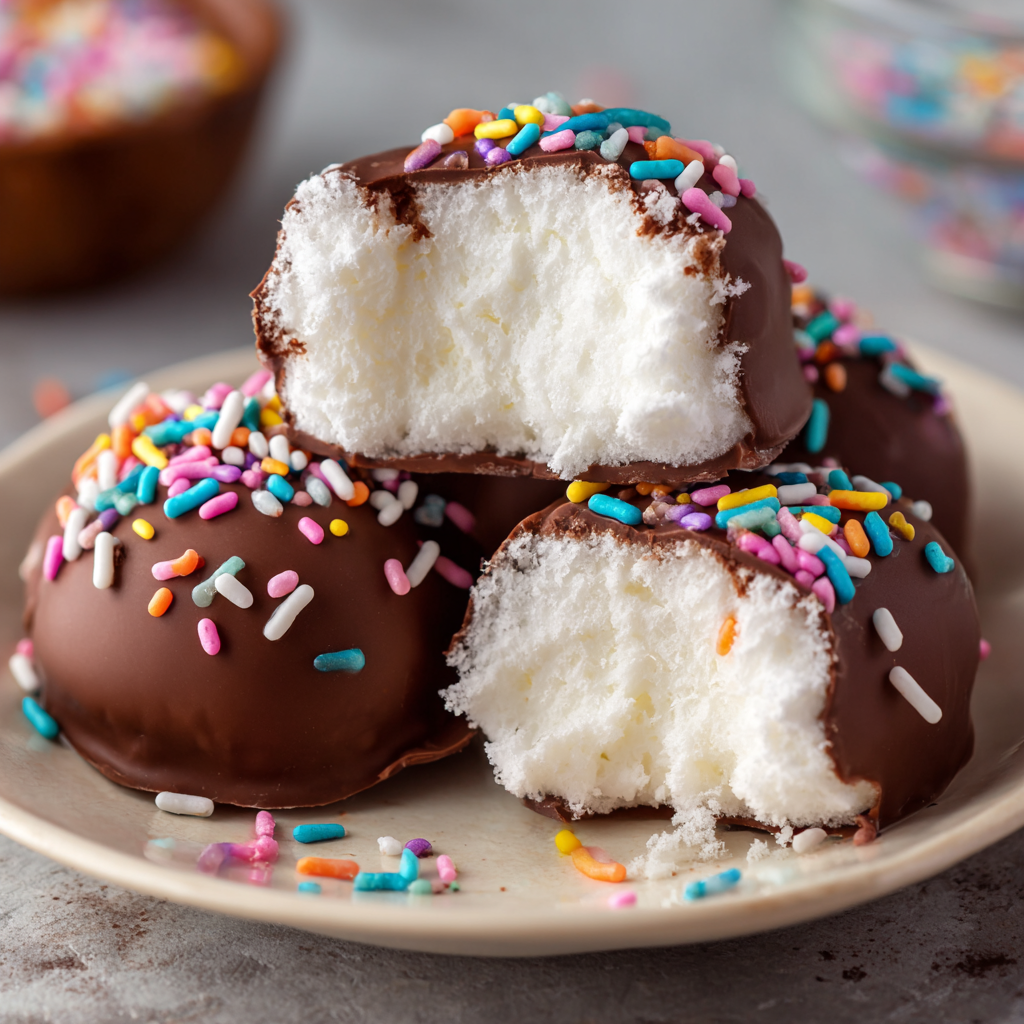
Homemade Marshmallow Easter Eggs : Soft, Fluffy & Chocolate Covered Treats
Homemade Marshmallow Easter Eggs: Your New Sweet Spring Tradition
Hey friends, Beau here from Feastical! Is there anything that says “spring is here” quite like a pastel-wrapped basket filled with goodies? For me, the crown jewel has always been those fluffy, melt-in-your-mouth marshmallow eggs, enrobed in a thin, crisp shell of chocolate. That first bite—the gentle crack of the chocolate giving way to a cloud of sweet, vanilla-kissed fluff—is a little bite of pure, unadulterated joy.
But here’s my chef’s secret: the store-bought versions can’t hold a candle to what you can make in your own kitchen. When you make marshmallow eggs at home, you control the fluffiness (maximum cloud-like texture, please), the chocolate quality (the good stuff!), and the love that goes into each one. These aren’t just candies; they’re edible memories waiting to be made. And the best part? They’re surprisingly simple. No fancy equipment needed, just a stand mixer or a good arm, a saucepan, and a willingness to get a little powdered sugar on your nose. So, tie on your favorite apron, cue up some happy tunes, and let’s turn your kitchen into the sweetest Easter candy workshop. I promise, the result is more than worth it.
The Marshmallow Egg That Started It All
My love for these treats goes way back. Every Easter, my grandma would have a special, slightly lopsided marshmallow egg waiting just for me, tucked beside the dyed eggs in my basket. She’d always say, “This one has extra fluff, just for my Beau.” I believed her completely. One year, I was finally deemed “old enough” to help. I remember standing on a step-stool, watching in awe as she poured a shimmering, hot syrup into her big, chrome mixer. The transformation from clear liquid to a towering, glossy, white mountain of marshmallow was nothing short of kitchen magic. My job was the all-important “vanilla pour” and, of course, the first taste test of the bowl scrapings. That sweet, sticky memory of connection, of learning that food magic is something you can make, is the heart of this recipe. Every time I shape these eggs, I’m back in her sunny kitchen, and I hope this recipe creates that same spark of magic and togetherness for you and your crew.
Gathering Your Sweet Supplies
Here’s everything you’ll need to create your own marshmallow masterpiece. Don’t let the gelatin scare you—it’s just the wizard behind the fluffy curtain!
For the Marshmallow Filling:
- 3 envelopes unflavored gelatin: This is our structure-giver! It’s what transforms the liquid syrup into that iconic, bouncy texture. Make sure it’s unflavored and fresh for the best set.
- 1 cup cold water, divided: We use half to “bloom” the gelatin (making it soft and spongy) and the other half in the syrup. Cold water for the bloom is key!
- 2 cups granulated sugar: The sweet soul of the operation. It caramelizes slightly when cooked, giving marshmallow its depth of flavor beyond just sweetness.
- 1 cup light corn syrup: Chef’s insight: This is the guardian against crystallization. It keeps the sugar syrup smooth and the final marshmallow tender, not gritty. For a swap, you can use agave nectar or honey, but note that honey will impart its own distinct flavor.
- ¼ teaspoon salt: A tiny bit to balance all that sweetness and make the vanilla flavor pop. Trust me on this.
- 1 teaspoon pure vanilla extract: The aromatic finish. For a fun twist, try almond or clear vanilla extract for that classic “marshmallow” scent.
For Coating & Finishing:
- 12–16 oz milk, dark, or semi-sweet chocolate, chopped or in chips: Use the best quality you love to eat! Chocolate chips work in a pinch, but bar chocolate (like Ghirardelli or Baker’s) melts and coats more smoothly. This is your chance to be the chocolatier.
- Cornstarch or powdered sugar, for dusting: Our non-stick superhero for shaping. I prefer cornstarch as it absorbs moisture better without adding extra sweetness to the outside.
- Optional decorations: Pastel sprinkles, toasted shredded coconut, or a contrasting drizzle of white chocolate. Let your inner artist play!
Crafting Your Fluffy Clouds: Step-by-Step
Ready to work some sugar magic? Follow these steps, and you’ll be a marshmallow master in no time.
- Bloom the Gelatin: In the bowl of your stand mixer (fitted with the whisk attachment), sprinkle the gelatin over ½ cup of cold water. Don’t stir it! Just let it sit and absorb for 10 minutes. It will look like a wrinkly, solid sponge—that’s perfect. This step ensures it dissolves evenly later.
- Cook the Syrup: Meanwhile, in a medium saucepan, combine the sugar, corn syrup, salt, and the remaining ½ cup of water. Stir just until the sugar looks wet. Chef’s hack: Brush down the sides of the pan with a wet pastry brush to prevent sugar crystals from forming. Now, bring it to a boil over medium-high heat without stirring. Attach a candy thermometer and let it cook until it reaches precisely 240°F (the soft-ball stage). This temperature is crucial for the right texture!
- The Magic Merge: With the mixer on low speed, carefully and slowly pour the blazing hot sugar syrup directly into the bloomed gelatin. Go slow to avoid splatters. Once it’s all in, crank the speed to high and whip for a full 10-12 minutes. Watch the transformation! It will go from watery, to opaque, to a thick, glossy, white wonder that forms stiff peaks. It should about triple in volume.
- Flavor & Prep: In the last minute of whipping, add the vanilla. While it whips, generously dust a baking sheet with cornstarch. This is your shaping station.
- Shape the Eggs: Dust your hands liberally with cornstarch. The marshmallow will be sticky! Scoop out a heaping tablespoon of fluff and gently form it into an egg shape between your palms. Place it on the dusted sheet. Repeat with remaining marshmallow, re-dusting your hands often. Don’t stress about perfection—homemade charm is the goal! Let them sit, uncovered, for 1-2 hours to form a slight “skin.”
- The Chocolate Dip: Melt your chocolate in a deep, narrow bowl (a liquid measuring cup works great) in 30-second bursts in the microwave, stirring well between bursts. Let it cool slightly so it’s not piping hot. One by one, drop a marshmallow egg into the chocolate. Use a fork to flip it, ensure it’s coated, then lift it out, letting excess chocolate drip back into the cup. Transfer to a parchment-lined sheet. Immediately add sprinkles if using. Let the chocolate set completely at room temperature (about 1 hour).
Sharing the Sweetness: How to Serve
These little gems deserve a special presentation! Nestle them in pastel paper cupcake liners for a classic candy shop look. They’re the star of any Easter basket—just tuck them in among the plastic grass. For a gorgeous dessert table, arrange them on a cake stand or a platter lined with edible Easter straw. I love pairing them with a strong cup of coffee after brunch or serving them as the grand finale to a spring dinner party. They also make the most heartfelt, handcrafted gift. Place a few in a cute cellophane bag tied with ribbon, and you’ve just made someone’s day sweeter.
Make It Your Own: Fun Flavor Twists
Once you’ve mastered the classic, the playground is open! Here are a few of my favorite riffs:
- Peanut Butter Paradise: Add ½ cup of smooth peanut butter to the mixer along with the vanilla. For the ultimate combo, coat in milk chocolate and roll in crushed peanuts.
- Fruity Fluff: Swap the vanilla for 1 teaspoon of strawberry, raspberry, or orange extract. Add a drop or two of gel food coloring for a pastel pink or orange center!
- Coconut Cream Dream: Fold ½ cup of finely shredded toasted coconut into the finished marshmallow before shaping. Coat in dark chocolate and roll in more coconut.
- Cookies & Cream: After whipping, gently fold in ¾ cup of crushed Oreo cookie pieces (creme and all). The speckled look is so fun!
- Dairy-Free/Vegan Option: Use agar-agar (follow package instructions for substitution amounts) instead of gelatin, and ensure your chocolate and corn syrup are vegan-friendly.
Beau’s Kitchen Notes & Stories
This recipe has been my springtime labor of love for years, and it’s evolved with every batch. My first attempt? Let’s just say the eggs looked more like abstract marshmallow blobs, and my chocolate was a grainy mess. I learned that patience with the syrup temperature and gently melting the chocolate are non-negotiable. I also learned that inviting friends over for a “Marshmallow Egg Decorating Party” is the best way to do it. Kids (and adults!) love shaping and decorating their own. The kitchen gets messy, there’s laughter, and the results are always hilariously beautiful. Don’t be afraid to make a mess—that’s where the best memories (and the best tasting notes for your blog) come from!
Your Questions, Answered
Q: My marshmallow is SO sticky! How do I handle it?
A: Dust, dust, and dust again! Cornstarch or powdered sugar is your best friend. Don’t be shy with it on your hands, the work surface, and the eggs themselves. A little cornstarch on the finished egg gets sealed in by the chocolate.
Q: Can I make these ahead of time?
A: Absolutely! Once fully set, store them in a single layer in an airtight container at room temperature for up to 1 week. They’re actually even better the next day as the flavors meld.
Q: Why did my chocolate get streaky or thick?
A: This usually means the chocolate got too hot and “seized.” The fix? Gently stir in a tiny amount of neutral oil (like coconut or vegetable) a teaspoon at a time until it smooths back out. For perfect dipping, consider tempering your chocolate or using high-quality “dipping” chocolate or candy melts.
Q: I don’t have a candy thermometer. Can I still make these?
A: For consistent results, a thermometer is highly recommended. However, in a pinch, you can use the “soft-ball stage” test: drop a bit of syrup into a cup of cold water. If you can roll it into a soft, pliable ball with your fingers, it’s ready.
Homemade Marshmallow Easter Eggs : Soft, Fluffy & Chocolate Covered Treats
Description
These homemade marshmallow Easter eggs are soft, fluffy, and coated in a smooth chocolate shell. They have that signature crack-and-cloud bite everyone loves — but fresher, softer, and more flavorful than store-bought. While marshmallow sounds fancy, the process is straightforward and totally doable with a mixer and a saucepan. Perfect for Easter baskets, dessert tables, or gifting.
Ingredients
Marshmallow Filling
-
3 envelopes unflavored gelatin
-
1 cup cold water, divided
-
2 cups granulated sugar
-
1 cup light corn syrup
-
1/4 teaspoon salt
-
1 teaspoon vanilla extract
Chocolate Coating
-
12–16 oz milk, semi-sweet, or dark chocolate (chips or chopped bars)
-
Cornstarch or powdered sugar, for dusting
Optional Decorations
-
Sprinkles
-
Toasted coconut
-
White chocolate drizzle
Instructions
-
Bloom the Gelatin
Add 1/2 cup cold water to the bowl of a stand mixer. Sprinkle gelatin over the top. Let sit 10 minutes until spongy. Do not stir. -
Make the Sugar Syrup
In a saucepan combine sugar, corn syrup, salt, and remaining 1/2 cup water.
Heat over medium-high until boiling. Cook without stirring until it reaches 240°F / 115°C (soft-ball stage). -
Whip the Marshmallow
Turn mixer to low. Carefully pour the hot syrup into the gelatin.
Increase to high speed and whip 10–12 minutes until thick, glossy, and tripled in volume.
Add vanilla during the last minute. -
Prepare Shaping Surface
Generously dust a baking sheet with cornstarch or powdered sugar. -
Shape the Eggs
Dust hands well. Scoop about a heaping tablespoon of marshmallow and gently form an egg shape.
Place on the sheet. Repeat, re-dusting hands often.
Let sit uncovered 1–2 hours to form a light outer skin. -
Melt the Chocolate
Melt chocolate gently in the microwave in 30-second bursts, stirring between each, until smooth. Let cool slightly. -
Dip
Drop each marshmallow egg into chocolate, turn to coat, lift with a fork, and let excess drip off.
Place on parchment paper and decorate immediately if desired. -
Set
Let chocolate firm at room temperature about 1 hour or refrigerate 20 minutes.
Notes
-
A candy thermometer gives the most reliable texture
-
Dust your hands often — marshmallow is naturally sticky
-
Let chocolate cool slightly before dipping to avoid melting the marshmallow
-
Use good chocolate — it makes a big difference in flavor and finish
-
If chocolate thickens, stir in 1 teaspoon neutral oil to loosen it
A Note on Nutrition & Details
Prep Time: 30 minutes | Setting Time: 1-2 hours | Total Time: ~2 hours | Yield: About 18-24 eggs, depending on size
Nutritional Information (Per egg, approximate): Calories: 140 | Carbohydrates: 26g | Sugar: 22g | Fat: 4g | Saturated Fat: 2g | Protein: 1g | Sodium: 30mg
Remember, these are a special occasion treat, meant to be savored and shared. The joy they bring is the best ingredient of all!
Final Sweet Thoughts
And there you have it, friends—your ticket to creating the most unforgettable, fluffy, chocolatey homemade Easter treat. This recipe is more than a list of steps; it’s an invitation to slow down, get your hands a little sugary, and create something truly special. Whether you’re carrying on a family tradition or starting a brand new one, these marshmallow eggs are a delicious way to mark the season. I’d love to see your creations! Tag me @feastical or use #FeasticalEaster so I can share in your sweet success. From my kitchen to yours, Happy Easter and happy cooking!
Stay cozy,
Beau
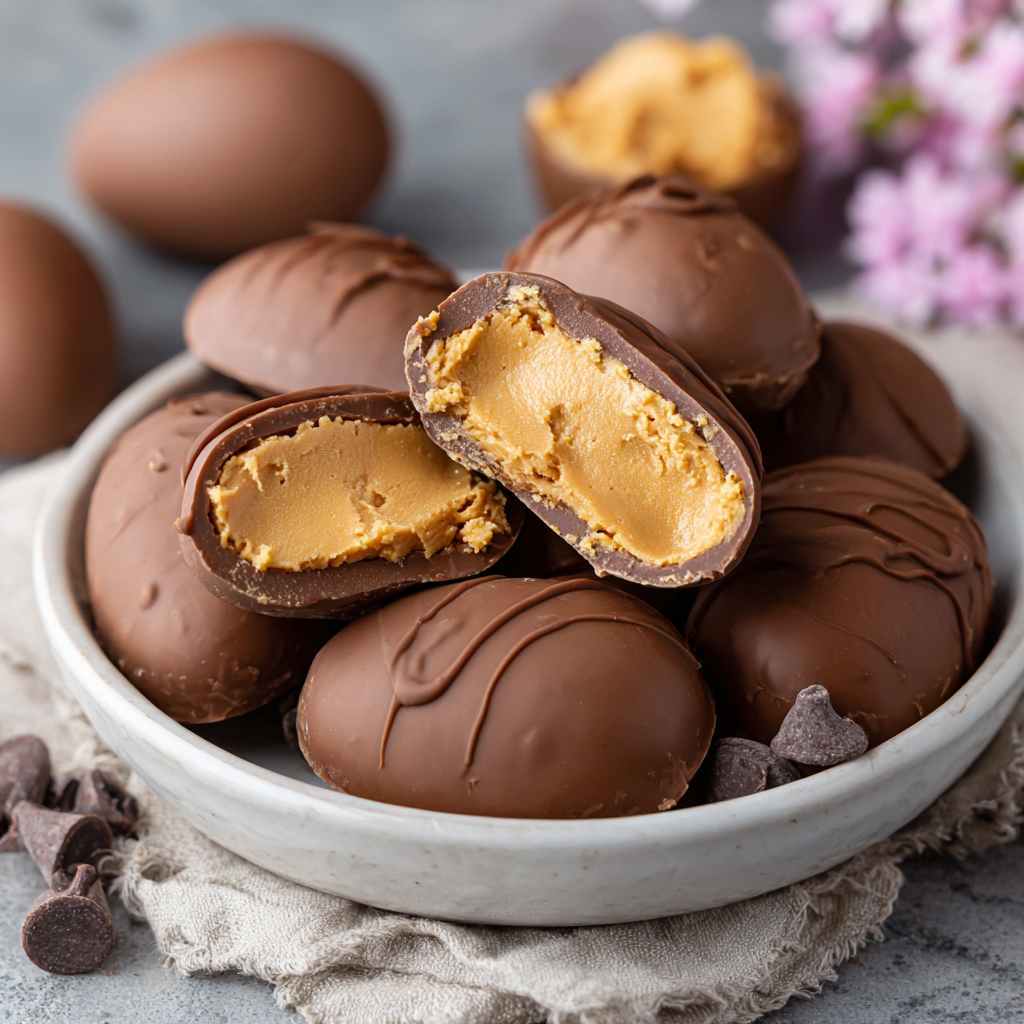
Homemade Reese’s Peanut Butter Eggs (Easy 6-Ingredient Recipe)
Homemade Reese’s Peanut Butter Eggs: Your New Easter Tradition (Easy 6-Ingredient Recipe!)
Hey friends, Beau here! Can we talk about the undisputed champion of the Easter candy bowl for a second? I’m not talking about those chalky marshmallow chicks (no offense, Peeps). I’m talking about that glorious, perfect marriage of sweet and salty, creamy and crunchy: the Reese’s Peanut Butter Egg. There’s just something about that egg shape that makes the peanut butter-to-chocolate ratio feel… sacred. Magical, even.
But what if I told you that you can create that magic right on your own kitchen counter? That with just six simple ingredients and zero oven time, you can whip up a batch of homemade Reese’s Eggs that might just outshine the classic? I’m here to tell you it’s not only possible, it’s an absolute joy. This isn’t about replicating a factory-made candy bar perfectly—it’s about capturing that soul-satisfying flavor with a touch of homemade love. The kind of treat that makes you close your eyes and hum after the first bite. So, grab your favorite mixing bowl and your trusty spatula. We’re about to make some memories, and more importantly, some incredibly delicious candy. Let’s get to it!
The Peanut Butter-Stained Apron: An Easter Memory
My love for these things goes way back. Picture a sunny spring kitchen, the smell of ham in the oven, and my grandma’s counter perpetually dusted with a fine layer of powdered sugar. One year, she decided our store-bought Easter candy needed a homemade companion. She pulled out her big stoneware bowl, a jar of Jif, and a bag of chocolate chips. I was appointed “Official Egg Shaper,” a title I wore with immense, flour-dusted pride.
We didn’t have fancy molds. It was just us, a lump of sweet peanut butter dough, and our hands. Mine were small and clumsy, making lopsided ovals that looked more like potatoes than eggs. Grandma’s, however, were swift and sure, turning out perfect, smooth eggs every time. She’d smile, her eyes crinkling, and say, “Taste is what matters, Beau. The shape is just the fun of it.” And oh, the taste. That first bite of a still-slightly-warm egg, the chocolate shell giving way to the rich, creamy center… it wasn’t just candy. It was connection. It was the thrill of making something wonderful from simple things. Every time I make this recipe now, I’m back at that counter, and that’s the feeling I hope this recipe brings to your kitchen.
Your Candy-Making Toolkit: The 6 Simple Ingredients
Here’s the beautiful part: you probably have most of this in your pantry already. This is minimalist magic at its finest. Let’s break down each player and why it’s here.
- 1 ½ cups creamy peanut butter: This is the STAR. Use a standard, no-stir creamy peanut butter like Jif or Skippy. The oils and consistency are predictable, which gives us that perfect, moldable filling. Natural peanut butter (the kind that separates) can make the filling too oily and soft. Chef’s insight: This is your one chance to be a brand loyalist—use your favorite!
- ¼ cup unsalted butter, melted: Our binding agent and flavor booster. Melt it and let it cool just slightly so it doesn’t melt the peanut butter. Unsalted lets us control the sweetness. Substitution tip: For a dairy-free version, a solid, unrefined coconut oil works beautifully and adds a subtle hint of coconut flavor.
- 1 tsp pure vanilla extract: The secret whisper in the background. It deepens all the other flavors and rounds out the sweetness. Don’t skip it! Chef’s insight: If you’re feeling fancy, a tiny splash (⅛ tsp) of almond extract is a game-changer.
- 2 cups powdered sugar (confectioners’ sugar): This is what transforms our gooey mixture into a shape-holding dough. It adds sweetness and structure. Pro tip: Sift it if it’s lumpy for a super smooth filling.
- 2 cups milk chocolate chips: The iconic shell. Chocolate chips are formulated to hold their shape, making them perfect for dipping. For a darker, richer shell, use semi-sweet chips.
- 1 tbsp coconut oil or shortening: Our chocolate’s best friend! Adding a bit of fat thins the melted chocolate just enough for a smooth, glossy, crack-free coating that sets beautifully. Coconut oil will harden faster and give a slight sheen.
Let’s Make Some Magic: Step-by-Step Instructions
Ready? This is where the fun happens. Clear some counter space, put on some good tunes, and let’s craft some candy.
- Create the Peanut Butter Dough: In a medium-sized bowl, combine the creamy peanut butter, slightly cooled melted butter, and vanilla extract. Stir with a sturdy spoon or spatula until it’s completely smooth and homogenous. It’ll look like a velvety peanut butter dream.
- Incorporate the Powdered Sugar: Here’s the trick: add the powdered sugar one cup at a time. Stir vigorously after the first cup. It will get thick and crumbly—that’s normal! Add the second cup and keep mixing. At first, it’ll seem impossible, but keep faith. It will eventually come together into a soft, pliable dough that looks like Play-Doh and smells like heaven. Chef Hack: If the dough feels too sticky to handle, add an extra tablespoon or two of powdered sugar. If it’s too dry and crumbly, add a tiny drizzle of melted butter or a teaspoon of peanut butter.
- Shape Your Eggs: Line a baking sheet or tray with parchment paper. Pinch off portions of dough (about 1½ – 2 tablespoons each) and roll them into a ball in your hands. Then, gently shape them into ovals, flattening them slightly to look like classic peanut butter eggs. Place them on the parchment-lined tray. Don’t stress about perfection! Part of the charm is their homemade shape. Pro Tip: If your hands are warm, a light dusting of powdered sugar on your palms can prevent sticking.
- The Key to Success: The Freeze! Pop the entire tray into the freezer for 20-30 minutes. This step is NON-NEGOTIABLE. Freezing firms up the peanut butter centers, which makes dipping them in warm chocolate a clean, easy process. It prevents the filling from melting or falling apart.
- Prep the Chocolate Coating: While the eggs chill, melt your chocolate. Use a double boiler (a heatproof bowl set over a pot of simmering water, ensuring the bowl doesn’t touch the water) or melt carefully in the microwave in 30-second bursts, stirring well between each burst. Once the chocolate is mostly melted, stir in the tablespoon of coconut oil or shortening until the mixture is completely smooth and fluid.
- The Dip: Remove your peanut butter eggs from the freezer. Using a fork or a dipping tool, gently lower an egg into the melted chocolate. Spoon chocolate over the top to ensure it’s fully coated. Lift it out, let the excess chocolate drip off for a second, then gently scrape the bottom of the fork on the edge of the bowl. Place it back on the parchment paper. Repeat with all eggs. Chef Hack: For that classic Reese’s crosshatch pattern, drag the tines of your fork across the top of the chocolate-coated egg before it sets!
- Set and Serve: Let the chocolate set at room temperature, or for faster results, pop the tray back in the fridge for 15-20 minutes. The chocolate will become firm and glossy. That’s it! You did it!
How to Serve Your Homemade Masterpiece
Presentation is part of the fun! Once set, these eggs are ready for their debut. You can arrange them on a festive platter lined with pastel paper or Easter grass for a classic candy bowl moment. For a more personal touch, place each one in a small candy cup (the frilly paper liners) and pack them into little gift boxes or clear cellophane bags tied with a ribbon. They make the most thoughtful, delicious homemade gift for neighbors, teachers, or friends. They’re rich, so I recommend serving them alongside some fresh fruit or berries to cut the sweetness. And a cold glass of milk? An absolute mandatory pairing, in my humble opinion.
Get Creative: Recipe Variations & Twists
Once you’ve mastered the classic, the playground is open! Here are a few of my favorite ways to mix it up:
- The Dark Side: Use dark chocolate chips for the coating. The deeper, less sweet chocolate creates an incredible contrast with the sweet filling.
- Crunch Time: Mix ½ cup of crushed pretzel pieces or rice krispies into the peanut butter dough before shaping. You get an amazing salty crunch in every bite.
- Nutty Swap: For a different flavor profile, use almond butter or cashew butter instead of peanut butter. It’s a delicious and elegant twist.
- “Healthier” Hack: Use natural peanut butter (just be prepared for a slightly softer texture), swap the butter for coconut oil, and use a reduced-sugar powdered sugar alternative. The shape might be a little less perfect, but the flavor will still be fantastic.
- Year-Round Fun: Who says these are just for Easter? Shape them into hearts for Valentine’s Day, circles for Christmas ornaments, or even just simple balls for a classic peanut butter cup experience any day of the year.
Beau’s Chef Notes & Kitchen Confessions
This recipe has been my Easter staple for over a decade, and it’s evolved from those lopsided eggs with my grandma. I’ve learned that a splash of flaky sea salt on top of the wet chocolate is a revelation. I’ve also learned the hard way that skipping the freezer step leads to a delicious but disastrous chocolate-peanut butter puddle—so learn from my mistakes! One year, I was out of vanilla and used a bit of bourbon instead. Let’s just say that “adults-only” batch was a hit at the family gathering. The beauty of a recipe like this is that it’s a foundation. Make it yours. Add a little love, a little laughter, and maybe a few finger-swipes of peanut butter dough along the way. That’s the real secret ingredient.
FAQs & Troubleshooting: Your Questions, Answered
Q: My peanut butter filling is too soft/sticky to shape. What did I do wrong?
A: Don’t panic! This is usually a measuring issue or due to the type of peanut butter. First, make sure you packed the peanut butter into the measuring cup. Add more powdered sugar, a few tablespoons at a time, until it’s moldable. If you used natural peanut butter, it will be softer; popping the mixed dough in the fridge for 20 minutes before shaping can help firm it up.
Q: My chocolate cracked when it set! Why?
A: This is likely a temperature shock. Your peanut butter centers were too cold when dipped, and the warm chocolate contracted too much as it cooled. Next time, let the frozen eggs sit out for 2-3 minutes before dipping to take the deep chill off. Also, adding that coconut oil/shortening to the chocolate helps make it more flexible.
Q: Can I use almond bark or candy melts instead of chocolate chips?
A> Absolutely! Candy melts and almond bark are designed for coating and set up very easily. Follow the package directions for melting. You won’t need to add the coconut oil, as they are already formulated to be fluid.
Q: How do I store these, and how long do they last?
A: Store them in an airtight container in the refrigerator for up to 2 weeks. They can also be frozen for up to 3 months! Just layer them between parchment paper in a freezer-safe container. Thaw in the fridge before serving.
Homemade Reese’s Peanut Butter Eggs (Easy 6-Ingredient Recipe)
Description
Creamy peanut butter filling wrapped in a smooth milk chocolate shell—these homemade Reese’s-style peanut butter eggs are rich, nostalgic, and dangerously easy to make. No oven, no fancy tools, just pure Easter magic made right on your kitchen counter.
Ingredients
-
1½ cups creamy peanut butter (no-stir, like Jif or Skippy)
-
¼ cup unsalted butter, melted and slightly cooled
-
1 teaspoon vanilla extract
-
2 cups powdered sugar (confectioners’ sugar)
-
2 cups milk chocolate chips (or semi-sweet)
-
1 tablespoon coconut oil or shortening
Instructions
-
Make the Peanut Butter Filling
In a medium bowl, mix peanut butter, melted butter, and vanilla until smooth. -
Add the Sugar
Stir in powdered sugar one cup at a time. The mixture will be thick at first, then come together into a soft, moldable dough. -
Shape the Eggs
Scoop about 1½–2 tablespoons of dough per egg. Roll into a ball, then gently shape into an oval.
Place on a parchment-lined baking sheet. -
Freeze (Very Important!)
Freeze shaped eggs for 20–30 minutes until firm. -
Melt the Chocolate
Melt chocolate chips with coconut oil using a double boiler or microwave (30-second intervals, stirring between). Stir until smooth and glossy. -
Dip the Eggs
Using a fork, dip each egg into melted chocolate. Let excess drip off, then place back on parchment.
Optional: Drag fork tines across the top for the classic look. -
Set & Enjoy
Let chocolate set at room temperature or refrigerate for 15–20 minutes until firm.
Notes
-
Use room-temperature peanut butter for smoother mixing
-
If dough is sticky, add powdered sugar 1 tablespoon at a time
-
Let frozen eggs sit out 2–3 minutes before dipping to prevent chocolate cracking
-
Sprinkle flaky sea salt on top before the chocolate sets for a gourmet touch
-
A fork works perfectly—no fancy candy tools required
A Quick Nutritional Glance
Let’s be real: this is a celebratory treat, meant to be savored and enjoyed. Each homemade egg (assuming you make about 14 from this batch) packs roughly 210-230 calories, with most coming from fats (the good kind from peanuts!) and carbohydrates. They contain about 5g of protein per serving, thanks to the peanut butter. While not an everyday health food, making them at home means you control the ingredients—no preservatives, no unpronounceable additives, just real, simple stuff. Enjoy them mindfully as part of your holiday fun!
Final Thoughts from My Kitchen to Yours
And there you have it, friends—the path to homemade Easter candy bliss. This recipe proves that the most beloved flavors are often the simplest to create. It’s not about intricate technique; it’s about the joy of making something with your own hands that brings a smile to someone’s face. Whether you’re making these for a crowd, as a gift, or just as a special treat for yourself (no judgment here!), I hope this recipe finds a spot in your tradition. So from my counter to yours, happy mixing, happy dipping, and most importantly, happy eating. Don’t forget to tag @Feastical if you share your creations—I love seeing your kitchen wins!
Until next time, keep it simple, soulful, and satisfying.
– Beau
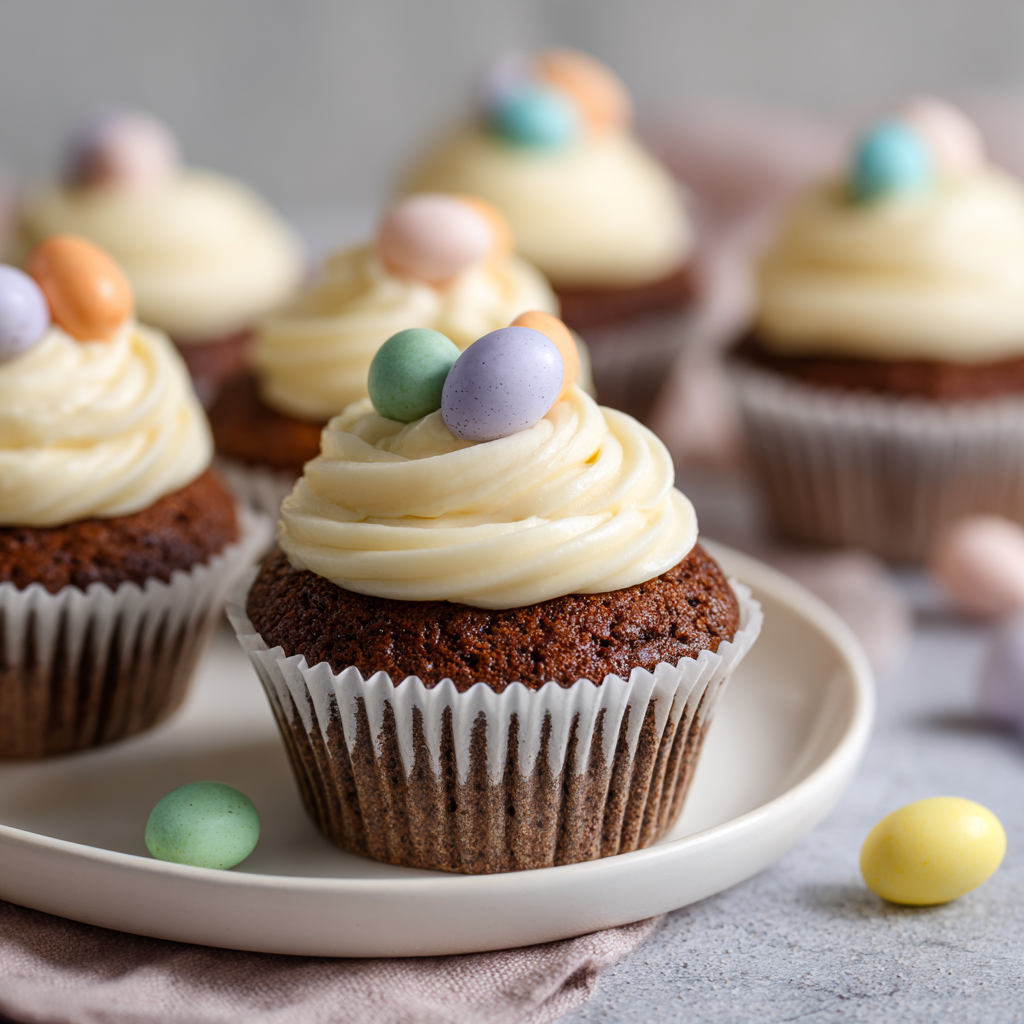
Easter Chocolate Cupcakes with Creamy Vanilla Frosting
Easter Chocolate Cupcakes: Your New Go-To Spring Celebration Treat!
Hey there, friend! Beau here, from Feastical. Can you smell that? It’s the scent of spring in the air—fresh grass, blooming flowers, and… is that chocolate? You bet it is. There’s something absolutely magical about baking for Easter. It’s the first big, bright, feel-good holiday after winter, and the dessert table deserves to be the star of the show.
That’s where these little bundles of joy come in. These aren’t just any cupcakes. These are my Easter Chocolate Cupcakes with Creamy Vanilla Frosting, and they are pure, unadulterated happiness on a cake liner. Imagine this: a cupcake so moist and deeply chocolatey it practically melts on your tongue, crowned with a cloud of vanilla frosting so smooth and fluffy you’ll want to eat it with a spoon. The final touch? A cheerful sprinkle of pastel chocolate eggs that just screams “celebration.”
Whether you’re hosting a big Easter brunch, need a show-stopper for the neighborhood potluck, or just want to make a regular Tuesday feel special, this recipe is your ticket. I’ve kept it wonderfully simple because, around here, we believe fantastic food shouldn’t be a fuss. So, tie on your favorite apron, preheat that oven, and let’s create some sweet, delicious memories together. This is more than baking; it’s an act of joy, and I’m so glad you’re here for it.
The Sweetest Easter Memory: A Kitchen Covered in Flour
My love for these cupcakes goes way back to when I was maybe eight years old, standing on a wobbly step-stool in my Nana’s kitchen. The counters were a disaster zone of mixing bowls, cocoa powder dust (a good portion of which was on my face), and a rainbow assortment of sprinkles. Nana was the queen of “a little bit of this, a little dash of that” cooking, but for Easter cupcakes, she followed a recipe card stained with chocolate fingerprints—her mother’s recipe.
The magic moment was always when she’d pour in the hot water. I’d watch, wide-eyed, as the thick batter suddenly turned into a silky, liquid chocolate river. “That’s the secret, Beau,” she’d whisper, like she was telling me the location of a hidden treasure. “It makes them extra fudgy.” My job was the “egg placement engineer,” a title I took very seriously. Arranging those little candy eggs on top felt like decorating a tiny, delicious world. Every year, that simple act of baking together—the mess, the laughter, the anticipation of that first bite—was Easter to me. This recipe is my homage to that feeling. It’s my Nana’s hug in dessert form, and now I get to share it with you.
Gathering Your Sunshine: What You’ll Need
Here’s the beautiful part: this recipe uses simple, pantry-friendly ingredients. No fancy equipment or hard-to-find items here! Let’s break it down so you know exactly why each component is a VIP (Very Important Pantry item).
For the Chocolate Cupcakes:
- 1 cup all-purpose flour: The trusty foundation. For a slightly lighter crumb, you can swap in cake flour. For a gluten-free version, a 1:1 GF blend works wonderfully (see variations below!).
- ½ cup unsweetened cocoa powder: This is where the chocolate magic happens! Use natural cocoa powder for that classic, slightly tangy chocolate flavor. Chef’s Insight: For an even richer, darker cupcake, use Dutch-processed cocoa. It’s less acidic and gives a deeper color.
- ¾ tsp baking soda: Our leavening agent. It reacts with the cocoa and acidic ingredients to give our cupcakes a beautiful, tender rise.
- ¼ tsp salt: Never skip this! Salt is the flavor enhancer that makes the chocolate taste more chocolatey and balances the sweetness perfectly.
- ¾ cup granulated sugar: Sweetness and tenderness, all in one. This amount gives us a perfectly balanced cake that isn’t overly sweet, letting the frosting shine.
- ½ cup milk: Whole milk is ideal for richness, but any milk you have works—dairy or non-dairy like oat or almond milk.
- ¼ cup vegetable oil: Oil keeps these cupcakes incredibly moist, much more so than butter would in this quick-mix method. Canola or a light olive oil works too.
- 1 large egg, at room temperature: The binder. A room-temperature egg incorporates more smoothly. Just pop it in a bowl of warm water for 5 minutes if you forgot to take it out earlier!
- 1 tsp pure vanilla extract: The flavor booster. It adds a warm, complex note that complements chocolate beautifully.
- ½ cup hot water (or hot coffee!): The SECRET WEAPON! Pouring in hot liquid at the end “blooms” the cocoa powder, intensifying its flavor, and creates a thin batter that bakes up into the most moist, tender crumb imaginable. Using hot coffee will make the chocolate flavor even deeper without tasting like coffee.
For the Vanilla Frosting:
- ½ cup (1 stick) unsalted butter, softened: The base of our fluffy cloud. Softened is key! It should leave a slight indent when you press it. Unsalted lets us control the salt level.
- 2 cups powdered sugar, sifted: Sifting is a non-negotiable hack for lump-free, silky frosting. It incorporates air and makes whipping a dream.
- 1–2 tbsp milk or heavy cream: Start with one tablespoon to reach your perfect spreading consistency. Heavy cream will give you an even richer, more luxurious frosting.
- 1 tsp vanilla extract (or the seeds from ½ a vanilla bean!): For that true, beautiful vanilla flavor. Using a vanilla bean paste or real seeds gives you those gorgeous little speckles.
For the Topping:
- Mini chocolate eggs or pastel candy eggs: The festive crown! I love the mixed pastel colors for Easter, but any small chocolate candies will do. Get creative!
Let’s Get Baking: Your Step-by-Step Joy Guide
Ready? Let’s turn these ingredients into something spectacular. Follow these steps, and don’t forget to read my little chef hacks along the way—they’re like having me right there in the kitchen with you!
- Preheat & Prep: Preheat your oven to 350°F (175°C). Line a standard 12-cup muffin pan with your favorite cupcake liners. Pro Tip: For easy cleanup and perfect cupcake bottoms, give the top of the pan a quick spritz of baking spray. It prevents any sticky overflow!
- The Dry Team: In a large mixing bowl, whisk together the flour, cocoa powder, baking soda, salt, and granulated sugar. Keep whisking until you see no more streaks of cocoa or flour. This isn’t just mixing; it’s aerating. You’re giving your dry ingredients a head start on being light and lump-free.
- The Wet Team Joins In: Make a well in the center of your dry ingredients. Pour in the milk, vegetable oil, egg, and vanilla extract. Using a hand mixer (or a sturdy whisk and some elbow grease), beat everything on medium speed for about 1-2 minutes. You’re looking for a thick, shiny, and beautifully chocolatey batter. Scrape down the sides of the bowl to make sure everything is incorporated.
- The Magic Pour: Now, with the mixer on low, slowly and carefully stream in the hot water (or coffee!). The batter will become very thin—this is exactly what you want! Don’t panic. It might look more like chocolate soup than cake batter, but I promise you, this is the secret to that incredibly moist texture. Mix just until it’s smooth and combined.
- Fill & Bake: Using a ladle, large cookie scoop, or just a measuring cup, divide the batter evenly among the prepared liners, filling each one about ⅔ of the way full. This gives them room to rise into perfect little domes. Slide the pan into the center of your preheated oven and bake for 16-18 minutes. The test? A toothpick inserted into the center of a cupcake should come out with just a few moist crumbs attached, not wet batter.
- The All-Important Cool Down: As soon as they’re out of the oven, transfer the cupcakes from the pan to a wire rack. This stops the cooking process and prevents soggy bottoms. Let them cool completely before you even think about frosting. I know it’s hard to wait, but warm cupcakes will melt your beautiful frosting into a puddle!
- Create the Fluffy Cloud (Frosting Time!): While the cupcakes cool, make your frosting. In a clean bowl, beat the softened butter on medium-high speed for 2-3 minutes until it’s pale, creamy, and smooth. This step incorporates air, which is the foundation of fluffiness. Reduce the speed to low and gradually add the sifted powdered sugar, about ½ cup at a time, until fully combined. Add the vanilla and 1 tablespoon of milk/cream. Beat on high speed for another 2-3 minutes until incredibly light and fluffy. If it’s too thick, add the remaining liquid a teaspoon at a time.
- Frost & Festoon: Once the cupcakes are completely cool, it’s showtime! You can spread the frosting on with a knife for a rustic look, or for those beautiful swirled tops, fit a piping bag with a large star tip (I love a Wilton 1M or 2D) and pipe away. Finish each one with a generous sprinkle of your mini chocolate eggs. Go on, be generous—it’s a celebration!
Presenting Your Masterpiece: How to Serve with Style
You’ve created something wonderful, so let’s show it off! Presentation is the final, joyful step. I love arranging these cupcakes on a simple, tiered cake stand for a party—it adds height and makes them look extra special. For a family-style Easter brunch, pile them high on a vintage platter or a simple wooden board lined with a checkered napkin.
Pair them with a pot of freshly brewed coffee, a pitcher of cold milk for the kids (and the kids at heart), or even a glass of sparkling rosé for the adults. They are the perfect sweet ending to a hearty meal. And remember, part of the fun is in the reveal—that moment when you bring them out to the “oohs” and “aahs.” Soak it in, chef. You earned it!
Make It Your Own: Delicious Twists & Swaps
Love the base recipe but want to shake things up? Here are some of my favorite ways to play with this classic:
- Citrus Zing: Add the zest of one orange to the cupcake batter for a stunning chocolate-orange flavor. It’s a bright, springy twist that’s absolutely divine.
- Peanut Butter Paradise: Swap the vanilla frosting for a peanut butter frosting (just replace half the butter with creamy peanut butter). Top with mini peanut butter cups for an epic flavor combo.
- Spring Berry Swirl: Before baking, drop a small spoonful of raspberry or strawberry jam into the center of each cupcake batter-filled liner. It bakes into a sweet, fruity surprise!
- Gluten-Free & Dairy-Free Friendly: This recipe is incredibly adaptable. Use a trusted 1:1 gluten-free flour blend and ensure your cocoa is GF. For dairy-free, use non-dairy milk, vegan butter sticks for the frosting, and top with dairy-free chocolate eggs.
- “Nest” Topping: For an adorable look, press a circle of toasted coconut flakes into the frosting around the edge of the cupcake to form a “nest,” then place a few mini eggs in the center.
Beau’s Kitchen Notes & Stories
This recipe has been my Easter constant for years, but it’s evolved in the best ways. One year, I ran out of vanilla for the frosting and used almond extract instead. It was a happy accident that tasted like wedding cake! Another time, my nephew decided to “help” by adding a handful of sprinkles directly into the batter. We ended up with confetti chocolate cupcakes, and they were a huge hit. The moral? Don’t be afraid to play.
The biggest lesson I’ve learned is that the hot water step is non-negotiable. I once rushed it and used room-temp water, and the cupcakes were just… fine. Not magical. So trust the process. Also, if your frosting ever seems too soft, just pop the bowl in the fridge for 15 minutes, then re-whip. Kitchen challenges are just opportunities for new hacks!
Your Questions, Answered (Let’s Troubleshoot!)
Q: My cupcakes sank in the middle! What happened?
A: This is usually an issue with leavening or oven temp. Make sure your baking soda is fresh (test it with a little vinegar—it should bubble furiously). Also, avoid over-mixing the batter after adding the dry ingredients, and don’t open the oven door too early! The rush of cold air can cause a collapse.
Q: Can I make these ahead of time?
A> Absolutely! Bake the cupcakes up to 2 days ahead, let them cool completely, and store them in an airtight container at room temperature. Frost them the day you plan to serve them for the best texture. Unfrosted cupcakes also freeze beautifully for up to 2 months.
Q: My frosting is too runny/grainy. Help!
A: Runny frosting means your butter might have been too soft or you added too much liquid. Chill it and re-whip. Grainy frosting means your powdered sugar wasn’t fully incorporated or wasn’t sifted. Keep beating! The friction will help dissolve the sugar. You can also add a tiny pinch of salt to help balance and mask any graininess.
Q: Can I use this batter to make a cake?
A> You sure can! This recipe is perfect for a 9-inch round cake. Grease and flour two pans, divide the batter, and bake for 25-30 minutes at the same temperature, or until a toothpick comes out clean.

Easter Chocolate Cupcakes with Creamy Vanilla Frosting
Description
These Easter Chocolate Cupcakes are soft, moist, and deeply chocolatey, topped with a fluffy vanilla frosting and decorated with colorful mini eggs. They’re easy to make, perfect for spring celebrations, and great for baking with family. If you want a reliable, crowd-pleasing dessert, this is your go-to recipe.
Ingredients
Chocolate Cupcakes
-
1 cup all-purpose flour
-
1/2 cup unsweetened cocoa powder
-
3/4 teaspoon baking soda
-
1/4 teaspoon salt
-
3/4 cup granulated sugar
-
1/2 cup milk (dairy or non-dairy)
-
1/4 cup vegetable oil
-
1 large egg, room temperature
-
1 teaspoon vanilla extract
-
1/2 cup hot water or hot coffee
Vanilla Frosting
-
1/2 cup (115 g) unsalted butter, softened
-
2 cups powdered sugar, sifted
-
1–2 tablespoons milk or cream
-
1 teaspoon vanilla extract
Decoration
-
Mini chocolate eggs or pastel candy eggs
-
Sprinkles (optional)
Instructions
-
Prep
-
Heat oven to 350°F (175°C).
-
Line a 12-cup muffin pan with cupcake liners.
-
-
Mix Dry Ingredients
-
In a bowl, whisk flour, cocoa powder, baking soda, salt, and sugar.
-
-
Add Wet Ingredients
-
Add milk, oil, egg, and vanilla. Mix until smooth (about 1–2 minutes).
-
-
Add Hot Liquid
-
Slowly stir in the hot water or coffee. Batter will be thin — that’s correct and makes the cupcakes extra moist.
-
-
Fill & Bake
-
Fill liners about 2/3 full.
-
Bake 16–18 minutes until a toothpick comes out with a few moist crumbs.
-
Cool completely on a rack.
-
-
Make Frosting
-
Beat butter until creamy.
-
Gradually beat in powdered sugar.
-
Add vanilla and 1 tablespoon milk/cream. Beat until fluffy. Add more liquid if needed.
-
-
Frost & Decorate
-
Spread or pipe frosting onto cooled cupcakes.
-
Top with mini chocolate eggs and sprinkles.
-
Notes
-
Use hot coffee instead of water to deepen chocolate flavor (it won’t taste like coffee).
-
Don’t overmix once combined — mix just until smooth.
-
Cool completely before frosting or the frosting will melt.
-
If frosting is too soft, chill it 10–15 minutes, then whip again.
-
Want bakery-style looks? Use a piping bag with a star tip.
Nutritional Information (A Quick Note)
While we’re all about indulgence and celebration here at Feastical, I know some folks like to have the info. Here’s a general breakdown per cupcake (with frosting and assuming the recipe makes 12): Approximately 260 calories, 12g fat, 36g carbohydrates, 2g protein, 1g fiber, 25g sugar. Remember, these are estimates, and the exact values can change based on the specific brands of ingredients you use and any substitutions you make. The real nutrition? The joy of baking and sharing something made with love. That’s always calorie-free.
Final Thoughts
And just like that, friend—we’ve baked our way to Easter.
From that wobbly step-stool in my Nana’s flour-dusted kitchen to yours, these chocolate cupcakes have traveled through decades, through countless celebrations, through the exact moment when batter becomes magic and simple ingredients become memory. That’s the thing about recipes like this one. They’re never really just about the food.
Sure, these cupcakes are impossibly moist. Yes, that vanilla frosting is essentially edible clouds. And absolutely, those pastel eggs on top are the cutest thing you’ll put on a dessert table all spring. But what makes this recipe your new go-to isn’t the technique—it’s what happens when you make it.
It’s the tiny fingers sneaking candy eggs before you’ve even piped the frosting. It’s the laughter when someone gets cocoa powder on their nose. It’s the text you’ll send your mom with a photo captioned, “Made your mom’s recipe today.” It’s the way a simple cupcake can say I’m glad you’re here better than words ever could.
This Easter, as you set out your tiered stand or your vintage platter, as you pour that first cup of coffee and watch someone take their first bite, remember: you didn’t just bake cupcakes. You created a moment. You carried forward a tradition—maybe Nana’s, maybe your own, maybe one you’re starting right now. That’s the sweetest ingredient of all.
So here’s to chocolate. Here’s to spring. Here’s to sticky counters, imperfect swirls, and the people we share them with.
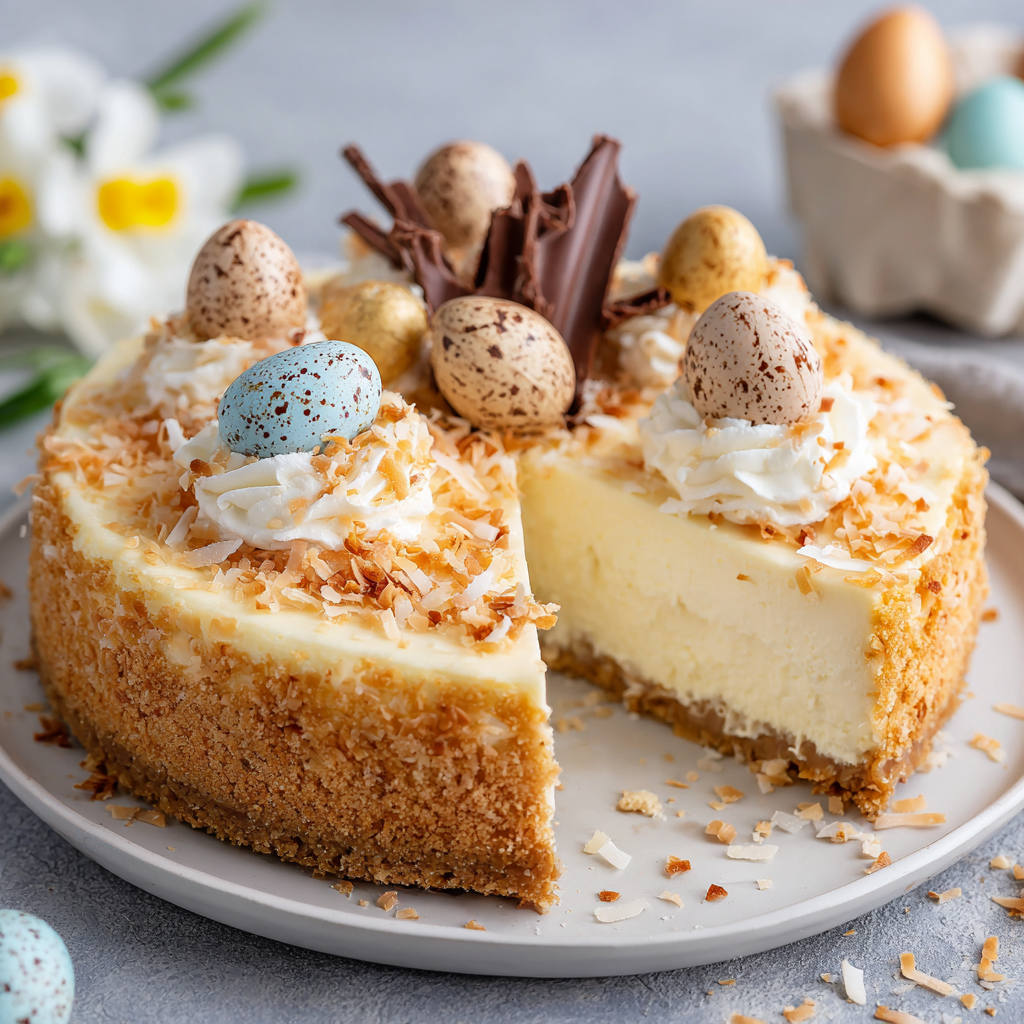
Easter Egg Coconut Cheesecake : Easy Easter Cheesecake with Toasted Coconut
Easter Egg Coconut Cheesecake: Your New Spring Tradition Awaits!
Hey there, friend! Beau here, welcoming you back to the Feastical kitchen. Is there anything better than the moment you present a dessert that makes everyone at the table go completely quiet, followed by a chorus of “Oh, wow”? That’s the magic we’re cooking up today.
With Easter and spring gatherings just around the corner, I know you’re looking for that showstopper dessert. The one that looks like you fussed for hours but secretly comes together with a whole lot of joy and not a lot of stress. Enter this dreamy, creamy Easter Egg Coconut Cheesecake. Imagine the richest, smoothest cheesecake you’ve ever tasted, infused with the tropical sweetness of coconut, all sitting on a buttery golden crust. Now, picture it topped with a snowfall of toasted coconut and a nest of playful chocolate Easter eggs. See? I just heard you say “Oh, wow,” too.
This isn’t a fussy, crack-prone cheesecake that demands a water bath and a prayer. Nope. This is my kind of recipe: straightforward, forgiving, and packed with flavor. It’s a dessert that feels like a celebration—a perfect centerpiece for your Easter table, a Mother’s Day brunch, or any sunny Sunday that deserves something special. So, tie on your apron, grab your favorite mixing bowl, and let’s create some delicious memories together. Trust me, this cheesecake is about to become a seasonal request for years to come.
A Tale of Two Desserts & One Happy Accident
This recipe has a little backstory, as the best ones often do. Years ago, I was hosting my very first big Easter dinner. I wanted to impress, so I decided to make two desserts: a classic New York cheesecake and a tropical coconut cake. Ambitious? Sure. A bit chaotic? Absolutely. In the pre-dinner whirlwind, I accidentally drizzled a bit of the coconut cake’s soaking syrup over a slice of the plain cheesecake. One bite of that happy accident and my mind was blown. The creamy tang of the cheesecake was the perfect canvas for the fragrant, sweet coconut.
Right then, I knew I had to merge them into one ultimate dessert. After a few (very tasty) experiments, this beauty was born. It captures that “aha!” moment—the comfort of classic cheesecake meets the sunny, festive vibe of coconut. Every time I make it now, it reminds me that sometimes the best things in life (and in the kitchen) come from a little joyful mix-up.
Gathering Your Coconut Cheesecake Crew
Here’s the dream team of ingredients. Using full-fat, quality stuff here makes all the difference in creating that luxuriously smooth texture we’re after. Don’t worry, I’ve got swaps and tips for you, too!
- For the Crust:
- 2 cups graham cracker crumbs: The classic cozy base. For a fun twist, try using vanilla wafers or even biscoff cookies! Just pulse them in a food processor until fine.
- ½ cup unsalted butter, melted: This is the glue. Unsalted lets you control the salt level. Melt it until just liquid and slightly cooled.
- 2 tablespoons sugar: A little sweetness for the crust. You can skip it if you prefer, but it adds a nice caramelized note.
- For the Filling:
- 24 oz (three 8-oz blocks) cream cheese, FULL FAT and softened: This is non-negotiable for the right texture. Take it out of the fridge at least 2 hours ahead. Room temp cream cheese blends smoothly without lumps.
- 1 cup granulated sugar: Sweetens the deal. For a deeper flavor, you could swap in ½ cup of packed brown sugar along with ½ cup white sugar.
- 3 large eggs, at room temperature: They incorporate more evenly when not cold. Add them one at a time, just like we’ll discuss in the steps.
- 1 cup coconut cream or full-fat coconut milk: The star flavor! Chill a can of coconut milk overnight and scoop out the thick cream on top for the richest result. The leftover liquid is great for smoothies!
- 1 teaspoon vanilla extract: The flavor enhancer. A splash of coconut extract (¼ tsp) can double down on the tropical vibe if you’re a superfan.
- For the Topping & Decoration:
- 1 cup shredded coconut, toasted: Toasting is the game-changer! It brings out a nutty, irresistible aroma and adds wonderful texture.
- Chocolate Easter eggs or candy eggs: The festive crown! Use mini eggs, robin’s eggs, or even a few chocolate bunnies for maximum cuteness.
- Whipped cream (optional): For piping pretty rosettes around the edge. A dollop on each slice is never wrong.
Let’s Build This Beauty: Step-by-Step
Follow these steps, and you’ll have a flawless cheesecake. I’m chatting you through each one with my best tips to ensure success!
- Prep & Preheat: Start by preheating your oven to 325°F (165°C). Grease the bottom and sides of a 9-inch springform pan. Chef’s Hack: For ultra-easy removal, line the bottom with a round of parchment paper after greasing.
- Create the Crust: In a medium bowl, mix the graham cracker crumbs, melted butter, and sugar until it resembles wet sand. Dump it into your prepared pan and press it firmly and evenly into the bottom and about halfway up the sides. I use the bottom of a measuring cup to get it nice and compact. Bake this for 10 minutes, then let it cool on a rack while you make the filling. This short pre-bake sets the crust and prevents sogginess.
- Master the Filling: In a large bowl (or stand mixer), beat the softened cream cheese and sugar on medium-low speed for a good 2-3 minutes. You want it completely smooth, with no lumps. Scrape down the bowl and beater. Now, with the mixer on low, add the eggs one at a time, beating just until each yolk disappears before adding the next. OVER-BEATING THE EGGS is the #1 cause of cracks! We’re incorporating them, not whipping air into them.
- Incorporate the Flavor: Still on low speed, pour in the coconut cream and vanilla extract. Mix just until the batter is silky and uniform. That’s it! No more mixing. Pour this luscious filling over your slightly cooled crust and gently smooth the top.
- The Gentle Bake: Place the pan in the center of your preheated oven. Bake for 50-55 minutes. The cheesecake is done when the edges are lightly puffed and set, but the center (about a 3-inch circle) still has a slight jiggle—like Jell-O—when you gently shake the pan. It will firm up as it cools. This is the key to creamy perfection!
- The Crucial Cool-Down: Turn off the oven, crack the door open about an inch, and let the cheesecake sit inside for 1 hour. This gradual temperature drop prevents shocking and shrinking. Then, remove it to a wire rack to cool completely to room temperature. Once cool, cover it loosely and refrigerate for at least 4 hours, but overnight is truly best for the flavor and sliceability.
- The Festive Finish: Right before serving, run a thin knife around the inner edge of the pan before unclasping the springform ring. Sprinkle the toasted coconut generously over the top. Arrange your chocolate Easter eggs in a cute cluster in the center. If using, pipe or dollop whipped cream around the edges. Slice with a clean, hot knife (dip it in hot water and wipe dry between cuts) for picture-perfect slices.
How to Serve This Spring Showstopper
Presentation is part of the fun! For a gorgeous Easter table, place the whole cheesecake on a cake stand or pretty platter. Scatter a few pastel-colored sprinkles or edible flowers around the base for an extra spring touch. When it’s time to slice, remember the hot knife trick for those clean, professional-looking pieces.
I love serving this with a cup of strong coffee or a glass of cold milk to balance the sweetness. It’s rich, so a smaller slice is often plenty—but I’ve never seen anyone turn down seconds! The toasted coconut adds a lovely crunch against the creamy filling, making every bite a textural delight.
Make It Your Own: Delicious Twists & Swaps
This recipe is a fantastic blueprint. Here are a few ways to play with it:
- Chocolate Coconut Dream: Add ½ cup of unsweetened cocoa powder to the filling when you add the sugar. Use a chocolate cookie (like Oreo) crust instead of graham cracker. Top with chocolate shavings and coconut.
- Pina Colada Vibes: Fold in ½ cup of well-drained crushed pineapple into the batter after mixing. Top with toasted coconut and a maraschino cherry on each slice for the full tropical effect.
- Lemon Coconut Sunshine: Add the zest of one lemon to the filling for a bright, citrusy pop. It cuts through the richness beautifully.
- Gluten-Free & Nutty: Use gluten-free graham crackers for the crust. For a different flavor, try a crust made from ground pecans or almonds mixed with butter and a touch of sugar.
- Mini Egg Inside-Out: Roughly chop ½ cup of chocolate mini eggs and fold them into the batter before pouring. You get little bursts of chocolate and candy shell in every bite!
Beau’s Kitchen Notes & Nostalgia
This cheesecake has been on my Easter table for nearly a decade, and it’s evolved in the best ways. The biggest lesson? Patience is the most important ingredient. Don’t rush the cooling or the chilling—it’s what gives you that flawless texture. One year, I was too eager and tried to decorate it after only two hours in the fridge. Let’s just say my “Easter egg nest” started to sink! We ate it with spoons straight from the pan, laughing the whole time. It was still delicious, but now I always plan for that overnight chill. It’s a dessert that loves you back when you give it a little time.
Your Questions, Answered
Q: Can I make this ahead of time?
A: Absolutely! That’s one of its best features. Bake it 1-2 days ahead, keep it covered in the fridge, and add the toppings just before serving. The flavor actually improves!
Q: My cheesecake cracked! What did I do wrong?
A: Welcome to the club—it happens to everyone! The most common culprits are over-mixing the eggs (which incorporates too much air) or a too-sudden temperature change. That’s why we cool it slowly in the turned-off oven. If it does crack, don’t sweat it! That’s what the mountain of toasted coconut and Easter eggs are for—they hide everything beautifully.
Q: Can I use sweetened coconut cream (like Coco Lopez)?
A: You can, but reduce the granulated sugar in the filling to ¾ cup, as the cream is already sweetened. Taste the batter before adding the eggs to check sweetness.
Q: How do I toast coconut perfectly?
A: Spread shredded coconut on a dry baking sheet. Bake at 325°F for 5-10 minutes, stirring every 2-3 minutes, until it’s golden brown. Watch it like a hawk—it goes from perfect to burnt in seconds!

Easter Egg Coconut Cheesecake : Easy Easter Cheesecake with Toasted Coconut
Description
This Easter Egg Coconut Cheesecake is creamy, smooth, and full of light coconut flavor with a buttery crust and a festive topping of toasted coconut and chocolate eggs. It looks impressive on the table but is simple to make, with no complicated techniques required. Perfect for Easter, spring gatherings, or anytime you want a cheerful, crowd-pleasing dessert.
Ingredients
Crust
-
2 cups graham cracker crumbs
-
1/2 cup unsalted butter, melted
-
2 tablespoons sugar
Coconut Cheesecake Filling
-
24 oz (680 g) full-fat cream cheese, softened
-
1 cup granulated sugar
-
3 large eggs, room temperature
-
1 cup coconut cream or full-fat coconut milk (thick part)
-
1 teaspoon vanilla extract
-
Optional: 1/4 teaspoon coconut extract for stronger flavor
Topping
-
1 cup shredded coconut
-
Chocolate Easter eggs or candy eggs
-
Whipped cream (optional)
Instructions
-
Prep
-
Heat oven to 325°F (165°C).
-
Grease a 9-inch springform pan and line the bottom with parchment.
-
-
Make the Crust
-
Mix crumbs, melted butter, and sugar until combined.
-
Press firmly into the bottom and slightly up the sides of the pan.
-
Bake 10 minutes, then cool.
-
-
Make the Filling
-
Beat cream cheese and sugar on low–medium speed until completely smooth.
-
Add eggs one at a time, mixing on low just until blended.
-
Mix in coconut cream and vanilla until silky. Do not overmix.
-
-
Bake
-
Pour filling over crust and smooth the top.
-
Bake 50–55 minutes until edges are set and the center still slightly jiggly.
-
-
Cool Slowly
-
Turn oven off, crack the door open, and let cheesecake sit inside 1 hour.
-
Remove and cool to room temperature, then refrigerate at least 4 hours (overnight is best).
-
-
Toast Coconut & Decorate
-
Spread coconut on a baking sheet. Bake at 325°F for 5–8 minutes, stirring often, until golden.
-
Once cheesecake is chilled, top with toasted coconut and chocolate eggs. Add whipped cream if desired.
-
Notes
-
Use room-temperature cream cheese to avoid lumps.
-
Mix on low speed after adding eggs to help prevent cracks.
-
Don’t overbake — a slight center wobble means a creamy texture later.
-
Chill overnight for the cleanest slices and best flavor.
-
Slice with a hot, clean knife for neat presentation.
Nutritional Information (Because We’re All Friends Here)
Okay, let’s keep it real: this is a celebratory dessert, meant to be savored and enjoyed with people you love. Here’s a general breakdown per slice (based on 12 servings), but remember, values can vary based on specific brands and toppings used.
- Calories: ~430
- Carbohydrates: 32g
- Protein: 7g
- Fat: 30g
- Saturated Fat: 18g
- Sugar: 24g
- Sodium: 320mg
This is a rich treat, so a little goes a long way. Balance is key—enjoy a slice after a lovely meal, and maybe take an extra-long walk with the family the next day to hunt for leftover Easter eggs!
Final Thoughts from My Kitchen to Yours
And there you have it, my friend—the Easter Egg Coconut Cheesecake that’s as fun to make as it is to devour. I hope this recipe brings as much joy to your kitchen as it has to mine. Remember, cooking is about the experience: the stories, the little mishaps, and the triumphant moments when you pull something beautiful and delicious from the oven.
This Easter, whether you’re hosting a big crowd or having a cozy brunch for a few, this cheesecake is your secret weapon for creating a sweet, memorable moment. Don’t forget to tag @Feastical if you share a photo—I love seeing your creations! Now, go preheat that oven and get ready for some serious compliments. Happy baking, and Happy Easter!
With a full heart and an even fuller plate,
Beau
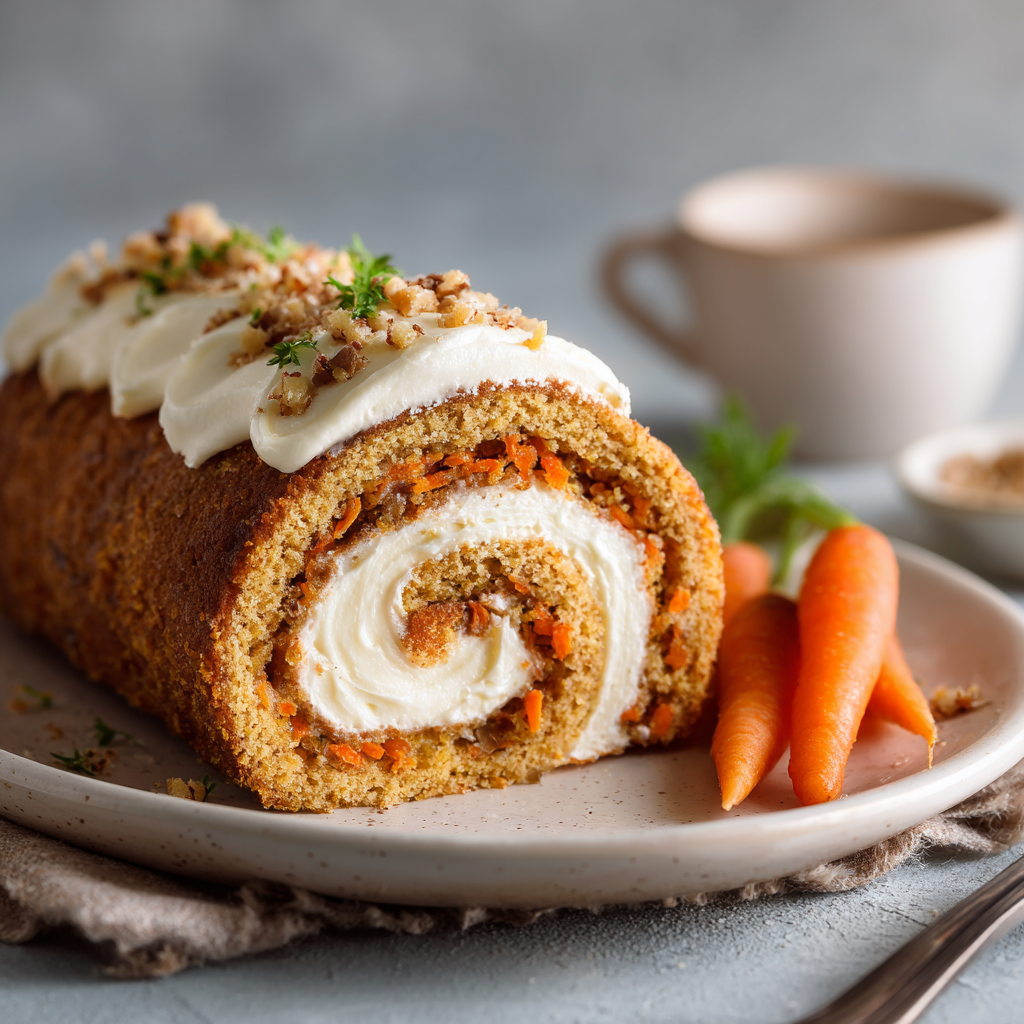
Carrot Cake Roll with Cream Cheese Frosting : Easy Easter Dessert
Carrot Cake Roll: Your New Favorite Easter (Or Anytime!) Dessert
Hey friends, Beau here! Can you smell it? That magical aroma of warm cinnamon, nutmeg, and sweet carrots baking in the oven—it’s the unofficial scent of spring in my kitchen. If you’ve ever stared at a beautiful, swirled dessert and thought, “I could never make that,” I’m here to tell you, with a wink and a whisk, that you absolutely can. Today, we’re taking everything we adore about classic carrot cake and giving it a fun, impressive, and honestly easier twist: the glorious Carrot Cake Roll.
Picture this: a pillow-soft, spiced carrot cake, baked thin and flexible, hugging a river of the dreamiest, tangiest cream cheese frosting. All rolled up into a stunning spiral that looks like it came from a fancy bakery. The best part? It’s a total conversation starter that’s surprisingly simple to master. This isn’t just a dessert; it’s a centerpiece. It’s the show-stopping finale to your Easter brunch, Mother’s Day lunch, or “just because it’s Tuesday” dinner. So, tie on your favorite apron, preheat that oven, and let’s turn some simple ingredients into pure, sliceable magic. Trust me, once you see that perfect swirl, you’ll be doing a little happy dance right there by the counter.
A Rolled-Up Memory: Why This Cake Feels Like Home
This recipe always takes me back to my grandma’s linoleum-floored kitchen. She made the most incredible, towering, layer carrot cake, covered in toasted walnuts and thick frosting. But it was a project. Flour everywhere, multiple bowls, and the eternal worry of the layers sliding. I loved it, but when I started Feastical, I wanted that same warm, spiced comfort in a form that felt a bit more… playful and less daunting.
The “roll” idea came to me one year when Easter was just a couple of days away, and I’d promised to bring dessert. My counter was a disaster zone from testing other recipes, and I needed something special but streamlined. I remembered the simple jelly rolls of my childhood and had a lightbulb moment: carrot cake flavors in a roll! That first attempt was a little… rustic (we’ll call it “full of character”). But the moment I sliced into it and saw that gorgeous swirl of cake and filling, and tasted that familiar, comforting flavor, I knew I had something special. It captured the soul of my grandma’s classic but in a fresh, modern, and utterly shareable package. It’s become my go-to for proving that impressive doesn’t have to mean complicated.
Gathering Your Flavor Crew: Ingredients & Why They Matter
Let’s meet the team! Using simple, quality ingredients is the secret to big flavor here. Here’s what you’ll need and my quick chef insights on each one.
- All-purpose flour: The foundation. It gives our cake structure without making it tough. For a gluten-free version, a 1:1 gluten-free flour blend works beautifully here.
- Baking powder & baking soda: Our leavening dream team. They work together to give the cake its perfect, airy lift, ensuring it’s light enough to roll.
- Cinnamon, ginger, nutmeg: The spice trilogy! This combo creates that deep, warm, unmistakable carrot cake flavor. Freshly grated nutmeg is a game-changer if you have it.
- Salt: The flavor enhancer. Never skip it—it makes the sweet and spicy notes pop.
- Large eggs: They provide structure, richness, and help bind everything together. Let them come to room temperature for better volume when beating.
- Granulated sugar: Sweetness and tenderness. It also helps create a lovely texture in the cake crumb.
- Vegetable oil: My fat of choice for this cake. It keeps the crumb incredibly moist and tender, which is crucial for a flexible roll.
- Pure vanilla extract: The aromatic backbone of so many desserts. It rounds out all the other flavors.
- Finely grated carrots: The star! Use the small holes on your grater. This lets them blend seamlessly into the batter and release their sweet moisture perfectly. No big, crunchy strands here.
- Cream cheese & butter (for filling): Both MUST be fully softened to room temperature. This is the non-negotiable secret to a silky-smooth, lump-free frosting. I take mine out about 2 hours before I start.
- Powdered sugar: Sweetens and thickens our dreamy filling. Sift it if it’s lumpy for the smoothest result.
Let’s Get Rolling! Your Step-by-Step Guide
Follow these steps, and you’ll be a roll master in no time. I’ve packed each one with my best tips to ensure success.
- Prep Your Stage: Preheat your oven to 350°F (175°C). Line a 10×15 inch jelly roll pan with parchment paper, letting a little overhang on the short sides. This “sling” will be your best friend for lifting the cake out later. Give the paper a light spray with non-stick spray—trust me on this extra insurance.
- Mix the Dry Team: In a medium bowl, whisk together the flour, baking powder, baking soda, cinnamon, ginger, nutmeg, and salt. Whisking by hand here is perfect—we just want them evenly combined and aerated a bit.
- Whip the Wet Team: In a large bowl, beat the eggs and granulated sugar with an electric mixer on medium-high speed for a full 3-4 minutes. This is CRUCIAL! We need the mixture to be thick, pale, and form ribbons when you lift the beaters. This step incorporates air, giving our cake its light texture. Beat in the oil and vanilla until just combined.
- Bring it All Together: Gently fold the dry ingredients into the wet ingredients using a spatula. Use big, sweeping folds until just a few streaks of flour remain. Then, fold in the finely grated carrots until everything is just combined. Don’t overmix! A few lumps are totally fine.
- Bake to Perfection: Pour and spread the batter evenly into your prepared pan, getting it into all the corners. A small offset spatula is the perfect tool here. Bake for 10-12 minutes. The cake is done when the top springs back lightly when touched. It should *not* be browned all over—just set and springy.
- The Magic Roll (Part 1): As soon as the cake comes out of the oven, have your next move ready! Dust a clean, thin kitchen towel (not fluffy) generously with powdered sugar. Invert the hot cake onto the towel. Carefully peel off the parchment paper—see? That spray helped! Starting at one short end, use the towel to gently but confidently roll the cake up, towel and all. Let it cool completely rolled up on a wire rack. This “trains” the cake to hold its rolled shape and prevents cracking later.
- Make the Dreamy Filling: While the cake cools, beat the softened cream cheese and butter together until completely smooth and creamy. Beat in the vanilla. Gradually add the sifted powdered sugar and beat on low until combined, then on medium until fluffy. Don’t overbeat once the sugar is in, or it can get too soft.
- The Final Assembly: Once the cake is completely cool, carefully unroll it. It will lie flat. Spread the cream cheese filling evenly over the entire surface, leaving a tiny ½-inch border on one of the short ends (this prevents squeeze-out). Using the towel to help guide you, gently but firmly re-roll the cake, this time without the towel inside. Don’t worry if it cracks a tiny bit—that’s just “rustic charm” and will be covered.
- Chill & Serve: Wrap the roll tightly in plastic wrap and chill in the fridge for at least 30 minutes (up to overnight) to set the shape and make slicing clean and easy. This waiting period is the final key to a beautiful presentation!
Making it Shine: How to Serve Your Masterpiece
Presentation is half the fun! Once chilled, transfer your roll to a serving platter. For a beautiful finish, I like to give the ends a clean trim (chef’s snack!) to reveal the perfect swirl. You can dust the whole roll with a fresh snowfall of powdered sugar for a simple, elegant look.
For Easter or a spring gathering, get playful! Decorate the top with a few pastel candy eggs, edible flowers, or a sprinkle of chopped toasted pecans or walnuts for a little crunch. Serve each slice with a cup of strong coffee, a glass of cold milk, or a dollop of lightly sweetened whipped cream on the side. Watch as eyes widen with delight when you cut into it, revealing that gorgeous, swirled interior. It’s a moment of pure kitchen pride, and you’ve earned it!
Make It Your Own: Fun Twists & Swaps
Love the base recipe? Let’s play with it! Here are a few of my favorite ways to mix things up.
- The Tropical Twist: Add ½ cup of well-drained crushed pineapple (squeeze it in a towel) to the batter with the carrots, and add ½ cup of sweetened shredded coconut to the cream cheese filling. Hello, pina colada vibes!
- The Nutty Professor: Fold ½ cup of finely chopped toasted pecans or walnuts into the cake batter for wonderful texture. You can also sprinkle some on the frosting before rolling for an extra nutty bite in every slice.
- Orange You Glad: Add 1 tablespoon of freshly grated orange zest to the cake batter and 1 teaspoon to the cream cheese filling. The citrus brightens all the warm spices beautifully.
- Venture into Ginger: For a more pronounced spicy kick, add 2 tablespoons of finely chopped crystallized ginger to the batter. It’s a delightful little surprise.
- Dairy-Free Delight: Use a plant-based cream cheese and butter alternative for the filling, and your favorite non-dairy milk (like oat or almond) in place of any potential moisture (though the oil and carrots usually suffice). Check that your sugar is vegan-friendly.
Beau’s Kitchen Confidential: A Few Parting Thoughts
This recipe has seen a lot of love (and a few learning experiences) in my kitchen. My very first roll had a legendary crack right down the middle because I let the cake cool before the initial roll. I just patched it with extra frosting and called it a “canyon cake.” It still tasted incredible, and nobody cared! The point is, don’t stress perfection. The flavors are what people remember.
Over time, I’ve learned that the thin kitchen towel and immediate rolling are the true MVP steps. I’ve also started grating my carrots on a microplane for an ultra-fine texture when I’m feeling fancy. This roll has become my signature “I want to impress but not stress” dessert, and I hope it becomes yours, too. Food is about joy, connection, and a little bit of delicious mess. Embrace it all.
Your Questions, Answered: FAQs & Fixes
Q: I’m terrified my cake will crack when I roll it! Any pro tips?
A: The two biggies are: 1) Don’t overbake it. The second it springs back, it’s done. An overbaked cake is a dry, crack-prone cake. 2) Roll it IMMEDIATELY after baking while it’s still hot and flexible. The initial “training” roll in the towel is your insurance policy.
Q: Can I make this ahead of time?
A: Absolutely, and I often do! The rolled, unfilled cake can be cooled, then wrapped tightly in plastic wrap and kept at room temperature for a day before filling. The fully assembled roll can be wrapped and refrigerated for up to 2 days. It slices best when cold.
Q: My filling is runny. What happened?
A: This usually means the cream cheese or butter wasn’t soft enough, leading to overbeating as you tried to smooth it out, which incorporates too much air and heat. Or, the ingredients were too warm to begin with. Make sure they are softened but still cool to the touch. If it’s too soft, just pop the whole bowl in the fridge for 15-20 minutes to firm up before spreading.
Q: Can I freeze the carrot cake roll?
A> You can! Wrap the unfilled, cooled cake roll (without the filling) tightly in plastic and then foil, and freeze for up to 2 months. Thaw in the fridge overnight, then unroll, spread with fresh filling, and proceed. I don’t recommend freezing it with the filling already in, as the texture can become watery.

Carrot Cake Roll with Cream Cheese Frosting : Easy Easter Dessert
Description
This Carrot Cake Roll takes everything you love about classic carrot cake and turns it into a beautiful, swirled dessert that looks impressive but is actually easy to make. It’s soft, warmly spiced, and filled with a creamy cream-cheese frosting. Perfect for holidays, parties, or whenever you want a show-stopping treat.
Ingredients
Cake
-
3/4 cup all-purpose flour
-
1/2 tsp baking powder
-
1/2 tsp baking soda
-
1 1/2 tsp ground cinnamon
-
1/4 tsp ground nutmeg
-
1/4 tsp ground ginger
-
1/4 tsp salt
-
3 large eggs (room temperature)
-
2/3 cup granulated sugar
-
2 tbsp vegetable oil
-
1 tsp vanilla extract
-
1 1/2 cups finely grated carrots
Filling
-
8 oz (225 g) cream cheese, softened
-
3 tbsp butter, softened
-
1 tsp vanilla extract
-
1 cup powdered sugar (sifted)
For rolling
-
Powdered sugar for dusting towel
Instructions
-
Prep Pan & Oven
Heat oven to 350°F (175°C). Line a 10×15-inch (25×38 cm) pan with parchment and lightly grease. -
Mix Dry Ingredients
In a bowl, whisk flour, baking powder, baking soda, cinnamon, nutmeg, ginger, and salt. -
Beat Eggs & Sugar
In a large bowl, beat eggs and sugar with a mixer for 3–4 minutes until thick and pale. Mix in oil and vanilla. -
Combine & Add Carrots
Gently fold dry ingredients into the egg mixture. Fold in grated carrots. Do not overmix. -
Bake
Spread batter evenly in the pan. Bake 10–12 minutes until the cake springs back when touched. -
First Roll (Very Important Step)
Dust a clean kitchen towel with powdered sugar. Turn hot cake onto towel and peel off parchment.
Roll the cake up with the towel from the short end. Let cool completely. -
Make Filling
Beat cream cheese and butter until smooth. Add vanilla and powdered sugar. Beat until creamy. -
Fill & Final Roll
Carefully unroll cooled cake. Spread filling evenly, leaving a small border at one end. Roll back up (without towel). Wrap and chill at least 30 minutes. -
Serve
Dust with powdered sugar, slice, and serve.
Notes
-
Grate carrots finely so the cake rolls smoothly without cracking.
-
Roll while hot — this prevents breaks later.
-
Don’t overbake — dry cake cracks more easily.
-
Chill before slicing for clean, pretty swirls.
-
Add chopped nuts or a few raisins if you like extra texture.
A Quick Nutritional Note
While we’re all about indulgence and joy here at Feastical, I believe in mindful enjoyment. This Carrot Cake Roll is a dessert, meant to be savored and shared. Each slice provides a serving of veggies (thank you, carrots!), and the spices offer their own antioxidant benefits. Of course, it contains sugar, dairy, and gluten as written. The variations above offer great ways to adapt to different dietary needs. My philosophy? Bake with love, enjoy a slice fully, and balance it with all the other wonderful foods you eat. Life—and dessert—is all about the sweet balance.
Final Slice: You Did It!
And there you have it, friends—your guide to creating a truly spectacular Carrot Cake Roll. From the first whip of the eggs to that final, satisfying chill in the fridge, you’ve created something more than just a dessert. You’ve made a centerpiece, a conversation starter, and a big, swirled hug on a plate.
I hope this recipe brings as much laughter and contentment to your table as it has to mine. Remember, the best kitchen tool you have is your own sense of adventure. So, tweak the spices, add your favorite nut, or decorate it with abandon. Make it yours. Then, slice it up, serve it with a huge smile, and take a bow. You’re not just a cook; you’re a creator of delicious moments. Now, go enjoy the fruits (or should I say, vegetables?) of your labor. Happy baking!
Lovingly from my kitchen to yours,
Beau
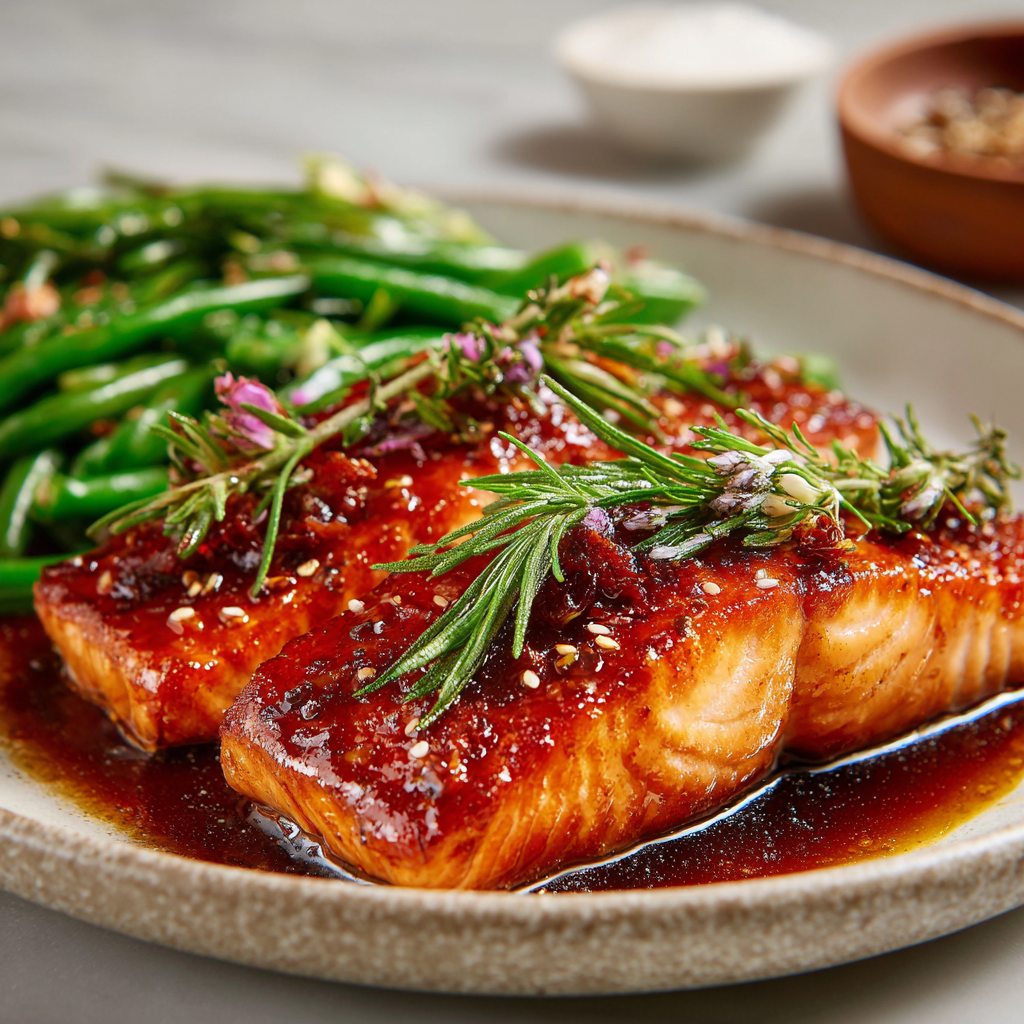
Teriyaki Salmon Recipe : Sweet, Savory, and Perfectly Glazed
This Teriyaki Salmon Recipe is Your New Weeknight Hero
Hey there, friend! Beau here from Feastical. Ever have one of those days where you’re staring into the fridge, dreaming of something delicious that doesn’t require a culinary degree or a three-hour time commitment? You crave that perfect, glossy, restaurant-style teriyaki salmon—sweet, savory, and falling-apart tender—but the thought of ordering takeout feels like a compromise on both flavor and your wallet. I get it. I’ve been there more times than I can count.
Well, pull up a stool at my kitchen counter, because I’m about to let you in on a little secret: the best teriyaki salmon you’ll ever eat doesn’t come in a cardboard box. It comes from your own stove, in about 25 minutes flat. This recipe is my ultimate back-pocket, never-fail, “wow, you made this?!” dish. It’s the one I make when I want to feel like a kitchen rockstar with minimal effort, and the one I share with friends who swear they can’t cook. The magic is in a simple, homemade glaze that caramelizes into a sticky, finger-licking-good sauce, hugging every flaky bite of salmon.
We’re talking about a dish that’s elegant enough for a date night but simple enough for a chaotic Tuesday. Whether you pan-sear it for a gorgeous crispy edge or bake it for hands-off ease, this teriyaki salmon is about to become your go-to. So, let’s ditch the mediocre delivery and create some real, feel-good flavor together. Grab your favorite skillet, and let’s get cooking!
The Seattle Rain & My First Taste of Teriyaki Magic
This recipe always takes me back to a drizzly afternoon in Seattle. I was about 19, wandering through the iconic Pike Place Market, absolutely soaked to the bone. The smell of rain on concrete mixed with something incredible—something sweet, salty, and utterly beguiling. I followed my nose to a tiny, steamy window where a vendor was grilling salmon filets, brushing them with a dark, shimmering sauce that sizzled and smoked on the hot grill.
I bought a piece, wrapped in parchment, and found a semi-dry spot under an awning. That first bite was a revelation. The salmon was impossibly moist, the glaze was a perfect punch of umami with a gentle sweet finish, and the slight char from the grill added a whisper of bitterness that tied it all together. It was warm, comforting, and complex, yet so fundamentally simple. In that moment, cold and damp, I felt completely content. I knew right then I had to learn how to make that feeling happen in my own kitchen. This recipe is my homage to that Seattle stall—a way to capture that cozy, rain-or-shine satisfaction anytime the craving strikes.
Gathering Your Flavor Allies: The Ingredient Lineup
Here’s everything you need to create this teriyaki masterpiece. Don’t stress about perfection—cooking is about playing, not policing. I’ve included my favorite tips and swaps so you can make this recipe work with what you’ve got.
- 4 salmon fillets (about 6 oz each): I prefer skin-on for pan-searing—it gets irresistibly crispy and protects the delicate flesh. But skin-off works beautifully for baking! Look for bright, firm fillets with a pleasant sea-breeze smell. Chef’s Insight: If you’re using frozen, thaw it slowly in the fridge overnight. Never use a microwave; it turns the texture mealy.
- Salt and pepper to taste: The foundation builders. We season the salmon simply to let the glaze be the star.
- 1 tablespoon neutral oil: Avocado, grape seed, or a light olive oil are my go-tos. They have a high smoke point, which is key for getting that perfect sear without burning.
- For the Legendary Teriyaki Glaze:
- 1/4 cup soy sauce: This is our salty, umami base. For a gluten-free version, easily swap in tamari or coconut aminos. I use reduced-sodium so I can control the salt level.
- 2 tablespoons honey: Nature’s perfect sweetener that adds a lovely floral depth. Easy Swap: Pure maple syrup or packed brown sugar works in a pinch!
- 1 tablespoon rice vinegar: The secret weapon! It adds a bright, subtle tang that cuts through the richness and balances the sweetness. No rice vinegar? A squeeze of fresh lime juice will do the trick.
- 1 tablespoon toasted sesame oil: Don’t skip this! That nutty, aromatic flavor is what makes teriyaki taste like teriyaki. It’s a finish oil, so we add it off-heat to preserve its magic.
- 2 garlic cloves, minced: Fresh is best here. That pungent punch mellows into sweet, savory goodness as it cooks.
- 1 teaspoon fresh ginger, grated: The zippy cousin to garlic. I keep a knob of ginger in my freezer and grate it, skin and all, whenever I need it—no peeling required!
- 1 tablespoon cornstarch + 2 tablespoons water: Our thickening dream team. This slurry transforms the sauce from a watery mixture to a luxurious, clingy glaze that sticks to every nook and cranny of the salmon.
Let’s Make Some Magic: Your Foolproof Steps
Ready? Put on some tunes, tie on your apron (or don’t—I usually forget mine), and let’s dance through this. I’ll walk you through every step with the little hacks I’ve learned over countless batches.
Step 1: Prep Like a Pro. First, take your salmon fillets out of the fridge and pat them bone-dry with paper towels. This is the single most important step for getting a gorgeous sear, not a sad steam. Season both sides lightly with salt and pepper. Let them sit on the counter while you make the sauce—taking the chill off helps them cook more evenly.
Step 2: Whisk Up the Glaze. In a small saucepan, combine the soy sauce, honey, rice vinegar, minced garlic, and grated ginger. Give it a good whisk. Now, here’s a major chef hack: in a separate little bowl or mug, mix your cornstarch and cold water into a smooth, milky slurry before adding it to the pot. This prevents dreaded cornstarch lumps! Bring the sauce to a gentle simmer over medium heat, then whisk in the slurry. Keep whisking for 2-3 minutes as it bubbles gently. You’ll see it go from cloudy to clear and thicken beautifully. Remove it from the heat and stir in the tablespoon of toasted sesame oil. That incredible smell? That’s the sound of success. Set aside.
Step 3: Choose Your Adventure: Pan-Sear or Bake!
For the Crispy-Skin Lovers (Pan-Sear): Heat your oil in a large non-stick or well-seasoned skillet over medium-high heat. Once the oil is shimmering (a drop of water should sizzle), place the salmon fillets skin-side down. Hear that sizzle? That’s the good stuff. Don’t touch them! Let them cook undisturbed for 4-5 minutes. This renders the fat and crisps the skin. Use a thin spatula to gently flip. Brush the tops generously with your teriyaki glaze and cook for another 3-4 minutes, or until the salmon flakes easily with a fork.
For the Hands-Off Crew (Bake): Preheat your oven to 400°F (200°C). Line a baking sheet with parchment or foil (hello, easy cleanup!). Place the salmon fillets on the sheet and brush them liberally with the glaze. Bake for 12-14 minutes. The glaze will bake into a gorgeous, sticky coating. So simple!
Step 4: The Final Flourish. No matter your cooking method, right before serving, give the salmon another brush or drizzle with the remaining warm glaze. This final layer adds maximum shine and flavor.
Plating Up: How to Serve Your Teriyaki Salmon
Now for the fun part—making it look as good as it tastes! I like to serve each glistening fillet on a bed of fluffy, steamed jasmine or white rice. The rice is the perfect canvas to catch any extra sauce. Then, I add a heap of something green and vibrant. Quick-steamed broccoli, snap peas, or a simple cucumber salad are my weeknight favorites.
For the garnish, a sprinkle of white and black sesame seeds adds a lovely crunch and visual pop. Thinly sliced green onions (both the white and green parts) bring a fresh, oniony bite. Sometimes, if I’m feeling fancy, I’ll add a few very thin slices of fresh jalapeño for a hint of heat. Serve it family-style on a big platter or plate it individually for a restaurant-worthy presentation. Don’t forget a wedge of lime on the side—a tiny squeeze right before eating brightens everything up perfectly. Pour a crisp Pinot Gris or a cold, dry cider, and dinner is served!
Make It Your Own: Delicious Twists & Swaps
This recipe is a fantastic blueprint. Once you’ve mastered the basic, play around! Here are a few of my favorite variations.
- The Spicy Kick: Add 1-2 teaspoons of Sriracha or a big pinch of red pepper flakes to the sauce while simmering. Finish with a drizzle of chili crisp on the plated fish.
- Citrus Burst: Add the zest of one orange or lime to the sauce ingredients. The citrus oils add an incredible fragrance.
- Protein Swap: Not a salmon fan? This glaze is incredible on chicken thighs (bake at 400°F for 25-30 mins), firm tofu (press it well first!), or even roasted cauliflower steaks.
- Pineapple Teriyaki: Stir 1/2 cup of crushed pineapple (with its juice) into the sauce. The natural sugars caramelize beautifully, and the fruitiness is a classic combo.
- Extra “Umami Bomb”: Add a teaspoon of fish sauce or a tablespoon of mirin (sweet rice wine) to the sauce mixture for an even deeper, more complex savory flavor.
Beau’s Kitchen Notes & Stories
This recipe has been with me for years, and it’s evolved from a strict formula to a feel-it-out kind of friend. The biggest lesson I’ve learned? Trust your nose and your eyes, not just the timer. Salmon cooks quickly, and its perfect doneness (where it’s just opaque and flaky) can vary by thickness. The cornstarch slurry was a game-changer—I used to try to reduce the sauce for ages to thicken it, only to end up with something too salty. The slurry gives you control and a perfect consistency every time.
Funny story: I once, in a sleepy morning haze, accidentally used balsamic vinegar instead of rice vinegar. My wife took one bite and said, “This is… interesting. Kinda fancy?” We now call that version “Gourmet Accident Teriyaki.” So remember, even the “mistakes” can lead to something tasty. Cooking is an adventure!
Your Questions, Answered
Q: My salmon skin always sticks to the pan! Help!
A: I feel your pain. The keys are: 1) A dry, dry fillet. 2) A hot pan with hot oil before the fish goes in. 3) The patience to not move it until it’s ready to release on its own. If it’s still sticking, your pan might need to be re-seasoned (for cast iron) or it’s time to invest in a good quality non-stick skillet just for fish.
Q: Can I make the sauce ahead of time?
A> Absolutely! Whip up a double or triple batch of the sauce (through the thickening step) and store it in a jar in the fridge for up to two weeks. It’s amazing on grilled veggies, as a stir-fry sauce, or as a dip for spring rolls. Just give it a good shake or reheat gently before using.
Q: My sauce didn’t thicken. What went wrong?
A> The cornstarch slurry needs to come to a full simmer to activate its thickening power. If your heat was too low, it might not have gotten there. Solution: mix another small slurry (1 tsp cornstarch + 2 tsp water) and whisk it into the simmering sauce. It should tighten up in a minute.
Q: How do I know when the salmon is done?
A> The best test is the flake test. Gently press the tines of a fork into the thickest part of the fillet and twist slightly. The salmon should flake apart easily and be opaque all the way through. If you use a thermometer, you’re aiming for 125-130°F at the thickest part for medium-rare to medium, which is my preferred juicy, tender doneness.
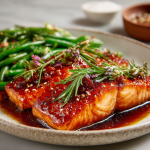
Teriyaki Salmon Recipe : Sweet, Savory, and Perfectly Glazed
Description
Looking for a fast, flavorful dinner that feels a little special but takes very little effort? This teriyaki salmon is the answer. It’s sweet, savory, glossy, and tender, with a simple homemade glaze that comes together in minutes. Perfect for busy weeknights and impressive enough for guests.
Ingredients
For the salmon
-
4 salmon fillets (about 6 oz / 170 g each)
-
Salt and black pepper, to taste
-
1 tablespoon neutral oil (avocado, vegetable, or light olive oil)
For the teriyaki glaze
-
1/4 cup soy sauce (preferably reduced sodium)
-
2 tablespoons honey or maple syrup
-
1 tablespoon rice vinegar (or lime juice)
-
1 tablespoon toasted sesame oil
-
2 garlic cloves, minced
-
1 teaspoon fresh grated ginger
-
1 tablespoon cornstarch
-
2 tablespoons cold water
Optional garnish: sesame seeds, sliced green onions
Instructions
-
Prep the Salmon
Pat salmon dry with paper towels. Season lightly with salt and pepper on both sides. -
Make the Glaze
In a small saucepan, whisk soy sauce, honey, rice vinegar, garlic, and ginger.
Bring to a gentle simmer over medium heat.
Mix cornstarch with cold water, then whisk into the sauce. Simmer 2–3 minutes until thick and glossy. Remove from heat and stir in sesame oil. -
Cook the Salmon (Choose One Method)
Pan-Sear Method (crisp edges):
-
Heat oil in a skillet over medium-high heat.
-
Cook salmon skin-side down first for 4–5 minutes.
-
Flip, brush with glaze, and cook 3–4 more minutes until flaky.
Oven Method (easy & hands-off):
-
Heat oven to 400°F (200°C).
-
Place salmon on lined baking sheet.
-
Brush with glaze.
-
Bake 12–14 minutes until cooked through.
-
-
Finish & Serve
Brush with extra glaze and add sesame seeds or green onions if desired. Serve hot.
Notes
-
Dry fish = better texture. Patting salmon dry helps it cook better and brown nicely.
-
Don’t overcook. Salmon is ready when it flakes easily with a fork.
-
Make extra sauce. It keeps in the fridge up to 2 weeks and works great on chicken or vegetables.
-
Want it spicy? Add a little chili flakes or a small squeeze of chili sauce to the glaze.
-
Lower sodium option: Use low-sodium soy sauce or coconut aminos
Nutritional Info (A General Guide)
Here’s a general breakdown per serving (one 6oz fillet with glaze), to help you plan your meal. Remember, values can vary based on specific ingredients used (like the type of soy sauce or sweetener).
Approximate Nutritional Information Per Serving: Calories: 390 | Protein: 34g | Fat: 20g | Saturated Fat: 3g | Carbohydrates: 14g | Sugar: 11g | Sodium: ~900mg (using reduced-sodium soy sauce)
Salmon is a fantastic source of high-quality protein and heart-healthy omega-3 fatty acids. To make this a balanced plate, I always pair it with a complex carb (like brown rice or quinoa) and a generous portion of vegetables. The sauce does contain sugar and sodium, so if you’re monitoring those, you can reduce the honey slightly and use a low-sodium soy sauce alternative.
Final Thoughts: This Teriyaki Salmon Recipe is Your New Weeknight Hero
And there you have it, friend. From a drizzly Seattle sidewalk to your very own kitchen, this teriyaki salmon has traveled far to land on your plate. But more than a recipe, I hope I’ve handed you something I wish that 19-year-old, rain-soaked Beau had known: you don’t need a fancy takeout window or a culinary degree to create food that feels like a warm hug. You just need a few good ingredients, a little patience, and the willingness to trust yourself.
This salmon has saved me on nights when the fridge felt empty and my energy felt emptier. It’s been the “I can’t believe you made this” dish at dinner parties, the quiet Tuesday night companion when the world felt loud, and the recipe I’ve texted to more friends than I can count. It’s forgiving when you need it to be—swap the honey for maple syrup, use lime instead of rice vinegar, bake it when you’re too tired to stand over a skillet—and spectacular when you follow it to the letter.
What I love most about this dish is what it taught me that day in Seattle: extraordinary flavor doesn’t have to be complicated. Sometimes it’s just salmon, soy sauce, honey, and a little patience. Sometimes it’s a stranger grilling fish in the rain, sharing something beautiful without saying a word. And sometimes it’s you, standing in your own kitchen, creating that same feeling of warmth and contentment for yourself and the people you love.
So the next time you’re staring into the fridge, craving something that tastes like more than just dinner, I hope you remember this recipe. I hope you pull out that salmon, whisk up that glossy glaze, and let the sizzle remind you that you’re capable of creating something genuinely delicious. No cardboard boxes required.
Now go make some magic. And save me a piece.
Happy cooking,
Beau
Feastical
Cottage Cheese Toast with Spring Veggies : Fresh, Creamy & Bright
Cottage Cheese Toast with Spring Veggies – Your New Favorite Bite of Sunshine
Hello, Spring! Let’s Make a Toast.
Hey friend, Beau here from Feastical! Can you feel it? That little shift in the air, the extra hour of sunshine, the sudden craving for something… green? Spring isn’t just a season; it’s a feeling. And for me, that feeling belongs on a plate. Or, more specifically, on a perfectly crunchy slice of toast.
I know what you’re thinking. “Beau, it’s toast. How exciting can it be?” Trust me on this one. We’re about to take the humble toast from a rushed breakfast afterthought to a bright, beautiful, and seriously satisfying meal that celebrates the best of the season. This isn’t just any topping. We’re whipping cottage cheese into a cloud of creamy luxury, piling on the crispest, sweetest spring veggies, and finishing it with a zip of lemon that tastes like sunshine itself.
This Cottage Cheese Toast with Spring Veggies is my love letter to simple, feel-good food. It’s for those mornings when you want a breakfast that feels special without the fuss. It’s for the lazy weekend brunch that impresses your friends. It’s for the “I-need-something-vibrant-and-nourishing-for-lunch-STAT” moment. It’s proof that the most stunning dishes often come from the fewest ingredients, treated with a little bit of love and a lot of flavor. So, grab your favorite bread, and let’s turn a simple slice into a spring celebration.
The Humble Beginnings: My Grandma’s “Everything” Cheese
This recipe takes me right back to my grandma’s screened-in porch, where the smell of lilacs mixed with whatever was coming from her kitchen. She wasn’t a “fancy” cook, but she was a genius with what she had. Her secret weapon? A big tub of cottage cheese. She’d put it on baked potatoes, scoop it onto fruit, and yes, slather it on toast. To me, it was just “Grandma’s cheese.”
One spring, her garden went wild with sugar snap peas. We’d sit on the porch steps, shelling peas straight into a bowl, popping almost as many into our mouths as made it in. She took that day’s haul, mixed a few peas into her cottage cheese with a crack of pepper, and gave it to me on toast. It was a revelation – cool, creamy, sweet, and savory all at once. This toast is my grown-up, slightly finessed version of that memory. It’s that same soul-satisfying simplicity, reminding me that the best food isn’t about complication; it’s about connection and making the most of the fresh, good stuff right in front of you.
Gathering Your Sunshine: The Ingredients Breakdown
Here’s the beautiful part: this recipe is all about quality, not quantity. Each ingredient plays a starring role. Let’s break it down:
- 2 slices rustic sourdough or artisanal bread: This is your foundation. A good, sturdy bread with a tight crumb and tangy flavor is non-negotiable. It needs to hold up to our creamy topping without getting soggy. Chef’s Insight: No sourdough? A dense whole grain or a seeded rye works wonderfully too.
- 1 cup full-fat cottage cheese: Don’t you dare reach for the low-fat stuff here! The full-fat version whips into a lush, creamy dream. This is our protein-packed canvas. Substitution Tip: For a similar texture, you could use ricotta, but you’ll miss the lovely tang of cottage cheese.
- ½ cup fresh peas: The taste of spring in a tiny pod. Their pop of sweetness is magical. Chef’s Hack: Frozen peas are a fantastic, year-round substitute. Just thaw them in warm water for a minute—no need to cook!
- 1 tsp fresh lemon zest: This is the secret weapon. The zest, not the juice, gives that powerful floral citrus aroma without adding liquid. It makes the whole dish sing.
- 1-2 tsp good olive oil: A finishing drizzle of a fruity, high-quality olive oil adds richness and ties everything together. This is where you can really taste the difference.
- Salt and fresh cracked black pepper: Season as you go! They elevate every single layer.
- Optional: Chili flakes, fresh mint, dill, or chives: This is your playground. A pinch of chili flakes adds a warm kick. Fresh herbs like mint make it taste like a garden party. Don’t be shy!
Let’s Build Some Magic: Step-by-Step
Okay, team. Let’s get our hands (minimally) dirty. This comes together in about 10 minutes, but I’ll walk you through every chef-y little trick.
- Toast Your Foundation: Pop your bread in the toaster, oven, or even a grill pan until it’s deeply golden and crisp. Why? A warm, sturdy base helps the cottage cheese spread like a dream and prevents sogginess. Let it cool for just a minute so it’s warm, not molten.
- Whip That Cheese: Dump your cottage cheese into a blender or food processor. Blitz it for 30-60 seconds, stopping to scrape down the sides, until it’s completely smooth, creamy, and almost dip-like. Chef’s Hack: No blender? Use a fork and some muscle! Mash it vigorously against the side of a bowl. It won’t be as silky, but it’ll still be deliciously spreadable.
- Wake Up The Veggies: If using fresh peas, bring a small pot of water to a boil. Toss them in for just 60-90 seconds (we call this blanching). You want them brighter green and just tender, not mushy. Immediately drain and run under cold water to stop the cooking. If using asparagus, take a Y-peeler and run it down the stalk to create beautiful, delicate ribbons. No cooking needed! Pro Tip: This quick blanch (or shaving) wakes up the veggie’s color and flavor, making them taste truly fresh.
- The Art of Assembly: Take your whipped cottage cheese and spread a generous, swoopy layer onto each toast. Pile on those bright green peas or drape those asparagus ribbons. The more, the merrier!
- The Finishing Flourishes: Here’s where personality comes in. Zest that lemon right over the top. Drizzle with your best olive oil. Season generously with flaky salt and a good grind of black pepper. Scatter over your chosen herbs or a pinch of chili flakes. My mantra: We eat with our eyes first. Make it pretty!
- The Most Important Step: EAT. IMMEDIATELY. Grab a fork and knife or pick it up with your hands. Enjoy that perfect contrast of warm, crunchy bread, cool creamy cheese, and sweet, snappy veggies.
How to Serve This Slice of Spring
This toast is a star all on its own, but it also loves company! For a light, beautiful brunch, serve two toasts per person alongside a simple arugula salad dressed with lemon and oil. It’s the perfect prelude to a day of gardening or relaxing.
Want to make it more substantial? Pair one toast with a softly poached or fried egg on the side. The runny yolk mingling with the creamy cheese is next-level goodness. For a lovely lunch, I love adding a side of quick-pickled radishes or onions for an extra tangy crunch. Presentation-wise, use a vibrant plate or a simple wooden board. A final tiny sprinkle of fresh herbs or edible flowers makes it look straight out of a café—in the best way possible.
Make It Your Own: Flavor Twists & Swaps
The basic formula here is your playground. Once you master it, try these delicious spins!
- The “Everything Bagel”: Mix everything bagel seasoning into the whipped cottage cheese. Top with thinly sliced radishes and extra chives. Instant NYC vibes.
- Mediterranean Sunshine: Top the base with chopped sun-dried tomatoes, a few kalamata olives, a sprinkle of dried oregano, and a tiny drizzle of balsamic glaze.
- Sweet & Savory Berry Twist: Swap the peas for sliced strawberries or raspberries. Add a drizzle of honey and some fresh basil instead of mint. Unbelievably good.
- Vegan Dream: Use a thick, plain vegan yogurt or a blended firm tofu with a squeeze of lemon for the base. All the other components are already plant-based!
- Smoky & Spicy: Add a touch of smoked paprika to the cheese. Top with blistered cherry tomatoes and a dot of hot honey.
Beau’s Kitchen Notes & Nudges
This recipe has lived on my fridge for years, scribbled on a notecard that’s seen its share of olive oil splatters. It started as a quick snack and has evolved into my go-to for showing off spring’s first harvest. The biggest game-changer was realizing that whipping the cottage cheese transforms it from a lumpy diet food into a luxurious spread worthy of any party.
One funny fail? I once tried to use a potato masher instead of a blender. Let’s just say I got an arm workout and a “rustic” (read: lumpy) texture. It was still tasty, but not the cloud-like experience we’re going for. My dog, Biscuit, is always my official floor-cleaner for any escaped peas, so he’s a big fan of recipe testing days.
Your Questions, Answered!
Q: My whipped cottage cheese is runny. What did I do wrong?
A: This usually means your cottage cheese had a higher liquid content to start. No worries! Just drain it in a fine-mesh strainer for 5-10 minutes before whipping. Also, make sure you’re using full-fat; low-fat varieties have more water.
Q: Can I make this ahead of time?
A> You can prep the components! Whip the cheese and store it covered in the fridge for up to 2 days. Blanch the veggies and keep them separate. But assemble just before serving to keep that toast perfectly crisp.
Q: I don’t like peas. What other spring veggies work?
A> Oh, so many! Try blanched and chopped sugar snap peas, shaved raw fennel, very thinly sliced raw zucchini, or even steamed and chopped broccolini.
Q: Is there a way to make this gluten-free?
A> Absolutely! Just use your favorite gluten-free bread. Look for a sturdy, artisanal-style GF loaf that toasts well so it doesn’t crumble under the topping.
Cottage Cheese Toast with Spring Veggies : Fresh, Creamy & Bright
Description
When the weather turns brighter, meals should too. This Cottage Cheese Toast with Spring Veggies is quick, colorful, and packed with protein and freshness. Creamy whipped cottage cheese, crisp toast, and tender green veggies come together for a simple breakfast or lunch that feels fancy without extra work. It’s one of those recipes that proves a few good ingredients can do a lot.
Ingredients
Ingredients (Serves 2)
-
2 slices sturdy bread (sourdough, whole grain, or seeded)
-
1 cup full-fat cottage cheese
-
1/2 cup fresh or frozen peas (thawed)
or shaved asparagus / sugar snap peas -
1 tsp lemon zest
-
1–2 tsp olive oil
-
Salt and black pepper, to taste
Optional toppings
-
Chopped chives, dill, or mint
-
Chili flakes
-
Radish slices
-
Everything bagel seasoning
-
Drizzle of honey (for sweet-savory style)
Instructions
-
Toast the bread until deeply golden and crisp.
-
Whip the cottage cheese in a blender or food processor for 30–60 seconds until smooth and spreadable. (You can also mash very well with a fork if needed.)
-
Prep veggies:
-
Fresh peas: blanch in boiling water 1 minute, then cool.
-
Frozen peas: thaw and pat dry.
-
Asparagus: shave into thin ribbons with a peeler.
-
-
Spread whipped cottage cheese thickly over warm toast.
-
Top with veggies evenly.
-
Finish with lemon zest, olive oil drizzle, salt, pepper, and any optional toppings.
-
Serve immediately while the toast is crisp.
Notes
-
Use sturdy bread so it doesn’t get soggy.
-
Full-fat cottage cheese whips best and tastes creamier.
-
Drain watery cottage cheese in a strainer 5–10 minutes if needed.
-
Zest the lemon directly over the toast for maximum aroma.
-
Assemble right before eating for best texture.
Nourishment Note (Because Feeling Good Matters!)
Let’s talk about what’s fueling you here. This isn’t just empty calories; it’s a power-packed meal. The cottage cheese delivers a huge punch of high-quality protein (about 18g per serving!), which helps keep you full and satisfied for hours. The peas add fiber, vitamins C and K, and even a bit more plant-based protein. Using a good whole-grain sourdough adds complex carbs and fiber for sustained energy. The healthy fats from the olive oil help your body absorb all the fat-soluble vitamins from the veggies. It’s a balanced, nutrient-dense plate that genuinely makes you feel as good as it tastes. Remember, these are estimates—actual values will vary based on your specific bread and ingredient brands.
The Last Bite
And there you have it, friend. More than just a recipe, this Cottage Cheese Toast is a mindset. It’s about taking ten minutes to treat yourself to something beautiful. It’s about celebrating the simple, vibrant ingredients that each season gives us. It’s proof that you don’t need a fancy degree or complicated techniques to make food that sings.
I hope this becomes a regular in your kitchen rotation, a canvas for your own experiments, and a little moment of bright, creamy joy in your day. If you make it (and I really hope you do), tag me over at @Feastical—I love seeing your creations! Now, go enjoy that sunshine, both on your plate and out your window. Until next time, keep it simple, soulful, and satisfying.
With a full heart and an empty plate,
Beau
Save This Recipe for Later!
Easy Zucchini Boats (Healthy, Flavor-Packed & Oven-Baked)
Easy Zucchini Boats: Your New Favorite Feel-Good, Veggie-Packed Dinner
Hey there, friend! Beau here from Feastical. Let’s talk about that magical moment when you stare into the fridge, hoping dinner will just… invent itself. We’ve all been there. You want something that feels like a treat, doesn’t take a PhD in culinary arts to make, and maybe, just maybe, counts as getting your veggies in. Well, pull up a chair, because I’m about to introduce you to your new kitchen bestie: Easy, Flavor-Packed Zucchini Boats.
Imagine this: tender, sweet zucchini halves, hollowed out like little canoes, piled high with a savory, saucy filling and crowned with a blanket of bubbly, golden cheese. They’re baked until everything is cozy and melded together in one glorious, satisfying bite. This isn’t “diet food.” This is celebratory food. It’s proof positive that eating your vegetables can be the most exciting part of your plate. They’re endlessly customizable, surprisingly simple, and have this magical way of making everyone at the table feel nourished and happy. So, if you’re ready for a recipe that delivers maximum flavor with minimal fuss, grab a couple of zucchinis and your favorite apron. We’re about to set sail for delicious town.
The Zucchini That Started It All: A Garden Tale
This recipe takes me right back to my grandma’s backyard garden. She had this… talent. A single zucchini seed would turn into a plant that could feed the entire neighborhood. By mid-summer, we’d have zucchinis hiding under leaves like green submarines, some of them growing to the size of a toddler’s leg. “Beau,” she’d say, hands on her hips, “we’ve got to do something with these!” And we did. We made bread, we grilled slices, we shredded them into fritters.
But my favorite was always when she’d make her “Italian Garden Barges.” She never called them boats. She’d take those giant zucchinis, scrape out the seedy center (which the chickens went wild for), and fill them with whatever was also ripe—tomatoes, herbs, a bit of leftover sausage. It was less of a precise recipe and more of a delicious, edible vehicle for using up the garden’s bounty. That spirit of simplicity, resourcefulness, and sheer joy in transforming a humble veggie into a meal is exactly what I’ve packed into this recipe for you. It’s a hug from the garden, baked until bubbly.
What You’ll Need: Building Your Flavor Fleet
Here’s the crew for our culinary voyage. The beauty is in the simplicity, and I’ve got some chef-y insights and swaps for each one so you can make this recipe your own.
- 4 medium zucchinis: Look for firm, shiny ones that feel heavy for their size. Medium is key here—too small and they’re hard to fill; too large and the seeds can be bitter. Chef’s Tip: A mix of green and golden zucchini makes for a gorgeous presentation!
- 1 tbsp olive oil: For brushing. This creates a barrier, helping the zucchini roast and caramelize instead of steam. A good extra-virgin olive oil adds a lovely fruitiness.
- 1 lb ground turkey or beef: I often use 93% lean ground turkey for a lighter feel, but 85/15 ground beef brings incredible richness. Great Swap: Use a plant-based ground “meat” or 1.5 cups of cooked lentils for a fantastic vegetarian version.
- 1 cup marinara sauce: Your favorite jarred sauce is perfect here! This is your flavor anchor. I love a robust, herby one. Chef’s Insight: A quarter cup of tomato paste + 3/4 cup water or broth works in a pinch too.
- 1 tsp Italian seasoning: The dried herb dream team. If you don’t have a blend, use ½ tsp dried oregano and ½ tsp dried basil.
- ½ tsp garlic powder: It distributes flavor evenly throughout the filling. For a punchier vibe, add one minced fresh garlic clove to the skillet with the meat.
- Salt and black pepper, to taste: Your essential flavor awakeners. Don’t be shy with seasoning the filling—it needs to be tasty enough to carry the mild zucchini.
- ¾ cup shredded mozzarella cheese: The melty, stretchy glory on top. Pre-shredded is convenient, but shredding a block yourself melts creamier (no anti-caking agents).
- ¼ cup grated parmesan cheese: The salty, umami kick. Freshly grated Parmigiano-Reggiano is a game-changer, but the stuff in the green can works in a bind.
- Optional: chopped fresh basil or parsley: The green confetti finish. It adds a pop of color and a fresh, bright note that cuts through the richness beautifully.
Setting Sail: Your Step-by-Step Guide to Perfect Zucchini Boats
Ready to build? Let’s walk through this together. I’ll be right here with tips and hacks to ensure your boats are unsinkable.
- Preheat and Prep: Fire up your oven to 375°F (190°C). This is the sweet spot—hot enough to cook the zucchini and brown the cheese, but gentle enough to prevent burning. While it heats, line a large baking sheet with parchment paper or foil for the world’s easiest cleanup.
- Create Your Vessels: Wash your zucchinis and pat them dry. Slice each one in half lengthwise. Now, take a small spoon (a melon baller or even a teaspoon) and carefully scoop out the seedy center pulp, leaving a ¼-inch thick shell. Chef’s Hack: Don’t toss that pulp! Chop it up finely and add it right into your meat filling in the next step. Zero waste, extra flavor and moisture. Place your hollowed-out boats on the prepared sheet.
- Season the Boats: Drizzle or brush the olive oil all over the cut sides of the zucchini. Give them a light sprinkle of salt and pepper. This simple step is what transforms them from watery to wonderfully roasted.
- Make the Savory Filling: Heat a large skillet over medium-high heat. Add your ground meat (or alternative) and cook, breaking it up with a spatula, until it’s nicely browned and cooked through. If using beef or a fattier turkey, drain any excess grease. Now, stir in the marinara sauce, Italian seasoning, garlic powder, and that chopped zucchini pulp if you saved it! Let it simmer together for 2-3 minutes so the flavors can marry. Taste it! This is your chance to adjust the seasoning. Does it need more salt? A pinch of red pepper flakes? Make it sing.
- Load ‘Em Up: Evenly divide the filling among your eight zucchini halves, pressing it gently into the cavity and mounding it slightly. It’s okay if it’s heaping—this is a generous boat!
- The Cheesy Cap: Sprinkle the mozzarella cheese over each boat, followed by the parmesan. The combination is magic—mozzarella for the stretch, parmesan for the savory depth.
- Bake to Bubbly Perfection: Slide the baking sheet into your preheated oven. Bake for 20-25 minutes. You’re looking for the zucchini to be easily pierced with a fork (tender but not mushy) and the cheese to be melted, spotty, and golden. If you want extra browning, pop them under the broiler for the last 1-2 minutes, but watch them like a hawk!
- The Grand Finale: Carefully remove the pan from the oven. Let the boats cool for just 5 minutes—this helps them set and makes them easier to handle. Then, scatter that fresh, chopped basil or parsley over the top. That vibrant green against the golden cheese? *Chef’s kiss*.
Docking at the Dinner Table: How to Serve Your Masterpiece
Presentation is part of the fun! You can serve these boats directly on the baking sheet for a rustic, family-style vibe—just plop it in the middle of the table and let everyone dig in. For individual plates, use a thin spatula to carefully transfer two boats per person. They’re a complete meal in themselves, but I love to add a simple side to round things out. A crisp, lemony green salad cuts through the richness perfectly. For a true comfort-food night, a side of garlic bread or a crusty baguette is non-negotiable for soaking up any saucy, cheesy bits that escape. And if you have little ones (or adults!) who are veggie-hesitant, sometimes calling them “Pizza Zucchinis” or “Taco Boats” (using taco seasoning in the filling) does the trick!
Charting New Courses: Delicious Twists & Swaps
The true joy of this recipe is its versatility. Once you’ve mastered the basic route, try these fun detours:
- Mexican Fiesta Boats: Swap Italian seasoning for taco seasoning. Use salsa instead of marinara. Top with a blend of Monterey Jack and cheddar, and finish with diced avocado, cilantro, and a dollop of sour cream after baking.
- Greek-Inspired Vessels: Use ground lamb or turkey. Mix the cooked meat with chopped spinach, sun-dried tomatoes, kalamata olives, and a sprinkle of dried oregano. Top with crumbled feta cheese and a sprinkle of mozzarella before baking.
- Keto/Low-Carb “Everything” Boats: Skip the marinara or use a sugar-free version. Fill the boats with a mixture of cream cheese, cooked sausage, and chopped mushrooms. Top with just parmesan and bake. So rich and satisfying!
- Full Veggie Power: Sauté a mix of finely diced mushrooms, bell peppers, onions, and that saved zucchini pulp. Mix with 1 cup of cooked quinoa or rice and the marinara sauce. A great way to clean out the veggie drawer.
- Breakfast Boats: Fill raw zucchini boats with a mixture of scrambled eggs, cooked breakfast sausage or bacon, and diced peppers. Top with cheddar cheese and bake until eggs are set. Hello, brunch superstar!
From My Kitchen to Yours: A Few Parting Thoughts
This recipe has been a workhorse in my kitchen for years. It’s evolved from my grandma’s “use-what-you-have” method to this more structured guide, but the heart remains the same: simple, satisfying, shareable food. One funny fail I had early on? I didn’t oil or salt the zucchini shells first. They steamed in their own juice and turned out a bit… sad and watery. Lesson learned! That one tiny step makes all the difference. Also, don’t stress about making the boats look perfect. A little rustic, a little messy—that’s home cooking. It’s about the flavor and the joy of making something good with your own hands.
Your Questions, Answered: Smooth Sailing Ahead
Q: My zucchini turned out watery. What did I do wrong?
A: The most common culprits are not removing enough of the seedy center pulp (it holds a lot of water) or skipping the oil/salt roast before filling. Also, make sure your filling isn’t too wet—let the meat sauce simmer to thicken slightly before loading the boats.
Q: Can I make these ahead of time?
A: Absolutely! You can assemble the boats completely (through step 6), cover tightly, and refrigerate for up to 24 hours. Let them sit at room temp for 20 minutes before baking, and you may need to add 5-10 minutes to the bake time since they’re starting cold.
Q: Can I freeze zucchini boats?
A> You can, but with a caveat. Zucchini has a high water content, so it can become mushy upon thawing. For best results, freeze the unbaked, assembled boats on the sheet pan until solid, then transfer to a freezer bag. Bake from frozen, adding 15-20 minutes to the baking time, covered with foil for the first half.
Q: What’s the best way to reheat leftovers?
A> To keep the texture, reheat in a 350°F oven or a toaster oven until warm throughout, about 10-15 minutes. The microwave works in a pinch but can make the zucchini a bit soft.
Easy Zucchini Boats (Healthy, Flavor-Packed & Oven-Baked)
Description
When you want something warm, cheesy, and satisfying — but still packed with vegetables — these Easy Zucchini Boats are the answer. They’re simple to prepare, flexible with ingredients, and perfect for busy weeknights. Think tender roasted zucchini filled with a savory, saucy mixture and topped with melted cheese. Comfort food that just happens to be wholesome.
Ingredients
-
4 medium zucchinis
-
1 tbsp olive oil
-
Salt and black pepper
-
1 lb ground turkey or ground beef
-
1 cup marinara sauce
-
1 tsp Italian seasoning
-
1/2 tsp garlic powder (or 1 minced garlic clove)
-
3/4 cup shredded mozzarella cheese
-
1/4 cup grated parmesan cheese
-
Optional: 2–3 tbsp chopped zucchini pulp (from scooping)
-
Optional garnish: chopped basil or parsley
Instructions
-
Heat oven to 375°F (190°C). Line a baking sheet with parchment or foil.
-
Prep zucchini: Slice zucchinis lengthwise. Scoop out the centers with a spoon, leaving a shell about 1/4 inch thick. Place on baking sheet.
-
Season shells: Brush cut sides with olive oil and lightly salt and pepper.
-
Cook filling: In a skillet over medium heat, cook ground meat until browned. Drain excess fat if needed.
-
Stir in marinara, Italian seasoning, garlic powder, and optional chopped zucchini pulp. Simmer 2–3 minutes.
-
Fill boats: Spoon mixture evenly into zucchini halves.
-
Add cheese: Top with mozzarella and parmesan.
-
Bake 20–25 minutes, until zucchini is tender and cheese is melted and lightly golden.
-
Rest 5 minutes, garnish with herbs, and serve.
Notes
-
Choose medium zucchinis — large ones can be watery and seedy.
-
Don’t scoop too deep or the boats collapse.
-
Let the filling simmer briefly so it’s not too wet.
-
Want more browning? Broil 1–2 minutes at the end (watch closely).
-
Shred your own cheese for smoother melting.
Nourishment Info (A General Guide)
While I’m all about flavor first, it’s nice to know what’s fueling you! This nutritional estimate is based on using 93% lean ground turkey and part-skim mozzarella. Remember, values can vary based on your specific ingredients and brands.
- Servings: 4 (2 boats per serving)
- Prep Time: 15 minutes
- Cook Time: 25 minutes
- Approximate Nutrition per Serving:
- Calories: ~320
- Protein: 28g
- Carbohydrates: 10g
- Fat: 18g
- Fiber: 3g
These boats are a fantastic source of lean protein and provide a good dose of vitamins from the zucchini, like Vitamin C and potassium. They’re lower in carbs, making them a great option for many eating styles.
Final Thoughts: Until Next Time, Happy Cooking!
And there you have it, my friend—everything you need to turn a simple squash into a weeknight hero. I hope these Zucchini Boats find a regular spot in your dinner rotation and bring as much joy to your table as they have to mine. Remember, cooking isn’t about perfection; it’s about the fun of trying, the smell that fills your kitchen, and the people you get to share it with. So don’t be afraid to play with the flavors and make it your own. Got a twist you love? I’d adore hearing about it! Drop me a line over at Feastical.com. Now, go forth and bake something beautiful.
With a full heart and an even fuller plate,
Beau Collier
Love this recipe? Save it for later!
Bacon & Deviled Egg Cups (Crispy, Creamy Party Appetizer)
Bacon & Deviled Egg Cups: Your New Go-To Party Hero
Hey friends, Beau here from Feastical! Let me paint you a picture: you’re hosting a get-together. The game is on, the drinks are cold, and the buzz of happy conversation fills the air. You bring out a platter, and a hush falls over the room—but just for a second—before a chorus of “WHAT are those?!” rings out. You present your masterpiece: golden, crispy bacon cups cradling the creamiest, dreamiest deviled egg filling you’ve ever tasted. One bite later, and you’ve achieved legend status. That, my friends, is the power of these Bacon & Deviled Egg Cups.
This isn’t just another recipe; it’s a flavor and texture experience. We’re talking about the smoky, salty crunch of a perfectly baked bacon vessel meeting the cool, tangy, velvety embrace of a classic deviled egg. It’s a hand-held party in a single bite. They look like you spent all day in the kitchen (we’ll keep our little secret about how straightforward they are), and they deliver that undeniable “wow” factor every single time. Whether it’s holiday appetizer spread, a game day snack table, or just because it’s Tuesday and you deserve something fabulous, this recipe is your new secret weapon. So, tie on that apron, and let’s make some magic that’ll have your guests begging for the recipe.
The “Aha!” Moment That Started It All
This recipe was born from a happy kitchen accident, as the best ones often are. A few years back, I was prepping for a big backyard potluck. My mission? Deviled eggs. But as I was boiling my dozen, I realized I’d completely forgotten my serving plate. All I had were these flimsy paper plates that were definitely NOT going to hold a tower of elegant egg halves. Panic set in. Then, my eyes landed on a mini muffin tin and a pack of bacon. A crazy idea sparked.
I’d seen bacon-wrapped things, but what if the bacon was the plate? I started draping slices over the muffin cups, crossing my fingers, and threw it in the oven. While they baked, I whipped up my filling. When those bacon cups came out—all crimped and crispy and holding their shape—I knew I was onto something. I piped the filling in, took a bite, and literally did a little dance right there by the stove. They were a smash hit at the potluck, disappearing before the burgers even hit the grill. It was a beautiful lesson: sometimes, the best creations come from a little chaos and a lot of bacon.
Gathering Your Flavor Crew
Simple ingredients, incredible payoff. Here’s everything you need to bring these crispy, creamy bites to life. Don’t just toss them in your cart—get to know them! A little insight goes a long way in the kitchen.
- 1 lb thin-sliced, center-cut bacon: This is the architectural star of the show. Why thin-sliced? It crisps up beautifully and forms to the muffin cups without becoming too thick or chewy. Center-cut tends to be leaner and more uniform, which means less shrinkage and neater cups. If you only have thick-cut, just add a few extra minutes to the bake time.
- Nonstick cooking spray: Our trusty sidekick for effortless release. Don’t skip it, or you’ll be chiseling bacon out of your pan!
- 6 hard-cooked eggs, peeled: The soul of the filling. Pro-tip: For easier peeling, use eggs that are a week or two old and shock them in an ice bath after boiling. The fresher the egg, the more it fights you!
- ¼ cup mayonnaise: This is our creaminess foundation. For a tangier twist, try using half mayo and half plain Greek yogurt. It adds a lovely zip and a bit of protein.
- 2 tbsp Dijon mustard: This isn’t just for tang; Dijon has a complex, slightly wine-like flavor that elevates the filling beyond your standard yellow mustard. It’s the grown-up, flavor-packed choice.
- 1 tsp white wine vinegar: A tiny splash of acidity is the secret weapon that makes all the other flavors pop. It cuts through the richness and brightens everything up. Lemon juice works in a pinch!
- Salt, black pepper, and cayenne pepper, to taste: The seasoning trifecta. Salt enhances, black pepper grounds, and a pinch of cayenne gives a warm, subtle heat that lingers. Start with a tiny bit of cayenne—you can always add more.
- 1 tbsp fresh chives, finely chopped: The finishing touch! Their mild, oniony freshness is the perfect counterpoint to the smoky bacon. If you must sub, green onion tops or a tiny bit of fresh dill work, but fresh chives are truly best here.
Let’s Build Some Bites: Your Step-by-Step Roadmap
Ready to roll up your sleeves? Follow these steps, and you’ll be a bacon cup architect in no time. I’ve packed each one with my tried-and-true tips to guarantee your success.
- Preheat & Prep Your Pan: Fire up your oven to 350°F (175°C). Here’s the first chef hack: take a standard 24-cup mini muffin pan and flip it upside down on a rimmed baking sheet. Give the bottom (now the top) of the muffin pan a really good coat of nonstick spray. This setup catches all the glorious bacon grease and makes cleanup a dream.
- Create the Bacon “X”: Lay two slices of bacon over each inverted muffin cup, crossing them in the middle to form an “X.” You want the ends to drape down the sides. Lightly spray the bacon itself—this helps it crisp up evenly. Now, take a mini muffin paper liner and press it down firmly over the bacon “X,” right onto the muffin cup. This is the mold that gives our cup its perfect shape! Place a second baking sheet on top, sprayed-side down, to weigh everything down. This prevents the bacon from curling up as it cooks and ensures crisp, flat-bottomed cups.
- The Slow Bake to Perfection: Slide your bacon-pan-sandwich into the oven. Now, patience is key! Bake for 1 to 1 ½ hours. Yes, it’s a while, but we’re rendering the fat slowly for maximum crispiness without burning. They’re done when the bacon is deeply golden brown and firm. Let them cool completely in the pan. Trying to remove them warm is a recipe for a bacon cup collapse. Once cool, gently peel off the paper liners—you’ll have perfect, freestanding bacon cups!
- Whip Up the Dreamy Filling: While the cups cool, make the filling. For an ultra-silky, no-lump texture, toss your peeled hard-cooked eggs, mayo, Dijon, and vinegar into a food processor. Pulse until it’s smoother than a jazz record. Scrape down the sides and give it one more whirl. Season with salt, black pepper, and that sneaky pinch of cayenne. Taste it! Adjust to your liking. Fold in the fresh chives by hand to keep their bright green color.
- Chill, Pipe, and Triumph: Pop the filling into the fridge for 15-20 minutes to firm up slightly. This makes piping so much easier. Transfer it to a piping bag fitted with a star or plain tip, or just use a zip-top bag with the corner snipped off. Right before serving, pipe a generous swirl of filling into each cooled bacon cup. The contrast of the cool, creamy filling and the crispy, room-temperature bacon is absolute perfection.
How to Serve These Showstoppers
Presentation is half the fun! Arrange your Bacon & Deviled Egg Cups on a simple wooden board, a sleek slate platter, or even a tiered stand for serious drama. Tuck in a few sprigs of fresh parsley, dill, or extra chives around them for a pop of color. I like to add a small bowl of extra chopped chives or a light dusting of smoked paprika over the top for those who want an extra kick.
Timing is everything: For the best texture, assemble them no more than an hour before your guests arrive. You can make the components ahead—bake the cups and make the filling a day in advance, storing them separately in the fridge—but wait to fill them until you’re close to serving. This keeps the bacon maximally crisp and the filling beautifully fresh.
Make It Your Own: Delicious Twists & Swaps
Once you’ve mastered the classic, the playground is open! Here are a few of my favorite ways to mix it up.
- The “Everything Bagel”: Add 1 tablespoon of everything bagel seasoning to the filling. Garnish the filled cups with extra seasoning and a tiny sprinkle of toasted sesame seeds.
- Spicy Sriracha Lime: Add 1-2 teaspoons of sriracha and the zest of one lime to the filling. Garnish with a tiny slice of jalapeño for the brave.
- Herb Garden Delight: Fold in a mix of fresh, soft herbs like tarragon, dill, and parsley along with the chives for a super-fresh, aromatic version.
- The “Guacamole” Twist: Replace half the mayo with mashed ripe avocado and add a pinch of cumin. Fill the cups and top with a tiny dollop of salsa.
- Turkey Bacon & Lighter Fill: For a lighter option, use turkey bacon (spray it well!) and swap the mayo entirely for plain, full-fat Greek yogurt. You’ll still get amazing flavor with a different nutritional profile.
Beau’s Kitchen Confidential
This recipe has become a Feastical staple, and I’ve learned a thing or two after making hundreds of these cups. My biggest lesson? Not all bacon is created equal. Different brands have different sugar and water content, which affects shrinkage and crispness. If your first batch curls a bit more than you’d like, don’t sweat it—they’ll still taste amazing. Just press that top baking sheet down firmly next time!
Also, I once tried to speed up the bacon process by cranking the heat. Big mistake. We ended up with charred edges and flabby middles. Low and slow is the only way to go for the perfect, all-over crisp. Trust the process, friends. And always, always make a few extra—the cook deserves a taste test, right?
Your Questions, Answered
Q: My bacon cups are soggy. What happened?
A: Sogginess usually comes from filling them too far in advance. The moisture from the filling will soften the bacon over time. Always assemble close to serving! Also, ensure your bacon is truly crisp straight out of the oven—if it’s still flexible, it needs more bake time.
Q: Can I make these ahead of time?
A: Absolutely! Bake the bacon cups and make the filling separately up to 24 hours ahead. Store the cups in an airtight container at room temperature (if your kitchen is cool) or in the fridge. Store the filling in a sealed container in the fridge. Assemble within an hour of serving.
Q: I don’t have a food processor. How do I make the filling?
A: No problem! Simply mash the yolks and whites with a fork until very fine, then whisk in the other ingredients vigorously. For the smoothest texture, you can push the mixture through a fine-mesh sieve with the back of a spoon. It’s an extra step, but it works like a charm.
Q: Help! My bacon shrank too much and doesn’t look like a cup.
A> This is often a weighting issue. Make sure you’re using that second, weighted baking sheet on top to press the bacon down firmly against the muffin mold. Also, using center-cut bacon and overlapping the slices well in the “X” helps create more structure.

Bacon & Deviled Egg Cups (Crispy, Creamy Party Appetizer)
Description
These Bacon & Deviled Egg Cups take everything people love about deviled eggs and give them a crispy, smoky upgrade. Each bite-sized cup is made from oven-baked bacon and filled with a smooth, tangy egg filling. They look impressive, travel well, and disappear fast — perfect for parties, game days, and holiday spreads.
Ingredients
Bacon Cups
-
1 lb thin-sliced bacon (center-cut works best)
-
Nonstick cooking spray
Deviled Egg Filling
-
6 hard-boiled eggs, peeled
-
1/4 cup mayonnaise
-
2 tbsp Dijon mustard
-
1 tsp white wine vinegar (or lemon juice)
-
Salt and black pepper, to taste
-
Pinch of cayenne pepper (optional)
-
1 tbsp fresh chives, finely chopped
Instructions
1️⃣ Make the Bacon Cups
-
Heat oven to 350°F (175°C).
-
Flip a mini muffin pan upside down and place on a rimmed baking sheet. Spray well with nonstick spray.
-
Lay two bacon slices in an “X” shape over each muffin bump.
-
Press a mini paper liner over each bacon X to help shape it.
-
Place another sprayed baking sheet on top to weigh bacon down.
-
Bake 60–90 minutes until deeply golden and crisp.
-
Cool completely, then gently remove liners and bacon cups.
2️⃣ Prepare the Filling
-
Add eggs, mayo, Dijon, and vinegar to a food processor (or mash very finely by hand).
-
Blend until smooth and creamy.
-
Season with salt, pepper, and cayenne if using.
-
Stir in chopped chives.
-
Chill 15–20 minutes to firm up.
3️⃣ Assemble
-
Pipe or spoon filling into cooled bacon cups.
-
Garnish with extra chives or a light sprinkle of paprika.
-
Serve within 1 hour for best crispness.
Notes
-
Assemble close to serving time so bacon stays crisp.
-
Use a piping bag (or zip bag with corner cut) for neat filling.
-
Add a tiny pickle slice or jalapeño ring on top for extra pop.
-
Make a few extra — they go fast.
A Quick Nutritional Glance
Let’s keep it real: this is a celebratory, indulgent appetizer. Each Bacon & Deviled Egg Cup is a rich, flavorful bite. Based on the specific ingredients used, one cup averages about 95 calories, with 5g of protein, 8g of fat (the good, satisfying kind from bacon and eggs), 1g of carbohydrates, and 210mg of sodium. Because they’re so rich and satisfying, people tend to eat just a few, which makes them a great part of a balanced party spread. For lighter variations, refer to the “Turkey Bacon & Lighter Fill” swap in the variations section above!
Final Thoughts
And there you have it, friends—the complete guide to creating the most talked-about appetizer at your next gathering. These Bacon & Deviled Egg Cups are more than just a recipe; they’re a conversation starter, a memory maker, and a testament to the fact that the most delicious things often come from a simple, happy idea. They embody exactly what Feastical is all about: feel-good food that brings people together without stressing you out.
So, I hope you give these a try. I can’t wait to hear about your own kitchen triumphs and the stories that unfold around your table. Tag me @Feastical when you make them—I love seeing your creations! Now, go forth, cook with joy, and get ready to take a well-deserved bow when that platter empties in record time. Happy cooking!
Beau
Carrot Cake Overnight Oats (High-Protein Dessert-Style Breakfast)
Carrot Cake Overnight Oats: Your New Favorite Dessert-for-Breakfast Hack
Hey friends, Beau here from Feastical! Let’s cut right to the chase: what if I told you you could have a slice of the world’s coziest carrot cake for breakfast? And I’m not talking about a sad, dry muffin posing as cake. I mean the real deal—spicy, sweet, creamy, crunchy, and utterly satisfying—but packed with protein and good-for-you stuff that actually gets you excited to jump out of bed.
That’s the magic of these Carrot Cake Overnight Oats. This isn’t just a recipe; it’s a life hack for anyone who believes breakfast should be something you dream about. We’re taking everything glorious about a classic carrot cake—the warm hug of cinnamon, the sweet shreds of carrot, the plump raisins, the toasty pecans—and layering it into a jar with a swoon-worthy cheesecake-style topping. The best part? You do all the work the night before while you’re maybe already in your pajamas. Morning-you will thank night-you profusely.
So, whether you’re sprinting out the door to work, need a stellar post-workout refuel, or just want a breakfast that feels like a treat without the sugar crash, you’ve landed in the right spot. Grab your favorite jar, and let’s make mornings something to celebrate.
Why Carrot Cake? A Slice of Nostalgia
I have to confess, my love for carrot cake runs deep. It’s not about fancy desserts for me; it’s about my grandma’s kitchen. Every spring, without fail, she’d bake this towering, nut-studded carrot cake with cream cheese frosting so thick you could stand a spoon in it. The whole house would smell like cinnamon and toasted nuts. It was the centerpiece of every family gathering, and getting the corner piece with an extra frosting flower was a high-stakes negotiation between us cousins.
That cake wasn’t just dessert; it was a feeling. It meant everyone was together, talking over each other, laughing, and fully present. When I started creating healthier breakfast options, I kept chasing that feeling—the comfort, the joy, the unabashed deliciousness. I wanted to bottle that nostalgic warmth and pour it into a breakfast that could kickstart a great day. These overnight oats are my tribute to that. They bring all the soul-satisfying flavor of my grandma’s classic into a jar you can eat with one hand while you tackle your to-do list. It’s the cozy hug of tradition, reinvented for the way we live now.
Gathering Your Cozy Ingredients
Here’s the beautiful part: you probably have most of this in your pantry already. This is simple, whole-food magic. Let’s break it down.
- ½ cup Rolled Oats (Old-Fashioned): The heart of the operation. Rolled oats are perfect here—they soften beautifully overnight but keep a lovely texture. Chef’s Insight: Don’t use quick oats or steel-cut here. Quick oats can get mushy, and steel-cut need cooking.
- ½ cup Almond Milk (or milk of choice): Our liquid base. I love unsweetened almond milk for its light, neutral flavor. Sub Tip: Any milk works! Oat milk makes it extra creamy, dairy milk adds more protein, and coconut milk adds a tropical hint.
- 1 tsp Chia Seeds: The secret thickener! They puff up overnight, creating a delightful pudding-like consistency. Plus, they’re little powerhouses of omega-3s and fiber.
- ½ scoop Vanilla Protein Powder: This is our high-protein backbone. It sweetens and flavors the oats. Chef’s Hack: If you don’t use protein powder, add an extra ¼ tsp of vanilla extract and a tablespoon of maple syrup or honey.
- ¼ tsp Cinnamon & ⅛ tsp Nutmeg: The warm, cozy spice brigade. This is non-negotiable for that true carrot cake vibe. Freshly grated nutmeg is a game-changer if you have it!
- 2 tbsp Finely Shredded Carrots: The star of the show! Use the small holes on your grater. Pro Tip: No need to peel them if you give them a good scrub. The shreds soften perfectly by morning.
- 1 tbsp Chopped Pecans: For that essential crunch and buttery flavor. Sub Tip: Walnuts are a classic swap, or use sunflower seeds for a nut-free crunch.
- 1 tbsp Raisins: Little pockets of chewy sweetness. They plump up overnight! Fun Twist: Try chopped dates or dried pineapple bits for a different kind of sweet.
For the “Cheesecake” Topping:
- ⅓ cup Plain Greek Yogurt: We want full-fat or 2% for maximum creaminess and tang. It’s also packing a serious protein punch.
- 2 tbsp White Chocolate Chips: This is my not-so-secret weapon. Melting them into the topping adds a luxurious sweetness and silky texture that’s just incredible. Insight: Trust me on this one.
- 1½ tbsp Cream Cheese, softened: The key to the “cheesecake” flavor. Let it sit on the counter for 20 minutes before you start. Low-fat works, but full-fat tastes like celebration.
Let’s Build Your Breakfast Jar: A Step-by-Step Guide
This is the fun, no-stress part. Put on some music, and let’s assemble happiness.
- The Base Mix: Grab your jar or bowl (I’m a mason jar fanatic—they’re just so satisfying). Dump in your rolled oats, chia seeds, protein powder, cinnamon, and nutmeg. Give this dry crew a quick stir with a fork to evenly distribute the spices and protein powder. No one wants a clump of cinnamon in one bite!
- Get Liquidy: Pour in your almond milk. Now, take that fork and stir, stir, stir! You want to see no dry pockets of powder. It should look like a uniform, somewhat thin mixture. Don’t worry, the chia seeds and oats will drink it all up.
- Fold in the Goodies: Here come the carrots, pecans, and raisins. Gently fold them in until they’re evenly distributed. You’ll see those bright orange shreds swirling through—it’s already looking festive!
- First Chill: Pop a lid on your jar and tuck it into the fridge. Let it hang out for at least 1 hour. This gives the oats and chia a head start on soaking. But if you can, just walk away and let it go overnight. The transformation is magical.
- Make the Magical Topping: When you’re ready for bed (or a few hours before eating), make the topping. Melt your white chocolate chips in a small microwave-safe bowl in 20-second bursts, stirring between each, until smooth. Let it cool for just a minute so it doesn’t curdle the yogurt. In another small bowl, whisk the softened cream cheese until it’s smooth. Add the Greek yogurt and whisk again. Now, drizzle in the melted white chocolate and whisk until it’s one gloriously creamy, pale mixture. Taste it. Go ahead. It’s heaven.
- The Grand Finale: Pull your oat jar from the fridge. It will have thickened up beautifully. Spoon the cheesecake topping over the oats and spread it into an even layer. Put the lid back on and return it to the fridge. This final overnight rest lets the flavors marry and the topping set up perfectly.
- Morning Glory: The next morning, grab a spoon. You can eat it straight from the jar! I like to give it one big stir to swirl the topping into the oats, or eat it in layers. Add an extra sprinkle of pecans or a few carrot shreds on top for crunch and looks.
How to Serve Your Masterpiece
This jar is a complete meal, so serving is beautifully simple. I eat mine straight from the mason jar with a long-handled spoon—it feels rustic and satisfying. For a prettier presentation, especially if you have guests for brunch, you can layer it in a clear glass. Start with half the oats, add a dollop of topping, then the rest of the oats, and finish with a thick swirl of the cheesecake mixture on top. A final garnish of a tiny pecan half, a sprinkle of cinnamon, and a few carrot threads makes it Instagram-worthy.
Pair it with a hot cup of coffee or a cold glass of milk. It’s rich, so it stands alone perfectly. For a larger brunch spread, it pairs wonderfully with fresh fruit salad or a few slices of crispy bacon for that sweet-and-salty combo we all love.
Make It Your Own: Delicious Twists & Swaps
The beauty of this recipe is its flexibility. Play with it!
- Tropical Carrot Cake: Swap raisins for chopped dried pineapple or mango. Use coconut milk instead of almond milk, and add a tablespoon of unsweetened shredded coconut to the oat mix. Top with toasted coconut flakes.
- Pumpkin Spice Everything: Replace the shredded carrot with canned pumpkin puree. Use the same spices, or add a pinch of cloves and ginger. It’s like autumn in a jar!
- Nut-Free & Seed-Crunchy: Swap pecans for toasted sunflower seeds or pumpkin seeds (pepitas). Use sunflower seed butter or tahini in the topping instead of cream cheese for a dairy-free “cheesecake” vibe.
- Ginger Snap Twist: Add 1 tablespoon of finely chopped crystallized ginger to the oats for a spicy-sweet kick. It’s incredible with the carrots.
- Double Chocolate Carrot Cake: Use chocolate protein powder and add 1 tablespoon of cacao nibs or mini dark chocolate chips to the oat mixture. Because sometimes you just need chocolate for breakfast.
Beau’s Kitchen Notes & Stories
This recipe has been a fun evolution. It started as a basic carrot-and-oat mix, but felt like it was missing that “wow” factor. One late night, I was staring at a leftover chunk of cream cheese and some white chocolate chips from another baking project. Lightbulb moment! I melted the chips, whisked it all together, and the “cheesecake” topping was born. It totally makes the dish.
A funny confession: I once tried to shortcut the process by grating a whole carrot into the food processor. It turned into carrot pulp and made the oats way too wet and… odd. Lesson learned: the small holes on a box grater are your friend. A little arm work for the perfect texture is worth it. Also, don’t skip softening the cream cheese! I’ve had readers tell me they ended up with lumpy topping because they tried to whisk cold cream cheese. We’ve all been there—patience is a kitchen virtue.
Your Questions, Answered
- Q: Can I make this dairy-free?A: Absolutely! Use a plant-based yogurt (like coconut or almond milk yogurt) for the topping. For the cream cheese, there are great vegan cream cheese alternatives. Use dairy-free white chocolate chips or simply omit them and sweeten the topping with a little maple syrup.
- Q: My oats are too runny/thick in the morning. What happened?A: This is usually a liquid ratio issue. If they’re runny, you might have used quick oats or added a bit too much milk. Next time, reduce the milk by 1 tablespoon. If they’re too thick, just stir in an extra splash of milk in the morning until you reach your preferred consistency. The chia seeds continue to absorb liquid, so a little adjustment is normal!
- Q: How long do these last in the fridge?A: They’re best enjoyed within 3-4 days. The carrots and nuts will stay good, but the texture of the oats is prime at the 12-24 hour mark. I don’t recommend freezing it with the topping.
- Q: I don’t like protein powder. Can I skip it?A: You can! Just add ¼ teaspoon of vanilla extract and a tablespoon of maple syrup, honey, or brown sugar to the oat base for sweetness. You’ll lose the protein boost, but it will still be delicious.
Carrot Cake Overnight Oats (High-Protein Dessert-Style Breakfast)
Description
Love carrot cake but want something that actually fuels your morning? These Carrot Cake Overnight Oats give you all the cozy flavors — cinnamon, carrot, nuts, and creamy topping — in a make-ahead breakfast that’s filling, high in protein, and ready when you wake up. No cooking, no morning stress — just stir, chill, and enjoy.
Ingredients
Oat Base
-
1/2 cup rolled oats (old-fashioned)
-
1/2 cup milk of choice (almond, oat, or dairy)
-
1 tsp chia seeds
-
1/2 scoop vanilla protein powder (optional but recommended)
-
1/4 tsp cinnamon
-
Pinch of nutmeg
-
2 tbsp finely grated carrot
-
1 tbsp chopped pecans or walnuts
-
1 tbsp raisins or chopped dates
-
1–2 tsp maple syrup or honey (optional, to taste)
Creamy “Cheesecake” Topping
-
1/3 cup plain Greek yogurt
-
1 1/2 tbsp softened cream cheese
-
1–2 tbsp white chocolate chips, melted (optional but tasty)
Notes
-
Use rolled oats only — quick oats turn mushy, steel-cut stay too firm.
-
Grate carrots finely so they soften overnight.
-
Soften cream cheese first to avoid lumps in the topping.
-
Too thick in the morning? Add a splash of milk and stir.
-
Meal prep friendly: Make 2–3 jars at once for busy days.
Nutritional Breakdown (A Friendly Guide)
Okay, let’s talk fuel. One serving of this jar (as written with full-fat dairy) comes in around 525 calories. But look at the breakdown: a whopping 30 grams of protein from the Greek yogurt, protein powder, and milk. That’s what keeps you full and energized for hours. You’re getting 8 grams of fiber from the oats, chia, carrots, and nuts—great for digestion. The 24 grams of fat comes from the good stuff: nuts, seeds, and dairy, which help absorb vitamins and add satiety.
The sugar (26g) is a combo of natural sugars from the carrots, raisins, and milk, plus the added sugar from the white chocolate and protein powder. You can lower this by using sugar-free chocolate chips, omitting raisins, or using a no-sugar-added protein powder. Remember, this is designed to be a satisfying, balanced meal that replaces both breakfast and a dessert craving. It’s nutrient-dense and delicious!
Final Thoughts: Dig In!
Friends, this recipe is everything I love about cooking: it’s nostalgic, practical, deeply satisfying, and just a little bit playful. It proves that eating well doesn’t mean sacrificing flavor or joy. Starting your day with something that feels this indulgent but is actually nourishing you from the inside out is a powerful little act of self-care.
So, I hope you give these Carrot Cake Overnight Oats a try. Make a batch on Sunday night, and your future self will have the gift of a wonderful week ahead. And when you take that first bite, I hope it brings you as much comfort and happiness as my grandma’s cake brings me. Don’t forget to tag me @feastical if you make it—I love seeing your kitchen creations!
Until next time, keep your spatula close and your appetite closer.
– Beau