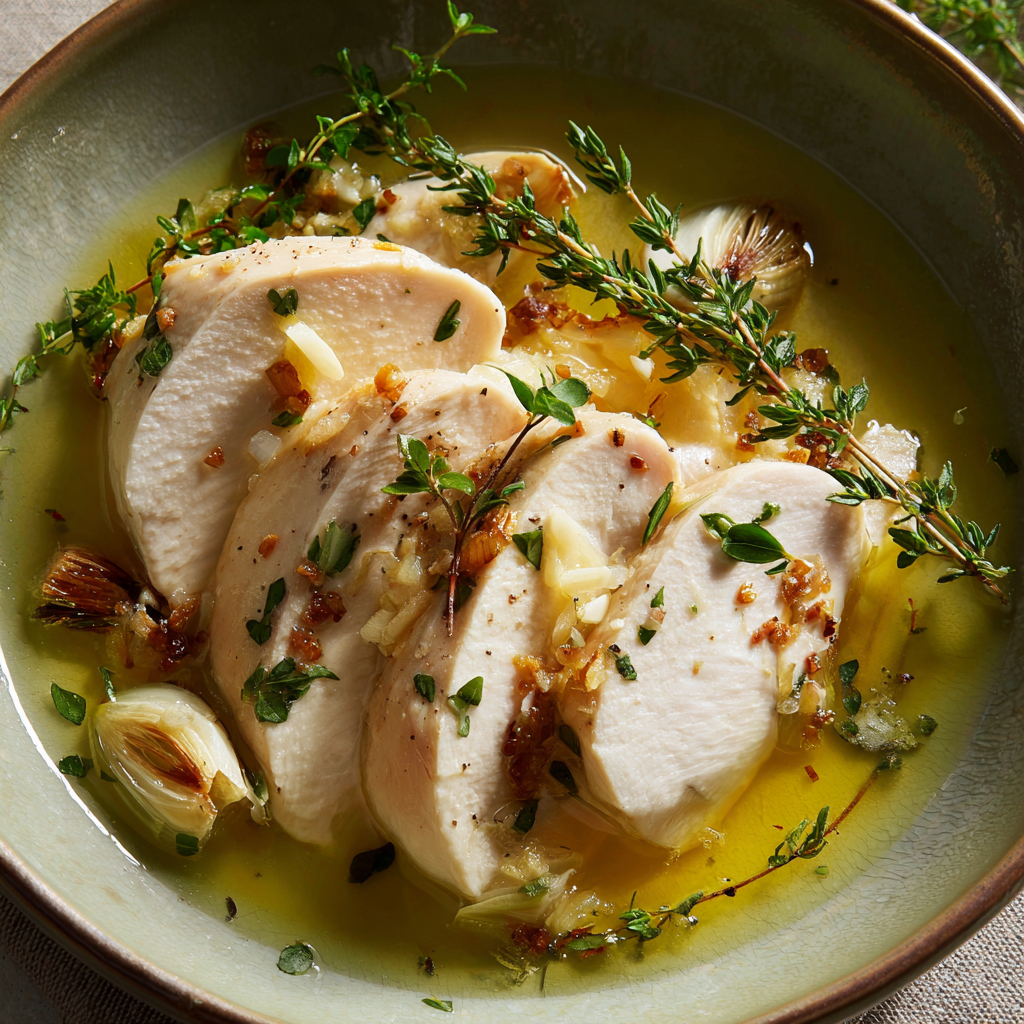
The Butter-Poached Chicken Secret: Your Ticket to Silky, Dreamy Dinners
Hey friends, Beau here from Feastical! Let me ask you a question: have you ever looked at a chicken breast and thought, “Okay, reliable… but maybe a little… boring?” I get it. We’ve all been there. It’s the culinary equivalent of a dependable beige sedan. But what if I told you there’s a magical, simple method hiding in plain sight that transforms that humble chicken breast into something so tender, so juicy, so luxuriously silky that it practically melts on your tongue? Welcome to the glorious world of butter-poached chicken.
If the term “poaching” makes you think of bland, boiled health food, wipe that image from your mind immediately. Butter-poaching is a whole different universe. We’re gently coddling the chicken in warm, fragrant, melted butter – not boiling it, not frying it. It’s a low-and-slow bath that coaxes out unbelievable moisture and infuses every single fiber with rich, savory flavor. The result is a chicken breast that cuts like soft butter (see what I did there?) and tastes like a warm, comforting hug. It’s a restaurant-worthy technique that requires almost zero fancy skills, just a little patience and trust. So, grab your favorite skillet and let’s turn that weeknight staple into a show-stopping masterpiece. You’re about to become a total poaching pro.
Grandma’s Kitchen & The Lesson of Low Heat
This technique always takes me back to my Grandma Eleanor’s kitchen. She wasn’t a fancy chef, but she was a wizard with simple ingredients. I remember one rainy afternoon, I was about to crank the stove to high to cook some chicken, impatient as any teenager would be. She gently placed her hand over mine and said, “Beau, honey, hurry ruins food. Let it get happy in the butter.” She showed me how to let the butter just barely shimmer, to add a sprig of thyme from her window box, and to let time do the work. That chicken was a revelation. It wasn’t just dinner; it was a lesson in patience and love. It taught me that the best flavors aren’t forced, they’re nurtured. Every time I butter-poach, I think of her, and I’m reminded that the most profound kitchen magic often happens on the lowest setting.
Gathering Your Flavor Toolkit
Here’s the beautiful part: the ingredient list is short and sweet. This is about quality, not quantity. Let’s break it down:
- 2 boneless, skinless chicken breasts: Look for ones that are similar in size and thickness so they cook evenly. A quick pro-tip: if one end is super thick, give it a gentle pound with a rolling pin or pan to even it out. This is called “butterflying” and it’s a game-changer for even cooking.
- 1 cup (2 sticks) unsalted butter, cut into chunks: Unsalted is key here, friends. It lets you control the salt level perfectly. We’re using a whole cup, and I know it seems like a lot, but stay with me. You’re not eating it all! The chicken absorbs just the flavor, not the entire fat content. The butter becomes a flavorful bath, not a sauce you consume in full.
- 2 garlic cloves, smashed: Just give them a good whack with the flat side of your knife. Smashing releases all those amazing aromatic oils better than mincing for this long, gentle cook.
- 2 sprigs fresh thyme or ½ tsp dried: Fresh thyme is fantastic, but dried works beautifully here too! The slow infusion will wake up those dried herbs wonderfully. Rosemary or sage sprigs are also incredible swaps.
- 1 bay leaf (optional but recommended): This little leaf adds a subtle, almost floral depth. Think of it as the background singer that makes the main vocal (the chicken) sound even better.
- Salt and freshly ground black pepper: Season your chicken generously. This is your primary seasoning, so make it count!
- Optional Flavor Boosters: A strip of lemon peel (just the yellow zest, avoid the white pith) adds a gorgeous bright note. A splash of dry white wine (like Sauvignon Blanc) added after the butter melts brings acidity and complexity. Start with a tablespoon or two!
Your Step-by-Step Guide to Silky Perfection
Ready? Let’s cook. This is less about hardcore technique and more about embracing calm in the kitchen.
- Season & Prep: Pat your chicken breasts completely dry with paper towels. This is crucial! Moisture on the chicken can make the butter sputter. Season both sides generously with salt and pepper. Let them sit for 5 minutes while you prep everything else – this helps the seasoning stick and start working its way in.
- Create Your Butter Bath: Choose a saucepan or skillet that’s just big enough to hold the chicken breasts snugly in a single layer. You want the butter to nearly submerge them. Add the butter chunks, smashed garlic, thyme, and bay leaf. Turn the heat to the lowest possible setting. We are melting and infusing, not cooking or frying. Let the butter melt slowly until it’s completely liquid and you see those little milk solids at the bottom. You should see tiny bubbles, but it should never simmer or bubble actively. If it does, immediately remove it from the heat for a minute. This low heat is the secret to the entire recipe.
- The Gentle Poach: Once the butter is melted and fragrant (smell it – it’s already amazing!), carefully slide in the chicken breasts. They should be almost covered. If they’re peeking out a bit, that’s okay; we’ll turn them. Now, walk away. Set a timer for 15 minutes. This is the trust fall. The butter should maintain a temperature between 140°F and 160°F (60°C-71°C) – warm to the touch but not hot enough to burn you. No need to hover!
- Turn & Finish: After 15 minutes, gently turn the chicken over using tongs. You’ll see it’s already becoming opaque. Let it poach for another 10-15 minutes. The total time will be 25-30 minutes depending on thickness. The best way to know it’s done? Use an instant-read thermometer. Pull the chicken at 155°F (68°C). The carryover heat will bring it to the safe 165°F (74°C) as it rests. If you don’t have a thermometer, make a small cut in the thickest part – the juices should run clear, and the meat should feel firm but not tough.
- The Essential Rest: Transfer the chicken to a cutting board and let it rest for 5 full minutes. I know, I know, you want to dig in! But resting allows the juices to redistribute throughout the meat. If you slice it immediately, all those precious juices will run out onto the board. Patience pays off in juiciness!
How to Serve This Buttery Masterpiece
Presentation is part of the fun! Slice the rested chicken breast against the grain (look for the lines in the meat and cut perpendicular to them) into beautiful, even medallions. This ensures each piece is tender. Fan the slices out on a plate. Now, take a spoonful of that glorious, infused poaching butter from the pan – it’s now a flavor-packed sauce! Drizzle a little over the chicken. The remaining butter can be strained and saved for cooking vegetables, brushing on bread, or using in another recipe – it’s liquid gold! Serve this chicken over a bed of creamy mashed potatoes, buttery egg noodles, or fluffy rice to soak up that sauce. A simple side of steamed green beans, asparagus, or a crisp green salad with a bright vinaigrette cuts through the richness perfectly.
Make It Your Own: Fun Flavor Twists
The basic formula is your canvas. Here are a few ways to paint with different flavors:
- Lemon-Herb Garden: Add 3-4 strips of lemon zest and a couple of sprigs of fresh tarragon or dill to the butter bath. Finish the sliced chicken with a fresh squeeze of lemon juice.
- Spicy Garlic-Lovers: Use 4-5 smashed garlic cloves and add ½ teaspoon of crushed red pepper flakes to the butter. The result is mellow, aromatic, and has a gentle warmth.
- Sun-Dried Tomato & Basil: Chop ¼ cup of oil-packed sun-dried tomatoes and add them to the butter with the garlic. Throw in a few fresh basil stems. The tomatoes add a sweet, tangy umami punch.
- Dairy-Free “Butter” Poach: You can still do this! Use a high-quality, flavorful extra-virgin olive oil or a plant-based butter that browns well. The technique is identical, and you’ll still get incredibly moist chicken.
- Go Global: Swap the thyme for a few slices of fresh ginger and a star anise pod for an Asian-inspired twist. Or use smoked paprika and a pinch of saffron threads for a Spanish flair.
Beau’s Kitchen Confidential
I’ve made this recipe a hundred times, and it’s evolved in tiny ways. At first, I was so nervous about the butter temperature I used a thermometer the whole time! Now I just use the “see tiny bubbles, no sizzle” visual cue. I also learned that adding just a tablespoon of water to the butter at the very start can help stabilize it and prevent any chance of burning during the melt. It evaporates away. My funniest fail? I once tried to speed up the melting by using high heat. I ended up with browned butter (delicious, but not right for this) and a smoky kitchen. Grandma’s voice echoed in my head: “Hurry ruins food, Beau.” She was, as always, right.
Your Questions, Answered
Q: Can I reuse the butter?
A: Absolutely! Let it cool, strain it through a fine-mesh sieve to remove the garlic and herbs, and store it in the fridge for up to a week or freeze it. Use it to cook eggs, sauté mushrooms, or roast potatoes. It’s packed with flavor!
Q: My butter got hot and bubbled a lot. Is the chicken ruined?
A: Not at all! You’ve essentially confited the chicken at a slightly higher temperature. It might be a bit more “shreddy” on the outside and won’t be quite as silky-textured, but it will still be delicious and moist. Just reduce the heat immediately and finish cooking.
Q: Can I use chicken thighs?
A: You can, but they already have more fat and are harder to overcook. The true magic of this method is how it transforms the lean, easy-to-dry-out breast. If you use thighs, poach them until they reach 175°F (80°C) for fall-apart tenderness.
Q: How do I know it’s done without a thermometer?
A: The chicken will feel firm to the touch (not hard or rubbery), and when you make a small cut in the thickest part, the meat will be opaque all the way through with clear, not pink, juices running.
Butter-Poached Chicken Breast : Tender, Juicy, and Full of Flavor
Description
Say goodbye to dry chicken forever! Butter-poaching gently cooks chicken in warm, melted butter, infusing it with incredible flavor and keeping it tender, juicy, and luxurious. This is a low-and-slow method that transforms ordinary chicken breasts into a show-stopping dish with almost no effort.
Ingredients
-
2 boneless, skinless chicken breasts (similar size and thickness)
-
1 cup (2 sticks) unsalted butter, cut into chunks
-
2 garlic cloves, smashed
-
2 sprigs fresh thyme (or ½ tsp dried thyme)
-
1 bay leaf (optional)
-
Salt and freshly ground black pepper, to taste
-
Optional: 1–2 strips lemon zest, 1–2 tbsp dry white wine
Instructions
1. Prep the Chicken
-
Pat chicken breasts completely dry.
-
Season generously with salt and pepper.
-
Let rest 5 minutes while preparing the butter bath.
Tip: Evenly sized breasts cook more consistently. Pound thicker areas lightly if needed.
2. Make the Butter Bath
-
Choose a skillet or saucepan just big enough for the chicken to fit in a single layer.
-
Add butter, garlic, thyme, bay leaf, and optional lemon zest or wine.
-
Melt over the lowest possible heat. The butter should be liquid with tiny bubbles—not simmering.
Tip: Low heat ensures chicken cooks gently and absorbs flavor.
3. Poach the Chicken
-
Slide chicken breasts into the butter bath.
-
Maintain a temperature of 140–160°F (60–71°C) for 15 minutes.
-
Turn chicken gently, then continue poaching another 10–15 minutes until the thickest part reaches 155°F (68°C). Carryover heat will bring it to 165°F (74°C).
-
Remove chicken and rest 5 minutes.
Tip: No thermometer? Cut a small slit—juices should run clear and meat feel firm but tender.
4. Serve
-
Slice against the grain into medallions.
-
Drizzle with some of the infused butter from the pan.
-
Serve over mashed potatoes, rice, egg noodles, or alongside steamed vegetables or a crisp salad.
Bonus: Save the remaining butter for cooking vegetables, spreading on bread, or flavoring sauces—it’s liquid gold.
Notes
-
Use unsalted butter to control salt.
-
Don’t rush! Low-and-slow is the key to silky chicken.
-
For chicken thighs, cook until 175°F (80°C) for tender, fall-apart meat.
-
Butter can be strained and stored for up to 1 week in the fridge or frozen.
A Note on Nutrition
Let’s talk honestly about the butter. Yes, there’s a lot of it in the pan. But remember, you are not consuming all of it. Most of it stays in the pan as a cooking medium. The chicken absorbs some of the fat and flavor, but a significant amount of the butter is left behind. The nutritional estimate provided (~480 calories per serving) accounts for about 2-3 tablespoons of the butter being absorbed/used per chicken breast. If you’re mindful, you can also use less butter in the bath (¾ cup works) or blot the chicken lightly before serving. The primary goal here is incredible flavor and foolproof juiciness, which this method delivers in spades.
The Final Slice
So there you have it, friends – your new secret weapon for impossibly tender chicken. Butter-poaching isn’t just a recipe; it’s a mindset. It’s about slowing down, trusting the process, and letting simple ingredients shine. It proves that you don’t need a dozen components to make something truly special. You just need a little time, a little butter, and the willingness to try something gently magical. I hope this recipe finds its way into your regular rotation and becomes a story you share in your own kitchen. Now, go forth and poach! And don’t forget to tag @Feastical if you make it – I love seeing your creations.
With a full heart and a buttery spoon,
Beau