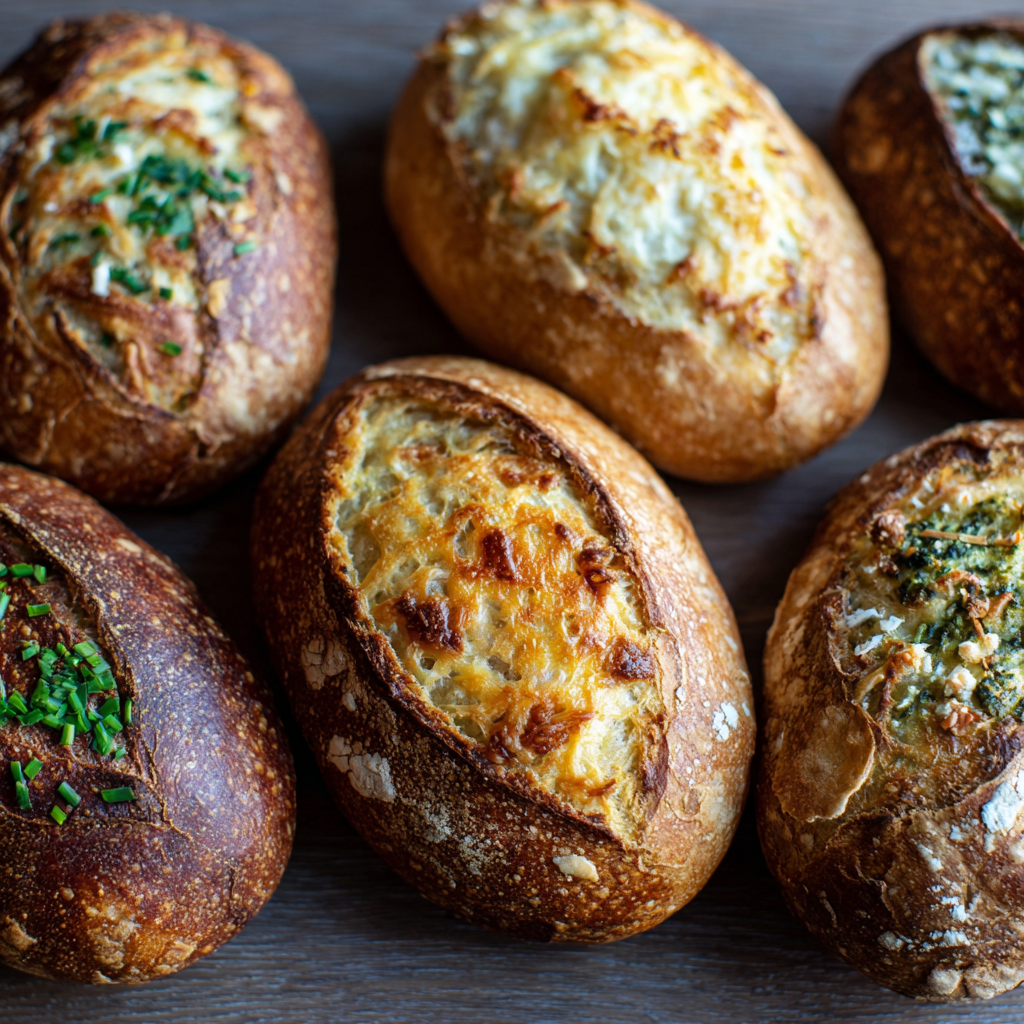
Mini Sourdough Loaves: Bake 3 Flavors with One Magical Dough
Hey there, friend! Beau here, from Feastical. Pull up a stool and let me tell you about one of my all-time favorite kitchen tricks: turning one humble ball of sourdough dough into a trio of spectacular, personality-packed mini loaves. If you’ve ever stared at your bubbly starter and thought, “I want to bake, but I also want to have some fun,” then you and I are on the same page today.
We’re not baking just any bread. We’re crafting edible gifts, creating the ultimate bread basket for a picnic, or simply treating ourselves to a choose-your-own-adventure baking session. The beauty of these mini loaves is in their versatility. With one straightforward dough recipe as your canvas, you can paint with flavors like vibrant basil pesto, smoky cheddar and spicy jalapeño, or the beautiful, tangy simplicity of a classic plain sourdough. It’s the perfect project for a lazy weekend, and the payoff is huge: golden, crisp-crusted, cloud-soft mini loaves that fill your kitchen with that unforgettable “I-am-a-bread-baking-rockstar” aroma.
Whether you’re a sourdough savant or just getting your starter’s feet wet, this recipe is built for success and smiles. We’ll keep it simple, soulful, and absolutely satisfying. So, dust off your favorite apron, grab your mini loaf pans (they’re a game-changer, I promise!), and let’s make some magic together.
The Little Loaf That Could: A Story of Sharing
This whole mini loaf obsession started in my early days of sourdough, when my enthusiasm wildly outpaced my household’s ability to consume a full-sized boule. My starter, “Bubbles,” was prolific, and my counter was constantly adorned with giant, beautiful crusty rounds. My neighbors, initially thrilled, began politely suggesting I open a bakery.
One rainy afternoon, I decided to scale things down. I greased up some forgotten mini pans I’d inherited from my grandma and divided my dough. On a whim, I folded some leftover pesto from pasta night into one, and some cheddar scraps into another. What emerged from the oven wasn’t just bread; it was pure joy. These personal-sized loaves were adorable, deeply flavored, and, most importantly, meant for sharing. I wrapped them in simple parchment, tied them with twine, and delivered them door-to-door. It wasn’t a giant loaf saying “help me eat this,” but a thoughtful little gift saying “I thought you’d enjoy this.” That’s the spirit of Feastical, right there—food that connects, delights, and feels like a warm hug.
Gathering Your Flavor Toolkit
Here’s everything you’ll need. The dough ingredients are your non-negotiable foundation—the simple elements that create sourdough’s magic. The flavor inclusions are where you become the artist. Don’t be afraid to riff!
- 125g Active Sourdough Starter: This is the heart of the recipe! Make sure it’s bubbly, fragrant, and floats in water. If it sinks, give it a fresh feeding and wait a few hours. No starter? A poolish (100g water + 100g flour + a pinch of instant yeast, left overnight) can work in a pinch, but you’ll miss the tang.
- 320g Warm Water: Lukewarm to the touch, about 85°F (30°C). This cozy temperature helps wake up the wild yeast and gets the fermentation party started smoothly.
- 500g Bread Flour: I love the high protein content in bread flour—it gives our mini loaves fantastic structure and those lovely, chewy holes. All-purpose flour works too; your crumb will just be a tad more tender.
- 12g Fine Sea Salt: Salt does more than just season; it tightens the gluten structure and regulates yeast activity. Don’t skip it, and add it after the autolyse rest.
Flavor Inclusions (Choose Your Adventure!):
- For the Pesto Parmesan: 3-4 tablespoons of high-quality pesto (store-bought or homemade) and a big handful of freshly grated Parmesan. The oil in the pesto will make this loaf incredibly tender.
- For the Jalapeño Cheddar: ½ cup of shredded sharp cheddar and 2-3 finely chopped jalapeños (seeds removed for less heat). A pinch of smoked paprika mixed in is a killer secret hack!
- For The Classic (Plain & Perfect): Sometimes, you just need the pure, tangy taste of sourdough. This one’s for the purists, the butter-slatherers, and the avocado toast connoisseurs.
Crafting Your Mini Masterpieces: A Step-by-Step Guide
Ready to get your hands doughy? Follow these steps, and I’ll whisper all my best chef hacks along the way. This process is as much about feeling as it is about timing.
Step 1: The Autolyse (The “Let It Be” Step)
In a large bowl, combine your active starter and warm water. Use your fingers or a whisk to break up the starter until it’s pretty much dissolved. Add all the flour and mix with a sturdy spoon or your hands until no dry bits remain. It will be a shaggy, messy mass. That’s perfect! Cover the bowl and let it rest for 30 minutes. This autolyse allows the flour to fully hydrate, making the gluten development easier and giving you a better crumb. Use this time to prep your flavor add-ins!
Step 2: Incorporating the Salt & Building Strength
Sprinkle the salt over the top of your rested dough. Now, get in there with wet hands. The dough will be sticky—that’s normal! Use a “pinch and fold” method to work the salt in. Then, begin a series of stretch and folds: grab one side of the dough, stretch it upward, and fold it over the center. Rotate the bowl a quarter turn and repeat. Do this 4-5 times. Cover, and let it rest for 30 minutes. Repeat this stretch-and-fold process 3-4 more times over the next 1.5 to 2 hours. You’ll feel the dough transform from loose and sticky to smooth, strong, and elastic.
Step 3: The Bulk Fermentation (Let the Magic Happen)
After your final set of folds, cover the bowl tightly and let the dough rise at room temperature. This is the bulk fermentation. It’s done when the dough has roughly doubled in size, looks bubbly, and jiggles like a happy waterbed when you shake the bowl. This can take 4-6 hours, depending on your starter’s strength and your kitchen’s temperature. Don’t watch the clock; watch the dough.
Step 4: Dividing, Flavoring, and Shaping
Lightly flour your counter. Gently turn out your dough—you want to preserve all those beautiful air bubbles. Divide it into three equal pieces (a kitchen scale is your friend here for precision). Now, for each piece:
- Gently flatten it into a small rectangle.
- Sprinkle or spread your chosen fillings over the center.
- Fold the dough over the fillings like an envelope, then roll and tuck it into a tight little batard or log shape that fits your mini pan.
Chef’s Hack: When adding wet ingredients like pesto, use a light hand and spread thinly. Too much moisture can make the dough slippery and hard to shape.
Step 5: Final Proof & Preheating
Generously grease your three mini loaf pans. Place each shaped loaf into a pan, seam-side down. Cover lightly with plastic wrap or a damp tea towel. Let them rise again until they look puffy and have risen about 1-1.5 inches above the pan rim. This final proof usually takes 1-2 hours. About 45 minutes before baking, preheat your oven to a roaring 450°F (232°C). If you have a baking stone or steel, put it on the middle rack.
Step 6: Baking to Golden Perfection
If your pans have lids, put them on. If not, tent the pans tightly with foil. This creates steam, giving our loaves an awesome oven spring and a crisp initial crust. Bake with the tops/lids ON for 16 minutes. Then, carefully remove the tops/lids or foil. You’ll see the loaves have risen beautifully! Reduce the heat to 425°F (218°C) and bake for another 16 minutes to finish browning the crust. For the cheesy loaves, you can leave them in for an extra 1-2 minutes at the higher temp to get those gorgeous, bubbly, golden-brown cheese spots.
Step 7: The Crucial Cool-Down
Immediately turn the loaves out of their pans onto a wire cooling rack. I know it’s tempting, but you must let them cool for at least an hour before slicing. The bread is still cooking internally from residual heat. Slicing too early results in a gummy crumb. Use this time to clean up… or just stare lovingly at your creations.
Sharing the Sourdough Love: How to Serve
Presentation is part of the fun! Once cooled, these loaves are ready for their close-up. For a family-style meal, slice each mini loaf on a cutting board and let everyone grab their favorite flavor. They’re incredible simply slathered with good butter or dunked into a bowl of soup.
For gifting, let the loaves cool completely, then wrap them in parchment paper and tie them with rustic baker’s twine. Add a little tag noting the flavor. It’s a heartfelt, handmade gift that truly says “I care.” These mini loaves also make a stunning addition to a brunch or charcuterie board. Arrange sliced pieces alongside cheeses, cured meats, olives, and fruit for a show-stopping centerpiece that tastes as good as it looks.
Your Dough, Your Rules: Flavor Twists & Swaps
The “three flavors” idea is just the beginning. Here’s how to make this recipe truly your own:
- Everything Bagel Bliss: After the final proof, brush the top of a plain loaf with water or an egg wash and generously sprinkle with everything bagel seasoning before baking.
- Sun-Dried Tomato & Kalamata: Fold in ¼ cup chopped oil-packed sun-dried tomatoes and 2 tablespoons chopped Kalamata olives for a Mediterranean vibe. A little crumbled feta is divine here too.
- Whole Grain Wonder: Substitute 150g of the bread flour with whole wheat or rye flour for a nuttier, heartier loaf. You may need a touch more water.
- Sweet Cinnamon Raisin: For a breakfast treat, knead 2 teaspoons of cinnamon and ⅓ cup of raisins or dried cranberries into one portion. A simple powdered sugar glaze after baking takes it over the top.
- Dairy-Free & Vegan: Simply choose vegan fillings! A dairy-free pesto and nutritional yeast combo is fantastic. The base dough is naturally vegan.
Beau’s Baker’s Bench Notes
This recipe has become a staple in my kitchen, and it’s evolved with every bake. I once, in a sleepy 5 a.m. baking haze, accidentally used garlic-stuffed olives in one loaf and thought I’d ruined it. It was the first loaf gone! Sometimes the “mistakes” are the best discoveries. I’ve also learned that my pesto loaf bakes best on the bottom rack—the extra heat helps counteract the oil and gives it a better crust. Don’t be afraid to play with oven placement. Most importantly, remember that sourdough is a living process. Some days your dough will rise fast, some days slow. Work with it, not against it. The reward is always worth it.
Your Sourdough Questions, Answered
Q: My dough didn’t double in size during bulk fermentation. What went wrong?
A: This almost always comes down to starter strength or temperature. Was your starter truly active and bubbly? Is your kitchen cooler than 70°F (21°C)? You can try placing the dough in a slightly warm spot (like an oven with the light on) to encourage a faster rise. Patience is key!
Q: The fillings leaked out during baking and made a mess. How do I prevent that?
A> Two tips: 1) Ensure your shaped loaf is well-sealed. Pinch the seams tightly. 2) For extra-wet or greasy fillings (like pesto or olives), use a slightly lighter hand. You can also try a “lamination” technique: roll the dough out very thin, spread fillings, then roll it up tightly like a cinnamon roll before the final shaping.
Q: Can I refrigerate the dough overnight?
A> Absolutely! After bulk fermentation, you can shape the loaves, place them in their greased pans, cover tightly, and refrigerate for 12-16 hours. In the morning, let them sit at room temp for an hour or so while the oven preheats, then bake as directed. This cold proof often develops even more flavor!
Q: My crust is too hard/thick. How can I adjust it?
A> For a softer crust, brush the hot loaves with melted butter right when they come out of the oven. For a thinner, crisper crust, ensure you’re creating enough steam at the start (with the lidded pans/foil) and try baking at the higher rack position.
Mini Sourdough Loaves : 3 Flavors with One Dough
Description
Golden crust, cloud-soft crumb, and three unique personalities—all from one sourdough dough. Perfect for brunch, gifting, or an indulgent snack!
Ingredients
Sourdough Base:
-
125g active sourdough starter, bubbly and floating
-
320g warm water (about 85°F / 30°C)
-
500g bread flour (or all-purpose flour)
-
12g fine sea salt
Flavor Add-Ins (choose your adventure!):
-
Pesto Parmesan: 3–4 tbsp high-quality pesto + handful of grated Parmesan
-
Jalapeño Cheddar: ½ cup shredded sharp cheddar + 2–3 finely chopped jalapeños (seeds removed) + pinch smoked paprika
-
Classic Plain: No add-ins, just tangy sourdough perfection
Instructions
1. Autolyse
-
In a large bowl, combine starter and warm water. Break up the starter until mostly dissolved.
-
Add the flour and mix until no dry bits remain. Shaggy and sticky is perfect.
-
Cover and rest 30 minutes.
2. Add Salt & Build Strength
-
Sprinkle salt over the dough. Incorporate using wet hands with “pinch and fold.”
-
Stretch and fold: grab one side, stretch up, fold to center, rotate ¼ turn, repeat 4–5 times.
-
Cover and rest 30 minutes. Repeat stretch-and-fold every 30 minutes for 1.5–2 hours (3–4 more sets).
3. Bulk Fermentation
-
Cover the bowl and let rise at room temperature until doubled, bubbly, and jiggly (4–6 hours depending on starter & kitchen temp).
4. Divide, Flavor, Shape
-
Lightly flour counter and turn out dough gently.
-
Divide into 3 equal pieces.
-
Flatten each into a rectangle, add fillings, fold over like an envelope, then roll into mini batards/logs.
Tip: Spread wet ingredients thinly to prevent slipping and leakage.
5. Final Proof & Preheat
-
Grease mini loaf pans generously. Place loaves seam-side down.
-
Cover with plastic wrap or damp towel. Let rise until puffy, 1–1.5 inches above pan rim (1–2 hours).
-
Preheat oven to 450°F (232°C).
6. Bake
-
Cover pans with lids or tent with foil for steam. Bake 16 minutes.
-
Remove lids/foil, reduce heat to 425°F (218°C), bake another 16 minutes until golden brown.
-
For cheesy loaves, add 1–2 extra minutes for bubbly topping.
7. Cool
-
Remove loaves from pans onto a wire rack. Cool at least 1 hour before slicing.
Notes
-
Fillings leaked? Ensure tight seams and spread wet ingredients thinly.
-
Refrigerated overnight? After bulk fermentation, shape loaves, cover, refrigerate 12–16 hours. Let sit 1 hour at room temp before baking.
-
Crust too hard/soft? Brush hot loaves with butter for softer crust. For crisper, ensure steam at start and try higher rack position.
A Note on Nutrition
While I’m a chef, not a nutritionist, I believe in being transparent about what we’re eating! These estimates are for a single slice (about 1/8th of a plain mini loaf). Remember, adding cheese, pesto, or other inclusions will change these values, primarily increasing the fat content in the most delicious way possible.
- Calories: ~140
- Protein: 4g
- Carbohydrates: 28g
- Dietary Fiber: 1g
- Total Fat: 0.5g (Can increase significantly with pesto or cheese additions)
- Sugars: 0g
Sourdough’s natural fermentation can make it easier to digest for some people, and it typically has a lower glycemic index than commercial bread. But let’s be real—we’re here for the incredible flavor, tangy chew, and the joy of baking from scratch!
One Dough, Endless Possibilities
And there you have it! You’re now armed with the knowledge to create not just one, but three incredible, flavor-packed mini sourdough loaves from a single, simple batch of dough. This recipe is more than just instructions; it’s an invitation to play, to share, and to fill your home with the unbeatable smell of baking bread.